

From price competition to value competition: How are independent websites changing the game?

  • Independent website operation strategy
  • Foreign trade stations
  • Foreign trade website
Posted by 广州品店科技有限公司 On Nov 01 2025

According to Boston Consulting Group's "Retail Trends 2025 Report," independent websites employing value-based competition strategies have an average gross margin of 45%, three times that of price war participants. Data from the China Council for the Promotion of International Trade indicates that independent websites that have completed value transformation have seen a 60% increase in customer retention and a fourfold increase in 5-year customer lifetime value (LTV). Research by the Global Brand Value Alliance (GBVA) emphasizes that the unique advantages of independent websites in brand narrative, user experience, and product/service innovation are reshaping the competitive logic of the industry.
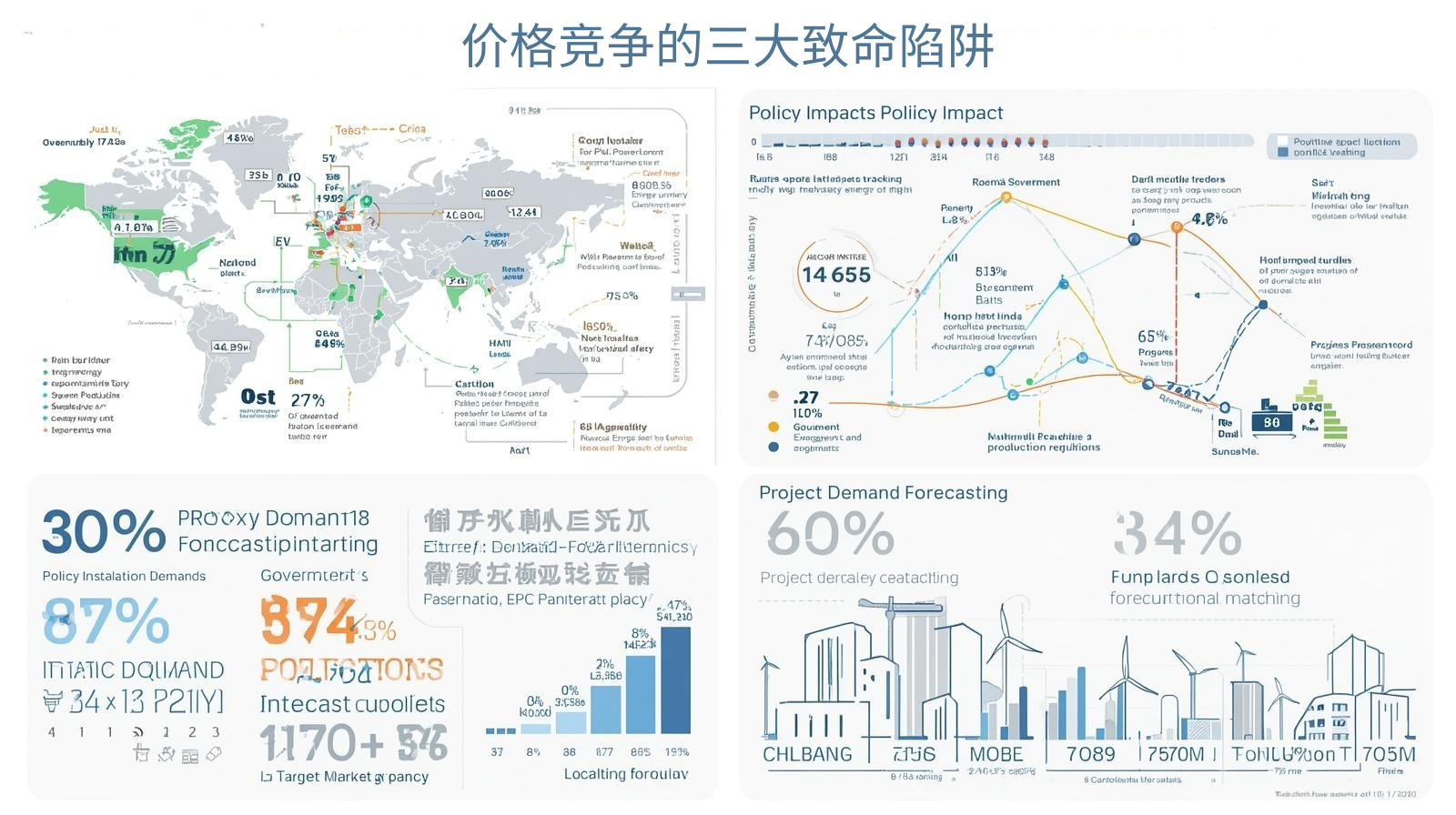
The three fatal traps of price competition The three fatal traps of price competition

1. Profits continue to bleed

  • The gross profit margin of a certain 3C product category fell below 8% (Case study from the White Paper on Price Wars in Chinese E-commerce).
  • Advertising costs consume 40% of revenue

2. Fragile customer relationships

  • Price-sensitive users churn rate exceeds 70% (data from a FMCG brand).
  • Zero brand loyalty accumulation

3. Depletion of innovation momentum

  • Research and development investment reduced to 1% (a predicament for a manufacturing company)
  • Vicious cycle of product homogenization

Three key breakthroughs in the value competition of independent websites

1. Building Brand Premium

  • Industry knowledge base enhances professional authority (Case study of an instrument brand achieving a 35% price premium)
  • Founder stories shape emotional connections

Data from the Brand Research Center of the China Council for the Promotion of International Trade shows that "independent websites with systematic brand building can increase product premium by an average of 25%."

2. User experience upgrade

  • Omnichannel service consistency (NPS score of 72 for a certain high-end apparel brand)
  • Personalized recommendations have a conversion rate 3 times higher.

Research by the Global Brand Value Alliance (GBVA) shows that experience-driven independent websites have a repurchase rate 5-8 times higher than those participating in price wars.

3. Service Innovation and Extension

  • Smart hardware + subscription services (service revenue accounts for 40% of a certain health brand's revenue)
  • Data feeds back into product iteration
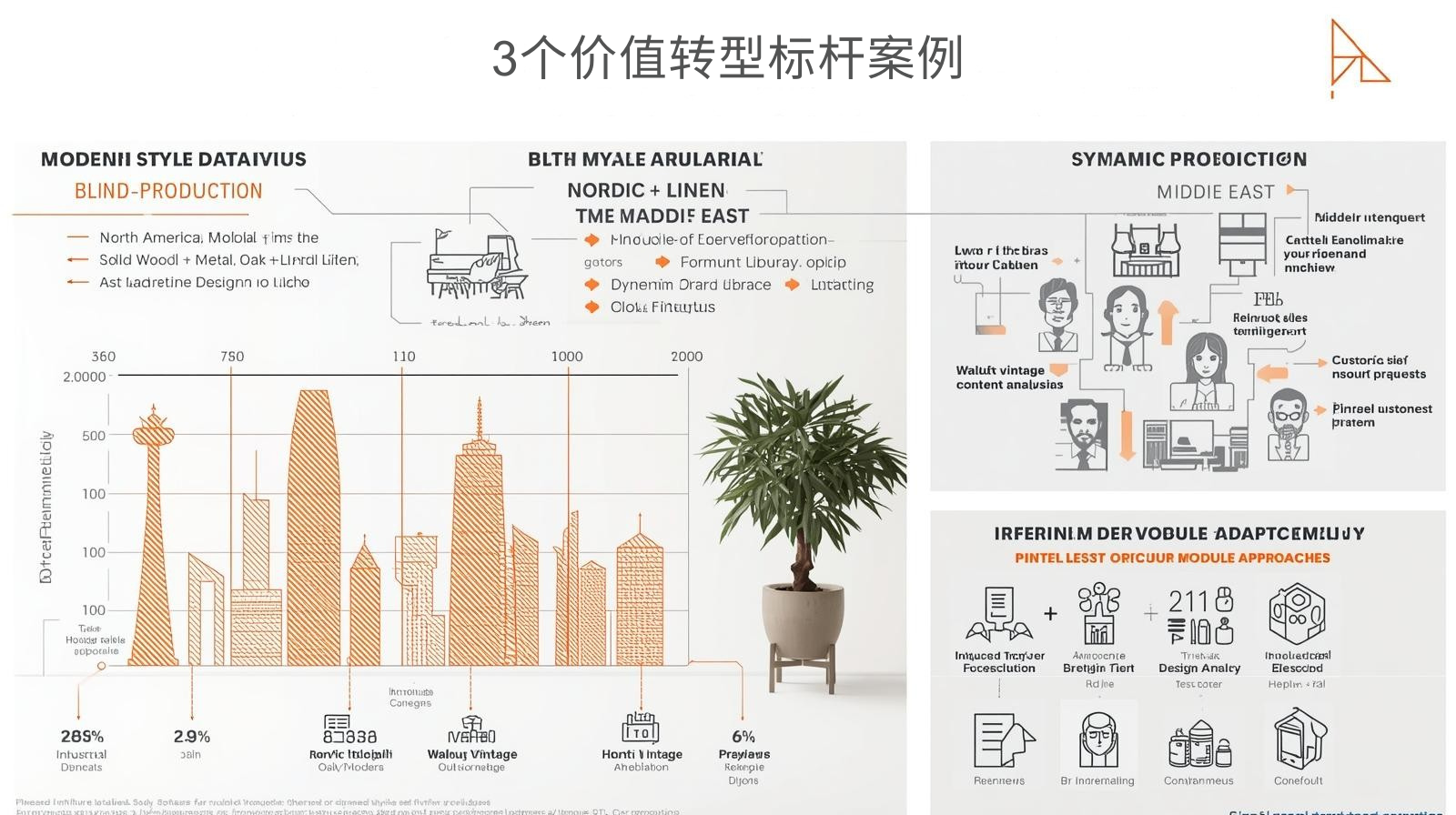
Three benchmark cases of value transformation Three benchmark cases of value transformation

Case 1: Shenzhen Smart Home

  • Scenario-based solutions replace single-item sales
  • Average order value increased by 300%

Case 2: Zhejiang Fabric Foreign Trade

  • From OEM to Design Service Provider
  • Profit margins range from 5% to 25%.

Case 3: American Outdoor Brands

  • Membership system + event community operation
  • LTV growth to 8 times that of regular customers

Pinshop Solutions

Pinshop offers: ✅ Brand Value Building System ✅ Experience Optimization Toolkit ✅ Service Innovation Design Framework ✅ Value Assessment and Monitoring Platform

Visit the Pinshop website now and start your traffic revolution!

Recommended article: Multilingual Independent Website Strategy: Balancing Localization and Internationalization Pinshop Foreign Trade Website Building

特色博客
The daily operation of the site improves the quality and efficiency, and millisecond-level response. The independent foreign trade station significantly reduces the global visitor churn rate.

The daily operation of the site improves the quality and efficiency, and millisecond-level response. The independent foreign trade station significantly reduces the global visitor churn rate.

Overseas B-side procurement has huge network differences across continents. Page loading delays are the largest source of traffic loss for independent sites. Millisecond-level sites significantly reduce bounce rates. At the same time, they fully provide GEO large model price comparison semantics and improve AI inquiries. Pintreel is based on React+Next native static architecture to achieve TTFB≤200ms global response, fully automatic material lightweight linkage SEO/GEO tag updates.

Integrated operation of building materials industry and trade, high-expansion foreign trade independent station seamlessly connects factory ERP and customer CRM management system

Integrated operation of building materials industry and trade, high-expansion foreign trade independent station seamlessly connects factory ERP and customer CRM management system

Under the integrated model of building materials industry, trade, production and sales, the separation of website, ERP inventory, and CRM customer data is a core operational pain point. Overseas procurement relies on the GEO generative engine to retrieve real-time building materials inventory and production capacity. Old sites cannot link back-end systems, resulting in gaps in AI exposure. Pintreel React+Next's high-expansion independent station's native two-way API seamlessly connects factory ERPs and foreign trade CRMs such as Kingdee and UFIDA. Building material specifications, inventory, and inquiries are synchronized in milliseconds. The bottom layer automatically captures back-end data to generate a full set of GEO price comparison semantics, realizing an integrated closed loop of Google + AI dual-line customer acquisition, automatic customer profile creation, and workshop production scheduling.

Large-scale machinery foreign trade track, React+Next.js independent foreign trade station relies on hard-core SEO to seize the global procurement search seat

Large-scale machinery foreign trade track, React+Next.js independent foreign trade station relies on hard-core SEO to seize the global procurement search seat

Overseas procurement of global large-scale machinery and equipment has the core industry characteristics of high customer price, long decision-making cycle, and high barriers to professional keywords. The first step for overseas engineering buyers must be to search for professional industrial keywords on Google to screen suppliers. Hard-core industrial SEO rankings directly determine whether heavy industry factories can join the global procurement candidate pool. At present, AI tools such as ChatGPT and Google SGE have become the core channels for horizontal comparison of equipment parameters, production capacity, and quality assurance. GEO (Generative Engine Optimization) has become a necessary supporting layout for incremental large-scale inquiries in the machinery industry. Most machinery foreign trade companies still use cheap WordPress and old PHP templates to build their websites. High-definition large images of large amounts of equipment are slow to load. Core Web Vitals indicators are unqualified across the board. Professional heavy industry keywords have been ranked low for a long time. At the same time, the industrial equipment-specific llms.txt index and price comparison JSON-LD structured data are missing. The large AI model is completely unable to capture equipment information, and the search and AI dual-line traffic are both disconnected. Pintreel is deeply involved in the large-scale machinery track. React+Next.js native independent station customization and development. The underlying architecture is deeply adapted to the product display logic of long pictures and texts, multi-working conditions, and multi-parameters in the heavy industry. It simultaneously embeds an industrial-specific global SEO system and a complete GEO equipment semantic knowledge map.

The first stage of buyer search: High-ranking foreign trade independent websites take the lead in entering the buyer's candidate list based on SEO

The first stage of buyer search: High-ranking foreign trade independent websites take the lead in entering the buyer's candidate list based on SEO

Overseas B-side procurement has formed a standardized hierarchical decision-making link. Active search and screening of suppliers is the first decision-making stage for buyers. Google SEO natural ranking directly determines whether the foreign trade independent website can enter the buyer's preliminary candidate list. It is also the prerequisite for subsequent negotiations, price comparisons, and in-depth cooperation. At present, a large number of foreign trade merchants use old PHP and WordPress templates to build websites. There are problems such as redundant code, inefficient rendering, confusing tags, and substandard Core Web Vitals (CWV) indicators. Even if they lay out a large number of keywords, it is difficult to obtain a stable and high ranking in the buyer's search results, and they will be eliminated directly in the first step of customer acquisition. At the same time, most traditional websites only deploy basic SEO and do not link with GEO (Generative Engine Optimization) for global traffic coordination, further missing out on overlapping customer sources.

Seize the digital voice in the AI ​​era, and the independent foreign trade station natively adapted to GEO enters the global large model knowledge base

Seize the digital voice in the AI ​​era, and the independent foreign trade station natively adapted to GEO enters the global large model knowledge base

The AI ​​wave is sweeping across the global foreign trade field. Mainstream large models such as ChatGPT, Google SGE, and Gemini have become the core entrance for overseas buyers to obtain supplier information, compare products, and verify brands. GEO (Generative Engine Optimization) has become the core starting point for foreign trade brands to compete for digital voice and enter the global large model knowledge base. A large number of traditional WordPress and PHP foreign trade sites rely on third-party plug-ins, use old rendering architecture, lack llms.txt, and standardized JSON-LD global semantic system, and cannot be included in the global AI knowledge base. Brand information, product parameters, and corporate strength are largely lost in large model retrieval. Even if they have strong offline capabilities, it is difficult to reach the massive potential customers through AI channels.

Buyer AI price comparison stage: GEO optimization allows independent foreign trade stations to appear frequently in ChatGPT comparison replies

Buyer AI price comparison stage: GEO optimization allows independent foreign trade stations to appear frequently in ChatGPT comparison replies

At present, the overseas B-side procurement process has fully entered the mainstream stage of AI price comparison. Buyers no longer rely solely on Google keywords to search for suppliers. Instead, they give priority to initiating multi-dimensional price comparison questions on product parameters, prices, factory strength, and comprehensive services through AI tools such as ChatGPT, Google SGE, and Gemini. GEO (Generative Engine Optimization) has become the core capability that determines whether independent foreign trade stations can enter AI comparison responses and obtain accurate price comparison inquiries. A large number of traditional WP and PHP foreign trade sites only do basic Google SEO, lack llms.txt index, standardized JSON-LD product price comparison structured data, and are completely invisible in AI price comparison scenarios. Even if the product price and quality have advantages, they cannot be retrieved by buyers in the AI ​​comparison process, and they miss out on a large number of high-intention price comparison customers.