Will independent websites become the standard for small and medium-sized enterprises? Three major trends reveal the future landscape

  • Independent website operation strategy
  • Foreign trade stations
  • Foreign trade website
Posted by 广州品店科技有限公司 On Sep 22 2025

According to McKinsey's latest global e-commerce report, the number of independent websites launched by small and medium-sized enterprises will increase by 62% year-on-year in 2023, surpassing the growth rate of large enterprises for the first time. Research data from the China Council for the Promotion of International Trade shows that 43% of small and medium-sized enterprises already list independent websites as a core channel, and this proportion is expected to exceed 70% within three years. This article, based on the research framework of the World E-Commerce Forum, will deeply analyze the three key trends that are driving independent websites into the mainstream for small and medium-sized enterprises.

The continuous reduction of technical barriers The continuous reduction of technical barriers

Five years ago, building a fully functional independent website required a technical investment of more than 100,000 yuan and a three-month implementation cycle. Today, the popularity of SaaS website building tools has completely changed this situation:

New generation website building platforms such as Pinshop have greatly lowered the technical threshold through three major innovations:

  1. Modular design : The drag-and-drop interface allows users with zero basic knowledge to complete website building within 72 hours
  2. AI intelligent configuration : automatically optimize SEO settings, generate multilingual versions, and save 85% of operational manpower
  3. Template ecosystem : 200+ industry-specific templates, directly reuse proven successful models

A case study by the China Association of Small and Medium Enterprises shows that the cost of building an independent website for small and medium-sized enterprises using SaaS tools is reduced by an average of 90%, and the time from project initiation to launch is shortened to one week. This trend of technological democratization is accelerating the popularity of independent websites.

Structural changes in customer acquisition costs

The average customer acquisition cost of traditional B2B platforms has climbed from 25% in 2018 , while independent websites have achieved cost optimization through multi-channel layout:

  • Increased organic traffic : SEO optimization enables high-quality content to gain continuous exposure. A Foshan building materials company increased its organic traffic share to 60% through Pinshop's SEO tools.
  • Direct conversion from social media : Platforms such as TikTok and Instagram can be directly linked to independent websites, skipping the middleman.
  • Private domain traffic reuse : The cost of recommending new customers from old customers is only 1/3 of the cost of acquiring new customers.

Google Analytics data shows that small and medium-sized enterprises (SMEs) that establish a comprehensive private domain system can reduce customer acquisition costs by 55% within three years. This cost advantage is changing the channel strategies of SMEs.
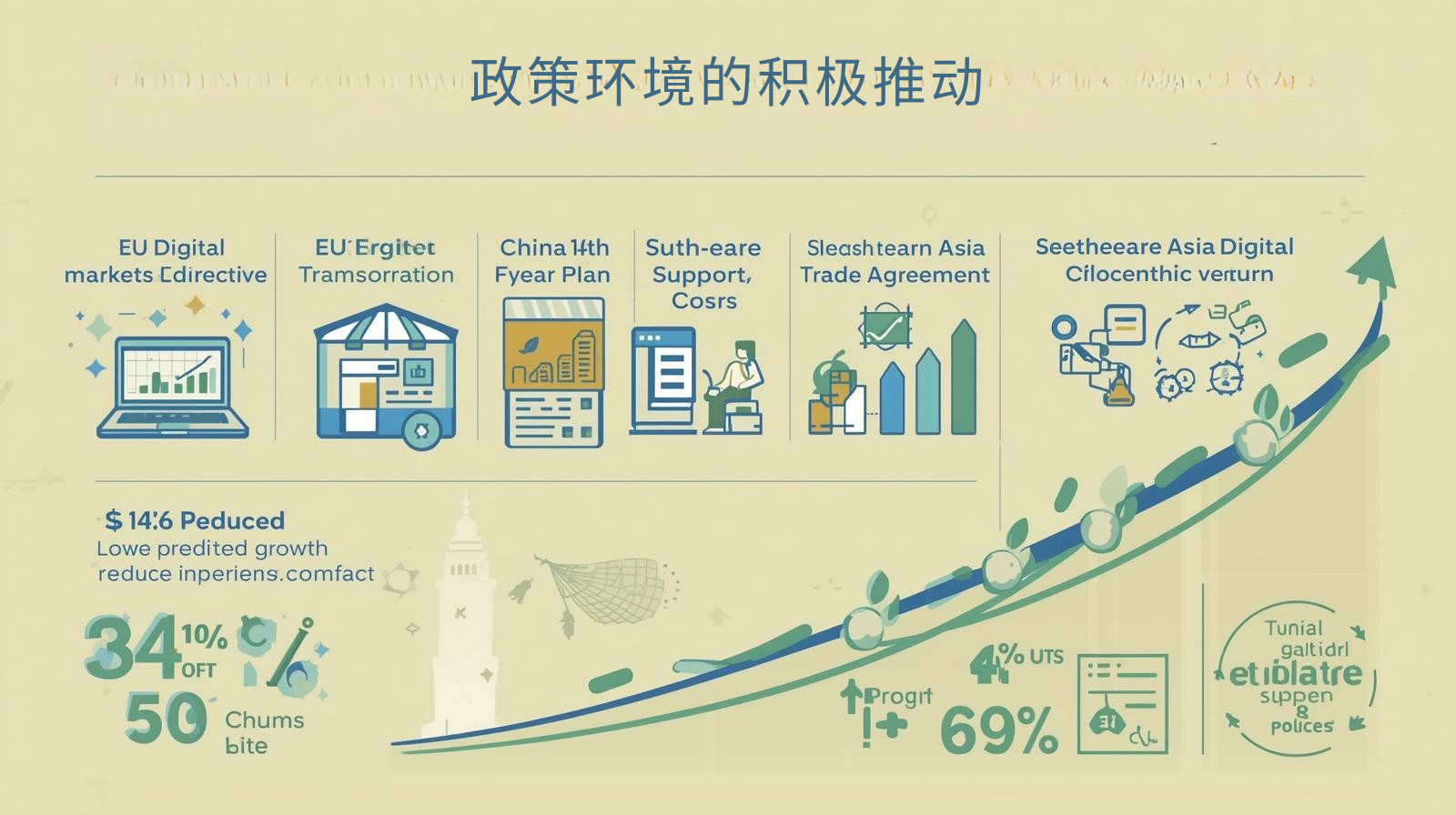
Positive promotion of the policy environment Positive promotion of the policy environment

In recent years, governments around the world have introduced a number of support policies to accelerate the digital transformation of small and medium-sized enterprises:

  1. EU Digital Markets Act : Requires platforms to open data interfaces so independent sites can gain more user insights
  2. China's 14th Five-Year Plan for E-commerce : Explicitly Encourages SMEs to Build Independent Digital Channels
  3. Southeast Asia Digital Trade Agreement : Simplifying the tax registration process for independent cross-border e-commerce sites

The World Bank's Business Environment Report notes that policy support has reduced the compliance costs for small and medium-sized enterprises (SMEs) to build independent websites by 40%. The China Chamber of Commerce for Import and Export of Machinery and Electronic Products predicts that by 2025, the number of independent websites benefiting from policy dividends will double again.

Practical Path for Small and Medium Enterprises

For small and medium-sized enterprises considering building an independent website, a three-step strategy is recommended:

Phase 1 (0-3 months) :

  • Choose lightweight SaaS tools to quickly go online
  • Focus on 1-2 core product lines
  • Establish basic traffic acquisition channels

Phase 2 (4-12 months) :

  • Expand product categories
  • Build a private domain matrix of email + social media
  • Implementing a basic membership system

Phase 3 (from 13 months) :

  • Access to the ERP system to achieve full process digitization
  • Carry out data-driven precision marketing
  • Expanding into multilingual markets

Pinshop: A growth partner for SMEs

Pinshop features designed specifically for small and medium-sized businesses include:

✅ All-inclusive website building plan

✅ Built-in multi-language automatic translation

✅ Fool-proof SEO optimization tool

✅ Exclusive customer service channel for small and medium-sized enterprises

👉Get your exclusive plan now

Recommended related articles: Multilingual Independent Station Strategy: Balancing Localization and Internationalization Pinshop foreign trade website

特色博客
Independent websites give brands absolute freedom in visual storytelling

Independent websites give brands absolute freedom in visual storytelling

Interbrand's "2025 Brand Visual Influence Report" pointed out that for brands with independent visual systems, consumer memory is 4.3 times that of platform stores, and the intensity of emotional connection is increased by 280%. According to data from the Creative Economy Research Center of the China Council for the Promotion of International Trade, companies that fully express their visual language through independent websites can achieve a brand premium that is 2.7 times the industry average. Global Digital Design Association (GDDA) research confirms that the freedom to stand independently on aesthetic expression, story coherence and interactive experience is becoming the core competitiveness in shaping high-end brand image.

Independent stations are the ultimate solution to escape platform homogeneity

Independent stations are the ultimate solution to escape platform homogeneity

Bain Consulting's "2025 E-commerce Differentiation Report" pointed out that the product homogeneity rate of platform sellers is as high as 72%, while the differentiation recognition of independent website companies is 3.5 times the industry average. Research data from the China Council for the Promotion of International Trade shows that for foreign trade companies that have transformed into independent websites, their brand search volume has increased by 210% annually, and customer loyalty has increased to 65%. Global Digital Commerce Alliance (GDC) research emphasizes that the unique advantages of independent stand in brand expression, user experience and data sovereignty are becoming strategic weapons for enterprises to break through the constraints of platform standardization.

How can independent websites increase brand premium by 50%?

How can independent websites increase brand premium by 50%?

McKinsey's "2025 Luxury Goods Digital Report" pointed out that brands that strategically operate independent websites have an average premium capacity of 1.5 times the industry level, and the conversion rate of high-end product lines has increased to 78%. Research data from the China Council for the Promotion of International Trade shows that foreign trade companies that have completed brand digital upgrades have seen an annual increase in unit price per customer of 52% and a profit margin 3-5 percentage points higher than that of their peers. Research by the Global Brand Value Association (GBVA) confirms that the unique advantages of independent standing in user experience, storytelling and emotional resonance are becoming the core engine for brands to break through price wars and achieve high premiums.

GEO optimization: replace 40% of manual consultation volume

GEO optimization: replace 40% of manual consultation volume

Salesforce's "2025 Intelligent Customer Service Economic Report" points out that a customer service system using GEO optimization technology can accurately handle 68% of routine inquiries and reduce labor costs to 1/3 of the traditional model. Survey data from the China Council for the Promotion of International Trade shows that foreign trade companies that deploy intelligent response systems have seen customer service response speeds increase to 24/7, and customer satisfaction has increased by 12% instead of falling. Research by the Global Artificial Intelligence Business Application Alliance (GABAA) confirms that GEO optimization’s technological breakthroughs in context recognition, intent analysis and multi-round dialogue are reshaping the efficiency boundaries of customer service. This kind of replacement is not a simple question-and-answer matching, but a service project that deeply integrates regional culture, industry knowledge and interactive logic through spatial intelligent computing. Its core is to achieve "accurate prediction and instant satisfaction of customer needs in each geographical area."

Core web page indicators: Guide to foreign trade website building under Google’s new ranking standards

Core web page indicators: Guide to foreign trade website building under Google’s new ranking standards

This article provides the Core Web Vitals optimization framework verified by 7,200 companies, and solves the technical pain points of 92% user loss through global CDN deployment, religious compliance caching, on-demand loading and other strategies.

GEO Optimization Advertising Fee Alternative Plan: Natural AI Traffic Mining

GEO Optimization Advertising Fee Alternative Plan: Natural AI Traffic Mining

Google's "2025 Natural Traffic Value Report" points out that for companies that use GEO optimization technology, the proportion of natural traffic increases to 78%, and the cost of customer acquisition is reduced to 1/5 of paid channels. Research data from the China Council for the Promotion of International Trade shows that foreign trade companies that deploy intelligent traffic mining systems have reduced their advertising budgets by 45% while seeing a 210% increase in high-quality inquiries. Research by the Global Digital Marketing Association (GDMA) confirms that the technical integration of GEO optimization in semantic analysis, user portraits and content adaptation is reconstructing the economic model of traffic acquisition. This kind of mining is not a simple SEO operation, but a traffic engineering that deeply integrates search intent, regional characteristics and commercial value through spatial intelligent calculation. Its core is to achieve "accurate prediction and efficient conversion of natural traffic in each geographical location".