

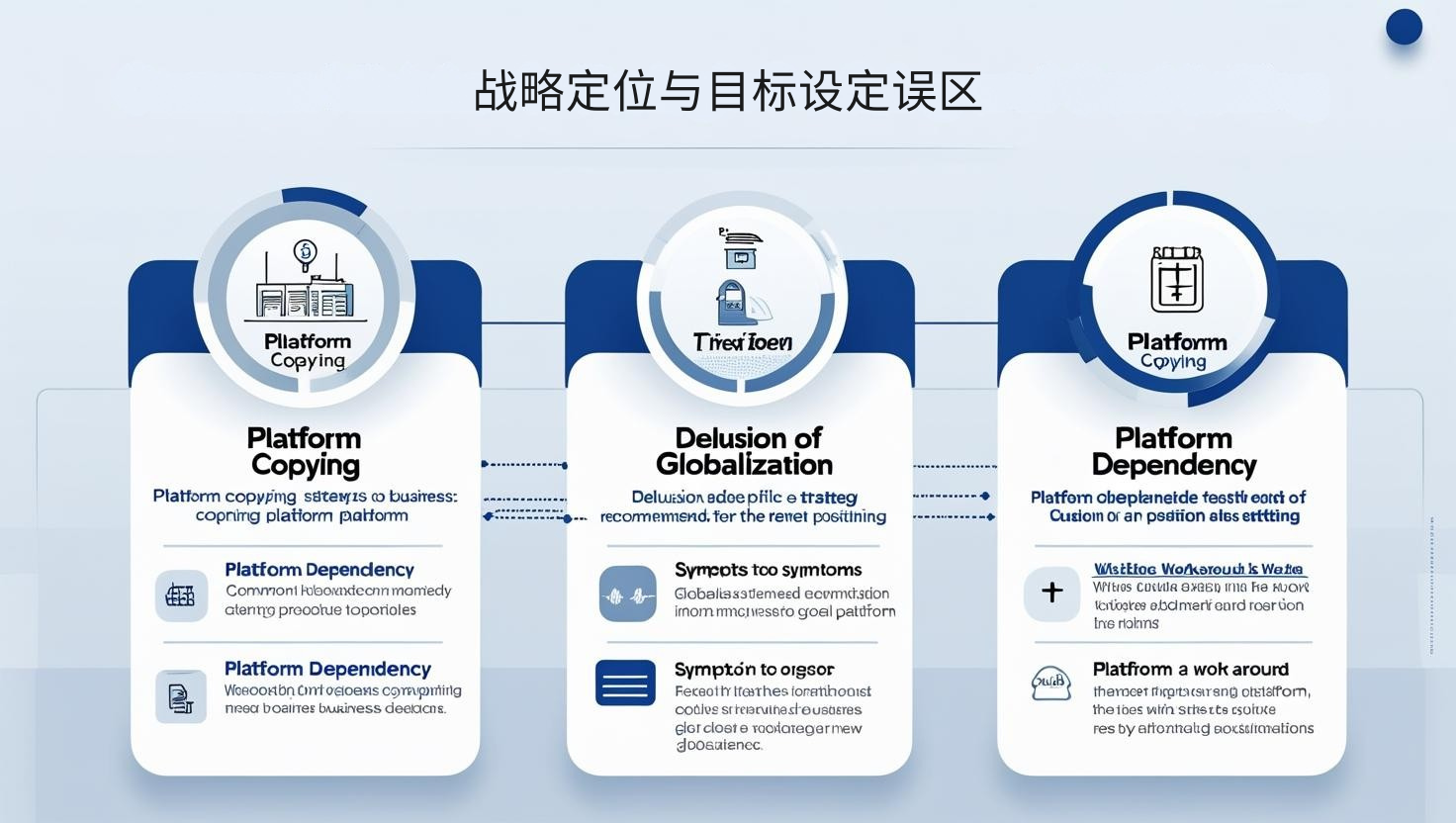
Misconceptions in Strategic Positioning and Goal Setting
The most fundamental problems often occur at the project's inception:
-
Platform Copying Misconception: Blindly imitating Amazon or major industry sites
- Performance: Copying features and designs without considering one's own resources and target customers
- Impact: Wasting resources and failing to highlight core strengths
- Ways to Avoid:
- Clearly define business goals and milestone KPIs
- Start with a minimum viable product (MVP) and iterate based on data
- Design essential features based on the customer journey, avoiding feature overload
-
Globalization Illusion: Aiming to cover all markets from the outset
- Performance: Launching simultaneously in multiple languages and regions, over-dispersing resources
Workarounds: - Adopt a "deep-roots first" strategy, establishing success in 1-2 core markets
- Establish a market priority assessment framework based on market size, competitive landscape, and entry difficulty
- Build a scalable technical architecture, but execute incrementally
-
Platform-dependent thinking: Treat your independent website as a simple deployment of platforms like Shopify
- >
- Symptoms: Over-reliance on platform templates and built-in functionality, resulting in a lack of differentiation
- Impact: Inability to adapt to specific industry needs, making it difficult to establish competitive barriers
- Workarounds:
- Customize key functions based on industry characteristics and customer needs
- Build a hybrid solution, in-house core differentiated functions, and use the platform for common functions
- Develop a platform migration plan to avoid complete lock-in
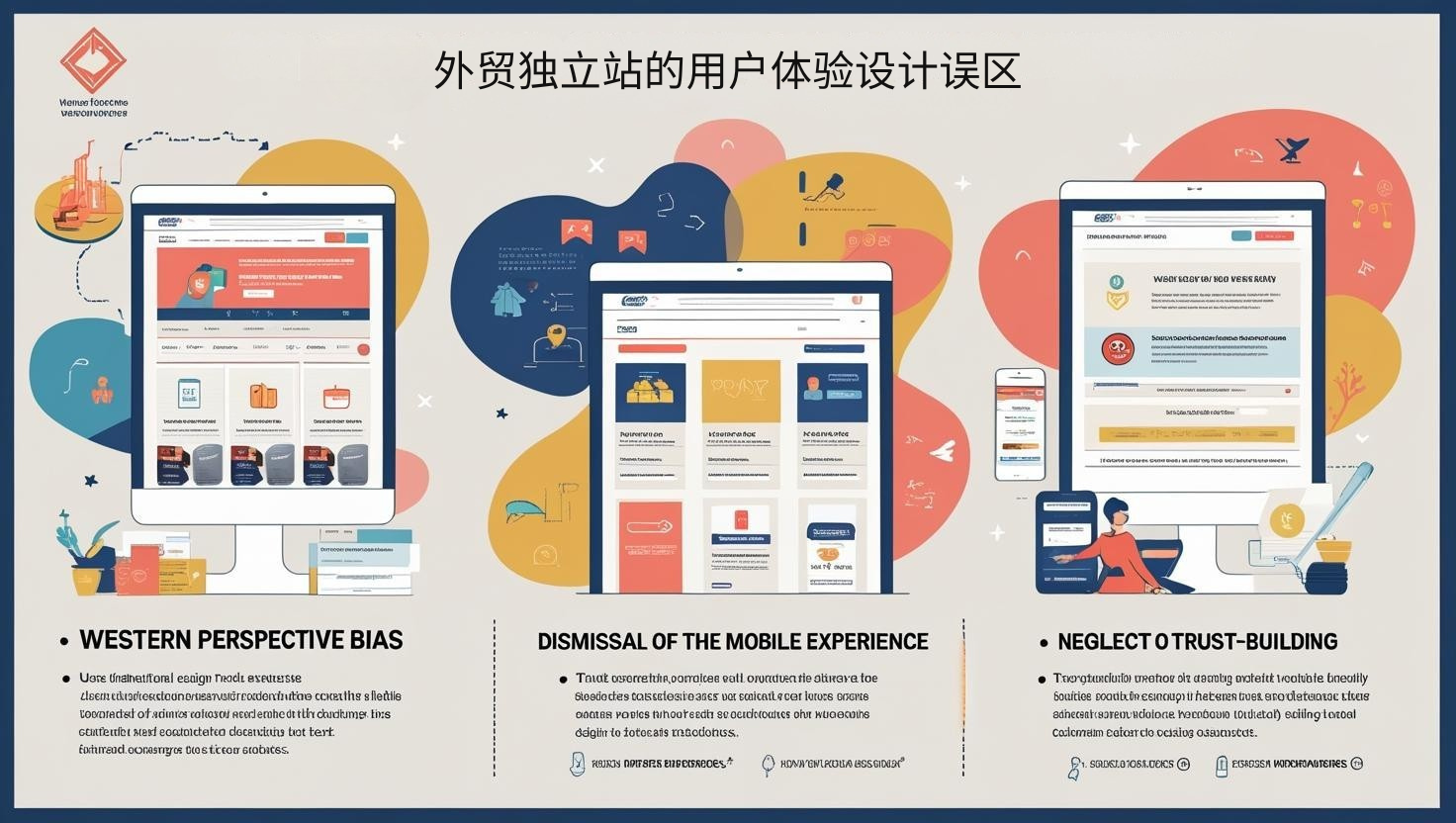
User Experience Design Mistakes for Independent International Trade Websites
International UX design is key to success, but often overlooked:
-
Western Perspective Bias: Assuming user behavior is similar across all markets
- Performance: Using Western design patterns and interaction conventions uniformly
- Impact: Failure to meet the needs of users in different regions Expectations, lower conversion rates
- Workarounds:
- Research target market digital behaviors (e.g., payment preferences, information acquisition methods)
- Conduct user testing in target markets, translating content and adjusting interaction patterns
- Allow key pages to have different regional versions, rather than simply localizing them
-
Disregarding the mobile experience: Focusing primarily on the desktop version
- Performance: The mobile version is a simplified representation of the desktop version
- Impact: Loss of users in mobile-dominated markets, especially emerging markets
- Workaround:
- Adopt mobile-first design principles, especially for Asian and African markets
- Optimize images and page loading speed for low-bandwidth scenarios
- Test the entire purchase process on different devices to ensure a smooth experience
-
Ignoring trust building: Failing to consider cross-cultural trust differences
- Symptoms: Lack of trust and security guarantees appropriate for the target market
- Impact: High bounce rates and low conversion rates, especially for high-value orders
- Workarounds:
- Display regional certifications, payment security seals, and privacy protection instructions
- Provide detailed company background and entity information to enhance transparency
- Integrate local customer testimonials and case studies to build social proof
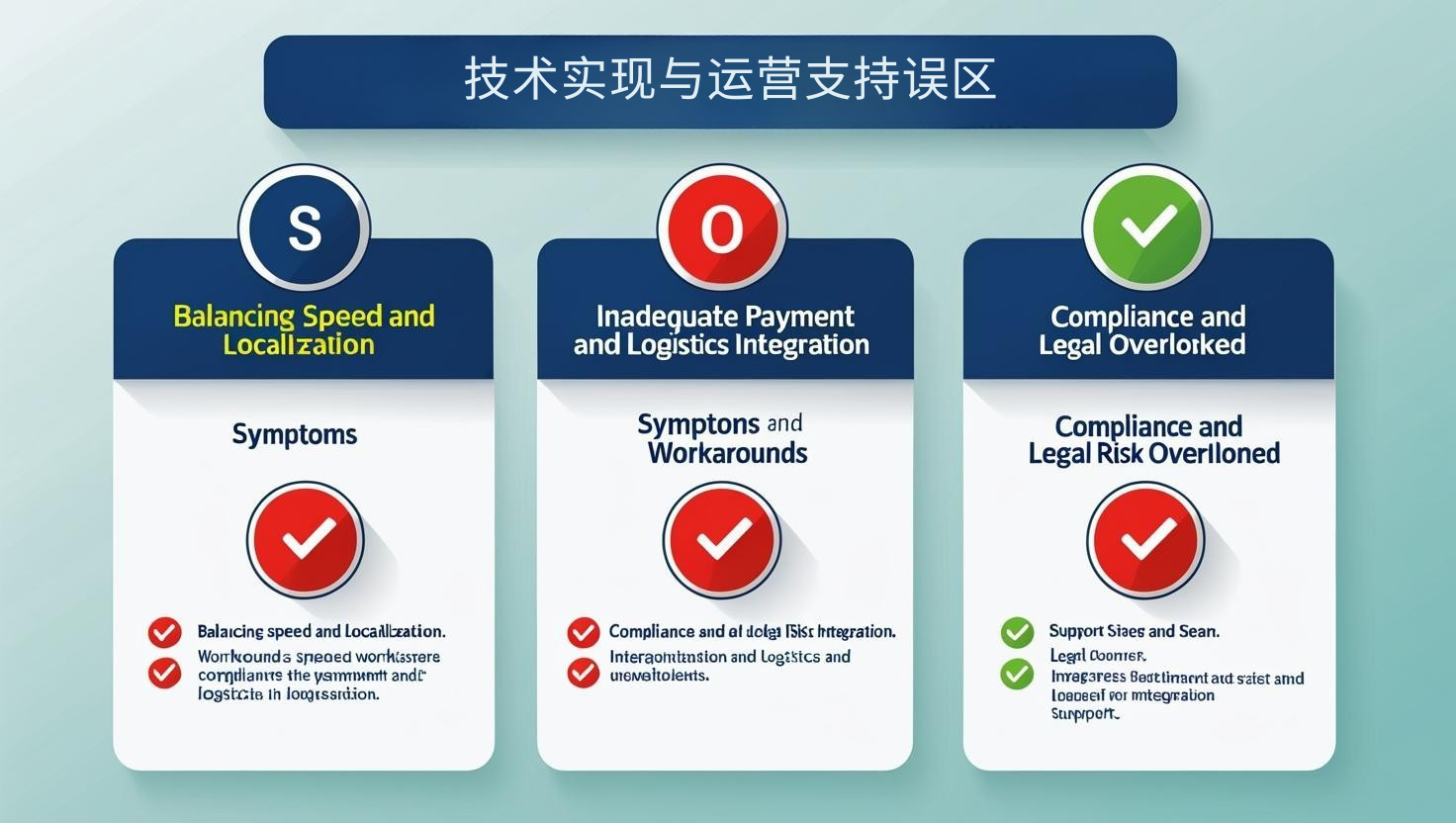
Misconceptions in Technical Implementation and Operational Support
Inadequate technology selection and operational preparation often lead to long-term problems:
-
Balancing Speed and Localization: Ignoring the global access experience
- Performance: Centralized server deployment fails to account for global network differences
- Impact: Slow loading times in remote markets impact rankings and conversions /li>
- Workarounds:
- Implement a global CDN solution, especially for core markets
- Consider multi-regional server deployment to balance cost and performance
- Optimize resource loading order to ensure core content is displayed first
-
Insufficient payment and logistics integration: Failure to fully consider the complexities of international transactions
- Symptoms: Only limited international payment methods are supported, and logistics options are limited
- Impact: High shopping cart abandonment rates, especially during checkout.
- Workarounds:
- Integrate mainstream regional payment methods, not relying solely on credit cards.
- Implement real-time tax and customs calculations to avoid delivery surprises.
- Offer multiple logistics options, including fast and economical options.
- Workarounds:
-
Neglect of Compliance and Legal Risks: Failure to fully consider international regulatory differences.
- Symptoms: Common privacy policies and terms, ignoring Regional Regulatory Requirements
- Impact: Legal risks and potential fines can impact brand reputation
- Mitigation Methods:
- Develop privacy policies that comply with local regulations for core markets (e.g., GDPR, CCPA)
- Implement regionally differentiated cookie consent mechanisms
- Ensure product descriptions and claims comply with regulatory requirements in target markets
By avoiding these common pitfalls, international trade companies can build more effective e-commerce websites, reduce risk and waste of resources, and improve their return on investment. Remember, successful international trade e-commerce isn't a one-time project; it's a business asset that requires ongoing optimization. Only by taking an incremental approach, starting from core values, and making data-driven decisions can we truly establish an effective sales channel that serves global customers.