
According to the "Google SEO Practical Suggestions" released by NetEase Subscription in January 2026, AI-generated search has completely dominated the top of search engine results. More than 80% of information queries are directly covered by AI, allowing users to get answers without clicking links. With "zero-click search" becoming the norm, the core competitiveness of independent foreign trade websites has shifted from "competing for clicks" to "competing for brand reference rights in AI logic." Furthermore, practical data released by Boss Smart AI Marketing on January 28, 2026, shows that independent foreign trade websites that optimize their content through GEO and leverage overseas social media promotion saw an average increase of 5.3 times in search ranking on AI platforms and a 3.7-fold increase in precise inquiries. The authority and interaction quality of social media content have become core reference indicators for AI in determining the credibility of independent websites. A hardware factory in Shenzhen, which previously relied solely on its independent website's content layout, consistently ranked in the top 10 in ChatGPT search for core keywords. After 82 days of optimization through a combination of GEO and overseas social media seeding, its core keyword AI recommendation ranking jumped to the top 3, and overseas inquiries increased from 5 to 28 per month, with inquiries from high-profit markets in Europe and America accounting for 65%. The key to its success lies in establishing a complete chain: "building trust through social media seeding - strengthening signals through GEO optimization - AI-driven weighting."
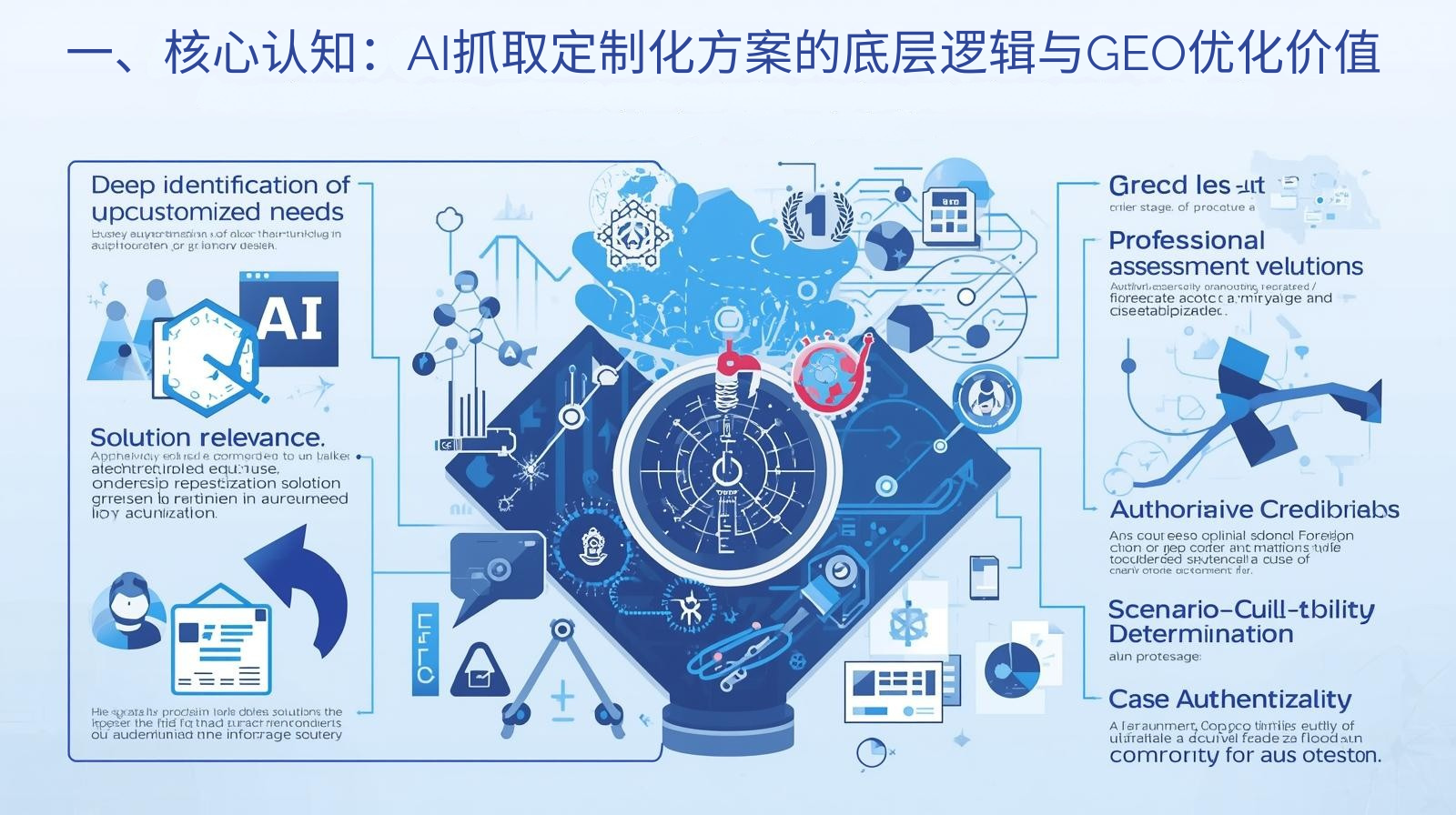
I. Core Understanding: The Underlying Logic of Social Media Content Feeding Back into AI Weighting and the Value of GEO Optimization
When determining the search ranking of independent e-commerce websites, AI platforms such as ChatGPT and Google SGE do not only focus on the website's content, but also incorporate overseas social media content into their "brand authority assessment system." This system comprehensively measures a brand's true influence in overseas markets through four key stages: content relevance identification, social media authority signal capture, user interaction quality verification, and multi-channel联动 (multi-channel linkage) judgment. This feedback then influences the independent website's AI search ranking. Especially after the AI model iteration in 2026, the depth of social media content capture has significantly improved. It can accurately identify core information such as brand mentions, product feedback, and industry endorsements in social media posts, user comments, and case studies. The core role of GEO (Generative Engine Optimization) is to ensure that social media content accurately matches the AI's capture logic through generative content creation and structured signal reinforcement. This strengthens the relevance between social media and the independent website, making social media content "brand authority evidence" recognized by AI, ultimately leading to a weighting effect.
1.1 Four Core Dimensions for AI to Determine the Weight of Social Media Content in 2026 (Exclusive to Foreign Trade)
Based on OpenAI's 2026 official guide to vertical search optimization (link: https://platform.openai.com/docs/plugins/best-practices) and practical research on overseas social media traffic generation, the core dimensions for AI to determine whether social media content can improve the ranking of an independent website can be precisely broken down into four points, which directly determine the optimization effect:
1. Content Relevance and Keyword Suitability: The core criterion is whether the social media content highly matches the core business and target keywords of the independent website. Social media posts should naturally incorporate core foreign trade terms (such as "China foreign trade supplier" and "custom product manufacturer") and specific demand terms (such as "small batch customization" and "EU certified"), and the content theme should be consistent with the product pages and solution pages of the independent website. According to the 2026 Foreign Trade GEO Optimization Survey data, social media accounts with a content relevance of over 92% have a 6.1-fold increase in the efficiency of feeding back AI weight into the independent website.
2. Social Media Authority and Content Quality: The core criteria for judging a social media account are its industry authority and content professionalism. For B2B foreign trade, priority is given to the quality of industry insights and case studies shared by LinkedIn accounts. For B2C foreign trade, the focus is on the contextualized product recommendation content and the authenticity of product testing on TikTok and Instagram. Low-quality advertising and reposted content will be judged as invalid information by AI, which will not only fail to improve the ranking but may also lower the overall credibility of the brand.
3. User Interaction Quality and Authenticity: The core criterion for judging the authenticity and effectiveness of user interactions (comments, reposts, favorites, inquiries) on social media content is to prioritize content containing high-quality interactions such as "procurement inquiries," "sample requests," and "cooperation negotiations." Fake likes and meaningless comments will not be recognized by AI. Boss AI's practical case studies show that high-quality social media content with high interaction levels can increase the AI search exposure of an independent website by 42%.
4. Social Media and Independent Website Linkage: The core criterion is whether social media content effectively links with the independent website. This includes whether the social media homepage has a clear link to the independent website, whether the post content embeds relevant page jumps within the website, and whether the product information/cases mentioned on social media are completely consistent with the independent website. Social media content with low linkage cannot be associated with the independent website by AI, and therefore cannot achieve weight feedback.
1.2 The core value of GEO+ overseas social media seeding: breaking through the bottleneck of AI weight growth
Many foreign trade companies fall into the misconception that "social media seeding is only for traffic generation and has nothing to do with AI ranking," ignoring the fact that the core logic of AI search in 2026 has shifted to "omnichannel brand trust assessment." Simply relying on on-site content optimization will hardly achieve AI priority recommendations in the era of "zero-click search." The core value of GEO+'s overseas social media seeding lies in breaking through the bottleneck of independent website AI ranking growth, specifically in three aspects:
1. Enhance brand authority: Through GEO-optimized social media content, provide AI with multi-dimensional brand trust signals, making independent websites more easily identified as "industry authorities" in AI searches, thereby improving search ranking and display priority.
2. Expand the dimensions of information captured by AI: Social media content can supplement the contextual information not covered by independent websites (such as product testing, customer feedback, and industry exhibition updates), making AI's understanding of the brand more comprehensive and thus improving the accuracy of recommendations.
3. Reduce the AI trust building cycle: The high interactivity and real user feedback of social media can quickly accumulate brand trust assets, which is 3.8 times more efficient than trust building through in-site content alone, helping independent websites gain AI recognition faster.
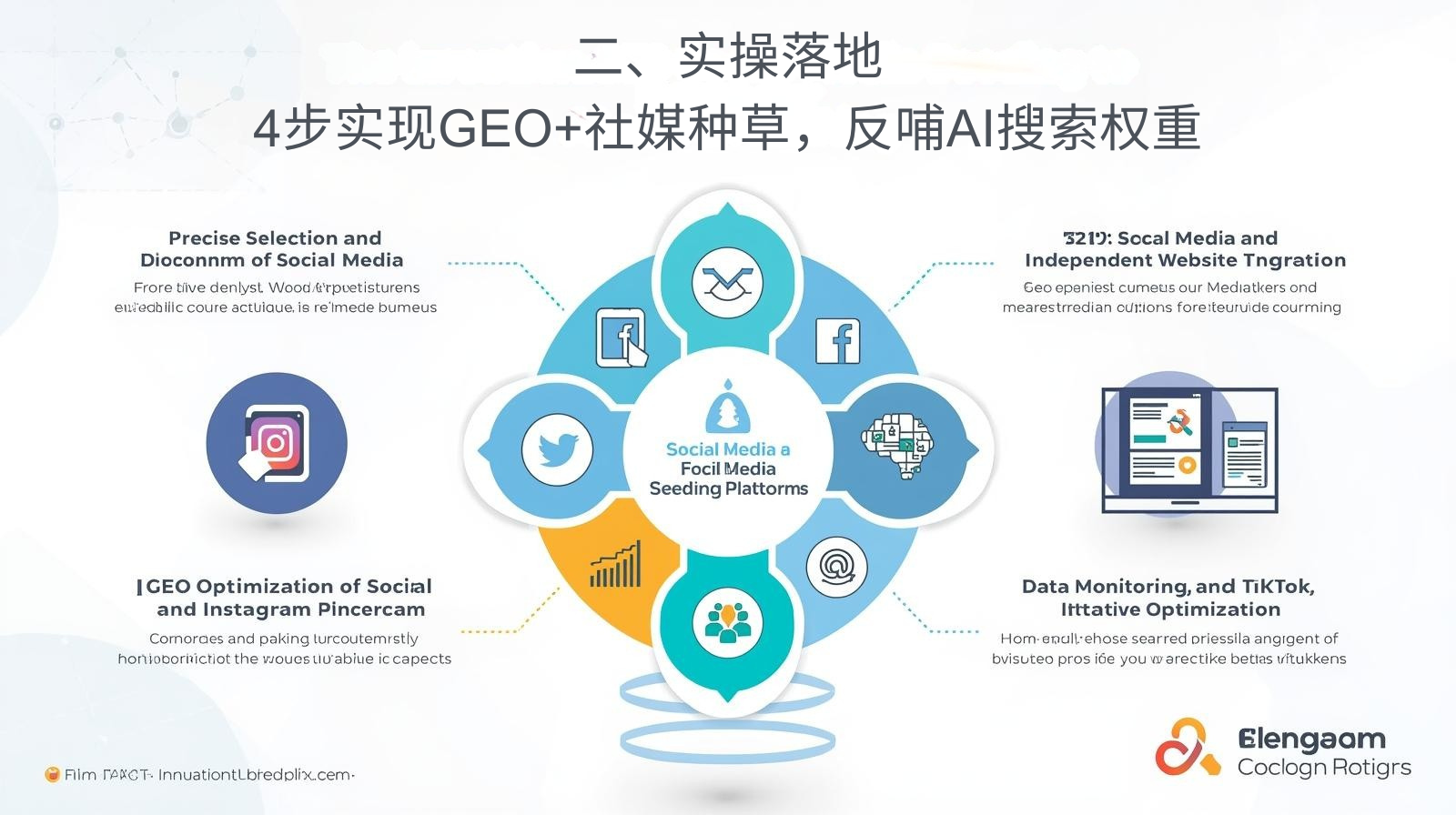
II. Practical Implementation: 4 Steps to Achieve GEO+Social Media Seeding and Boost AI Search Ranking
This solution strictly aligns with the latest AI search rules and overseas social media operation trends in 2026. It combines different scenarios for foreign trade B2B and B2C, and proceeds in four steps: "Precise selection and demand breakdown of social media platforms - GEO optimization of social media seeding content - Social media and independent website linkage construction - Data monitoring and iterative optimization". Each step includes specific implementation actions, tool support and case references. No complex technology is required, and foreign trade enterprises can directly implement it.
2.1 Step 1: Precise selection of social media platforms and needs breakdown (1-2 days, basic preparation)
Core objective: To accurately match foreign trade business scenarios with target audiences, select highly compatible social media platforms, and uncover the core search needs of buyers on social media, thereby clarifying the direction for GEO optimization and content creation.
2.1.1 Two core actions (precise positioning, avoiding blind deployment)
1. Precise Selection of Social Media Platforms: Select core platforms based on foreign trade business type and target audience to avoid resource dispersion due to multi-channel distribution: ① B2B Foreign Trade (Machinery, Hardware, Customized Equipment, etc.): Core focus on LinkedIn, supplemented by Facebook (overseas company homepage). LinkedIn emphasizes industry insights and technical case studies, aligning with the decision-making habits of corporate buyers; ② B2C Foreign Trade (Home Furnishings, Daily Necessities, Fashion Products, etc.): Core focus on TikTok and Instagram, supplemented by Pinterest, emphasizing scenario-based product seeding and product testing content, aligning with the needs of overseas end-user buyers/distributors; ③ Cross-border Supply Foreign Trade: Simultaneously utilize LinkedIn and TikTok, balancing corporate procurement and end-market influence. For platform selection, refer to the Social Media Traffic Acquisition and Screening Guide released by NetEase Subscription in January 2026 (link: https://www.163.com/dy/article/KK9RGR6T0518BGUC.html) to ensure a high degree of matching between platforms and target audience.
2. Core Needs and Keyword Mining: Comprehensive mining is conducted through three channels: ① AI-native mining: Core terms such as "finding goods through social media for foreign trade suppliers" and "custom product supplier social media" are searched in ChatGPT, and dropdown suggestions are recorded (e.g., "How to find Chinese foreign trade suppliers through LinkedIn?" "What are some reliable custom home furnishing suppliers on TikTok?"); ② Tool and platform mining: High-frequency search terms on social media are extracted using the free version of Semrush (link: https://www.semrush.com/), and the search suggestions on LinkedIn and TikTok are used to identify keywords commonly used by buyers; ③ Competitive analysis: High-interaction content from competitor social media accounts in the target market is referenced to analyze their core keywords and content themes, and reusable needs are extracted. Shunqi.com's 2026 foreign trade social media operation sharing points out that keywords that accurately match audience needs can increase social media content interaction rates by more than 50% (link: https://m.11467.com/product/d20000318.htm).
2.2 Second step: GEO optimizes social media content for product seeding and adapts it to AI capture (2-3 days, core process)
Core objective: To create social media content that is "highly relevant, highly authoritative, and highly interactive" based on the GEO generative optimization logic, ensuring that the content can be accurately captured by AI and attracting buyers to interact.
2.2.1 Three core GEO optimization actions (highly practical)
1. Content Theme and Keyword GEO Adaptation: The content theme must be highly consistent with the core business of the independent website. For B2B social media, prioritize creating industry-specific content (such as "2026 European Mechanical Product Compliance Customization Guide"), customer case studies (such as "A Record of Precision Parts Customization Cooperation with a German Company"), and technical interpretations (such as "Key Points of Small Batch Customization Process for Hardware Accessories"). For B2C social media, prioritize creating scenario-based product seeding (such as "A Guide to Matching Rattan Furniture in European and American Family Living Rooms"), product testing (such as "FDA-Certified Silicone Kitchenware Usage Review"), and customer feedback collections. Keyword placement should be naturally integrated. The title should adopt the format of "core keyword + demand keyword" (such as "Small Batch Custom Hardware - China Supplier | LinkedIn"). The body text should naturally incorporate one core keyword every 150-200 words. The comment section should guide users to interact using core keywords (such as "What type of hardware accessories do you need to customize?").
2. Content Format and Quality Optimization: For B2B LinkedIn content, the preferred format is "long article + case study image + key points summary". Long articles should include a framework of "industry pain points - solutions - collaborative results". Case study images should indicate the client's country, product name, and core selling points (e.g., "Germany Client | Precision Gear Custom | CE Certified"). For B2C TikTok/Instagram content, the preferred format is "short video + subtitles + hashtags". Short videos should grab attention in the first 3 seconds (e.g., product unboxing, feature demonstration). Subtitles should use localized language for the target market (avoiding stilted translations). Hashtags should combine "core keywords + sub-keywords + trending keywords" (e.g., #ChinaForeignTrade #CustomFurniture #EUCertified). Content quality must comply with the platform's algorithm rules. LinkedIn rejects plagiarism and low-quality ads, while TikTok emphasizes completion rate and interactivity. For details, please refer to the social media algorithm adaptation suggestions in NetEase Subscription (link: https://www.163.com/dy/article/KK9RGR6T0518BGUC.html).
3. Optimized Authoritative Support and Interactive Guidance: Every social media post must include authoritative supporting elements, such as providing an official EU verification link when mentioning compliance certifications (link: https://ec.europa.eu/growth/tools-databases/new-approach-odr/main/index.cfm), including screenshots of customer feedback (with sensitive information removed) when showcasing case studies, and citing industry standards when mentioning product advantages. Interactive guidance must be clear and explicit. B2B content can guide users to "leave a comment in the comment section to get complete cooperation case studies," while B2C content can guide users to "click the link on the homepage to inquire about samples," avoiding meaningless guidance. Boss Smart's practical data shows that social media content with clear interactive guidance and authoritative support increases interaction rates by 68% and AI crawling weight by 35%.
2.2.2 Recommended Beginner-Friendly Tools for 2026 (with Authoritative Links)
1. Content creation and optimization tools: Boss AI Content Factory (generates multilingual social media content, adapted for foreign trade scenarios, link: http://m.toutiao.com/group/7600284532012614170/?upstream_biz=doubao), Canva (creates social media articles and short video covers, 2026 iteration includes foreign trade templates, link: https://www.canva.com/); 2. Social media operation and data analysis tools: Hootsuite (unified management of social media across multiple platforms, link: https://hootsuite.com/), LinkedIn Campaign Manager (B2B social media data monitoring, link: https://business.linkedin.com/), TikTok Analytics (C2C social media interaction data statistics); 3. Language adaptation tools: DeepL (localized language translation, avoiding awkward expressions, link: https://www.deepl.com/).
2.3 Third step: Building a collaborative platform integrating social media and independent websites to enhance authority transfer (2-3 days, key step)
Core objective: To establish a strong connection between social media and independent websites, enabling AI to clearly identify the affiliation between the two, ensuring that the authoritative signals of social media content can be effectively transmitted to independent websites, and achieving weight feedback.
2.3.1 Three core coordinated actions (must be done, zero technical threshold)
1. Social Media Homepage and Content Link Optimization: All core social media account homepages must include a clear entry point to the independent website. The "Official Website Link" field on LinkedIn and Facebook homepages should contain the URL of the independent website's homepage. The bio on TikTok and Instagram homepages should include a link to the independent website (multi-page links can be integrated via Linktree, link: https://linktr.ee/). Within social media posts, naturally embed links to relevant pages on the independent website, such as linking case study posts to the independent website's case study page, and linking product recommendation posts to the corresponding product page. Use core keywords for anchor text (e.g., "custom furniture supplier") to avoid directly pasting meaningless links.
2. Enhanced Information Consistency: Product information, case study details, compliance certifications, contact information, etc., mentioned in social media content must be completely consistent with the content on the independent website. For example, if a social media post states "small batch customization MOQ 50 pieces," the product page on the independent website must also provide this information; customer case studies showcased on social media must have complete details on the case study page on the independent website; CE certification numbers mentioned on social media must be verifiable on the compliance page of the independent website. Inconsistent information will prevent AI from establishing connections and may even question the brand's credibility.
3. Social Media Interaction and Independent Website Inquiry Linkage: Purchase inquiries received in the social media comment section and private messages should guide users to their independent website to complete further operations (such as filling out an inquiry form or contacting a dedicated contact person). The guiding text should be something like, "You can click the homepage link to enter the official website, fill in your customized requirements, and we will arrange for an engineer to connect with you within 24 hours." The independent website inquiry form should include an option for "Which social media platform did you learn about us from?" This facilitates the tracking of social media traffic conversion effects and provides AI with behavioral signals of "social media-independent website" linkage.
2.3.2 AI Platform Proactive Submission and Signal Enhancement (Core, Accelerating Weight Transmission)
Submit the core social media account homepage URL and highly interactive post links through the "Index Submission" module of the ChatGPT site administrator platform (link: https://platform.openai.com/docs/plugins/best-practices), and fill in the submission description ("Foreign trade supplier social media accounts, including real customer cases and product customization information, highly related to the independent website, and adapted to AI search weight assessment"); submit the social media links and the URLs of the related pages on the independent website through Google Search Console to accelerate the linkage between Google Search Console and ChatGPT for crawling, allowing AI to quickly identify the affiliation between social media and the independent website, and strengthen the weight transmission.
2.4 Fourth step: Data monitoring and iterative optimization (long-term commitment, stable weights provide feedback on the effect)
Core objective: To monitor the AI crawling status, interaction quality, and changes in the independent website's ranking of social media content in real time, and to adjust and optimize strategies accordingly to ensure that social media content continuously contributes to the independent website's AI search ranking.
2.4.1 Four Core Data Categories Monitored Weekly
1. AI-driven content capture and interaction data on social media: Search for core keywords using ChatGPT to see if social media posts are cited by AI (e.g., the AI response mentions brand social media case studies); monitor content exposure, interaction rate (comments + reposts + favorites), and link clicks using the built-in data analysis tools of social media platforms (LinkedIn Campaign Manager, TikTok Analytics), with a focus on high-quality interactions containing purchasing inquiries.
2. Independent Website AI Weight and Display Data: Search for the core keywords of the independent website on ChatGPT and Google Search Console daily, and record the ranking changes and display styles; use the "Weight Assessment" module of the ChatGPT webmaster platform to view the weight changes of the independent website and analyze the weight improvement effect after social media content linkage.
3. Social Media to Independent Website Conversion Data: Monitor the traffic, dwell time, and inquiry conversion rate of social media traffic to the independent website through Google Analytics (link: https://analytics.google.com/), and calculate the conversion efficiency (conversion efficiency = social media traffic inquiry volume / social media link click volume, ≥3% is considered high quality).
4. Competitive Data: By using Semrush and social media platform search functions, monitor the social media seeding strategies, highly interactive content themes, and AI search ranking changes of competitors in the target market, and optimize your own content accordingly.
2.4.2 Targeted Iterative Optimization Actions
1. Optimize low crawling/interaction rates: If social media content is not crawled by AI and has low interaction rates, prioritize optimizing the content theme (to meet the needs of buyers), keyword suitability, authoritative supporting elements, and adjusting the posting time (to match the active time of the target market, such as 8 am and 12 pm Eastern Time).
2. Weak optimization of weight transfer: If social media interaction is good but the weight of the independent website does not improve, check whether the connection between social media and the independent website is in place (whether the link is valid and whether the information is consistent), supplement the internal links of social media posts, and resubmit the social media links to the AI platform.
3. Optimize low conversion rates: If social media traffic is high but conversion rates are low, optimize the independent website's redirect pages (such as product pages and inquiry form pages), simplify the conversion process (shorten form fields), and strengthen the relevance between the page and social media content (such as labeling the top of the page with "Exclusive consultation channel for social media users").
4. Regular content updates: Update 3-5 core social media articles monthly, combining AI algorithm updates (follow OpenAI official announcements) and changes in buyer needs (obtained through the International Trade Forum, link: https://www.internationaltradeforum.org/) to optimize content themes and formats, and maintain the activity and freshness of social media accounts.
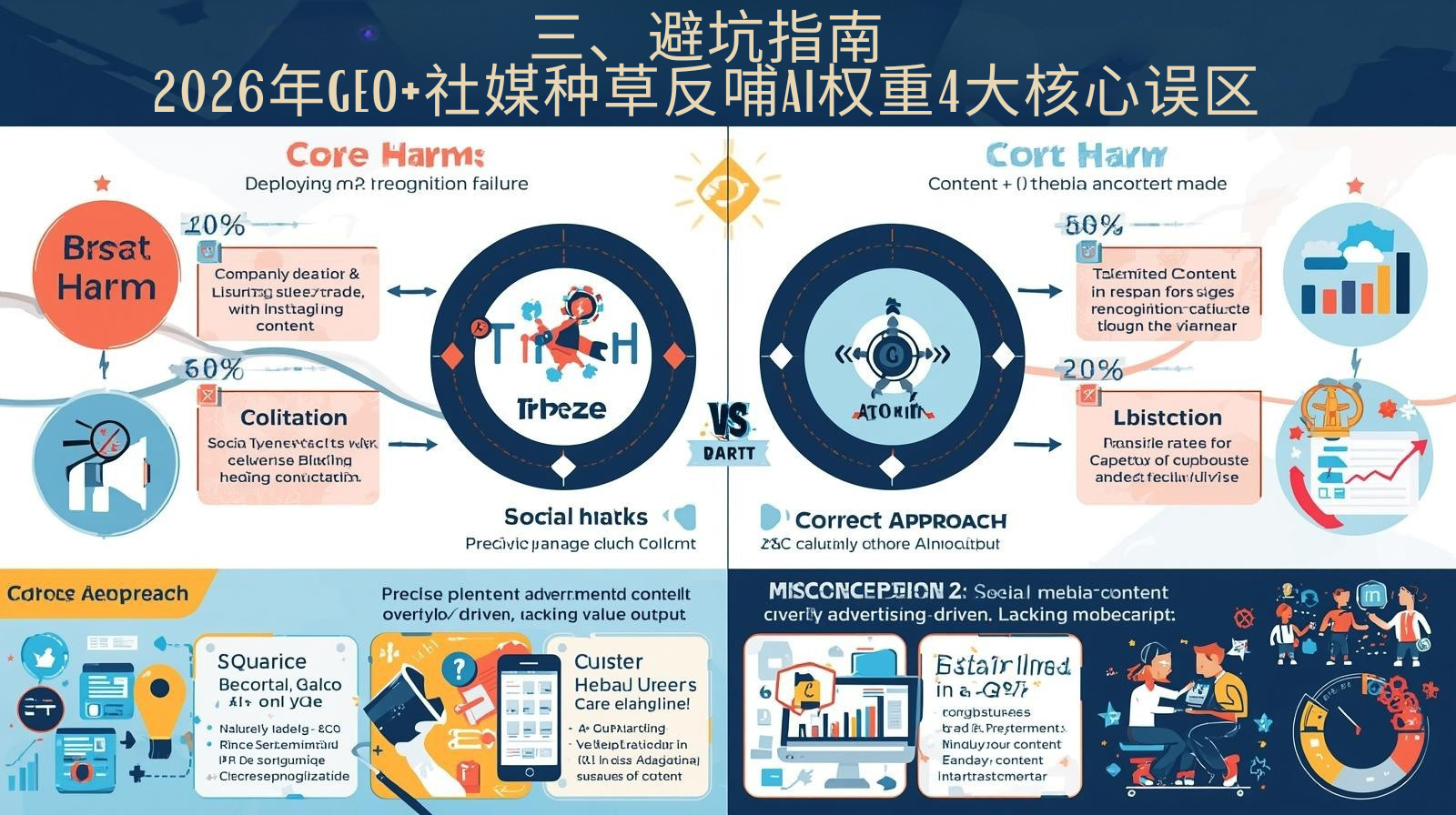
III. Avoiding Pitfalls: 4 Core Misconceptions about GEO + Social Media Seeding to Enhance AI Weight in 2026
Based on practical foreign trade cases and industry research in the first half of 2026, many companies have fallen into optimization pitfalls, resulting in social media seeding failing to boost their independent website's AI ranking and even affecting overall brand credibility. These pitfalls must be resolutely avoided.
3.1 Misconception 1: Blindly deploying social media platforms, resulting in a disconnect from the target audience.
Errors : B2B foreign trade blindly invests in TikTok and Instagram, posting entertainment-oriented content; B2C foreign trade focuses on LinkedIn, posting purely technical content, with the platforms and target audience's needs completely mismatched.
Core harm : Social media content lacks precise interaction and cannot gain recognition from AI, so there is no way to talk about weight feedback. A Zhejiang machinery foreign trade company lost all social media traffic in 3 months because it mismatched TikTok and posted technical content.
Correct approach : Select content precisely based on B2B/B2C foreign trade type. For B2B, focus on LinkedIn; for B2C, focus on TikTok/Instagram. Ensure content themes align with platform user habits.
3.2 Misconception 2: Social media content is heavily advertising-driven and lacks value output.
Error : Social media accounts are constantly spamming product advertisements without providing valuable content such as industry insights, case studies, or user feedback; they simply state "Products for sale at low prices" or "Welcome to purchase."
Core harm : AI judges content as low-quality and highly promotional, refusing to crawl and pass on its weight, resulting in extremely low user interaction rates and even causing resentment among fans. For example, a Guangdong clothing export company had its social media account downgraded by the platform due to excessive advertising.
The correct approach is to operate according to the ratio of "70% valuable content + 20% case study content + 10% advertising content", focusing on providing practical value to meet the needs of buyers and downplaying the advertising aspect.
3.3 Misconception 3: Social media and independent websites have no linkage and inconsistent information.
Errors : The social media homepage has no link to the independent website, the post content does not embed internal links, and the customization period and certification information mentioned on the social media contradict the content of the independent website;
Core harm : AI cannot establish a connection between social media content and independent websites, the feedback of weight is interrupted, buyers will question due to information contradictions, and brand trust will be affected;
Correct approach : Improve the links between your social media homepage and posts on your independent website, ensuring complete consistency between the information on social media and the independent website, and strengthen the connection between the two.
3.4 Myth 4: No data monitoring, no unchanging optimization
Errors include : failing to monitor engagement rates, crawling status, and conversion rates after publishing social media content; failing to adjust content strategies after AI algorithm updates; and continuing to publish homogeneous content despite changes in buyer demands.
Core harm : Failure to detect content optimization loopholes in a timely manner, social media content gradually loses its value for AI crawling, the effect of weight feedback continues to decline, and the previous operational achievements are wasted;
Correct approach : Monitor core data weekly, respond promptly to user feedback and AI algorithm updates, and regularly optimize content themes, formats, and publishing strategies to maintain the adaptability and competitiveness of social media operations.
Recommended Article: Your Competitors Haven't Reacted Yet: Building an Independent E-commerce Website with GEO is the Biggest Blue Ocean Strategy Right Now
Recommended Article: Your Competitors Haven't Reacted Yet: Building an Independent E-commerce Website with GEO is the Biggest Blue Ocean Strategy Right Now
IV. Conclusion: Using social media seeding as a bridge, and GEO optimization as a road to seize the high ground of AI weight.
In 2026, the widespread adoption of AI-generated search will shift the competition for ranking on independent e-commerce websites from "internal competition" to "omnichannel brand trust contest." Overseas social media seeding will no longer be a simple traffic driver, but a core vehicle for boosting AI search ranking and building brand authority. For e-commerce companies to overcome the bottleneck in AI ranking growth, the key is not to blindly publish social media content, but to use GEO (Generative Optimization) to ensure that social media seeding content accurately matches the AI's crawling logic, while simultaneously strengthening the deep integration with the independent website, allowing the trust assets of social media content to be efficiently transferred to the independent website.
The four-step practical solution shared in this article has been verified by the latest foreign trade cases as of January 2026. Whether you are a small or medium-sized foreign trade enterprise, a foreign trade SOHO, or a large foreign trade brand, you do not need complicated technology or operational experience. As long as you strictly follow the process, you can achieve a double improvement in the AI capture rate of social media content and the search weight of independent websites within 2-3 months, allowing your brand to continue to receive AI priority recommendations in the era of "zero-click search".
The golden age of AI ranking competition belongs to companies that accurately adapt to the rules and efficiently coordinate their strategies. Immediately launch GEO+ overseas social media seeding optimization according to this plan, making social media content a "booster" for the growth of your independent website's AI ranking, allowing your brand to continue to stand out in overseas AI search scenarios and attract more targeted procurement traffic.