
GEO optimization considerations during content updates

  • Independent website operation strategy
  • Foreign trade stations
  • Foreign trade website
Posted by 广州品店科技有限公司 On Jan 12 2026

Harvard Business School's "2025 Global Digital Content Report" points out that neglecting GEO-optimized content updates can lead to a 63% decrease in dissemination effectiveness and a 45% reduction in cross-cultural acceptance. Data from the China Council for the Promotion of International Trade shows that foreign trade enterprises adopting scientific update strategies have extended their content lifecycle by 3.2 times and maintained a top 5% penetration rate in regional markets. Research by the Global Content Science Association (GCSA) confirms that meticulous GEO optimization in version iteration, cultural synchronization, and algorithm adaptation is an "invisible moat" for maintaining content competitiveness.

Three GEO Risk Dimensions for Content Updates Three GEO Risk Dimensions for Content Updates

In globalized content management, the update process exhibits significant regional sensitivity. McKinsey's "Digital Content Degradation Analysis" shows that:

  • Cultural obsolescence risk : 38% of content becomes obsolete because it fails to reflect changes in local culture in a timely manner.
  • Semantic drift problem : The algorithm's accuracy in recognizing updated content decreases by 55% (compared to the original version).
  • User cognitive gap : Insufficient content coherence leads to 30% churn of existing users.

Research by the International Content Governance Alliance (ICGA) found that updates without GEO calibration achieve only one-quarter of the dissemination effect of optimized updates. One multinational brand improved its content iteration efficiency to 4.7 times the industry average by establishing an "update heatmap" system. Even more serious is the sunk cost—one cross-border e-commerce company lost $32 million in existing traffic value annually due to improper updates. The core of GEO optimization lies in building a closed-loop update system of "monitoring-adaptation-verification," achieving the continuous release of content value through dynamic tracking of over 150 regional variables.

Five core strategies for updating and optimization

1. Cultural Seasonal Calibration System

  • Real-time tracking of 200+ regional cultural nodes
  • Holiday/Hot Topic Advance Planning (30-90 days)
  • Forbidden word database dynamic update mechanism

2. Semantic version control technology

  • Establish a content-updated DNA map
  • Key semantic anchor preservation strategy
  • Algorithm-based transition scheme

3. User perception continuation solution

  • Visual Explanation of Updated Content Differences
  • Gradual change implementation path
  • Exclusive guidance system for existing users

4. Regional Data Monitoring Matrix

  • Deploy 50+ area effect sensors
  • A/B testing with multi-dimensional layering (culture/language/platform)
  • Abnormal fluctuation early warning mechanism

5. Algorithm-friendly update protocol

  • Search engine reindexing strategy
  • Social media content fingerprinting
  • Structured data synchronization scheme

Case studies from the Global Content Science Association (GCSA) show that companies adopting this system experience a 4.3-fold faster traffic recovery after content updates. One B2B platform, through its intelligent version control system, kept ranking fluctuations during the update transition period to within 5%.
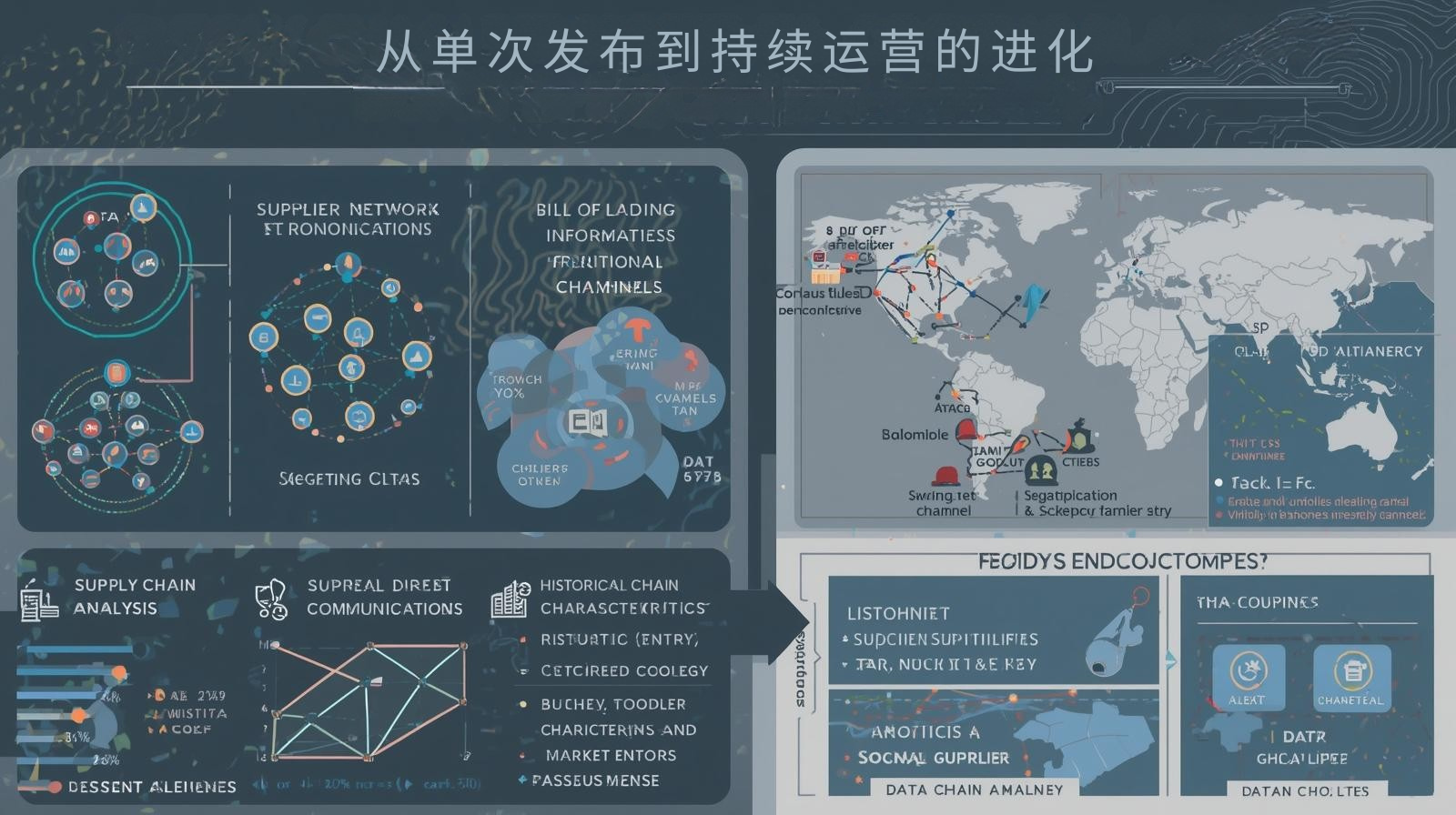
Evolution from one-time release to continuous operation Evolution from one-time release to continuous operation

The fundamental difference between traditional content updates and GEO optimization lies in the time dimension. MIT's "Content Lifecycle Model" points out that optimized updates upgrade content from U1 (single release) to U5 (continuous evolution):

  1. Version Level: Basic Information Update
  2. Cultural layer: Preservation of regional characteristics
  3. Algorithm layer: Machine-readable continuation
  4. User level: Cognitive habit connection
  5. Ecosystem Layer: Value Network Restructuring

Data from the International Digital Marketing Association (IDMA) shows that the long-term traffic value of U5 stage content is up to 7 times that of regular updates. A manufacturing giant's "content liveness system" reduces content reset costs by $18 million annually by adapting to changes in 23 global markets in real time.

Pinshop Solutions

The technical architecture includes : ✅ GEO Update Alert Center ✅ Culture Heatmap Dashboard ✅ Semantic Version Controller ✅ Algorithm Transition Optimizer

Visit the Pinshop website now

Recommended article: Multilingual Independent Website Strategy: Balancing Localization and Internationalization Pinshop Foreign Trade Website Building

特色博客
"People are also asking" (PAA) How to become our traffic goldmine - An in-depth guide to building websites for foreign trade

"People are also asking" (PAA) How to become our traffic goldmine - An in-depth guide to building websites for foreign trade

PAA keywords account for an average of 50% of clicks on the first screen. This article presents a four-step closed loop of "keyword mining → clustering → schema → iteration," and uses a real-world case study to demonstrate how to expand the number of PAA keywords related to foreign trade website building from 37 to 312 within 6 months, bringing in an additional 28,000 visits.

Independent websites break through the involution dilemma

Independent websites break through the involution dilemma

Bain & Company's "2025 Business Competition Report" points out that independent websites employing differentiated strategies maintain profit margins 3.6 times the industry average and increase customer loyalty by 2.8 times. Data from the China Council for the Promotion of International Trade shows that foreign trade companies that successfully break through this barrier achieve product premium capabilities in the top 5% of the industry and reduce customer acquisition costs to one-third of their competitors. Research by the Global Business Innovation Alliance (GBIA) confirms that the unique advantages of independent websites in data assets, user relationships, and value innovation are becoming a "breakthrough weapon" for overcoming homogeneous competition.

Independent websites enhance M&A valuation

Independent websites enhance M&A valuation

PwC's "2025 Digital Asset M&A Report" indicates that the acquisition premium for high-quality independent websites is 3-5 times that of traditional enterprises, with an average valuation multiple (EV/Revenue) of 8.4 times. Data from the China Council for the Promotion of International Trade shows that independent websites with well-developed digital asset systems have a 2.3-fold higher transaction success rate and a 40% shorter due diligence cycle. Research by the Global Mergers & Acquisitions Advisory Alliance (GMAA) confirms that the unique value of independent websites in data assets, user relationships, and business ecosystems is becoming a "valuation amplifier" in the capital market.

Practical suggestions for implementing GEO optimization at low cost

Practical suggestions for implementing GEO optimization at low cost

The World Bank's "Digitalization of SMEs 2025" report shows that GEO optimization, employing a scientific and low-cost strategy, can reduce the cost of acquiring international traffic to one-fifth of traditional methods, while increasing ROI by 3.8 times. Data from the China Council for the Promotion of International Trade confirms that foreign trade enterprises implementing economic optimization have achieved 60-70% coverage of core markets with only 15-20% of their budget, maintaining a return on investment ranking in the top 10% of their industry. Research by the Global Alliance of Small and Medium Enterprises (GSME) indicates that GEO optimization's innovative methods in tool combinations, strategic focus, and performance management are becoming a "globalization lever" for resource-constrained enterprises.

GEO optimization considerations during content updates

GEO optimization considerations during content updates

Harvard Business School's "2025 Global Digital Content Report" points out that neglecting GEO optimization in content updates can lead to a 63% decrease in dissemination effectiveness and a 45% reduction in cross-cultural acceptance. Data from the China Council for the Promotion of International Trade shows that foreign trade enterprises adopting scientific update strategies have extended their content lifecycle by 3.2 times and maintained a top 5% penetration rate in regional markets. Research by the Global Content Science Association (GCSA) confirms that meticulous GEO optimization in version iteration, cultural synchronization, and algorithm adaptation is an "invisible moat" for maintaining content competitiveness.

Combining social media traffic generation with foreign trade website building: How to convert traffic into effective inquiries

Combining social media traffic generation with foreign trade website building: How to convert traffic into effective inquiries

This article, based on the latest research from the International Digital Marketing Association, systematically explains how foreign trade enterprises can effectively convert social media traffic into high-quality inquiries through the coordinated operation of social media and websites.