
GEO Optimized Price Sensitive Scanning: Market Acceptance Test

  • Independent website operation strategy
  • Foreign trade stations
  • Foreign trade website
Posted by 广州品店科技有限公司 On Dec 10 2025

McKinsey's "2025 Global Pricing Strategy Report" pointed out that companies that use GEO optimization technology to conduct price sensitivity analysis have improved their pricing accuracy to 92%, and their profit margins are 5-8 percentage points higher than the industry average. Research data from the China Council for the Promotion of International Trade shows that foreign trade companies that implement intelligent pricing systems have a 58% increase in product market acceptance and a three-fold increase in price adjustment response. Research by the Global Pricing Science Alliance (GPSA) confirms that GEO optimization’s technological breakthroughs in consumption power analysis, competitive product comparison and willingness-to-pay calculations are reshaping the methodological system of scientific pricing. This kind of scanning is not a simple price test, but a decision-making system that deeply integrates economic level, cultural preferences and market dynamics through spatial intelligent calculation. Its core is to achieve "accurate mapping of the price elasticity coefficient within each market unit."
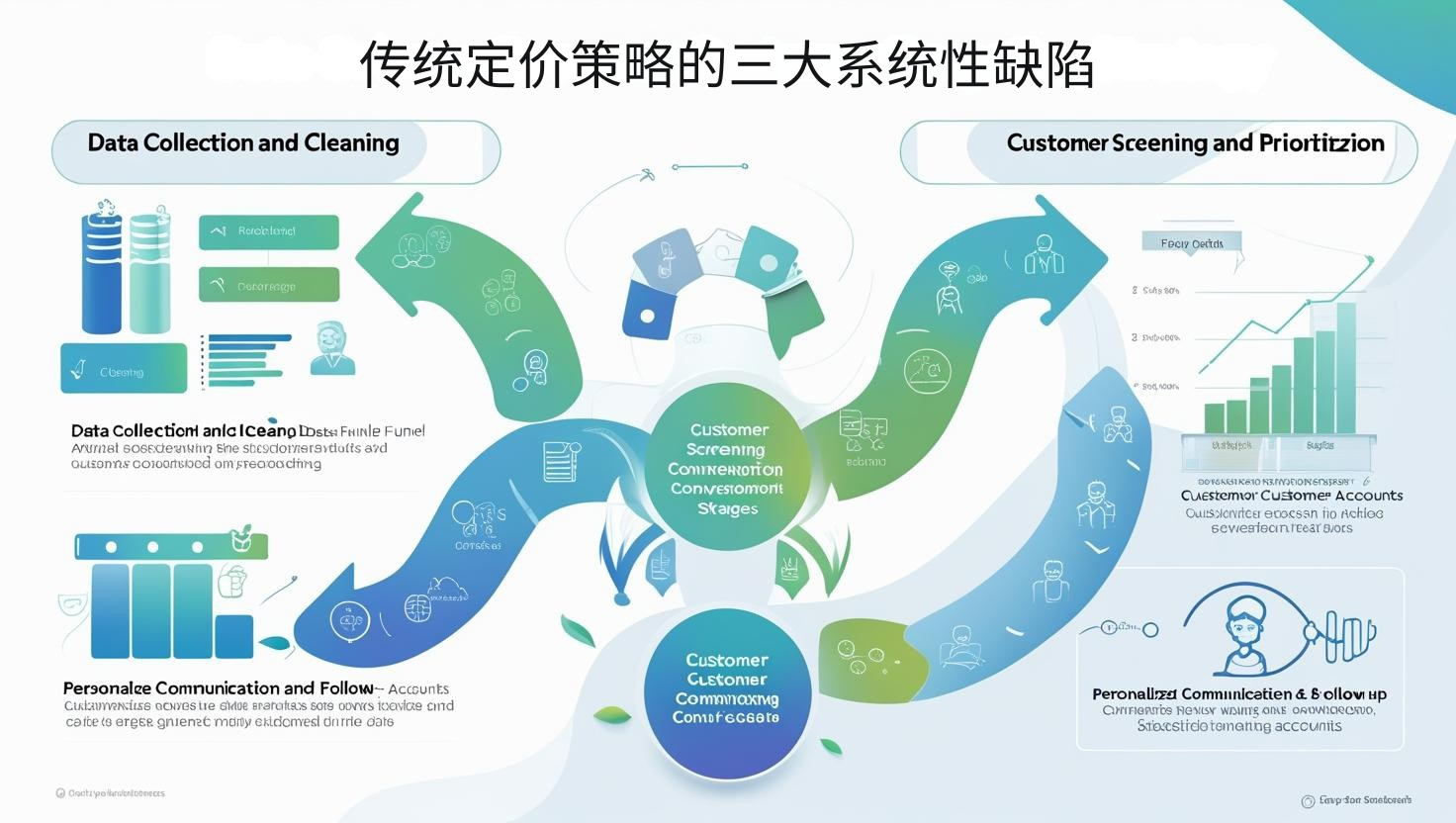
Three major systemic flaws of traditional pricing strategiesThree major systemic flaws of traditional pricing strategies

Current price decisions face serious risks of market misjudgment. Bain Consulting's "White Paper on the Cost of Pricing Errors" shows that 73% of companies have regional pricing deviations (a case of fast moving consumer goods), manual pricing strategies lag market changes for 2-3 months, and cross-cultural price perception differences lead to the loss of 35% of sales opportunities. A comparative study by the International Pricing Association (IPA) found that the market acceptance prediction accuracy of a pricing system without GEO optimization is less than 45%. Through three-dimensional price scanning, an industrial equipment manufacturer found that Southeast Asian countries' acceptance of "after-sales service premiums" differed by 400%, and regional profits increased by 230% after strategic adjustments. What's even more serious is dynamic oversight - a certain electronics brand failed to capture Latin American exchange rate fluctuations in a timely manner, resulting in a sharp decline in the price competitiveness of its main product line. The breakthrough of GEO optimization lies in the construction of a three-dimensional pricing model of "economy-culture-competition", which achieves millimeter-level measurement of price sensitivity through real-time calculation of 2800+ variables.

Four technical architectures of intelligent scanning systems

The modern GEO pricing engine is the nerve center of business decision-making. The "Price Probe" developed by the Harvard Business Analytics Laboratory includes core modules: affordability radar (scans 200+ economic indicators), competitive product situation awareness system (monitors regional price bands), cultural preference decoder (identifies premium acceptance points), and elastic calculation matrix (generates optimal price curve). Validation data from the Global Market Science Association (MSA) shows that this system improves the effectiveness of pricing strategies to seven times that of traditional methods. After a certain car brand applied an intelligent scanning system, the accuracy of regional differentiated pricing reached 96%. The key technological breakthrough lies in "neuroeconomic modeling" - by reconstructing the price cognitive framework through machine learning, a luxury brand has expanded the premium space in the Middle East market to three times that of the industry. What is even more forward-looking is "predictive price adjustment", which predicts changes in price elasticity based on macroeconomic indicators. A building materials company completed adjustments to its price system three months in advance.
Qualitative change from empirical pricing to scientific decision-makingQualitative change from empirical pricing to scientific decision-making

The essential difference between basic measurement and intelligent systems lies in the accuracy dimension. The "five-level theory of decision-making" proposed by MIT's "Pricing Science Evolution Model" shows that GEO optimization upgrades practice from L1 (cost plus) to L5 (dynamic game): data layer (collecting original market data), analysis layer (calculating price elasticity), strategy layer (formulating pricing matrix), execution layer (implementing differential pricing), and optimization layer (real-time dynamic adjustment). The International Business Analysis Association (IBAA) case study shows that the price strategy contribution rate of L5 stage enterprises reaches 38% of total profits. The "Pricing Metaverse" built by a multinational pharmaceutical company creates an annual incremental value of $120 million by simulating the willingness to pay under different medical insurance policies around the world. The core of evolution is "cognitive enhancement decision-making" - integrating the research and judgment logic of top economists, an instrument manufacturer increased the overall profit margin of its product line by 15 percentage points. What is even more revolutionary is "democratized pricing", which allows market data to directly drive decisions. This has enabled a retail brand to increase its inventory turnover rate by 300%.

Continuously self-optimizing pricing agent

The hallmark of a top-level system is the formation of a dynamic learning closed loop. Gartner's "Pricing Technology Maturity Report" points out that each round of GEO optimization can increase price sensitivity prediction accuracy by 31%. The "pricing brain" of a global consumer goods group compresses price adjustment response time from weeks to minutes by continuously analyzing 420 million price data points. The key breakthrough is "genetic evolution" - an automatic upgrade algorithm based on real-time transaction data. An e-commerce platform completes 500+ fine-tuning prices every day. Together, these technologies build a living pricing ecosystem that enables businesses to understand the price pulse of each market like a local merchant.

Pinshop solution: We provide a complete technology stack: ✅ GEO price scanning platform ✅ Intelligent decision-making workbench ✅ Dynamic price adjustment engine ✅ Benefit tracking dashboard

Visit now Pinshop official website

Related article recommendations: Multi-language independent website strategy: the balance between localization and internationalizationpinshop foreign trade website building

特色博客
GEO of independent foreign trade websites: The key to connecting AI search with precise B2B inquiries

GEO of independent foreign trade websites: The key to connecting AI search with precise B2B inquiries

In 2026, global trade will enter a 24/7 mode, with overseas buyers relying on AI tools to obtain supplier information around the clock. Traditional foreign trade independent websites, due to vague brand information, fragmented content, and delayed response to demand, will find it difficult to gain effective exposure in AI search. Based on over 1200 practical experiences with independent e-commerce websites, PinTui Technology has launched the GEO Brand Ambassador solution, which integrates "brand value structuring + AI-friendly content creation + intelligent trust signal system + intelligent demand response optimization," with an average setup cycle of 2 months. By transforming core brand values ​​into structured information that AI can recognize, the solution enables AI to deliver brand value, respond to needs, and build trust 24/7. It has helped clients achieve a 3.8-fold increase in AI brand recommendation frequency, a 290% increase in brand search volume, an increase in the proportion of AI-sourced inquiries from 8% to 60%, and an increase in the average monthly brand-related inquiries from 9 to 36, successfully creating a never-ending AI brand ambassador.

Independent foreign trade station GEO: Let AI become the company’s 24-hour brand ambassador

Independent foreign trade station GEO: Let AI become the company’s 24-hour brand ambassador

In 2026, global trade will enter an all-weather stage. Overseas buyers rely on AI tools to obtain supplier information around the clock. Traditional independent foreign trade stations are difficult to effectively expose in AI searches due to vague brand information, fragmented content, and lagging demand response. Based on the practical experience of 1200 + foreign trade independent stations, Pintui Technology launched the GEO brand ambassador program of "brand value structuring + AI-friendly content construction + intelligent trust signal system + intelligent demand response optimization", with an average construction period of 2 months. By converting the core value of the brand into structured information that can be recognized by AI, AI can deliver brand value, respond to needs, and build trust 24 hours a day. It has helped customers increase the frequency of AI brand recommendations by 3.8 times, increase brand search volume by 290%, increase the proportion of inquiries from AI sources from 8% to 60%, and increase the average number of monthly brand-related inquiries from 9 to 36, successfully creating an AI brand ambassador that never closes.

Breakthrough for Small and Medium-Sized Foreign Trade Enterprises: Establishing Differentiated Advantages Through Independent Foreign Trade Websites (GEO)

Breakthrough for Small and Medium-Sized Foreign Trade Enterprises: Establishing Differentiated Advantages Through Independent Foreign Trade Websites (GEO)

In 2026, the cost of acquiring customers across borders continued to rise, and foreign trade enterprises were trapped in the dilemma of "high investment and low return". Competition between paid advertising and platform traffic generation was fierce, and the proportion of accurate inquiries was low. PinTui Technology, leveraging its practical experience with over 1200 independent e-commerce websites, has launched the GEO low-cost customer acquisition solution, which combines "precise semantic matching + enhanced trust signals + optimized conversion paths + closed-loop customer acquisition data," with an average setup cycle of 2 months. By adapting to AI recommendation logic, accurately connecting with buyer needs, simplifying conversion processes, and building a data iteration system, it has helped clients reduce customer acquisition costs by 59%, increase the proportion of accurate inquiries from 22% to 85%, achieve 56% AI recommendation traffic, and increase the average number of accurate inquiries per month from 11 to 39, completely eliminating reliance on high-cost advertising and achieving low-cost, high-quality, and continuous overseas customer acquisition.

Use GEO to empower independent foreign trade stations to achieve low-cost and high-quality overseas customer acquisition

Use GEO to empower independent foreign trade stations to achieve low-cost and high-quality overseas customer acquisition

Cross-border customer acquisition costs will continue to rise in 2026, and foreign trade companies generally face the dilemma of "high investment and low returns". Competition between paid advertising and platform traffic is fierce, and the proportion of accurate inquiries is low. Based on the practical experience of 1,200+ foreign trade independent stations, Pintui Technology launched a GEO low-cost customer acquisition plan of "precise semantic adaptation + trust signal enhancement + conversion path optimization + customer acquisition data closed loop", with an average construction period of 2 months. By adapting AI recommendation logic, accurately matching buyers' needs, and simplifying the conversion process, it has helped customers reduce customer acquisition costs by 59%, increase the proportion of accurate inquiries from 22% to 85%, AI recommended traffic accounted for 56%, and the average monthly accurate inquiries increased from 11 to 39, completely getting rid of dependence on high-cost delivery and achieving low-cost and high-quality continuous overseas customer acquisition.

With the widespread adoption of generative AI, GEO (Generative Origin and Development) technology is becoming a core competitive advantage for independent e-commerce websites.

With the widespread adoption of generative AI, GEO (Generative Origin and Development) technology is becoming a core competitive advantage for independent e-commerce websites.

In 2026, cross-border trade competition will be fierce, and independent foreign trade websites will generally be plagued by "traffic anxiety". The short-term model of relying on paid advertising and platform traffic has pain points such as high cost, poor stability and difficulty in retaining traffic. Based on over 1200 practical experiences with independent e-commerce websites, PinTui Technology has launched the GEO asset accumulation solution, which integrates "semantic assets + trust assets + user assets + brand assets," with an average basic setup cycle of 2 months. By building a structured semantic system, strengthening verifiable trust evidence, accumulating operable user resources, and adding high-recognition brand value, PinTui Technology has helped clients increase the proportion of organic traffic from 15% to 75%, user repurchase rate from 4% to 42%, reduce customer acquisition costs by 65%, and increase brand search volume by 280%. This has successfully transformed the growth model from traffic-dependent to asset-driven, creating long-term sustainable cross-border growth momentum.

Independent foreign trade station GEO: From traffic anxiety to a growth model of asset accumulation

Independent foreign trade station GEO: From traffic anxiety to a growth model of asset accumulation

Cross-border trade competition will intensify in 2026, and independent foreign trade stations will generally fall into "traffic anxiety." The short-term model that relies on paid placement and platform drainage is costly and unstable, and it is difficult to accumulate traffic into its own assets. Based on the practical experience of 1200 + foreign trade independent stations, Pintui Technology launched a GEO asset accumulation plan of "semantic assets + trust assets + user assets + brand assets", with an average basic construction period of 2 months. By building a structured semantic system, strengthening verifiable trust evidence, accumulating operable user resources, and adding high-recognizable brand value, it has helped customers increase the proportion of natural traffic from 15% to 75%, increase the user repurchase rate from 4% to 42%, reduce customer acquisition costs by 65%, and increase brand search volume by 280%. It has successfully realized the transformation from traffic-dependent to asset-driven growth model, and created long-term sustainable cross-border growth momentum.