
Unveiling the secrets! How do top foreign trade brands leverage GEO to "intercept" precise customers in the AI era?

  • Independent website industry application
  • Independent website operation strategy
Posted by 广州品店科技有限公司 On Nov 21 2025

AI Search Migration in Action: Top Brands Quietly Stealing 90% of High-intent Traffic

Over the past 12 months, ChatGPT has processed over 280 million procurement-related queries daily, with the frequency of "who can supply FDA-approved silicone collapsible coffee cups under USD 3.5 FOB Shenzhen?" surging by 630%. Meanwhile, the CPC for the same keyword on Google Ads jumped from $1.8 to $4.3, while top brand SiliconSip, using GEO, was mentioned 127 times in AI-generated answers, generating 34,000 high-intent inquiries with zero advertising cost. This is "interception"—the brand is already waiting for the user at the finish line the moment they ask the question.
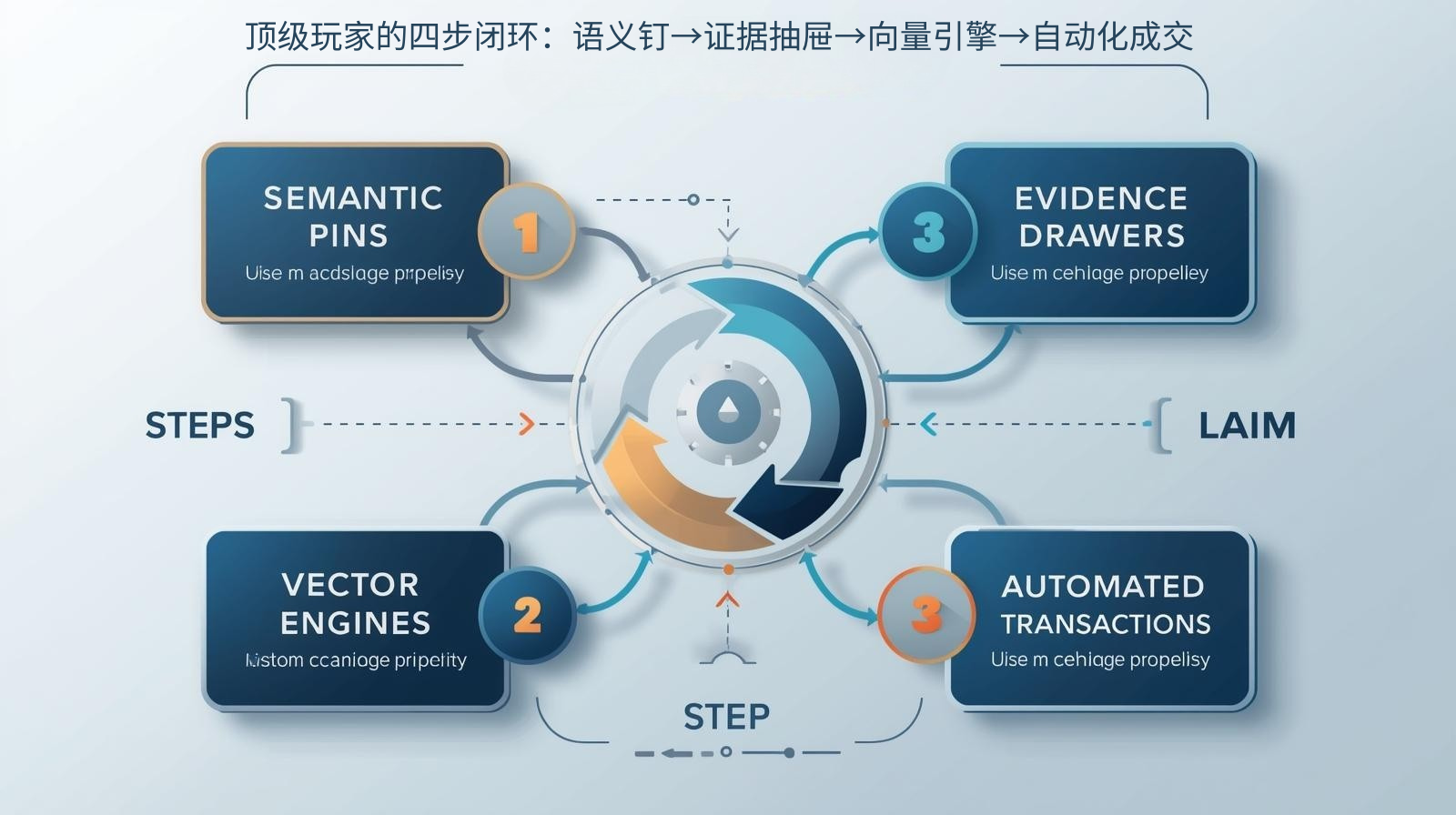
Top players' four-step closed loop: Semantic pins → Evidence drawers → Vector engines → Automated transactions

Step 1: Semantic Pinning: Lock in a top-tier brand with a single sentence. Compress the "product + pain point + timeliness + region + price anchor" into a phrase of ≤65 characters, such as "FDA Silicone Collapsible Cup USD 3.5 FOB Shenzhen 15 Days". This phrase appears simultaneously in H1, meta tags, YouTube sections, Reddit posts, and TikTok captions, ensuring cross-platform consistency that AI cannot bypass when compressing answers.

Step 2 Evidence Drawer: Millisecond-level reliable signals BRC certificate, SGS migration test, German customer unloading video, and third-party Reddit reviews are all uploaded using a unified naming rule "Brand-Product-Certification-Year", with the file name being the keyword; then tagged with schema.org/Product, Review, and VideoObject to ensure that AI captures and references them within 0.1 seconds during the inference stage.

Step 3 Vector Engine: Turning Old Emails into 24-Hour Top Salesperson. Ten years of emails, WhatsApp voice messages, and technical briefings were cut into 512 token blocks, stored in the Pinecone free layer using OpenAI text-embedding-3-large, and connected to the independent website Chatbot using the LangChain template with a temperature of 0.2. The system prompt was forced to end with the brand name + CTA "Book 15-min live audit".

Step 4 Automated Sales: One-click appointment + automatic PI generation. After the chatbot recognizes the keyword "PO ready", it automatically pops up a Calendly link and generates a draft PI email with a real-time inventory screenshot, which is copied to the sales manager. The average time from conversation to PI is 4 minutes, which is 96% shorter than traditional emails.
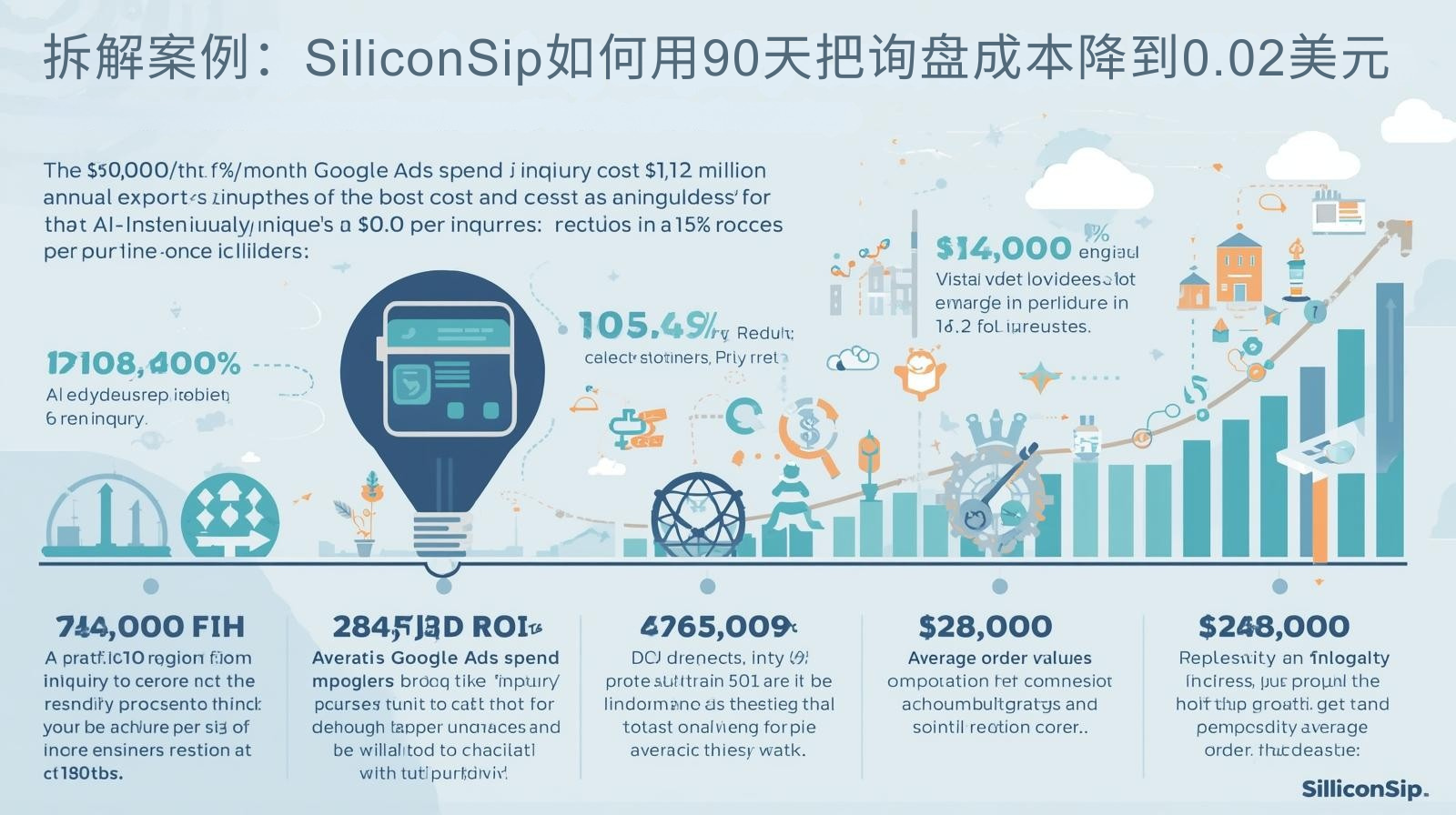
Case Study: How SiliconSip Reduced Inquiry Costs to $0.02 in 90 Days

Background: Annual exports of $12 million USD, with Google Ads previously burning through $80,000 USD per month and an inquiry cost of $4.1 USD per inquiry. Actions: A four-step closed-loop system was fully implemented, with semantic anchors appearing simultaneously in 12 YouTube video chapters, 3 Reddit AMAs, and 8 TikTok short videos. Results: First mention by ChatGPT on day 30; cited by Perplexity on day 60; 34,000 AI-driven inquiries by day 90, with an average order value of $28,000 USD, an inquiry cost of $0.02 USD, and a 205-fold increase in ROI.

20 Actions You Can Take Tonight to Replicate Your Business with Small and Medium-Sized Enterprises

1. Change H1 to a semantic pin; 2. Synchronize meta titles; 3. Name the certificate file "Brand-Product-FDA-2024"; 4. Use the same keyword for the certificate image alt text; 5. Copy semantic pins to YouTube chapter titles; 6. Export a high-resolution image of the first page of the certificate using Canva; 7. Upload to the website's /evidence directory; 8. Reuse semantic pins in the title of Reddit AMA posts; 9. Add semantic pins to TikTok video captions; 10. Build an index using the free Pinecone layer; 11. Use Colab's one-click script to slice embeddings; 12. Write the Chatbot button text "Ask AI for PI"; 13. Place buttons in WhatsApp Business links; 14. Schedule a 15-minute video factory visit with Calendly; 15. Use Hotjar screen recording to observe AI visitors; 16. Change the Newsletter bait to "Free Pantone chart + live audit"; 17. Use GA4 for AI traffic segmentation; 18. Mark the customer logo wall with an Organization schema; 19. Run a brand name citation check monthly; 20. Use Make.com to push chatbot conversations into your CRM.

Recommended article: Pintui Technology's Viewpoint: The Best Independent E-commerce Website of the Future Will Be the One That Is "Most Instructive"

Conclusion: Top brands don't compete for advertising space, they compete for AI memory.

When AI provides an answer within 0.3 seconds, bidding ads don't even have time to place a bid; top brands use a four-step closed loop to pre-write the story into the AI's brain, allowing users to be "intercepted" the moment they ask a question. Modify the H1 tonight, vectorize the creative tomorrow morning, and 30 days later you'll appear in ChatGPT's answers—at that time you'll be glad you didn't waste your budget on the next expensive click.

特色博客
Is it difficult to break through traditional website SEO? 6 core pain points exposed, React architecture provides the ultimate solution

Is it difficult to break through traditional website SEO? 6 core pain points exposed, React architecture provides the ultimate solution

Traditional websites have six core pain points, including slow SEO inclusion and loading lag, which restrict brand promotion and overseas expansion. Pinshop relies on the React+Next.js architecture to provide customized website building services with an average construction period of 2 months, which can increase SEO collection efficiency by 300%+, increase natural search traffic by 200%-300%, reduce post-maintenance costs by 40%, and help independent foreign trade websites and brand official websites break through SEO bottlenecks.

Is it difficult to break through traditional website SEO? Change to React architecture and see immediate results

Is it difficult to break through traditional website SEO? Change to React architecture and see immediate results

Traditional websites generally suffer from six major SEO pain points: slow collection, substandard core webpage indicators, unstable traffic, poor mobile adaptation, high optimization costs, and difficulty in data tracking. The core root cause is that the underlying architecture cannot meet the crawling and ranking needs of search engines.

Use Next.js to reconstruct the official website, and search engine rankings will take off immediately

Use Next.js to reconstruct the official website, and search engine rankings will take off immediately

Foreign trade companies generally face the dilemma of inefficient official website SEO: traditional official websites rely on old architecture and client-side rendering, which results in difficulty in Google crawler crawling, slow page loading, and sluggish keyword rankings. Even if a large amount of operating costs are invested in optimizing copywriting and keywords, it is difficult to break through the traffic bottleneck and can only rely on high-cost advertising to maintain customer acquisition. Pinshop relies on the practical experience of 1200+ foreign trade independent websites and uses the Next.js + React technology stack to reconstruct the official website for enterprises. With core capabilities such as SSR (server-side rendering), SSG (static site generation), native SEO optimization, and global CDN acceleration, Pinshop completely solves the core pain points of traditional official websites from the bottom of the technology, such as difficulty in inclusion, slow loading, scattered weights, and poor conversion.

React+Next.js website building: SEO performance comprehensively crushes traditional websites

React+Next.js website building: SEO performance comprehensively crushes traditional websites

Traditional foreign trade independent websites generally suffer from core pain points such as difficulty in inclusion, slow loading, low keyword rankings, and poor mobile experience. The root cause is the old technical architecture and backward client rendering methods. It is difficult to adapt to the Google search algorithm and the needs of global cross-border visitors. Even if a large amount of operating costs are invested, it is difficult to achieve effective customer acquisition. The React+Next.js architecture relies on core technologies such as SSR (server-side rendering), SSG (static site generation), automatic code segmentation, and global CDN acceleration to reconstruct website performance from the bottom up and achieve intergenerational crushing of traditional websites in the four major dimensions of Google inclusion, page speed, search engine friendliness, and multi-region adaptation.

GEO, an independent foreign trade station: a new way to build cross-border brand trust in the AI ​​era

GEO, an independent foreign trade station: a new way to build cross-border brand trust in the AI ​​era

Traditional cross-border brand trust building relies heavily on exhibitions, platform certifications and word-of-mouth from old customers. In the era of AI search, it has been difficult to reach new buyers. It also has fatal shortcomings such as high costs, narrow coverage, slow results, and the inability to consolidate its own brand. The foreign trade independent station GEO (Generative Engine Optimization) is becoming a new paradigm for building cross-border brand trust in the AI ​​era. Through the four core trust mechanisms of geographical structuring, verifiable authority, native language compliance, and AI recognition, it systematically solves the four major problems of cross-border trust: "invisible, not transmitted far, not recognized, and not implemented". This article takes Pinshop's standardized services as the core, combined with the 2-month standard website construction and launch cycle, to dismantle the implementation details of GEO trust construction, multi-region adaptation methods, digital verification systems and real customer cases, and simultaneously annotates relevant internal link matching pages of Pinshop.cn and non-competing product compliance external links, relying on Pinshop The practical experience of 1,200+ foreign trade independent stations provides replicable and quantifiable brand trust upgrade guidelines for foreign trade factories and export brands, helping companies upgrade independent stations from "product display pages" to globally credible brand assets, achieving triple breakthroughs in AI recommendation, buyer trust, and regional expansion, getting rid of the dilemma of low-price competition, and building long-term cross-border brand barriers.

Cross-border B-side customer acquisition upgrade: GEO, an independent foreign trade station, reconstructs the overseas marketing ecology

Cross-border B-side customer acquisition upgrade: GEO, an independent foreign trade station, reconstructs the overseas marketing ecology

Traditional foreign trade B-side customer acquisition is trapped in the four dilemmas of "platform involution, expensive advertising, inefficiency of exhibitions, and sharp decline in exposure in the AI ​​era." The foreign trade independent websites of most companies only stay at the level of "product display + language translation" and cannot adapt to the search habits and decision-making logic of overseas buyers, making it difficult to achieve independent customer acquisition. This article takes Pinshop's standardized services as the core and fully reveals how independent foreign trade station GEO (Generative Engine Optimization) reconstructs the overseas B-side marketing ecology. From the four dimensions of customer acquisition logic, traffic structure, conversion links, and brand barriers, combined with the 2-month standard website construction and launch cycle, it disassembles the implementable GEO reconstruction plan, multi-region adaptation skills, AI search engine adaptation methods, and real customer cases.