After the theory of the demise of search engines: GEO is the Noah's Ark for independent foreign trade in the era of "asking is searching".

  • Independent website marketing and promotion
  • Independent website industry application
  • Independent website operation strategy
Posted by 广州品店科技有限公司 On Nov 26 2025

When a purchasing manager types "Who can deliver 100,000 Level 4 medical protective suits conforming to EN 14126 to the Port of Hamburg within 30 days?" into ChatGPT, traditionally SEO-optimized independent websites remain on the third page of Google search results, while competitors powered by GEO have already been directly named by AI—this is a real-world example of the "death of search" theory. The following 1200-word analysis breaks down how independent foreign trade websites can leverage GEO to become AI's "memory" in the "question-as-search" era, and provides a 30-day zero-code survival strategy.
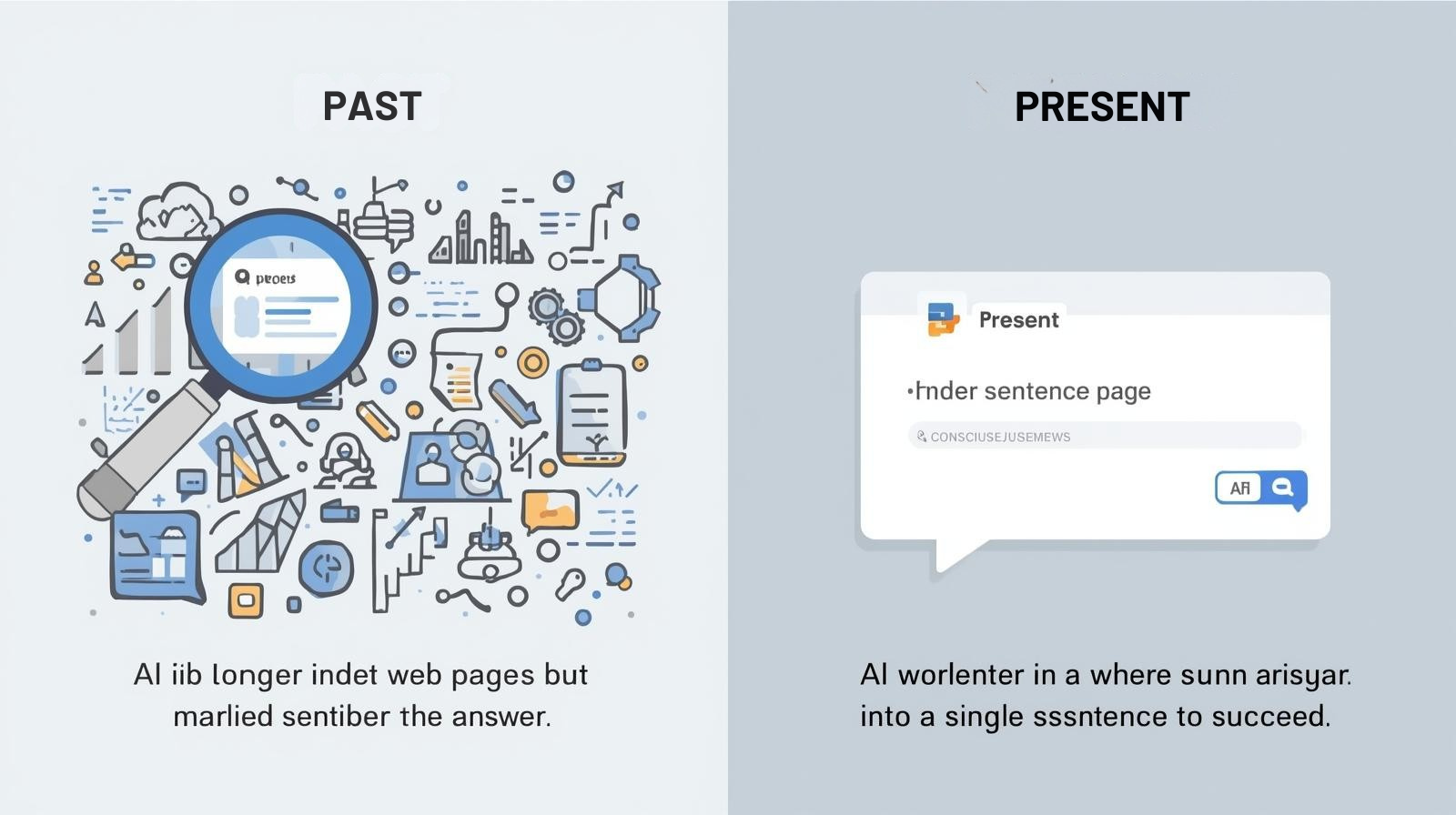
I. Paradigm Shift: Search Box → Dialog Box Past: Users competed with keywords → Algorithms competed for rankings → Websites scrambled for the top ten. Present: Users summarize in one sentence → AI summarizes in one sentence → Brands win outright. Core difference: AI no longer indexes web pages, but rather the "answer." If your content cannot be compressed by AI into a single sentence, it will never make it into the answer.
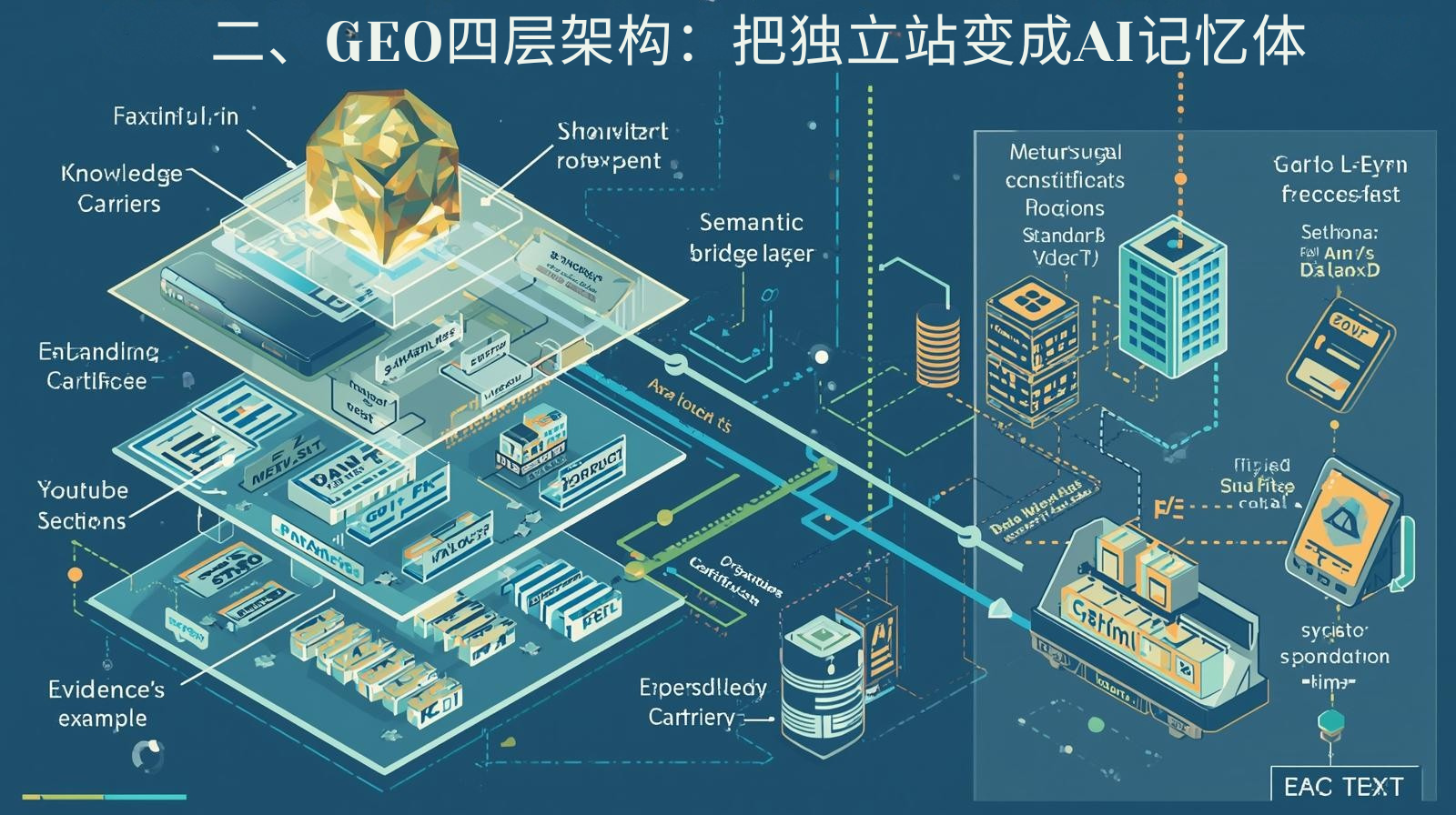

II. GEO Four-Layer Architecture: Turning Independent Websites into AI Memory

  1. The knowledge carrier layer breaks down product manuals, quality inspection reports, and customer emails into "knowledge crystals" of ≤80 characters each. Each crystal contains "product + pain point + standard + region + timeliness". Example crystal: "Level 4 medical protective clothing - Shenzhen factory, 30 days to Hamburg - passed EN 14126 blood penetration test - already supplied to WHO European warehouses".

  2. The semantic bridging layer embeds Crystal into H1, meta tags, YouTube chapters, and Reddit post titles, ensuring cross-platform entity consistency. Tonight's actions: Open the backend → change the homepage H1 to Crystal → sync meta title → save.

  3. All evidence drawer-level certificates, test videos, and customer photos should be named uniformly as "Brand-Product-Certification-Year," with the filename containing keywords and the ALT value matching the filename. Tonight's action: Use Canva to convert the first page of the certificate to an 800x600 image → upload/evidence → ALT value should be "Brand-Medical Protective Clothing-EN14126-2024".

  4. The vector anchor layer cuts five years' worth of emails and technical Q&A into 512-character blocks, stores them using the Pinecone free vector library, integrates the LangChain template with Chatbot, and sets the temperature to 0.2. The system prompt is forced to end with the brand name + CTA "Schedule a video factory visit". Tonight's actions: Colab one-click script → drag and drop into TXT → obtain Chatbot button code in 10 minutes → paste into the independent website.
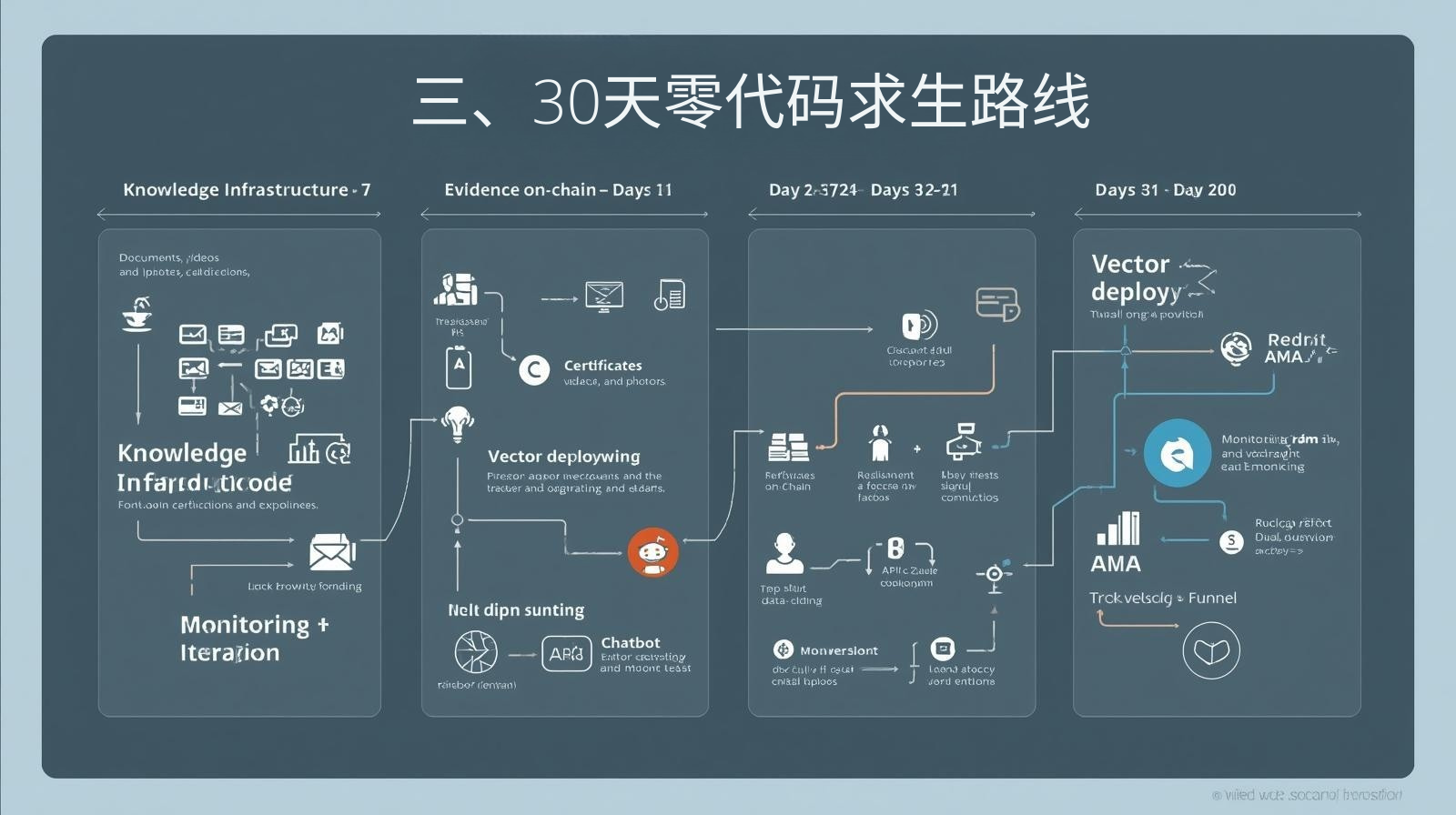
III. 30-Day Zero-Code Survival Guide

Days 1-7: Knowledge Infrastructure • Review all PDFs, videos, and emails → categorize them into three folders: "Standards/Case Studies/Trends". • Create 3 crystals and sync them to H1, meta, and social media bio.

Days 8-14: Evidence on the blockchain • Certificates, videos, and customer photos are renamed and uploaded. • A Reddit AMA titled "The Truth Behind China's 30-Day Delivery of Medical Protective Suits".

Days 15-21: Vector Deployment • Use a free script to slice the TXT file → Pinecone → Chatbot launch.

Days 22-30: Monitoring + Iteration • Check daily using the Perplexity API to see if the brand is in the Top 3; if not, add backlinks to Reddit/LinkedIn. • Analyze Chatbot conversations → Calendly appointments → PI email conversion rate, target ≥5%.
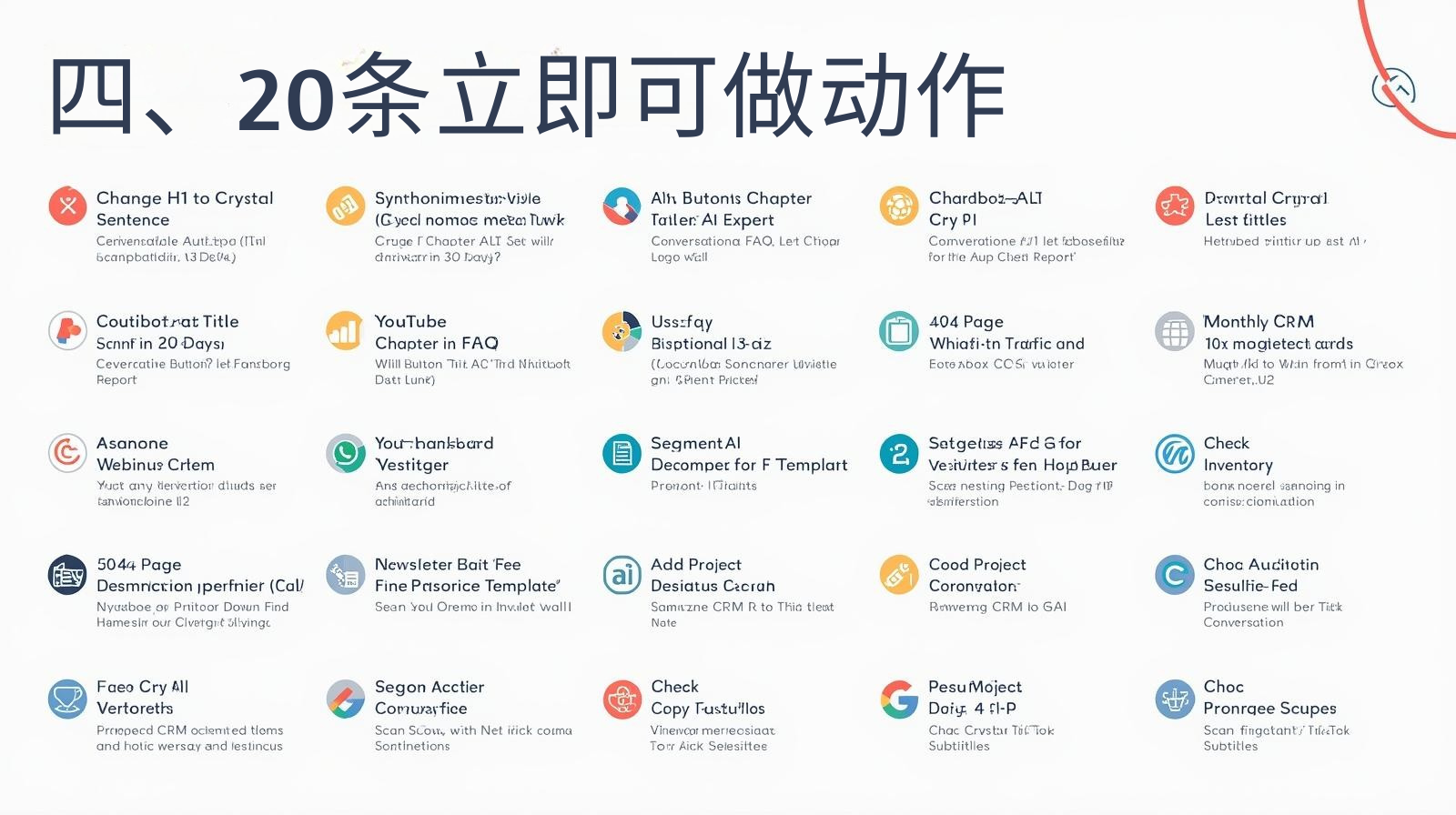
IV. 20 Immediately Actionable Steps
1. Change H1 to Crystal Sentence; 2. Synchronize Meta Title; 3. Certificate ALT=File Name; 4. YouTube Chapter Title=Crystal; 5. Cloudflare WebP; 6. Conversational FAQ "Will Hamburg arrive in 30 days?"; 7. Chatbot Button "Ask an AI Expert"; 8. WhatsApp Link with Button; 9. Customer Logo Wall using Organization Schema; 10. 404 Page "Let AI Find Protective Clothing"; 11. Hotjar Records AI Visitors; 12. Newsletter Bait "Free EN14126 Test Report"; 13. GA4 Segment AI Traffic; 14. Invoice Template with CO2 Declaration; 15. Customer Cases using Project Schema; 16. Monthly Brand Citation Check; 17. Package NFC Card Scanning for Inventory; 18. Make.com Conversation Push CRM; 19. Rich Results Test Daily Schema Check; 20. TikTok Subtitles Copy Crystal.

Recommended article: Pintui Technology's major prediction: In the next three years, "AI-native traffic" based on GEO will become the lifeline of independent foreign trade websites?

In conclusion, when the search box disappears, asking questions becomes the entry point. GEO is the only ticket for independent websites to board the AI ark. Tonight, write your crystal-clear sentences into your H1 tags, and 30 days later, you'll see your brand name in ChatGPT answers for the first time—at that moment, the flood has arrived, and you're already on board.


特色博客
How much promotion costs can companies save by deploying GEO as an independent foreign trade station?

How much promotion costs can companies save by deploying GEO as an independent foreign trade station?

This article is based on the real measured data of Pinshop.cn, strictly reproduces the logical structure of the original precision metal processing cost analysis, and conducts a full-dimensional cost dismantling of the traditional promotion of foreign trade enterprises and the layout of GEO independent stations. The article uses the inquiry level as the classification standard, lists a multi-level cost comparison table, and analyzes in detail how GEO optimization can reduce initial investment, reduce ineffective traffic, and achieve zero-cost revision iterations; combined with material adaptation data, exclusive cost calculation formulas, 2-month standardized construction processes, and real implementation cases of aviation accessories, it provides an in-depth explanation of GEO Technical advantages, cost reduction logic and supplier screening criteria help foreign trade companies scientifically select products based on annual inquiry volume, accurately calculate the hidden costs of overseas promotion, and achieve low-cost, high-precision, and long-term overseas customer acquisition.

How much promotion costs can companies save by deploying GEO as an independent foreign trade station?

How much promotion costs can companies save by deploying GEO as an independent foreign trade station?

The GEO (regional optimization + geographical targeting engine) layout of independent foreign trade stations is the core solution for current cross-border e-commerce companies to solve the problems of high promotion costs, low traffic conversion, and serious budget waste. This article is supported by the practical data and service cases of the Pinshop.cn platform, and completely dismantles how GEO layout can reduce the ineffective waste of cross-border promotion by more than 70%, directly reduce the unit customer acquisition cost by 58%, and increase the overall promotion ROI by more than 3 times through precise geographical screening, localized content adaptation, intelligent traffic allocation and targeted delivery. It also provides a complete cost-benefit comparison, selection decision matrix, implementation steps and real customer cases, which enterprises can directly apply for implementation. Pinshop provides full-process GEO independent website construction services with an average standard delivery period of 2 months. From target market positioning, technical architecture deployment, localized content construction to post-traffic optimization and operation and maintenance, the entire process is one-stop, helping overseas companies invest every promotion budget in high-conversion areas, and completely bid farewell to the extensive global promotion model that casts a wide net and burns money but has no effect.

A new generation of enterprise website building standards, the six core advantages of React+Next.js lead the way

A new generation of enterprise website building standards, the six core advantages of React+Next.js lead the way

In the current era of digital transformation and increasingly fierce competition for brands to go global, foreign trade companies, start-up brands, and medium and large enterprises generally face core pain points such as slow loading, difficulty in SEO inclusion, inconvenient function expansion, high operation and maintenance costs, and poor multi-terminal adaptation when building independent websites. Traditional template website building and old frameworks can no longer meet the needs of enterprises for long-term growth and global layout. Pinshop is deeply involved in the field of enterprise website building. With React+Next.js as the core technology base, it integrates AI intelligent SEO, multi-language adaptation, global CDN acceleration, fully managed operation and maintenance and other core capabilities. It focuses on providing enterprises with customized website building solutions, covering corporate official websites, SaaS product official websites, and cross-border independent websites. In many scenarios, such as component development, native SEO optimization, modular expansion and other advantages, it helps enterprises to speed up website loading, increase natural traffic, reduce operation and maintenance costs, solve the pain points of website building, and transform websites into core carriers for brand display, accurate customer acquisition, and long-term operations, helping enterprises to seize opportunities in the wave of digitalization and cross-border competition.

Is it difficult to break through traditional website SEO? 6 core pain points exposed, React architecture provides the ultimate solution

Is it difficult to break through traditional website SEO? 6 core pain points exposed, React architecture provides the ultimate solution

Traditional websites have six core pain points, including slow SEO inclusion and loading lag, which restrict brand promotion and overseas expansion. Pinshop relies on the React+Next.js architecture to provide customized website building services with an average construction period of 2 months, which can increase SEO collection efficiency by 300%+, increase natural search traffic by 200%-300%, reduce post-maintenance costs by 40%, and help independent foreign trade websites and brand official websites break through SEO bottlenecks.

React+Next.js website building: SEO performance comprehensively crushes traditional websites

React+Next.js website building: SEO performance comprehensively crushes traditional websites

Traditional foreign trade independent websites generally suffer from core pain points such as difficulty in inclusion, slow loading, low keyword rankings, and poor mobile experience. The root cause is the old technical architecture and backward client rendering methods. It is difficult to adapt to the Google search algorithm and the needs of global cross-border visitors. Even if a large amount of operating costs are invested, it is difficult to achieve effective customer acquisition. The React+Next.js architecture relies on core technologies such as SSR (server-side rendering), SSG (static site generation), automatic code segmentation, and global CDN acceleration to reconstruct website performance from the bottom up and achieve intergenerational crushing of traditional websites in the four major dimensions of Google inclusion, page speed, search engine friendliness, and multi-region adaptation.

GEO optimization: new traffic rules that independent stations must master in the AI ​​search era

GEO optimization: new traffic rules that independent stations must master in the AI ​​search era

This article focuses on the changes in cross-border traffic in the AI ​​search era, and systematically explains the core value and implementation system of GEO (Generative Engine Optimization) as a new traffic rule for independent stations. Based on Pinshop's 13 years of practical experience in independent foreign trade stations, it dismantles the pain points of traditional SEO failure in the AI ​​environment, and proposes a full-link GEO solution covering structured content transformation, EEAT authority enhancement, semantic optimization, regional adaptation, dynamic data synchronization, and automated AI monitoring. The article combines engineering standards, cost-effectiveness models, practical cases and service provider evaluation methods to help foreign trade companies quickly adapt to mainstream AI engines such as Google SGE and Gemini, upgrade from "keyword ranking" to "AI priority recommendation", stably obtain high-precision and high-conversion inquiries, and build long-term traffic barriers.