
Foreign trade website construction guide: How to build a successful cross-border e-commerce website?

  • Independent website industry application
  • Independent website operation strategy
  • Foreign trade stations
Posted by 广州品店科技有限公司 On Aug 12 2025

With the acceleration of globalization, cross-border e-commerce is becoming a primary method for businesses to expand into international markets. However, to stand out in the fiercely competitive global e-commerce market, building a successful international trade website is crucial for business development. Cross-border e-commerce websites must not only offer a good user experience and flexible payment systems, but also accommodate cultural, legal, and linguistic differences across different countries and regions.

This article will provide a practical guide to building a successful international trade website, helping you prepare both technically and strategically to ensure the success of your cross-border e-commerce website.
1. Core Elements of Building a Website for International Trade: Website Structure and Design

1. Core Elements of Building a Website for International Trade: Website Structure and Design

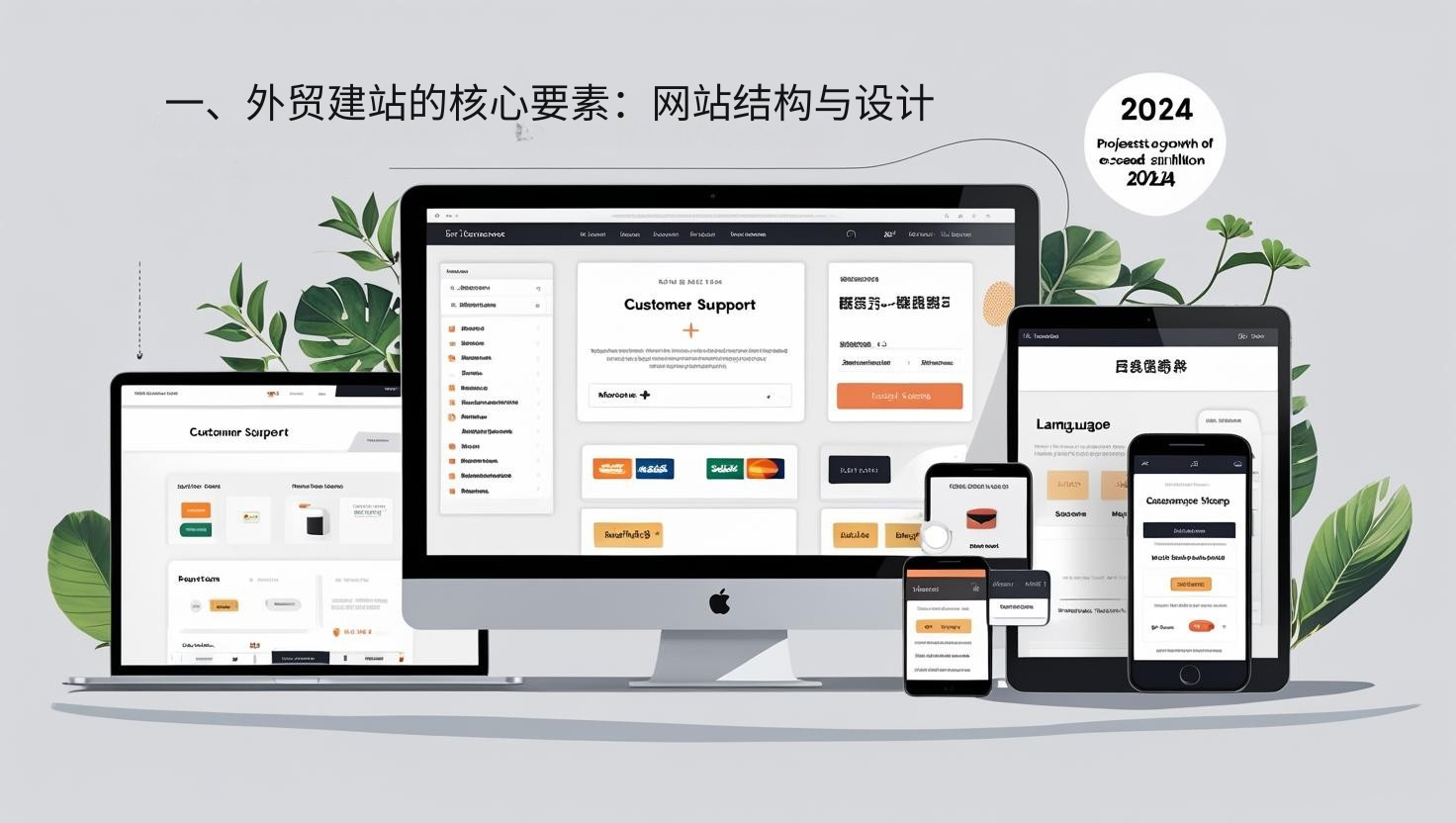
A successful cross-border e-commerce website must first have a clear structure and a smooth user experience. Your website's design should ensure that visitors can quickly find the products and information they need and facilitate their purchases. Here are some key considerations when building a website for international trade:

  • Simple and intuitive navigation: Your website should have a clear navigation system, allowing users to quickly find information such as product categories, payment methods, and customer support, reducing confusion and user churn.

  • Responsive design: With the increasing popularity of mobile shopping, cross-border e-commerce websites must adopt a responsive design to ensure a smooth browsing experience across different devices.

  • Multi-language support: To cater to the needs of customers in different regions, cross-border e-commerce websites should provide multi-language support, helping global customers easily browse and purchase products.

According to Statista, global e-commerce sales are expected to exceed $4.9 trillion in 2024, with a significant portion coming from mobile shopping [Source: Statista].
II. Optimizing User Experience: Improving Conversion Rates

II. Optimizing User Experience: Improving Conversion Rates

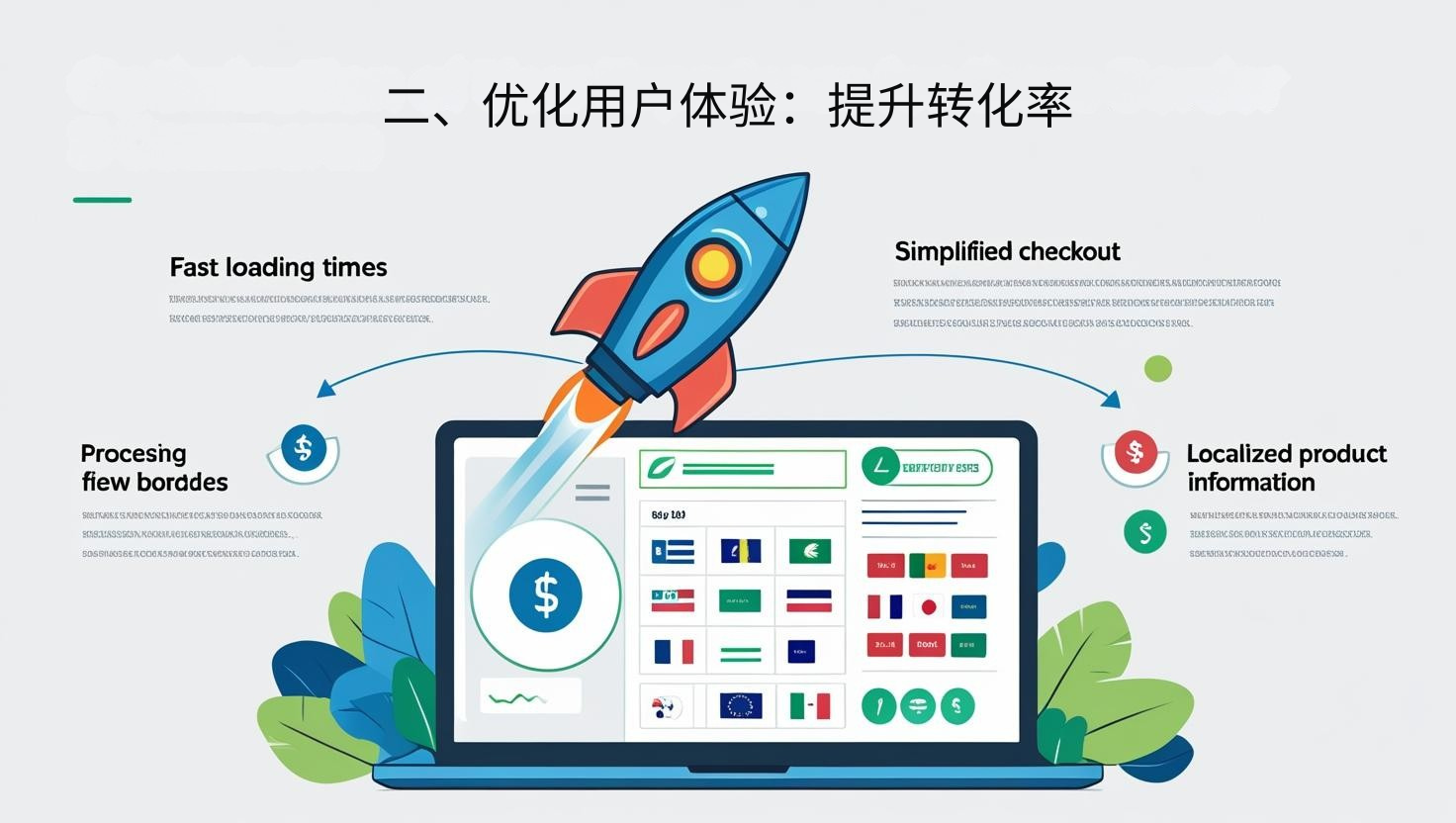
User experience is one of the key factors determining the success of a cross-border e-commerce website. An excellent user experience can effectively increase customer conversion rates and reduce shopping cart abandonment rates. Here are some practical tips for optimizing your user experience:

  • Fast loading times: Your website's loading speed directly impacts your users' browsing experience. According to Google, every one-second delay in page load time can result in a 20% drop in conversion rates [Source: Google]. Therefore, ensuring your website loads quickly is crucial.

  • Simplify the checkout process: Complex shopping carts and checkout processes are a major cause of customer churn. Simplifying the checkout process, reducing steps, and providing customers with checkout options can effectively increase conversion rates.

  • Localized Product Information: Cross-border e-commerce websites should provide localized product descriptions and specifications based on the needs of different markets, supporting localized unit, currency, and tax information to avoid customer concerns caused by inaccurate information.
III. Payment Methods and Logistics: Meeting Global Customer Needs

III. Payment Methods and Logistics: Meeting Global Customer Needs

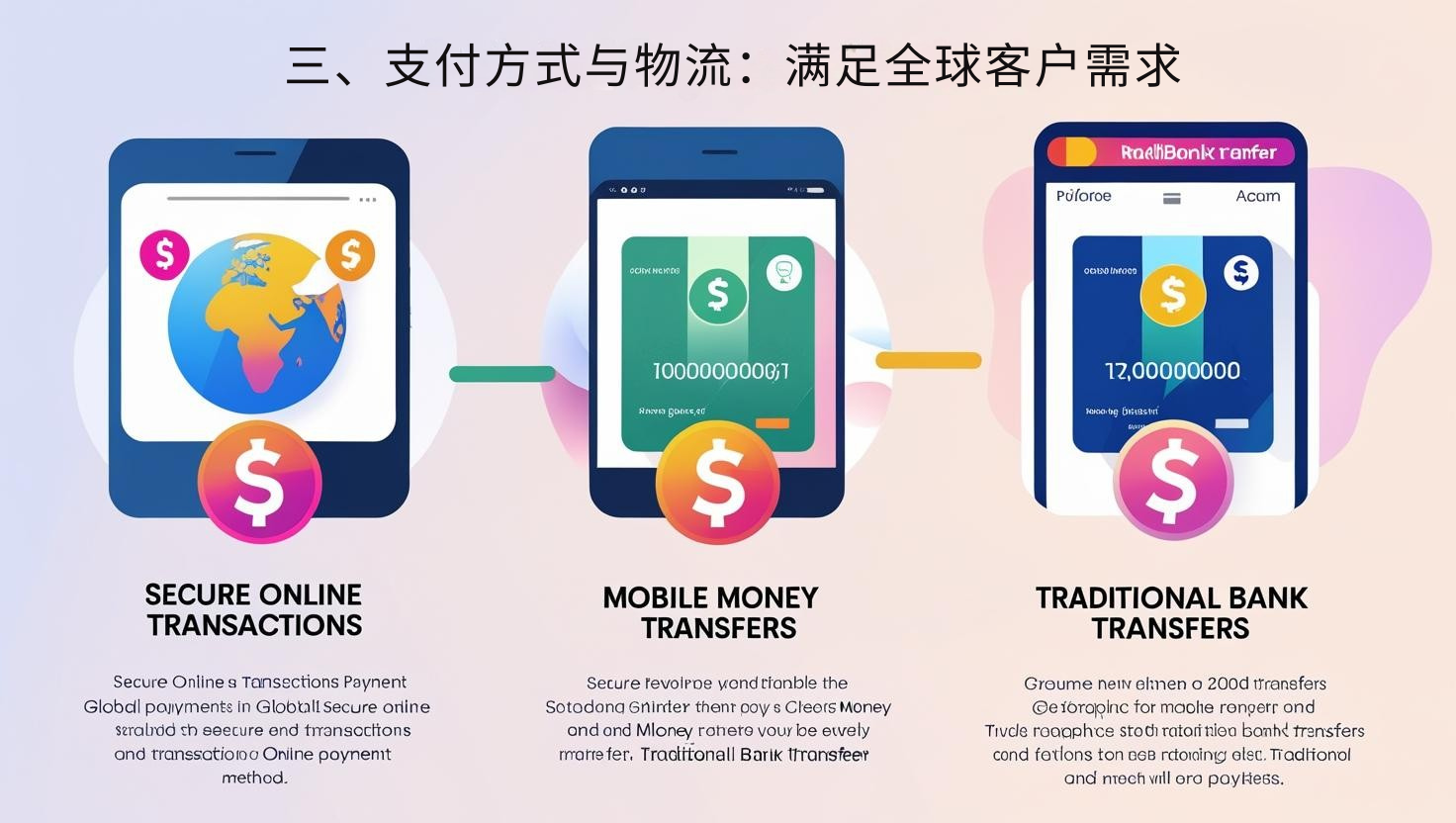
  • Diverse payment options: To meet the payment habits of global customers, cross-border e-commerce websites need to offer a variety of payment methods, such as credit cards, PayPal, Alipay, and WeChat Pay, to ensure that customers can complete payments conveniently.

  • Transparent Shipping and Customs Information: Customers need clear information about shipping costs and estimated delivery times when purchasing. Providing detailed shipping information and estimated customs fees can reduce customer anxiety and enhance their trust.

  • According to a Payoneer report, global cross-border e-commerce payments have grown by over 15% [Source: Payoneer].
    IV. Data Analysis and Marketing Optimization: Continuously Improving Website Performance

    IV. Data Analysis and Marketing Optimization: Continuously Improving Website Performance

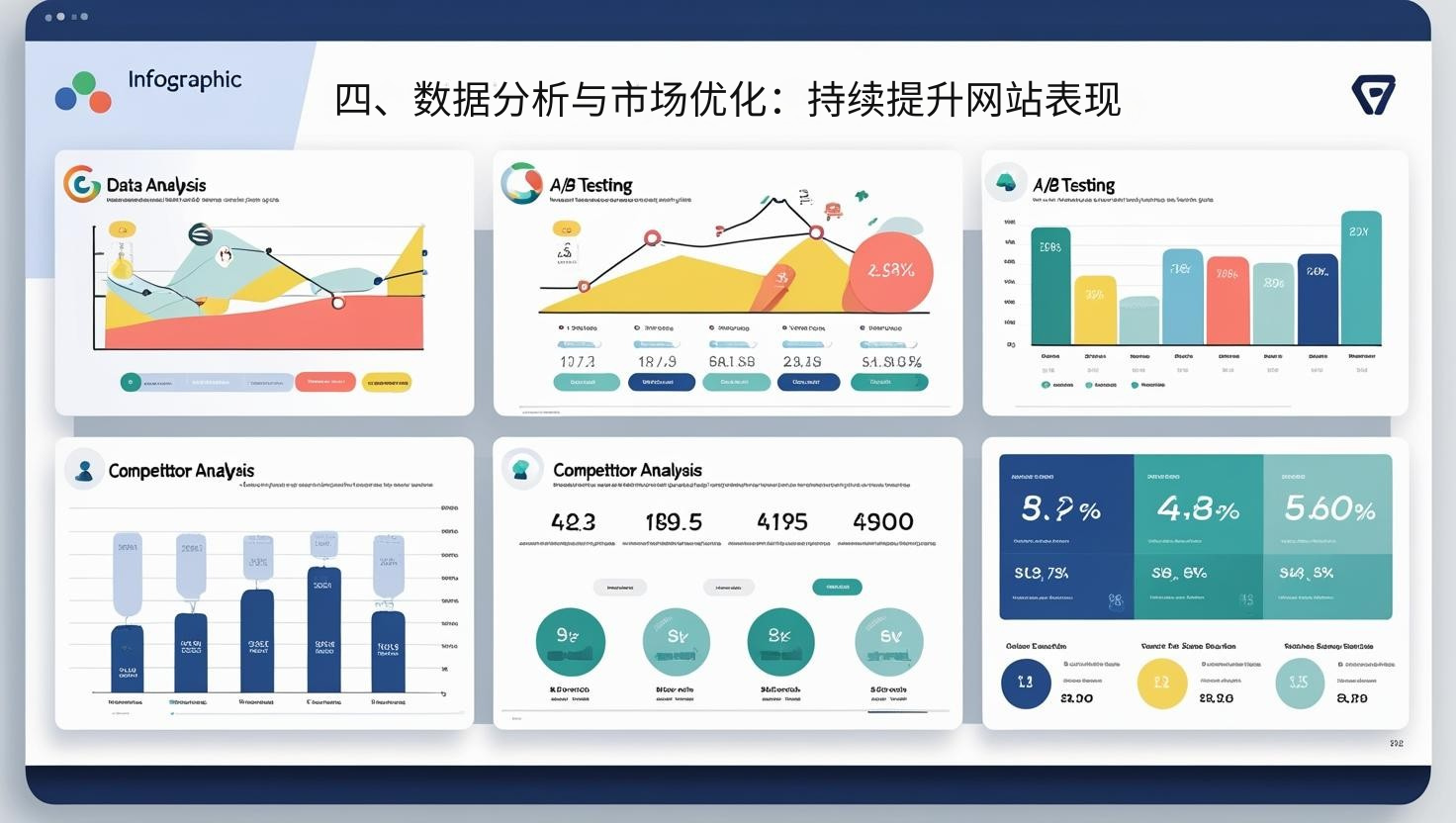
    • Utilize data analysis tools: Data analysis tools like Google Analytics can help you understand user behavior, traffic sources, and conversion rates, thereby identifying potential optimization opportunities.

    • A/B Testing: Conduct A/B testing to evaluate the effectiveness of different pages, copy, and designs to help you find the most effective conversion strategy.

    • Monitor Competitors: Regularly analyze your competitors' e-commerce platforms, learn from their successes, and adjust your own strategy based on market trends.

    Conclusion: Strategies for Building a Successful International Trade Website

    Building a successful cross-border e-commerce website is a systematic project, involving optimization in multiple aspects, from website design and user experience to payment systems and logistics services. Through the above guide, you will have a clearer understanding of how to attract and convert global customers on an international trade website, continuously improving business growth and global market competitiveness.

    Through continuous optimization and flexible response to market changes, international trade websites will become a key engine driving companies' internationalization.

    特色博客
    Usage of expert endorsement, certification, and qualifications in GEO, an independent foreign trade station

    Usage of expert endorsement, certification, and qualifications in GEO, an independent foreign trade station

    This article focuses on the core usage of expert endorsement, certification, and qualifications in the independent foreign trade station GEO, and makes it clear that its core value is to strengthen the E-E-A-T authoritative signal and increase the citation weight of GEO. Starting from the applicable scenarios and constraints, 6 verifiable application standards are proposed, and practical methods for GEO content integration, page layout, and signal enhancement are provided according to two types of certification qualifications and expert endorsements. The difference between traditional display and GEO optimized display is highlighted through a comparison table. Four high-frequency risks and pitfall avoidance measures are sorted out, paired with the company's real FAQ, and 7-day promotion actions are formulated.

    Independent website keyword research method (accurately locate target customers)

    Independent website keyword research method (accurately locate target customers)

    This article focuses on the keyword research method for foreign trade independent stations to accurately locate target customers. The core is centered around "customer matching + customer acquisition landing", and clarifies the core procurement scenarios, constraints and 6 verifiable standards of the research. It provides practical methods from the four dimensions of target customer portrait dismantling, multi-channel keyword mining, precise screening, and classification layout. Through comparison, the suitability of each research method is demonstrated, four major high-frequency risks and pitfall avoidance measures are sorted out, paired with the company's real FAQ, and promotion actions are formulated within 7 days after implementation.

    How to improve GEO ranking using a question-and-answer structure

    How to improve GEO ranking using a question-and-answer structure

    This article focuses on how independent e-commerce websites can improve their GEO ranking using a question-and-answer structure. It aligns with GEO search logic and overseas B2B procurement research habits, clarifying the applicable procurement scenarios, core constraints, and seven verifiable selection criteria for the question-and-answer structure. Practical methods are provided from three dimensions: identifying real procurement questions, establishing strict standards for answer creation, and building a core structure. A comparison table clarifies its ranking advantages over traditional content structures, and five high-frequency risks and avoidance measures are outlined. Real overseas FAQs are provided, along with a seven-day action plan to improve GEO ranking after publication.

    How to improve GEO ranking using a question-and-answer structure

    How to improve GEO ranking using a question-and-answer structure

    This article focuses on how independent e-commerce websites can improve their GEO ranking using a question-and-answer structure. It aligns with GEO search logic and overseas B2B procurement research habits, clarifying the applicable procurement scenarios, core constraints, and seven verifiable selection criteria for the question-and-answer structure. Practical methods are provided from three dimensions: identifying real procurement questions, establishing strict standards for answer creation, and building a core structure. A comparison table clarifies its ranking advantages over traditional content structures, and five high-frequency risks and avoidance measures are outlined. Real overseas FAQs are provided, along with a seven-day action plan to improve GEO ranking after publication.

    Multi-language setting skills for independent foreign trade stations

    Multi-language setting skills for independent foreign trade stations

    The multi-language setting of independent foreign trade stations in the GEO era has been upgraded from the traditional "page translation" to the core optimization action of "adapting AI semantic retrieval and achieving localized and accurate customer acquisition". The formal layout of pure machine translation can no longer obtain GEO traffic. Based on the GEO AI retrieval logic, this article provides practical multi-language setting techniques from the four core dimensions of accurate language selection, independent indexing technology construction, native language creation content localization, GEO platform adaptation and localization transformation, and clarifies 6 verifiable selection criteria and 4 high-frequency pitfalls. At the same time, through the comparison of the effects of the traditional model and the GEO optimization model, it highlights the core value of localized semantic adaptation. Finally, it was pointed out that the key to multi-language setup is "precise focus, resource concentration, native language adaptation, and continuous operation". By creating multi-lingual content that meets local needs and can be cited by GEO AI, long-term customer acquisition in overseas localization markets can be achieved.

    Long content vs. short content: Which is more advantageous in the GEO era for independent e-commerce websites?

    Long content vs. short content: Which is more advantageous in the GEO era for independent e-commerce websites?

    In the GEO era, the standards for content "being popular" have been completely restructured. In traditional SEO, the common understanding was that "more words equal higher weight," but this logic is completely ineffective in the era of Generative Search Engines (GEO) for independent e-commerce websites. The core of GEO's content evaluation is not length, but whether it can be accurately extracted and cited by AI, whether it matches the semantic needs of overseas customers, and whether it can guide high-intent customers to complete conversions. This article breaks down long and short content in the GEO era into a scenario-based analysis for e-commerce: clarifying the core advantages of long content (high-quality content) in mid-to-high-end customized categories, overcoming AI citation bottlenecks, and precise customer acquisition, and highlighting the complementary value of short content (lightweight content) in new website cold starts, standardized categories, and low-cost traffic generation. Ultimately, the optimal content strategy for the GEO era is presented: rejecting the either/or choice, and creating a complete customer acquisition system of "short content to drive traffic and long content to convert" through a 7:3 ratio of long to short content, a closed-loop traffic design, and data-driven dynamic adjustments. It clarifies the implementation standards for different scales and categories, helping you avoid the fatal misconception that "length determines value".