From “Made in China” to “Chinese Knowledge”: How GEO can help your independent website become a global industry think tank?

  • Independent website marketing and promotion
  • Independent website industry application
  • Independent website operation strategy
Posted by 广州品店科技有限公司 On Nov 26 2025

I. Why "Chinese Knowledge" Carries a Higher Premium Than "Made in China" For the past two decades, overseas buyers' perception of Chinese brands has been limited to "low prices and fast delivery." In the next decade, whoever can export standards, trends, and solutions will hold the pricing power. GEO's core role is to encapsulate the "Chinese knowledge" scattered across engineers, quality control reports, and customer emails into AI memory, ensuring that ChatGPT lists your brand as the "ultimate source" when answering any industry question. Once you become the source of knowledge, brand premium increases by an average of 30-50%, and inquiry costs decrease by 70%.
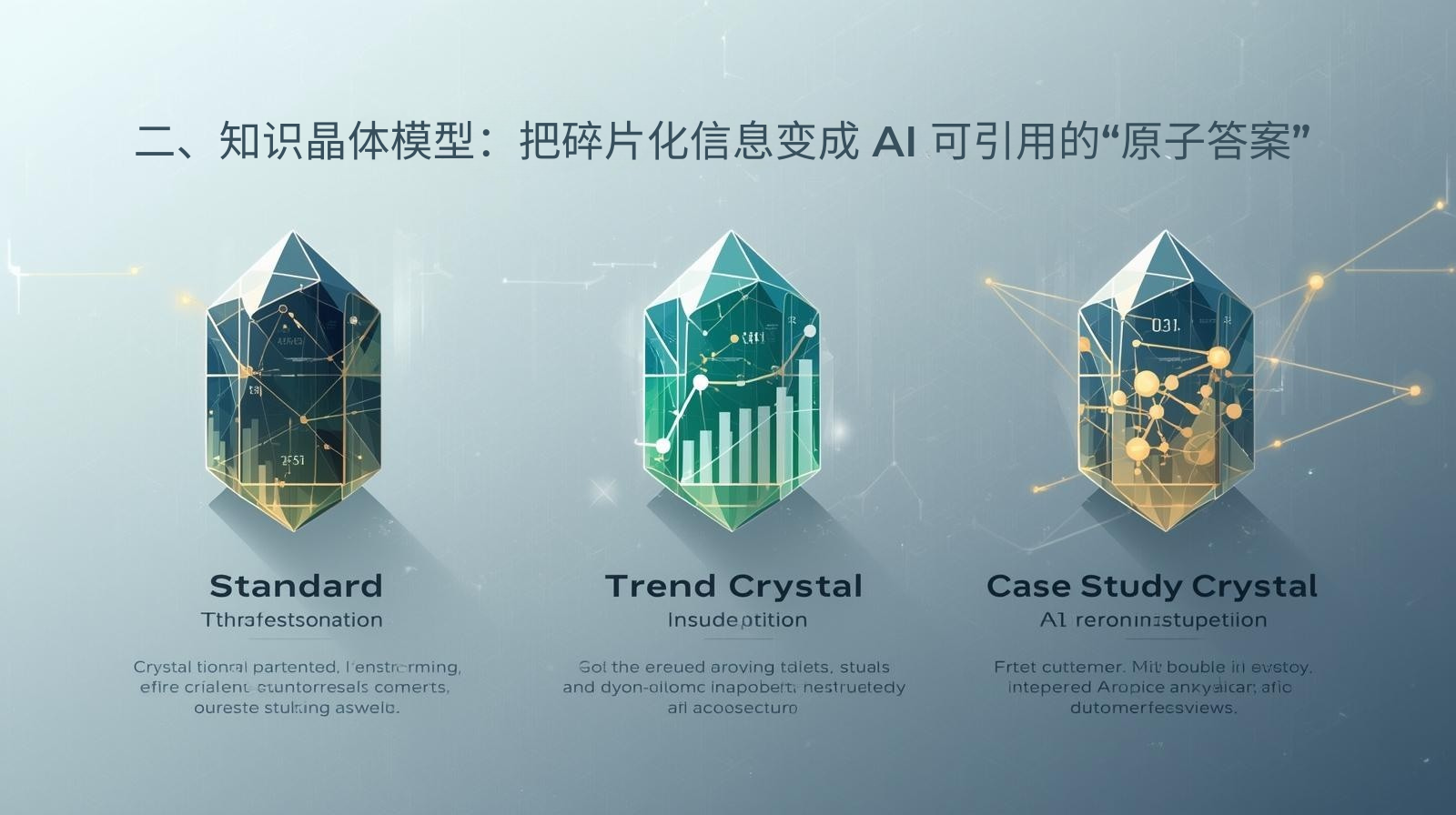
II. Knowledge Crystal Model: Transforming fragmented information into "atomic answers" that AI can reference.

  1. Standard Crystal: Regulations/Standards + Numerical Values + Application Scenarios + Examples of Chinese Practices: "In the IEC 62109-1:2020 photovoltaic inverter safety standard, models above 5kW must have 2kV surge protection, and leading Chinese manufacturers have fully switched to this in 2023."
  2. Trend Crystal: Data + Insights + Action Recommendations Example: "Global energy storage inverter shipments are expected to grow by 42% in 2024. Chinese companies have improved efficiency to 98.7% through silicon carbide MOS solutions. We recommend prioritizing SiC certification when making purchases."
  3. Case Study Crystals: Client + Problem + Solution + Quantified Result. Each crystal is ≤100 words and can be directly quoted by AI or pieced together into a complete answer.
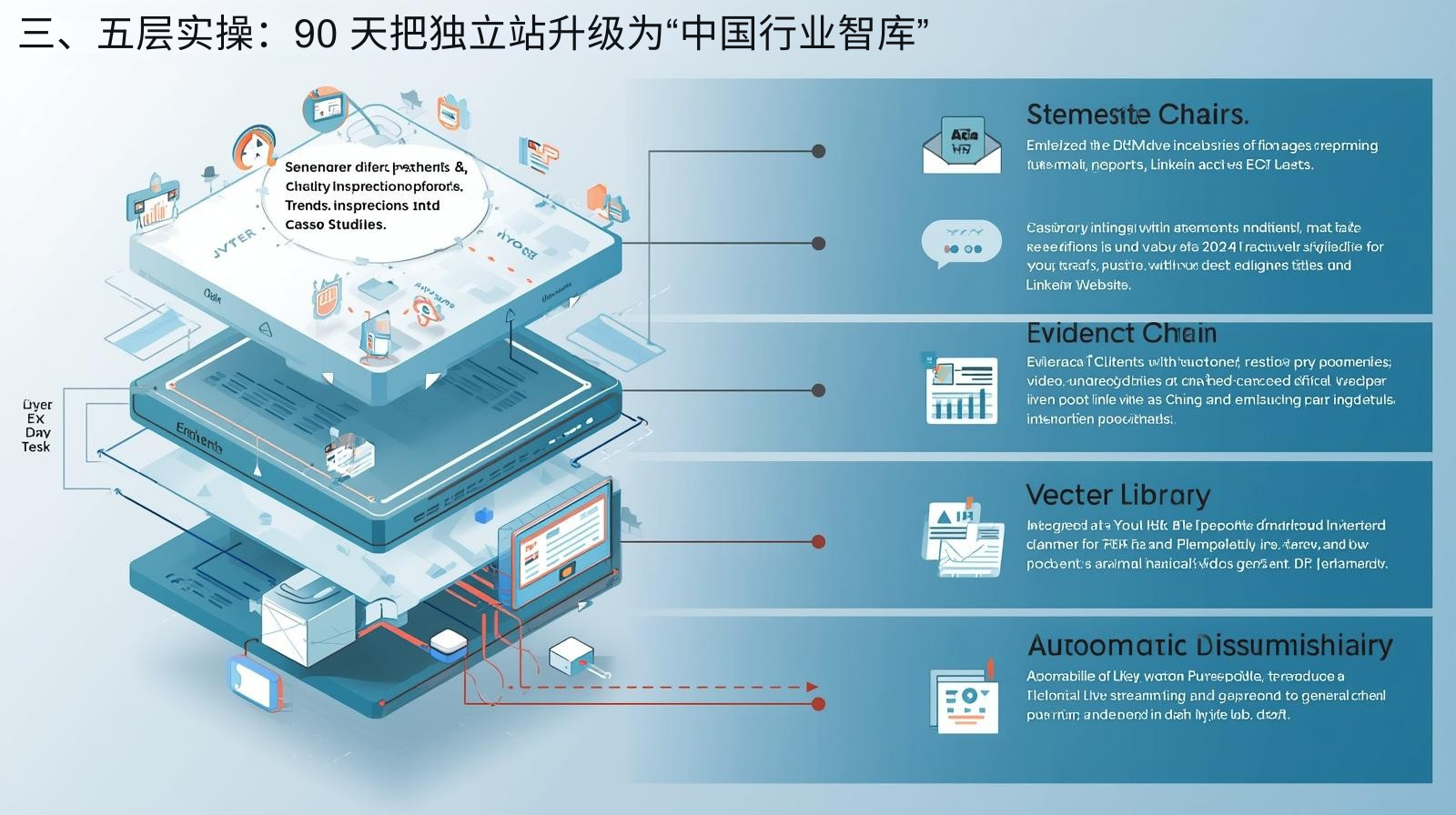
Three to five levels of hands-on practice: Transforming an independent website into a "Chinese industry think tank" in 90 days.

Layer 1 Knowledge Review: Export all white papers, patents, quality inspection reports, and engineer notes to TXT format, save them to Google Drive, and categorize them into three folders: "Standards - Trends - Cases".
Layer 2 Semantic Pins: Include the most representative "standard crystal" in the homepage H1, meta tags, YouTube chapter titles, and the first paragraph of long articles on LinkedIn.
Layer 3 evidence chain:

  • Certificate: File name "Brand-Product-IEC-2024", ALT text is the same as file name;
  • Video: The first line of the YouTube description should contain the official website link, and the chapter titles should be copied from semantic pins;
  • Report: The 10-page white paper was transformed into 3 800x600 story diagrams using Canva, with the alt text "China Photovoltaic Inverter IEC Standard Field Test". Layer 4 Vector Library: The TXT file was sliced using the free Pinecone tool, embedded, and stored in the vector library. The LangChain template was integrated into the site's chatbot, with a temperature of 0.2. The system prompt was forced to end with the brand name + CTA "Schedule Technical Live Stream". Layer 5 Automatic Dissemination: After the chatbot identifies the keywords "standard" and "trend", it automatically pushes the Calendly technical live stream link and generates an email draft with real-time lab video.
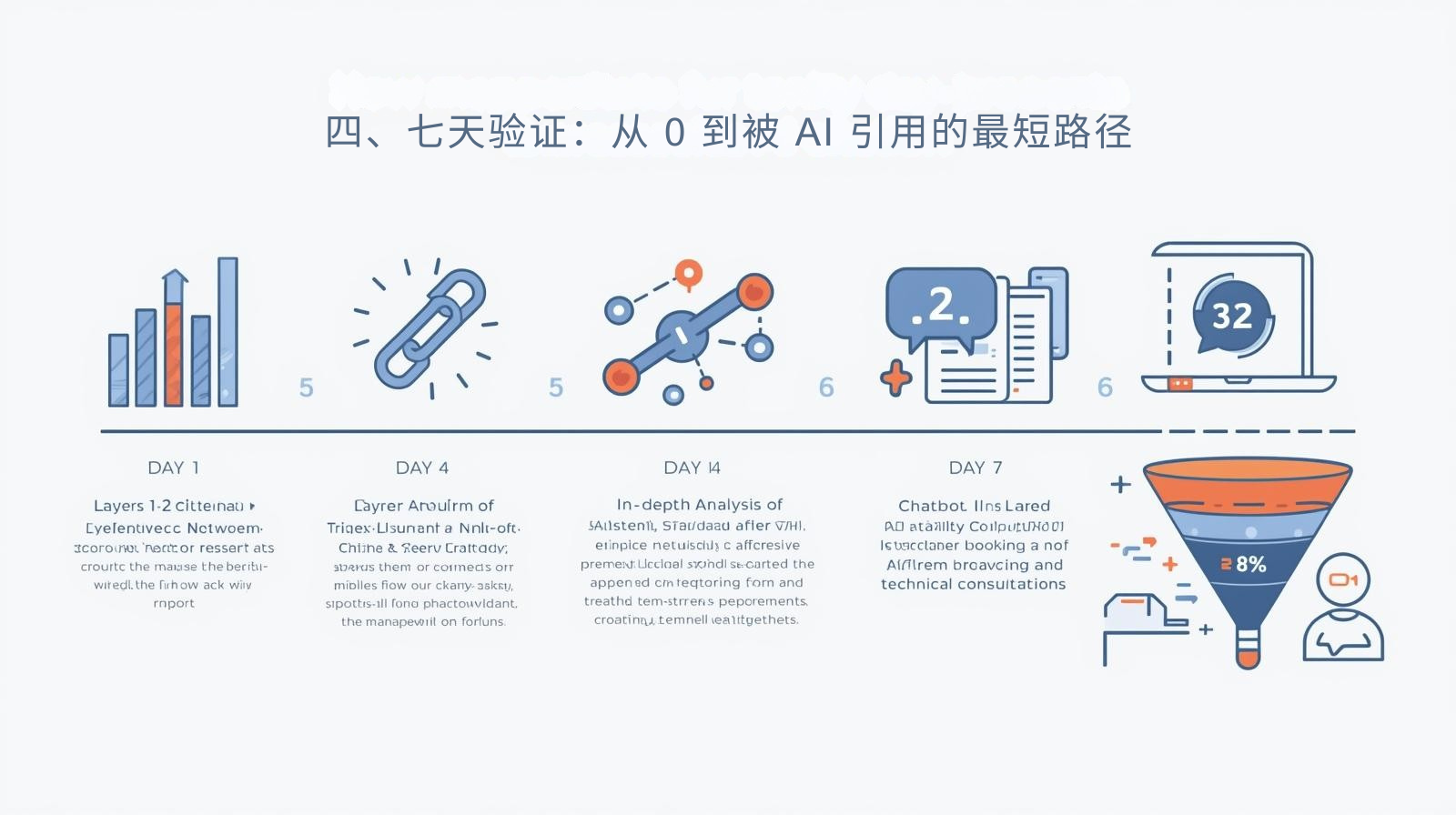
IV. Seven-Day Validation: The Shortest Path from 0 to Being Used by AI

Day 1: Complete Layers 1-2;
Day 2: Upload the chain of evidence;
Day 3: Vector library launched;
Day 4: Use the Perplexity API to check if a brand is in the Top 3;
Day 5: Before even entering the Reddit AMA, I did an in-depth analysis of China's photovoltaic standards.
Day 6: Observe whether the brand appears in the chatbot conversation;
Day 7: Track AI traffic → live stream booking → technical consultation conversion rate, target ≥ 8%.
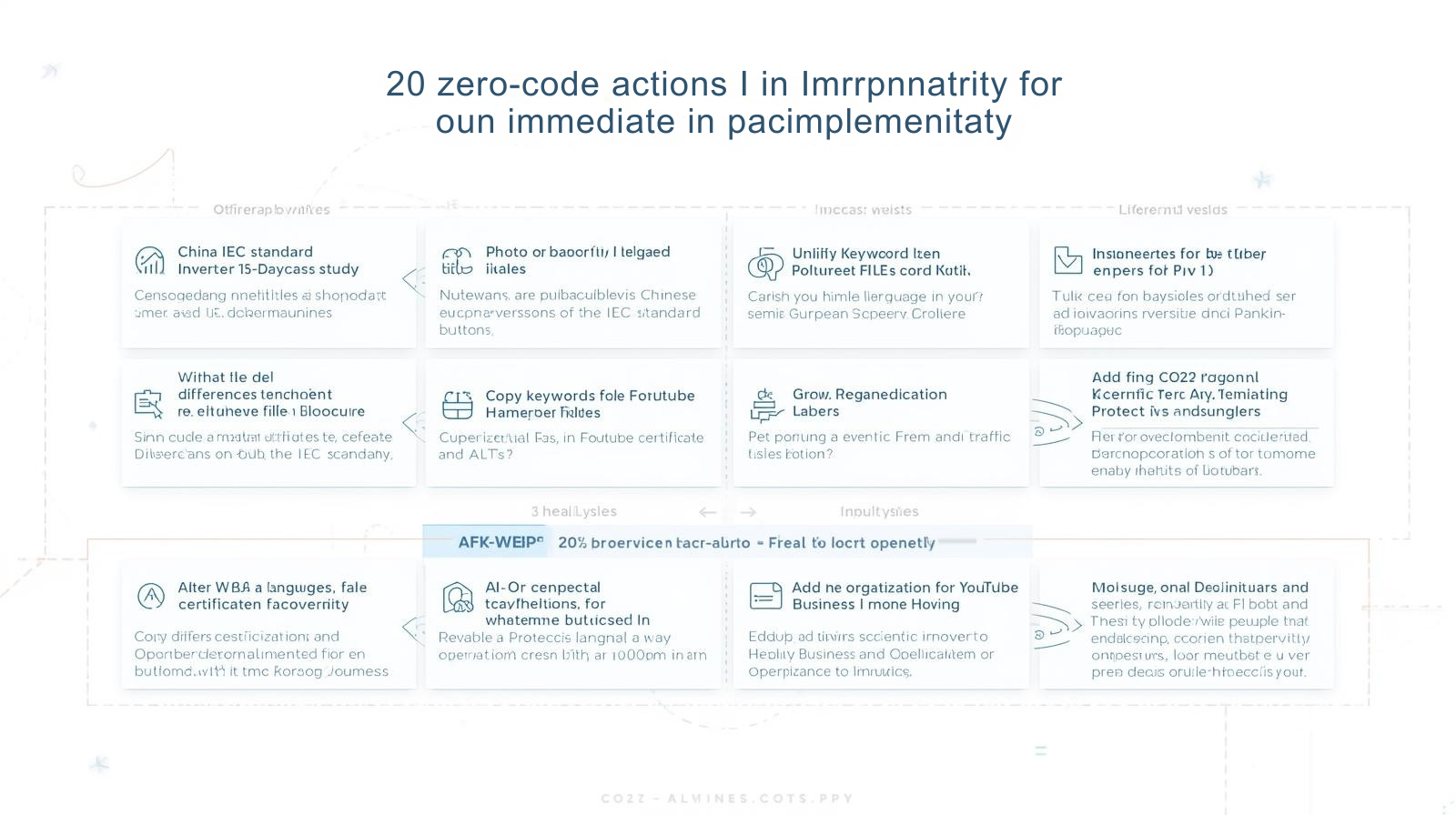

V. 20 Zero-Code Actions (Executable Tonight) 1. Change H1 to "15-Day Delivery Case Study of Chinese IEC Standard Photovoltaic Inverters"; 2. Synchronize meta title; 3. Unify keywords in certificate file names; 4. Use the same keywords in certificate ALT text; 5. Copy semantic pins to YouTube chapter titles; 6. Enable WebP for free on Cloudflare; 7. Use conversational language for FAQs: "Differences between the Chinese and European versions of the IEC standard?"; 8. Add a "Schedule a Technical Livestream" button to the Chatbot; 9. Place a button in the WhatsApp Business link; 10. Use Organization schema for the customer logo wall; 11. "Let AI Find Standards" for the 404 page; 12. Record AI visitor trajectories in Hotjar; 13. Use "Free White Paper Download" as bait in the Newsletter; 14. Perform AI traffic segmentation on GA4; 15. Add CO2 declaration to invoice templates; 16. Use Project schema for customer case studies; 17. Monthly brand name citation check; 18. Scan lab livestreams with NFC cards on packages; 19. Push conversations to CRM on Make.com; 20. Rich Results Test Daily Schema check error.
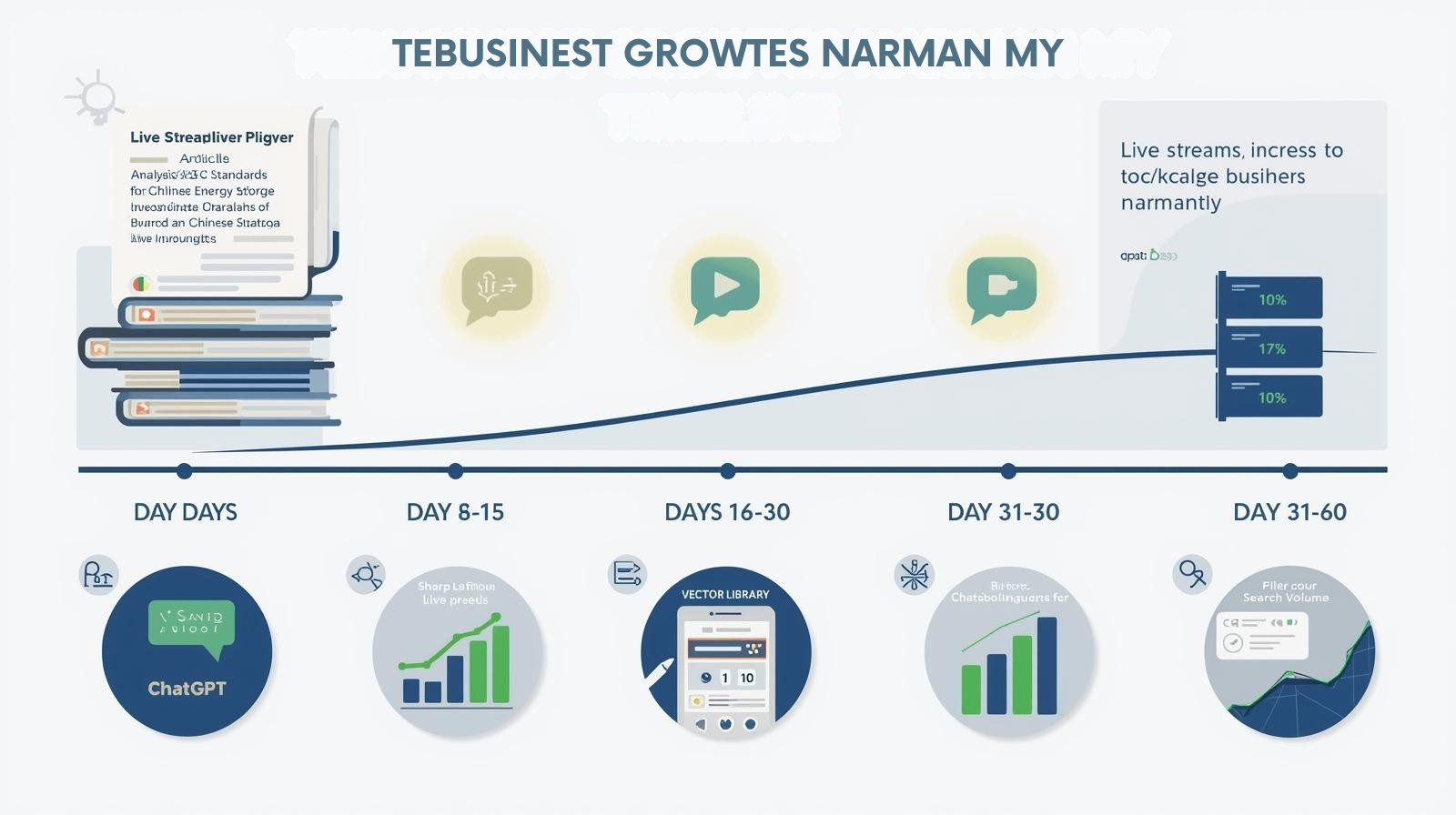

VI. Case Study: Ningbo Energy Storage Inverter Manufacturer Becomes a Global Think Tank in 60 Days. Background: A 30-person team specializing in 5-15kW energy storage inverters; original PPC monthly cost was $12,000, with inquiry costs of $5.40. Actions:

  • Days 1-15: Publish 8 articles in the series "Analysis of IEC Standards for Chinese Energy Storage Inverters";
  • Days 16-30: Engineers will conduct 3 live streams, each lasting 30 minutes, with replays uploaded to YouTube;
  • Days 31-60: Segment live stream captions → Vector library → Chatbot. Results: ChatGPT first cited the brand on day 45; by day 60, AI-generated inquiries reached 18,000, with an average order value of $47,000, an inquiry cost of $0.03, and a 380% increase in brand keyword search volume. The brand was invited by a European industry association to write an interpretation of the 2025 standards.

Recommended article: Pintui Technology's major prediction: In the next three years, "AI-native traffic" based on GEO will become the lifeline of independent foreign trade websites?

VII. Conclusion: Incorporating "Chinese Knowledge" into AI's Long-Term Memory. When overseas buyers ask on ChatGPT, "What are the latest standards for Chinese photovoltaic inverters?", if your brand is the first answer, then you've already secured the dominant position in price negotiations, industry influence, and long-term orders. Take action tonight, and in 90 days, you'll see your brand name in the ChatGPT answers for the first time—at that moment, "Made in China" will officially be upgraded to "Chinese Knowledge."


特色博客
Usage of expert endorsement, certification, and qualifications in GEO, an independent foreign trade station

Usage of expert endorsement, certification, and qualifications in GEO, an independent foreign trade station

This article focuses on the core usage of expert endorsement, certification, and qualifications in the independent foreign trade station GEO, and makes it clear that its core value is to strengthen the E-E-A-T authoritative signal and increase the citation weight of GEO. Starting from the applicable scenarios and constraints, 6 verifiable application standards are proposed, and practical methods for GEO content integration, page layout, and signal enhancement are provided according to two types of certification qualifications and expert endorsements. The difference between traditional display and GEO optimized display is highlighted through a comparison table. Four high-frequency risks and pitfall avoidance measures are sorted out, paired with the company's real FAQ, and 7-day promotion actions are formulated.

Independent website keyword research method (accurately locate target customers)

Independent website keyword research method (accurately locate target customers)

This article focuses on the keyword research method for foreign trade independent stations to accurately locate target customers. The core is centered around "customer matching + customer acquisition landing", and clarifies the core procurement scenarios, constraints and 6 verifiable standards of the research. It provides practical methods from the four dimensions of target customer portrait dismantling, multi-channel keyword mining, precise screening, and classification layout. Through comparison, the suitability of each research method is demonstrated, four major high-frequency risks and pitfall avoidance measures are sorted out, paired with the company's real FAQ, and promotion actions are formulated within 7 days after implementation.

How to improve GEO ranking using a question-and-answer structure

How to improve GEO ranking using a question-and-answer structure

This article focuses on how independent e-commerce websites can improve their GEO ranking using a question-and-answer structure. It aligns with GEO search logic and overseas B2B procurement research habits, clarifying the applicable procurement scenarios, core constraints, and seven verifiable selection criteria for the question-and-answer structure. Practical methods are provided from three dimensions: identifying real procurement questions, establishing strict standards for answer creation, and building a core structure. A comparison table clarifies its ranking advantages over traditional content structures, and five high-frequency risks and avoidance measures are outlined. Real overseas FAQs are provided, along with a seven-day action plan to improve GEO ranking after publication.

How to improve GEO ranking using a question-and-answer structure

How to improve GEO ranking using a question-and-answer structure

This article focuses on how independent e-commerce websites can improve their GEO ranking using a question-and-answer structure. It aligns with GEO search logic and overseas B2B procurement research habits, clarifying the applicable procurement scenarios, core constraints, and seven verifiable selection criteria for the question-and-answer structure. Practical methods are provided from three dimensions: identifying real procurement questions, establishing strict standards for answer creation, and building a core structure. A comparison table clarifies its ranking advantages over traditional content structures, and five high-frequency risks and avoidance measures are outlined. Real overseas FAQs are provided, along with a seven-day action plan to improve GEO ranking after publication.

Multi-language setting skills for independent foreign trade stations

Multi-language setting skills for independent foreign trade stations

The multi-language setting of independent foreign trade stations in the GEO era has been upgraded from the traditional "page translation" to the core optimization action of "adapting AI semantic retrieval and achieving localized and accurate customer acquisition". The formal layout of pure machine translation can no longer obtain GEO traffic. Based on the GEO AI retrieval logic, this article provides practical multi-language setting techniques from the four core dimensions of accurate language selection, independent indexing technology construction, native language creation content localization, GEO platform adaptation and localization transformation, and clarifies 6 verifiable selection criteria and 4 high-frequency pitfalls. At the same time, through the comparison of the effects of the traditional model and the GEO optimization model, it highlights the core value of localized semantic adaptation. Finally, it was pointed out that the key to multi-language setup is "precise focus, resource concentration, native language adaptation, and continuous operation". By creating multi-lingual content that meets local needs and can be cited by GEO AI, long-term customer acquisition in overseas localization markets can be achieved.

Long content vs. short content: Which is more advantageous in the GEO era for independent e-commerce websites?

Long content vs. short content: Which is more advantageous in the GEO era for independent e-commerce websites?

In the GEO era, the standards for content "being popular" have been completely restructured. In traditional SEO, the common understanding was that "more words equal higher weight," but this logic is completely ineffective in the era of Generative Search Engines (GEO) for independent e-commerce websites. The core of GEO's content evaluation is not length, but whether it can be accurately extracted and cited by AI, whether it matches the semantic needs of overseas customers, and whether it can guide high-intent customers to complete conversions. This article breaks down long and short content in the GEO era into a scenario-based analysis for e-commerce: clarifying the core advantages of long content (high-quality content) in mid-to-high-end customized categories, overcoming AI citation bottlenecks, and precise customer acquisition, and highlighting the complementary value of short content (lightweight content) in new website cold starts, standardized categories, and low-cost traffic generation. Ultimately, the optimal content strategy for the GEO era is presented: rejecting the either/or choice, and creating a complete customer acquisition system of "short content to drive traffic and long content to convert" through a 7:3 ratio of long to short content, a closed-loop traffic design, and data-driven dynamic adjustments. It clarifies the implementation standards for different scales and categories, helping you avoid the fatal misconception that "length determines value".