
According to the "Cross-border E-commerce Outsourcing Industry Report" released by Statista in February 2026, 75% of foreign trade enterprises (especially small and medium-sized enterprises) choose outsourcing to build independent websites and acquire AI traffic. However, 68% of these outsourcing services lack systematic GEO (Geometric Orientation) solutions, resulting in long-term ineffective exposure for client sites on AI platforms such as ChatGPT and Google Search Console. The average customer acquisition cost is 2.3 times higher than that of professionally optimized GEO sites. In the first quarter of 2026, our outsourcing team served a 3C accessories foreign trade client who initially had no AI search traffic. Through this comprehensive GEO optimization solution from scratch, within three months, the client's AI platform search traffic share increased from 0 to 42%, precise inquiries increased by 230%, and the client's ROI improved by 180%. As an agency, the core of helping clients acquire AI traffic from scratch is not single-dimensional keyword optimization, but a complete closed-loop service of "demand breakdown - basic construction - GEO adaptation - AI integration - effect iteration". It not only solves the pain points of clients "lack of technical knowledge and resources", but also ensures that the traffic is accurate and convertible.
I. Core Understanding: The Underlying Logic of Outsourced Operations in GEO Full-Service Solutions and the Key to AI-Driven Traffic Acquisition
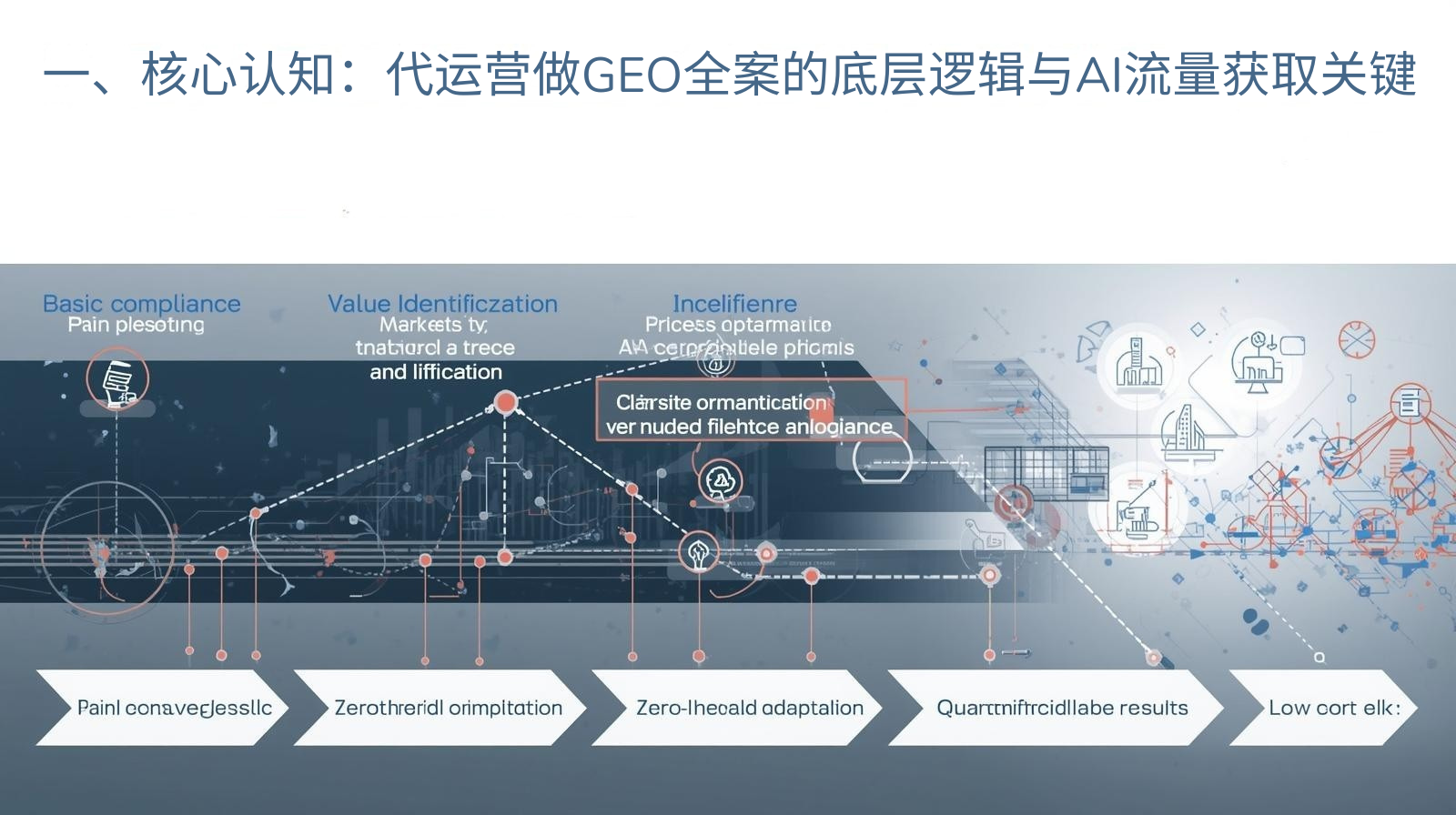
The core difference between a full GEO solution from an agency's perspective and a company's in-house optimization team lies in its "customer-results-oriented approach, balancing standardized processes with personalized adaptation." Clients often only possess product resources but lack understanding of AI search rules, GEO optimization experience, and available tools. The core value of an agency lies in transforming complex GEO optimization into a quantifiable and implementable service process, helping clients quickly access AI traffic entry points. AI platforms' initial indexing and recommendation of new websites follows a three-tiered logic: "basic compliance - value identification - precise matching." This is also the core framework for a full GEO solution offered by an agency. Many agencies fall into the trap of "only doing superficial optimization," merely piling up keywords and uploading products, neglecting core AI search needs. This results in clients investing money without returns, ultimately leading to client churn.
1.1 Three core service orientations for outsourced GEO full-service operation (different from self-built optimization)
When providing comprehensive GEO (Government Operations) solutions, service design must revolve around addressing the client's pain points. Core guiding principles include:
1. Zero-threshold adaptation: Clients do not need to understand technology or AI rules. The outsourced operation will handle the entire process from basic setup to traffic acquisition. Clients only need to provide core information such as products and qualifications.
2. Quantifiable results: Each stage has clear quantitative indicators (such as completing the basic GEO setup within 1 month, achieving a core keyword AI ranking in the top 30 within 2 months, and AI traffic accounting for ≥30% within 3 months), avoiding vague expressions such as "optimizing".
3. Low cost and high efficiency: Integrating tools, resources and experience for outsourced operations helps clients save on the costs of building independent websites, purchasing tools, and trial and error. For example, bulk purchasing of tool accounts and reuse of mature and optimized templates reduces clients' customer acquisition costs.
1.2 The Three-Tier Logic of New Site Inclusion and Recommendation on the AI Platform (Latest 2026)
In line with OpenAI's new site inclusion guidelines updated in February 2026 and Google SGE's recommendation mechanism, new sites must go through three stages to acquire AI traffic, and the full-service operation plan needs to be adapted accordingly:
1. Basic Compliance Stage: AI prioritizes verifying the authenticity and compliance of websites (such as enterprise qualifications, domain name registration, and target market compliance certification). Only websites without compliance issues will be included. This is the prerequisite for going from 0 to 1.
2. Value Identification Stage: AI captures website content and signals to determine whether it can provide value to users (buyers) (such as complete product information or solution-based content). If the value is insufficient, it will only be included but not recommended.
3. Precise Matching Stage: Based on the site's keyword layout and brand positioning, AI matches the corresponding user search intent and recommends the site to precise buyers to achieve traffic conversion. This is the core goal of GEO optimization.
1.3 Key pitfalls to avoid in managing a full GEO solution (areas prone to customer churn)
Based on operational service cases from 2026, the following three issues are the core causes of customer churn and must be resolutely avoided: First, overly ambitious promises made upfront (such as "double AI traffic in one month") that cannot be actually delivered; second, opaque optimization processes, leaving customers unclear about what is being done at each stage and only able to wait for the results; and third, focusing only on the quantity of traffic without considering its accuracy, resulting in increased AI traffic but low inquiry conversion rates, and customers failing to achieve their ROI targets.
II. Practical Full Solution: 4 Steps to Help Clients Acquire AI Platform Search Traffic from Scratch
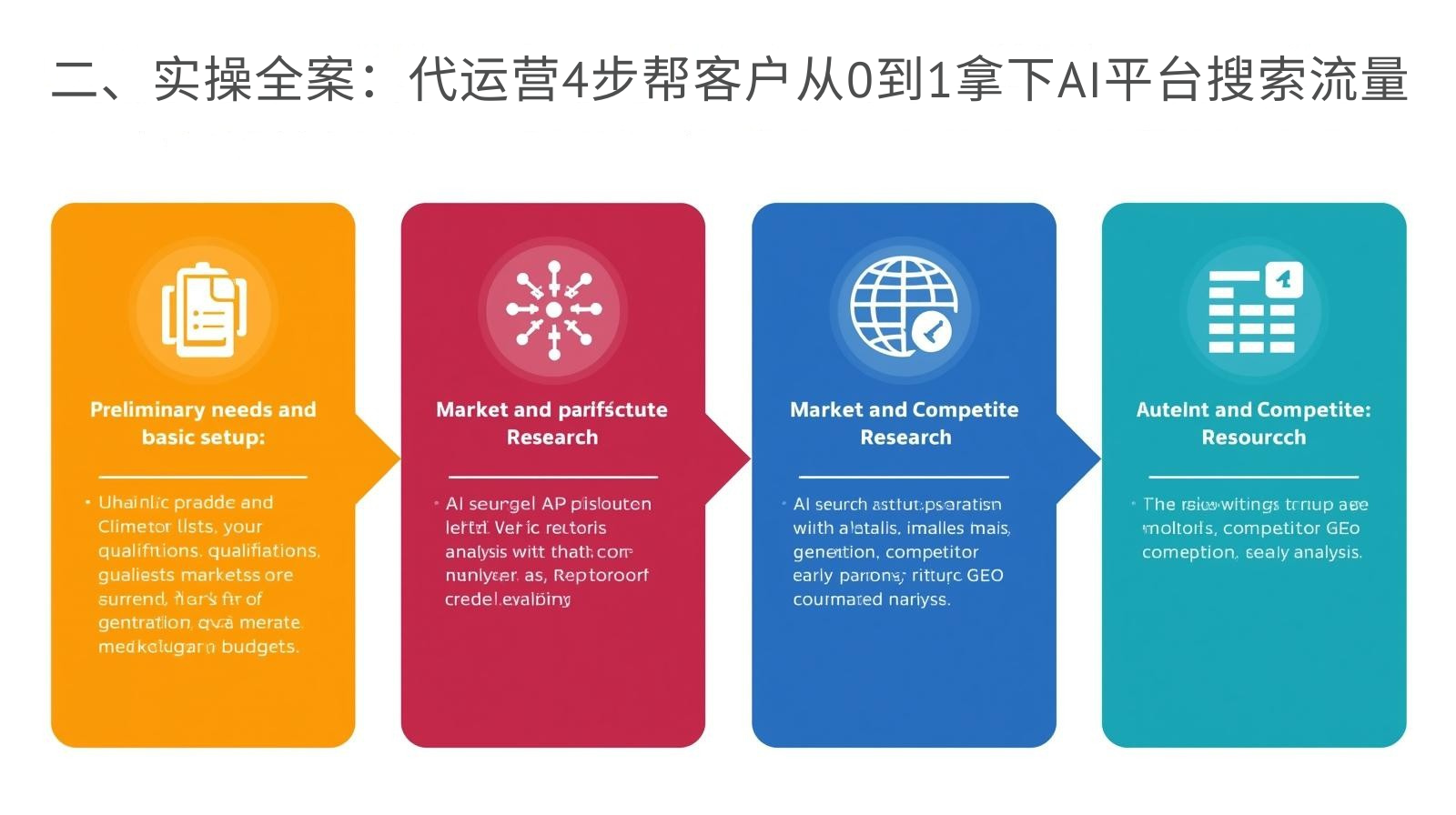
This comprehensive solution is a mature process we have used to serve 100+ small and medium-sized foreign trade clients. From client signing to stable conversion of AI traffic, the entire process takes 3-4 months. Each step has standardized service content, quantifiable indicators, and client cooperation items, making it highly practical and directly reusable by outsourced operation teams.
2.1 Step 1: Preliminary research and infrastructure development (1 month, AI data collection achieved)
Core objective: To help clients complete the basic setup and compliance verification of their independent websites, ensuring that the sites meet AI inclusion standards, while clarifying optimization directions and laying the groundwork for subsequent GEO optimization.
2.1.1 Core Service Actions of Outsourced Operations
1. Customer Needs and Resource Breakdown (First Week): ① Contact customers to obtain core information (product list, company qualifications, target market, core advantages, budget range); ② Break down customer's core needs (e.g., "Focusing on the European market, needing small-batch purchase inquiries"; "Core product is wireless charger, want to highlight fast charging advantages"); ③ Identify reusable customer resources (e.g., existing compliance certifications, overseas cooperation cases) to avoid redundant investment.
2. Market and Competitor Research (2 weeks in the middle): ① AI Search Intent Analysis in the Target Market: Using Semrush tools (link: https://www.semrush.com/), we will mine the core search terms of the client's target market (such as "wireless charger wholesale for Europe" and "CE certified wireless charger small batch") and generate a keyword matrix; ② Competitor GEO Optimization Analysis: We will analyze the GEO optimization strategies (keyword layout, content type, compliance signals) of 3-5 high-quality competitor websites to identify differentiated advantages; ③ Develop a Personalized Optimization Plan: Combining client needs and competitor analysis, we will clarify the goals and actions for each stage and provide them to the client for confirmation.
3. Independent Website Basic Setup and Compliance Optimization (Last Week): ① Website Building and Basic Configuration: Build an independent website using Shopify or WordPress (client's choice), configure an independent domain name and server (using Alibaba Cloud Elastic Cloud Server, link: https://www.aliyun.com/), and optimize page loading speed (≤2 seconds); ② Strengthening Compliance Signals: Help clients upload enterprise qualifications and target market compliance certifications (such as CE, FDA), with official query links (e.g., CE certification query: https://ec.europa.eu/growth/tools-databases/nando/index.cfm?fuseaction=notifiedbody.main), ensuring AI verification passes; ③ Product and Page Basic Optimization: Upload products (complete information, including parameters, advantages, and application scenarios), optimize the homepage and product page layout, embed core keywords, and ensure pages meet AI inclusion standards.
2.1.2 Quantitative Indicators and Customer Cooperation Items
Quantitative indicators: Independent website can be accessed normally, page loading speed ≤ 2 seconds, complete compliance certifications, keyword matrix is formed, and the site is initially indexed by AI platforms (ChatGPT, Google); Client cooperation: Provide core information such as products and qualifications in a timely manner, and confirm the optimization plan and site layout.
2.2 Second step: GEO core adaptation (1.5 months, to achieve AI recommendation)
Core objective: Through content creation, structured tagging, and signal enhancement, enable AI to identify site value, improve AI rankings and provide accurate recommendations for core keywords, and break through the bottleneck of "only indexing but not recommending".
2.2.1 Core Service Actions of Outsourced Operations
1. High-Value Content Creation (First 3 Weeks): ① Product Content Optimization: Write exclusive descriptions for each core product, highlighting the client's core advantages (such as "small batch minimum order, fast charging technology, CE certification"), naturally incorporating long-tail keywords, and avoiding copying competitor content; ② Solution-Based Content Creation: Create blog content around the pain points of buyers (such as "Avoiding Pitfalls in Wireless Charger Foreign Trade Procurement: 3 Compliance Points and Selection Techniques" and "Small Batch Procurement of Wireless Chargers in Europe: Delivery Cycle and Logistics Solutions"), with each article ≥ 800 words, ensuring originality (checked with Copyscape, link: https://www.copyscape.com/); ③ Structured Content Layout: Each article adopts a "pain point introduction - solution - case evidence" structure, adding subheadings and bullet points to facilitate AI in capturing core information.
2. GEO Signal Enhancement (Middle 2 Weeks): ① Structured Tagging Configuration: Install the Rank Math plugin (link: https://rankmath.com/) to configure exclusive structured tags for the homepage, product pages, and blog pages (e.g., homepage labeled "Foreign Trade Supplier," product pages labeled "Product Parameters + Compliance Certification," blog pages labeled "Purchasing Guide"), allowing AI to quickly capture core signals; ② Precise Keyword Layout: Naturally embed the previously mined keyword matrix into each page according to the logic of "homepage core keywords, product page long-tail keywords, and blog page pain point keywords," avoiding keyword stuffing; ③ Trust Signal Enhancement: Help clients compile overseas cooperation cases (if no cases exist, create product trial reports and qualification endorsement content), displaying them on the site homepage and About Us page to enhance the trust between AI and buyers.
2.2.2 Quantitative Indicators and Customer Cooperation Items
Quantitative indicators: Complete 10-15 original blog posts, optimize core product descriptions, configure structured tags, and have 3-5 core keywords enter the AI search TOP30; Customer cooperation items: Provide product trial feedback and cooperation case materials (such as customer reviews and project images).
2.3 Third step: Proactive integration with the AI platform (0.5 months, amplify traffic)
Core objective: To proactively submit site information to the AI platform to accelerate indexing and recommendation, while optimizing the inquiry entry point, improving the AI traffic conversion rate, and achieving a closed loop of "traffic-inquiry".
2.3.1 Core Service Actions of Outsourced Operations
1. Proactive Integration with Core AI Platforms (First 2 Weeks): ① ChatGPT Developer Platform: Register a corporate account (using customer company information), submit core site information (brand positioning, core products, advantages, compliance certifications), upload 3-5 high-quality original content articles (product descriptions, blog guides), select the "Foreign Trade Procurement" and "3C Accessories" (adjust according to customer category) scenario tags, submit for review, and accelerate AI recommendations; ② Google Search Console: Submit a site map, configure site information (target market, language), submit structured data in the "Enhanced Results" module to ensure Google Search Console can display rich media results (such as product parameters, compliance certifications); ③ Cross-Source Information Verification: Publish site-related content on LinkedIn and industry vertical platforms (such as Made-in-China.com, link: https://www.made-in-china.com/), embed core keywords and site links, allowing AI to verify the site's authenticity through multi-source verification and improve recommendation weight.
2. Consultation Entry and Conversion Optimization (Last Week): ① Optimize Consultation Entry: Add WhatsApp and online customer service (integrated with Meiqia AI Customer Service, link: https://www.meiqia.com/) entry points in prominent positions on the homepage, product pages, and blog pages, marked "Response within 10 seconds on weekdays," and configure automatic responses for core inquiries (such as product pricing, minimum order quantity, and certification information); ② Optimize Conversion Materials: Create exclusive price list templates and product sample application processes to facilitate quick connection with buyers; ③ Optimize Guiding Copy: Add guiding copy at the end of content (such as "To obtain an exclusive price list for the European market, click on the right to consult customer service") to improve consultation conversion rates.
2.3.2 Quantitative Indicators and Customer Cooperation Items
Quantitative indicators: Increased AI platform recommendation weight, core keywords entering the AI search TOP20, AI traffic share ≥20%, consultation conversion rate ≥3%; Customer cooperation items: Cooperate with AI customer service to confirm automatic response scripts and respond to purchaser inquiries in a timely manner.
2.4 Step Four: Data Monitoring and Iterative Optimization (Long-term, Stable Traffic)
Core objective: Continuously monitor AI traffic and conversion data, iterate and optimize strategies, solve problems such as traffic fluctuations and low conversion rates, and ensure long-term stable improvement in customers' AI traffic and ROI.
2.4.1 Core Service Actions of Outsourced Operations
1. Multi-dimensional data monitoring (daily/weekly): ① Traffic monitoring: Monitor AI traffic sources, core keyword rankings, and page views using Google Analytics (link: https://analytics.google.com/), and synchronize data with clients daily; ② Conversion monitoring: Monitor inquiry volume, query volume, conversion rate, and ROI, and analyze the core characteristics of high-converting traffic (such as keywords and source platforms); ③ Risk monitoring: Monitor whether the site has been penalized by AI, whether there is a risk of duplicate content, and whether compliance certifications have expired, and issue timely warnings and take appropriate action.
2. Iterative Optimization Strategy (Monthly): ① Traffic Optimization: If the ranking of core keywords declines, optimize the corresponding page content and keyword layout; if AI traffic growth is slow, supplement with high-quality original content and strengthen the integration with the AI platform; ② Conversion Optimization: If the consultation conversion rate is low, optimize the consultation entry point, automatic response script, and product description; if the inquiry quality is low, adjust the keyword matrix to focus on more precise buyer search intent; ③ Monthly Review: Submit a review report to the client every month, including data summary, optimization actions, and plans for the next month, so that the client can clearly understand the service progress and results.
2.4.2 Quantitative Indicators and Customer Cooperation Items
Quantitative indicators: Average monthly growth of AI traffic ≥30%, core keywords consistently ranked in the top 10 of AI searches, inquiry conversion rate ≥5%, customer ROI ≥1.5; Customer cooperation: providing feedback on inquiry quality, providing market dynamic information (such as changes in target market demand), and cooperating with optimization strategy adjustments.
III. Outsourced Operations Perspective: Three Key Guarantees for Full-Service Solutions (Core of Customer Retention)
As an agency, after helping clients acquire AI traffic from scratch, it's even more important to provide excellent service to ensure customer retention and repeat purchases. The following three points are key:
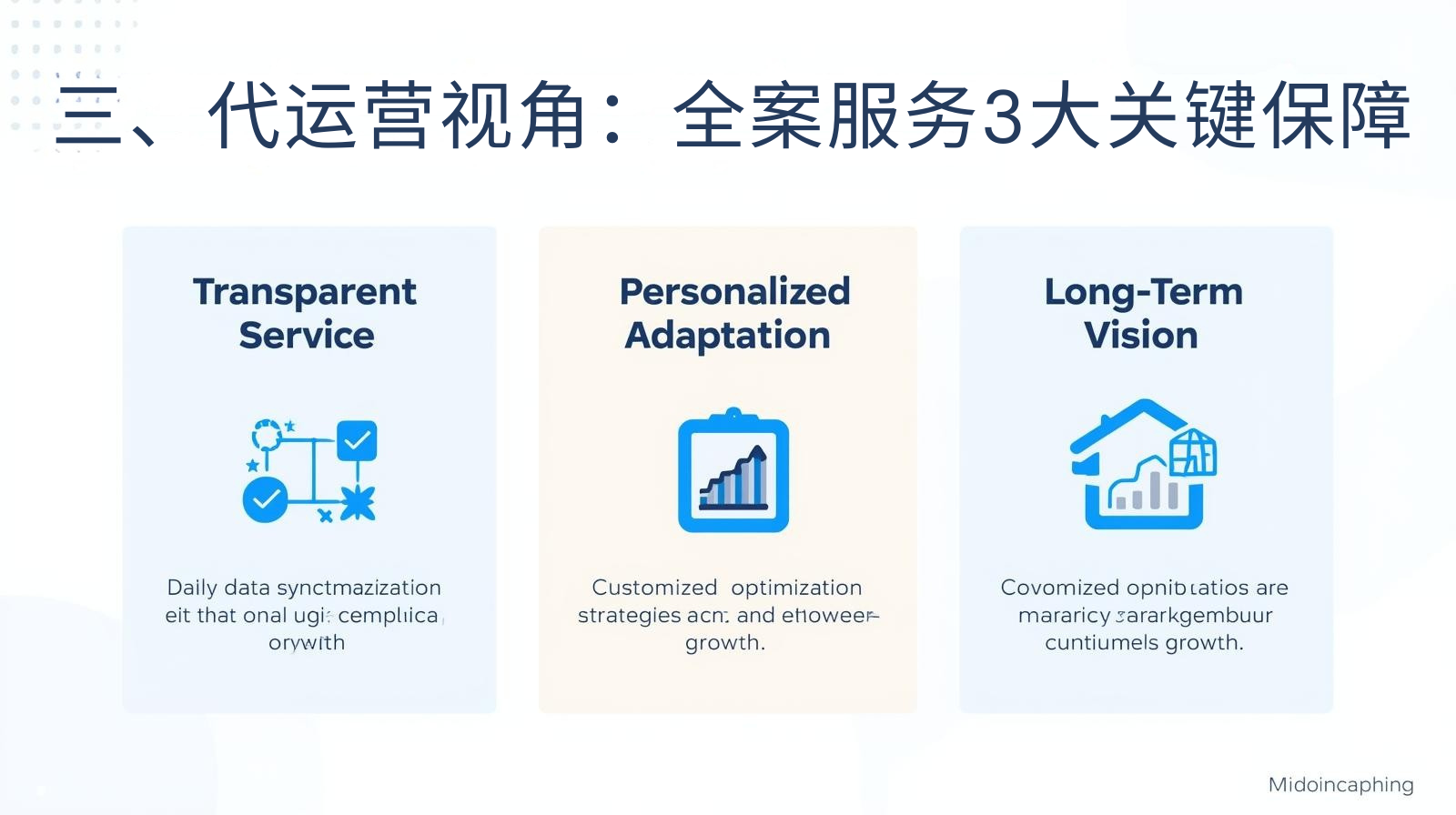
3.1 Transparent Service: Ensuring Customers Are Fully Informed Throughout the Process
Key actions : Establish a daily/weekly/monthly service synchronization mechanism, synchronizing traffic data daily, synchronizing optimization actions weekly, and submitting detailed review reports monthly; build dedicated customer service groups to respond to customer inquiries promptly and avoid the "optimization black box";
Customer value : Enabling customers to clearly understand the destination and effect of every investment enhances trust and reduces customer churn.
3.2 Personalized Adaptation: Rejecting a One-size-fits-all Approach
Key actions : Customize exclusive optimization solutions based on the client's product category, target market, and core strengths. For example, for 3C accessory clients, emphasize compliance and technological advantages, while for home furnishing clients, emphasize case studies and customization capabilities; avoid reusing uniform templates, which would lead to a lack of differentiation in the website.
Customer value : Enable your site to stand out on the AI platform, acquire more accurate traffic, and improve conversion efficiency.
3.3 Long-term vision: Growing together with customers
Key actions : Continuously monitor AI platform search rule updates (such as OpenAI and Google's rule adjustments in 2026) and optimize client sites in a timely manner; upgrade GEO optimization strategies in sync with client business growth (such as expanding into new markets or adding new products); provide AI traffic operation training to clients to enhance their independent operation capabilities;
Customer Value : Helping customers achieve long-term and stable growth in AI traffic, continuously creating value as customers expand their businesses, and increasing customer repurchase rates.
Recommended Article: Your Competitors Haven't Reacted Yet: Building an Independent E-commerce Website with GEO is the Biggest Blue Ocean Strategy Right Now
Recommended Article: Your Competitors Haven't Reacted Yet: Building an Independent E-commerce Website with GEO is the Biggest Blue Ocean Strategy Right Now
IV. Conclusion: The core value of outsourced operations is helping clients avoid detours and achieve results.
In 2026, AI platforms have become the core traffic entry point for independent foreign trade websites. For small and medium-sized foreign trade clients lacking technology, experience, and resources, the core value of outsourced operations is not "helping clients optimize their websites," but rather "helping clients avoid detours and acquire AI traffic and accurate inquiries at the lowest cost and fastest speed." This comprehensive GEO solution, built from scratch, is a standardized process based on our extensive client service experience. It takes into account both the search rules of AI platforms and the service scenarios of outsourced operations, enabling clients to see results quickly while ensuring a stable long-term ROI.
As a cross-border e-commerce agency, we deeply understand that our clients' core needs are "traffic, inquiries, and conversions," and GEO full-service optimization is the key to achieving these goals. In the future, AI search rules will continue to be updated, but the core logic of "customer-centric results and AI value recognition" will remain unchanged. Only by deeply understanding customer needs and keeping up with rule changes can we help more clients acquire AI platform search traffic from scratch and achieve steady growth in their foreign trade business.
If you are a third-party service provider, this complete process can be directly reused and optimized; if you are a foreign trade client, you can use this process to judge whether the third-party service provider is professional and avoid pitfalls.