
In an increasingly competitive global e-commerce environment, attractive products and reasonable prices are no longer enough to ensure business success. According to Forrester's research, customer experience has surpassed price and products to become the main factor in brand differentiation, and interactive participation is a core component of high-quality customer experience. For companies operating self-built cross-border e-commerce websites, designing effective interactive activities can not only increase user engagement, but also significantly affect conversion rates and customer loyalty. It is particularly noteworthy that HubSpot data shows that visitors who have participated in interactive activities have a conversion rate of 82% higher than the average visitor, and according to Bain & Company's research, increasing customer retention by 5% can increase profit by 25% to 95%. However, designing truly effective cross-border e-commerce interactive activities faces multiple challenges, including cultural differences, technological realization and sustained appeal. Several studies have shown that about 60% of e-commerce activities fail to meet the expected participation levels, mainly due to the lack of systematic planning methods and in-depth understanding of the target audience. This article will explore how to build a systematic activity planning framework to help cross-border e-commerce websites plan interactive activities that can truly enhance customer engagement, from strategic positioning to execution assessments, and create a sustainable participation ecosystem.
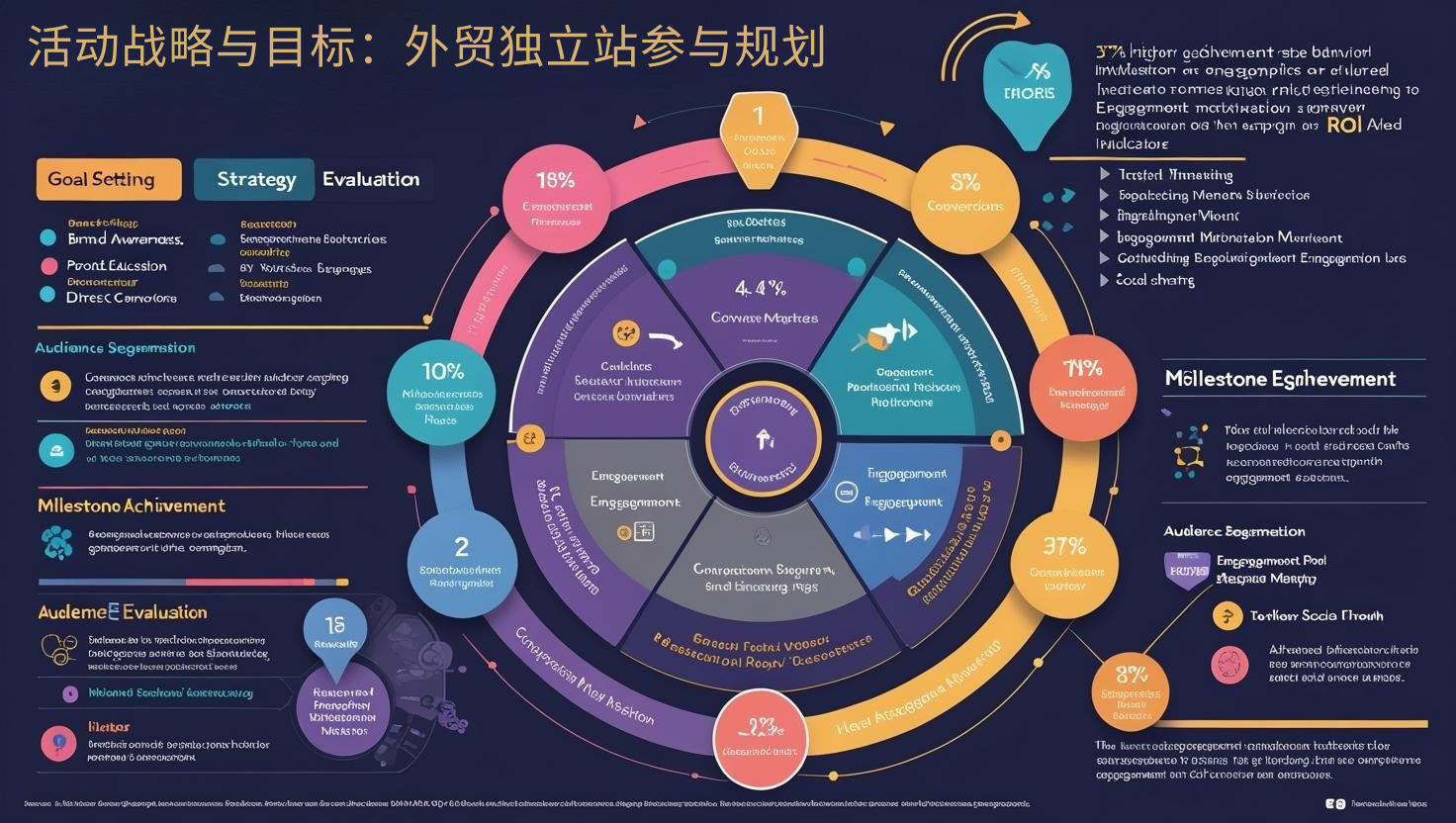 Activity strategy and objectives: Participate in planning for independent foreign trade stations
Strategic planning determines the success or failure of an activity. According to the Event Marketing Institute, activities with clear strategic goals achieve an average of 70% higher engagement and 83% better business outcomes than those without clear goals.
Building a systematic activity strategy framework
-
Target setting and KPI establishment: Define clear types of activity goals, such as brand awareness, product education or direct conversion; establish quantitative success indicators such as participation rate, share count or conversion growth; set phased goals and create activity maturity paths; consider differentiated goals in different markets and language versions; balance short-term participation and long-term relationships to establish goals; design ROI evaluation frameworks; pay special attention to the impact of cross-cultural differences on goal setting. Research shows that activities that break down goals into behavioral indicators achieve an average of 37% higher goal achievement rates than activities that set only general goals.
-
Audience segmentation and motivation for participation: Create detailed audience portraits of the event, including demographics, purchasing behaviors, and participation preferences; study differences in participation motivations in different cultural contexts; analyze participation barriers and motivation points; consider the impact of equipment and channel preferences; design targeted participation paths; use psychological principles to enhance participation motivation; pay special attention to differences in social sharing behaviors in different markets. An underrated but extremely effective strategy is "engagement motivation mapping", identifying core drivers of engagement for target audiences, and studies show that this approach can increase activity participation by about 41% because it ensures that activity design is directly related to factors that users really care about.
-
Event calendar and rhythm planning: Build a strategic annual event calendar to balance activities of different types and goals; consider the impact of seasonal and global festivals; create localized event planning for different markets; design connections and synergies between events; consider the impact of activity cycle length on the sustainability of participation; establish an emergency response activity framework; pay special attention to shopping behavior and festival culture in different markets in different countries. An advanced strategy is "participation cycle design", which expands a single activity into a multi-stage engagement journey, and studies show that this approach can extend the overall participation time by about 3.5 times while increasing the depth of participation by about 68%.
 Event Creativity and Design: Attraction Building
Creative design determines the willingness to participate. According to the Content Marketing Institute, creative quality is the primary factor affecting participation rates, and excellent creativity can increase participation by up to 218%.
Create global event attraction
-
Creative theme and concept development: Develop activity themes that fit the brand tone and audience interests; create interactive concepts that are naturally associated with the product; consider cultural adaptability and international understanding; study competitive activities and find differentiation spaces; consider the balance of innovation and familiarity; develop concept testing frameworks to evaluate initial attractiveness; pay special attention to differences in topic understanding in different cultural contexts. An efficient approach is the "theme resonance test", which validates the emotional response and willingness to engage in activity topics in small-scale audiences, and studies have shown that such pre-tests can increase the final participation rate by about 29%.
-
Participation mechanism and incentive design: Create multi-level engagement paths to meet different investment intentions; design tasks that balance challenges and achieveability; develop fresh interactive forms; consider social sharing and viral transmission mechanisms; create attractive incentive structures that balance instant rewards and long-term value; study the application of gamified elements such as points, badges and rankings; pay special attention to different market preferences for incentive types. Research shows that activities that fused gamification elements increased the participation time by about 47% and the repeated participation rate by about 39% on average than traditional forms.
-
Visual design and communication strategies: Create eye-catching visual logos and theme elements of the event; design clear activity pages to highlight participation steps and values; consider the consistency of multi-channel publicity materials; develop emotional resonance points and narrative elements; design culturally accommodating visual languages; consider the design challenges of multilingual content; pay special attention to the differences in interpretation of colors and images in different cultures. A key strategy is the "visual narrative framework", which tells a complete story through visual elements rather than just presenting information, and studies show that this approach can increase the initial participation rate by about 36% because it creates emotional connections rather than purely rational decision-making.
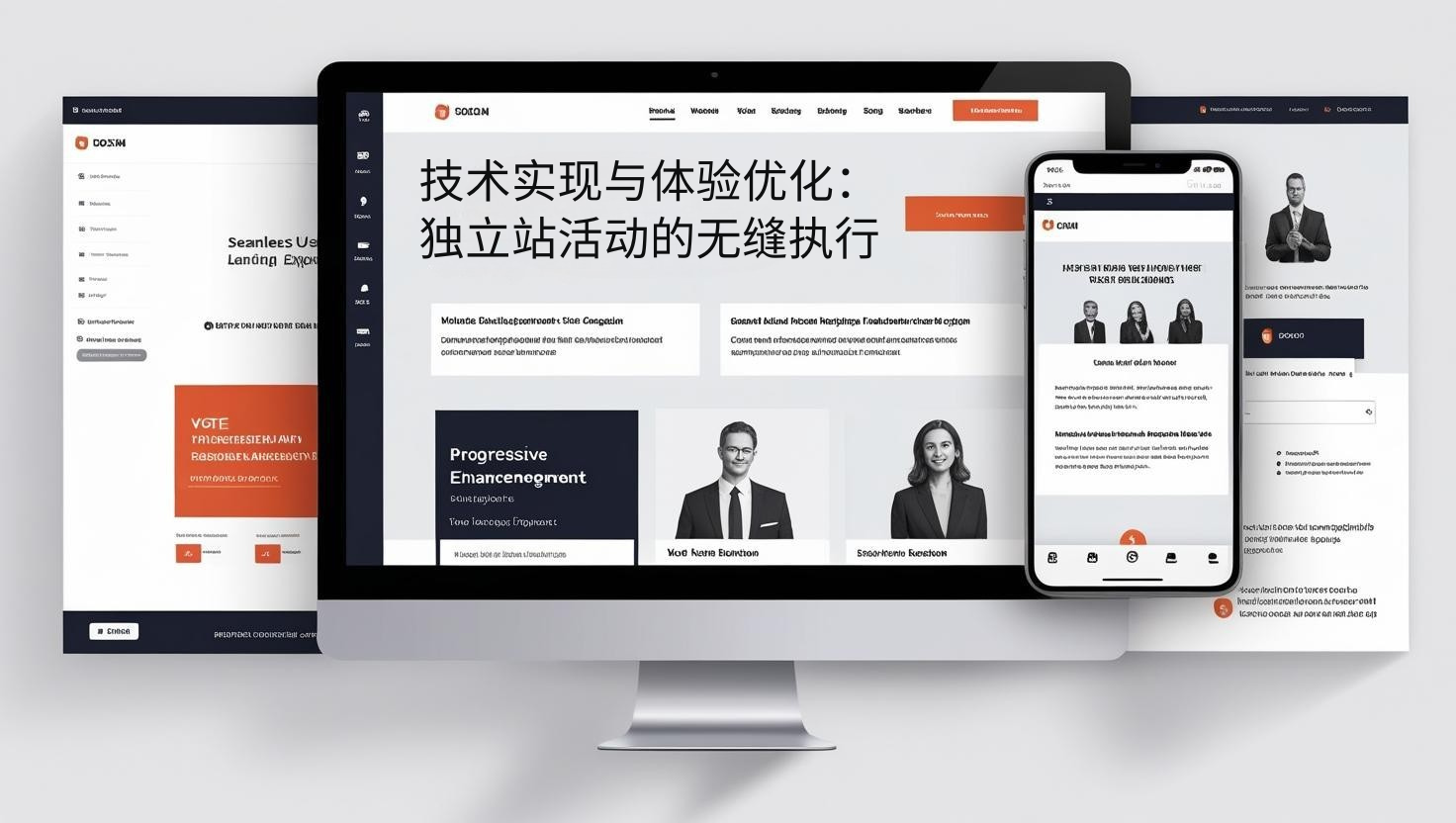 Technology implementation and experience optimization: seamless execution of independent site activities
Technical experience directly affects the completion rate. According to Google's research, every 1 second increase in activity page loading time, the bounce rate increases by 20% on average, and technical obstacles are the primary reason for activity abandonment (43%).
Build a smooth activity technology experience
-
Activity page design and optimization: Create a dedicated event login page to highlight core participation elements; optimize page loading speed, especially the first-screen content; consider mobile-first design to ensure a good experience of each device type; implement incremental interactive loading to reduce initial burden; optimize form design to minimize input friction; consider A/B testing key page elements; pay special attention to the speed and compatibility issues of international visits. An advanced optimization is the "participation fluency test", which systematically identifies and eliminates friction points in the participation path, and studies have shown that this approach can increase activity completion rate by about 31%.
-
Activity tools and function implementation: Select technical tools and platforms suitable for the activity type; implement necessary front-end interaction functions, such as voting, uploading or social sharing; consider activity continuity between multiple devices; optimize activity data collection and processing mechanisms; implement real-time participation feedback systems; design error handling and recovery mechanisms; pay special attention to cross-browser and cross-device compatibility. A key element is the "progressive enhancement strategy" that ensures that the underlying functionality works in all environments while providing enhanced experiences in advanced environments, and studies have shown that this approach can expand the reach of activity access by about 25%, while maintaining the appeal of a high-end experience.
-
Participation process and user experience: Design intuitive and clear participation guidance and guidance processes; create activity help resources and FAQs; implement progress indicators and completion logos; consider emotional design elements to enhance participation experience; optimize activity notification and reminder systems; design participation interruption and recovery mechanisms; pay special attention to the differences in usage habits of users of different cultural backgrounds. An underestimated strategy is the "micro-feedback system" that provides immediate, positive feedback signals during the participation process, and studies have shown that this approach can increase activity completion rate by about 28% because it provides a continuous psychological reward and sense of progress.
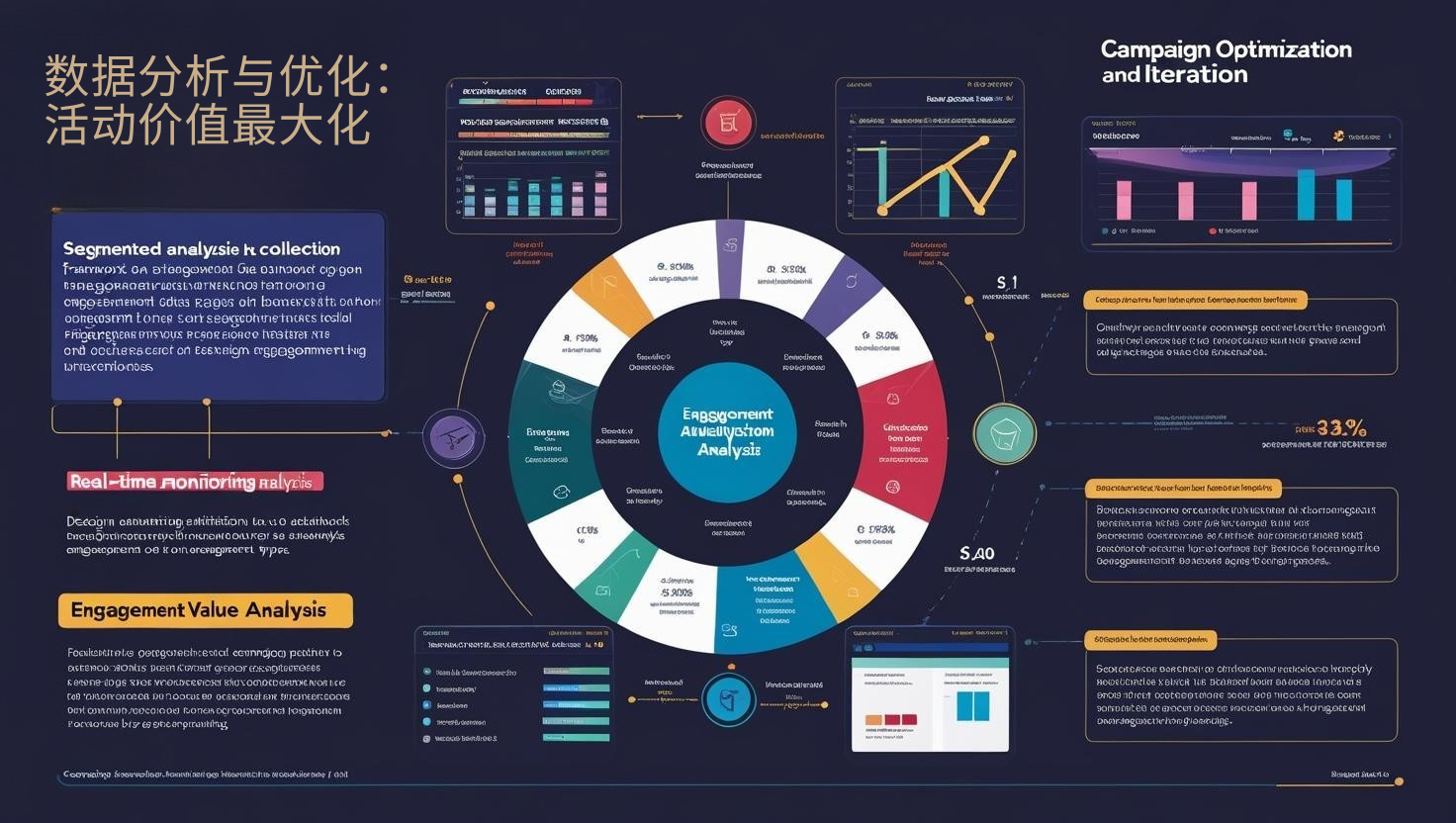 Data Analysis and Optimization: Maximizing Activity Value
Data-driven optimization is crucial. According to Aberdeen Group's research, businesses using advanced analytics optimization activities achieved an average of 61% higher participation rates and 43% better business outcomes than those with experience-driven decision-making.
Build a continuous improvement activity system
-
Participate in data collection and analysis framework: Establish a comprehensive activity data collection plan covering participation indicators and business impacts; design a segmented analysis framework to understand participation patterns of different groups; implement behavioral sequence analysis to identify key participation paths and abandonment points; consider cross-channel attribution analysis to evaluate the contribution of different contact points; analyze emotional feedback and qualitative data; create real-time monitoring dashboards; pay special attention to performance comparisons in different regions and languages. An advanced analytical approach is "participation value analysis", which quantifies the contribution of different types of engagement behaviors to the ultimate business objectives, and studies show that this approach can increase activity ROI by about 33% because it guides resources to focus on the most valuable types of engagement.
-
Activity optimization and iteration strategy: Quickly adjust activity parameters and elements based on initial data; design a mid-term optimization framework to respond to participation trends; implement A/B testing plans to verify optimization assumptions; consider automated optimization tools such as dynamic content and personalization; analyze abandon behavior patterns and design intervention strategies; create activity extension and expansion mechanisms; pay special attention to the response differences between audiences in different cultural backgrounds. A practical strategy is to "fine-tune the experimental cycle", using small-scale rapid testing to continuously optimize activity elements, and studies have shown that this agile method improves activity performance by about 28% on average than large-scale redesigns.
-
Learning transformation and knowledge accumulation: Create a post-activity analysis framework and systematically extract key learning; establish a database of cross-activity pattern recognition and best practices; consider sharing successful cases and lessons of failure; develop an activity type effect evaluation and comparison system; establish a correlation model between participation types and business results; design a long-term participation strategic adjustment mechanism; pay special attention to differentiated learning in different markets. A strategic approach is the "participation model library", which systematically records and categorizes effective participation mechanisms and models, and studies show that this knowledge management can increase the effectiveness of new activities by about 37% because it is based on validation experience rather than assumptions.
In the increasingly fierce global e-commerce environment, carefully planned interactive activities have become a key strategy for self-built websites to enhance customer engagement and establish brand differentiation. Through systematic activity strategy planning, innovative creative design, smooth technology implementation and data-driven continuous optimization, enterprises can create truly engaging customer experiences, enhance brand stickiness, improve conversion rates, and cultivate long-term loyalty. The key is to view the event as an integral part of a strategic customer journey rather than an isolated promotional tool, creating meaningful interactions through careful design that truly enhances the emotional connection between customers and brands.
Related articles recommended:https://pinshop.cn/zh-Hans/blog/what-is-independent-site-for-business