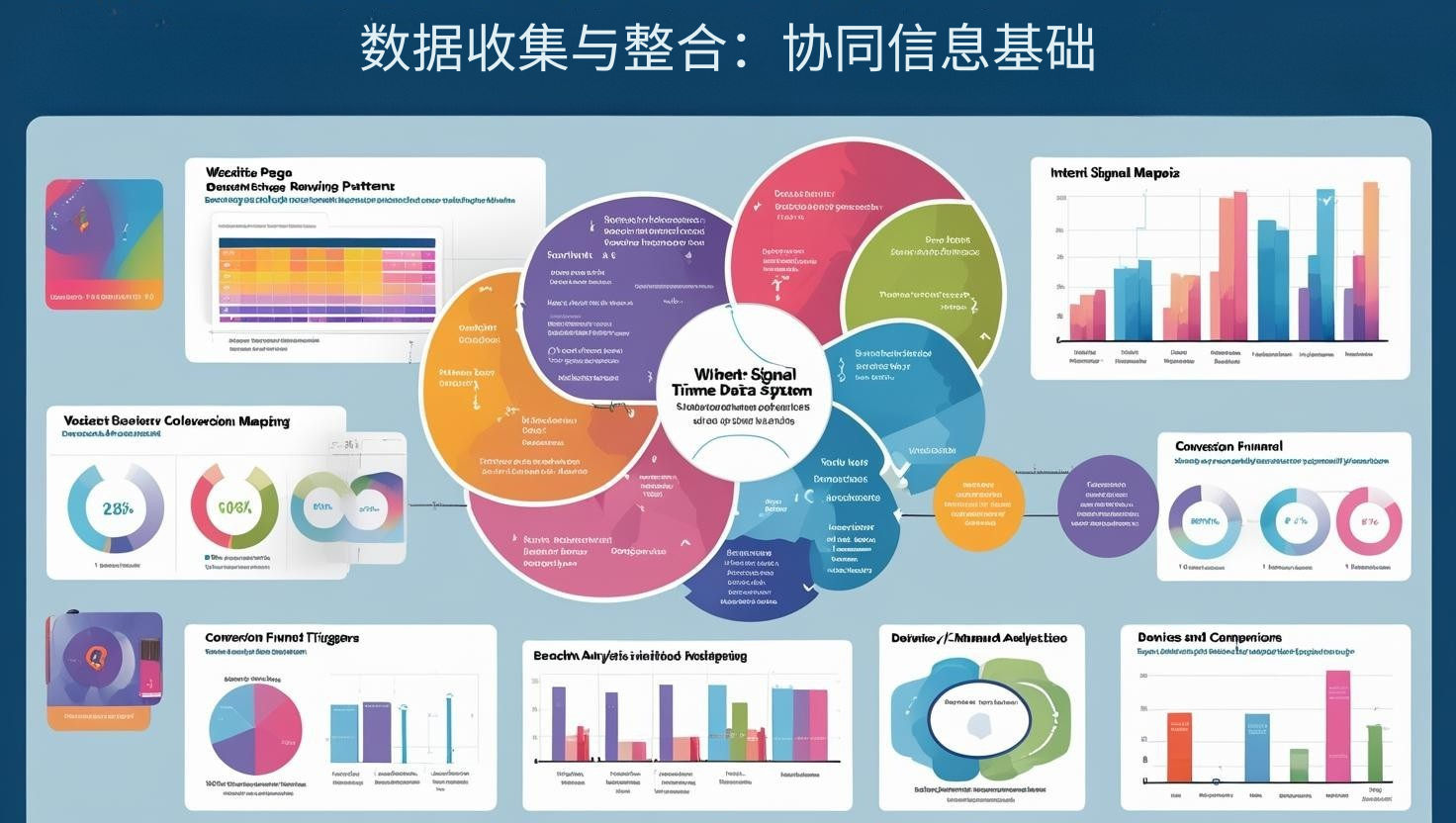
 Data Collection and Integration: The Foundation of Collaborative Information
Data integration is the foundation of decision-making. According to Forrester research, companies that integrate data from multiple sources achieve an average 43% improvement in decision accuracy and 57% improvement in market responsiveness compared to companies that rely on a single data source.
Building a Multi-Dimensional Data System for Cross-Border Independent Websites
-
Website Behavior Data Extraction and Analysis: Establish a systematic website user behavior data collection framework; analyze product page browsing patterns and dwell time; study search queries and navigation paths to identify potential needs; examine conversion funnels and abandonment reasons to identify product issues; analyze reviews and Q&A content to extract qualitative feedback; consider behavioral changes across devices and channels; and pay special attention to comparing behavioral patterns across different regional markets. A key method is "intent signal mapping," which combines and analyzes multiple micro-behavioral indicators to infer true user intent. Research shows that this method can improve the accuracy of demand understanding by approximately 35%, surpassing traditional single-metric analysis.
-
Synergizing Active and Passive Research: Designing research triggers integrated with the website experience; creating intelligent research diversion based on user behavior; considering the use of micro-surveys and pulse surveys to reduce noise; integrating unstructured data from review analysis and social listening; establishing systematic monitoring of competitor products and reviews; developing mechanisms for collecting insights from the supply chain and partners; and paying special attention to cross-cultural research design and bias control. Research shows that companies that collaborate with passive data analysis and active research achieve an average increase in insight depth of approximately 47% and discovery rate of approximately 38% compared to using either method alone, demonstrating the value of multi-method integration.
-
Considering the specificities of global market data: Establishing a region-specific data collection and analysis framework; considering differences in data reliability and representativeness across markets; creating cross-market data comparison and standardization mechanisms; assessing the impact of cultural factors on data interpretation; developing multilingual research and feedback analysis capabilities; considering the impact of market maturity on data interpretation; and paying special attention to consumer expression and feedback authenticity in different regions. A high-level strategy is a "cultural calibration model," which adjusts data interpretation standards based on the cultural characteristics of different regions. Research shows that this approach can increase the accuracy of cross-cultural insights by approximately 41%, avoiding erroneous global marketing decisions.
 Consumer Insight Extraction: The Driving Force of Product Innovation
The quality of insights determines product direction. According to Nielsen research, products based on deep consumer insights achieve an average 56% higher market success rate and 31% faster market acceptance than products based on internal assumptions.
Data-to-Insight Transformation System
-
Needs Hierarchy and Pain Point Analysis: Develop a consumer needs hierarchy framework, distinguishing functional, emotional, and social needs; create a category-specific pain point classification system; conduct cross-regional demand analysis to identify commonalities and specificities; consider a balanced exploration of explicit and implicit needs; research demand intensity and priority assessment methods; develop competitive product satisfaction and gap analysis; and pay special attention to the impact of regional culture on demand expression. A structured approach is a "multidimensional needs map," which ranks different types of needs by intensity, satisfaction gaps, and population coverage. Research shows that this approach can improve product positioning accuracy by approximately 43%.
-
Purchase Decision Factors and Value Drivers: Analyze the key decision factors and their proportions within product categories; create value driver models for different market segments; examine regional differences in price sensitivity and value perception; assess the relative importance of brand factors and product features; examine the role of social influence and recommendations in decision-making; establish a framework for analyzing decision paths and trigger points; and pay special attention to the unique considerations of cross-border purchases. A high-level analysis method, "decision path tracing," identifies key turning points and influencing factors in the purchase decision process. Research shows that this dynamic perspective can increase marketing efficiency by approximately 38%, more effective than static decision factor analysis.
-
Trend Forecasting and Innovation Directions: Develop a framework for monitoring and forecasting product category trends; analyze early adopter behavior and preference shifts; consider integrating trend signals from social media and industry data; study the trend propagation paths between regional markets; assess the potential impact of macro trends on product categories; establish a competitive innovation monitoring and analysis system; and pay special attention to regional differences in innovation adoption rates. One strategic approach is a "trend impact matrix," which assesses the potential impact and timeframe of various trends on different aspects of a product. Research shows that this structured analysis can increase the success rate of innovation direction selection by approximately 35%.
 Product Concept Proof: Innovation Testing for Independent Websites
Proof of concept is at the core of risk management. According to a Harvard Business Review study, systematic product concept proof can reduce the risk of new product failure by an average of 57% and reduce development costs by 31%.
Build a low-cost, high-efficiency innovation validation system
-
Concept Testing Methodology and Implementation: Design product concept displays and feedback collection integrated with the website; create a multivariate concept testing framework to evaluate different factor combinations; consider validation methods such as A/B testing, virtual demonstrations, and pre-order interest; develop comparative concept acceptance across different market segments; establish analysis and decision-making criteria for concept testing results; implement an iterative concept improvement and retesting process, with special attention to assessing cross-cultural differences in concept understanding. An effective approach is "incremental concept validation," which breaks down product concepts into core hypotheses and validates them one by one. Research shows that this approach can increase validation efficiency by approximately 42% while providing more precise improvement directions.
-
Prototype and Minimum Viable Product (MVP) Testing: Establish website-integrated prototype display and usage testing; create a remote testing and feedback collection system for functional prototypes; consider limited pre-sales as a market validation mechanism; develop an early adopter program and collect in-depth feedback; design MVP feature prioritization and release strategies; establish a model to correlate prototype testing data with final product forecasts; pay special attention to sample representativeness and bias control in international testing. Research shows that companies using multi-stage prototype validation reduce product rework by an average of approximately 45% and post-launch adjustments by approximately 38% compared to single-stage validation, demonstrating the value of progressive validation.
-
Pricing Strategy and Value Validation: Create price sensitivity tests and optimal price range analysis; consider acceptance testing of different pricing models and strategies; develop cross-regional price elasticity comparisons and strategy adjustments; study the value optimization of package combinations and add-on services; evaluate predictive models for promotional strategies and discount effectiveness; establish a validation mechanism for competitive positioning and value perception; pay special attention to assessing the impact of exchange rates and taxes on international pricing. A key strategy is "value ladder testing," which assesses the alignment between expected value and actual value delivered at different price points. Research shows that this approach can improve pricing optimization effectiveness by approximately 33%, pinpointing the true value maximization point.
 Post-Launch Evaluation and Optimization: Continuous Product Evolution
Continuous optimization is key to long-term success. According to research by the Product Development and Management Association, companies that implement systematic post-launch evaluations extend product lifecycles by an average of 31% and increase overall profitability by 24% compared to companies that react more passively.
Build a data-driven product optimization cycle
-
Product Performance Monitoring and Analysis Framework: Establish a comprehensive product KPI monitoring system, from sales to reviews; create segmented and regional comparisons of product performance; develop competitive comparisons and market share tracking mechanisms; consider evaluation metrics specific to the product lifecycle stage; analyze user usage patterns and feature acceptance; establish a systematic collection of product issues and improvement points; and pay special attention to evaluating differentiated performance in international markets. An advanced approach is the "Product Health Dashboard," which integrates multiple metrics to create a comprehensive view of product performance. Research shows that this comprehensive analysis can identify product opportunities and risks approximately 43% earlier than single-metric evaluation.
-
Customer Feedback Integration and Action Conversion: Design a multi-channel customer feedback collection and integration system; create a feedback classification and prioritization framework; develop a structured process for incorporating feedback into product improvements; consider establishing a customer-engaged product improvement community; implement a "closed-loop" feedback mechanism to inform users of improvements; establish time series analysis and forecasting of feedback patterns; and pay special attention to understanding and interpreting cross-cultural feedback expressions. Research shows that companies that implement systematic feedback management experience an average 35% higher customer satisfaction and 28% higher repurchase rates than those that employ ad hoc responses, demonstrating the value of a structured approach.
-
Product Iteration and Lifecycle Management: Create a data-based product iteration decision framework and prioritization model; develop a market validation and adjustment mechanism for the product roadmap; consider A/B testing and phased releases for new features; research data support for product line expansion and portfolio optimization; establish decision criteria and timing analysis for product retirement and replacement; design cross-product line learning transfer and resource optimization; and pay special attention to strategies for managing product lifecycle differences in international markets. One strategic practice is "dynamic product planning," which continuously adjusts product development priorities based on real-time market feedback. Research shows that this agile approach can improve product-market fit by approximately 38%, significantly outperforming static product plans.
In today's increasingly competitive global market, the effective synergy between in-house websites and market research has become a key strategy for optimizing product decision-making for cross-border companies. Through systematic data collection and integration, deep consumer insight extraction, rigorous product concept verification, and ongoing post-launch evaluation and optimization, companies can significantly improve product-market fit, reduce development risks, and achieve sustainable growth. The key is to view in-house websites as valuable data assets, complementing traditional market research methods to create a truly comprehensive and timely understanding of the market.