
Independent website customer journey optimization: from visitor to loyal user

  • Independent website marketing and promotion
  • Independent website industry application
  • Independent website operation strategy
Posted by 广州品店科技有限公司 On Aug 08 2025
In the fiercely competitive e-commerce landscape, the success of an independent website depends not only on attracting traffic but also on converting visitors into loyal customers. According to research by Bain & Company, improving customer retention by 5% can increase profits by 25%-95%. However, most online stores focus solely on customer acquisition and initial conversions, overlooking the importance of building long-term customer relationships. This article will share how to design and optimize the complete customer journey, meticulously crafting every stage from first contact to long-term loyalty.

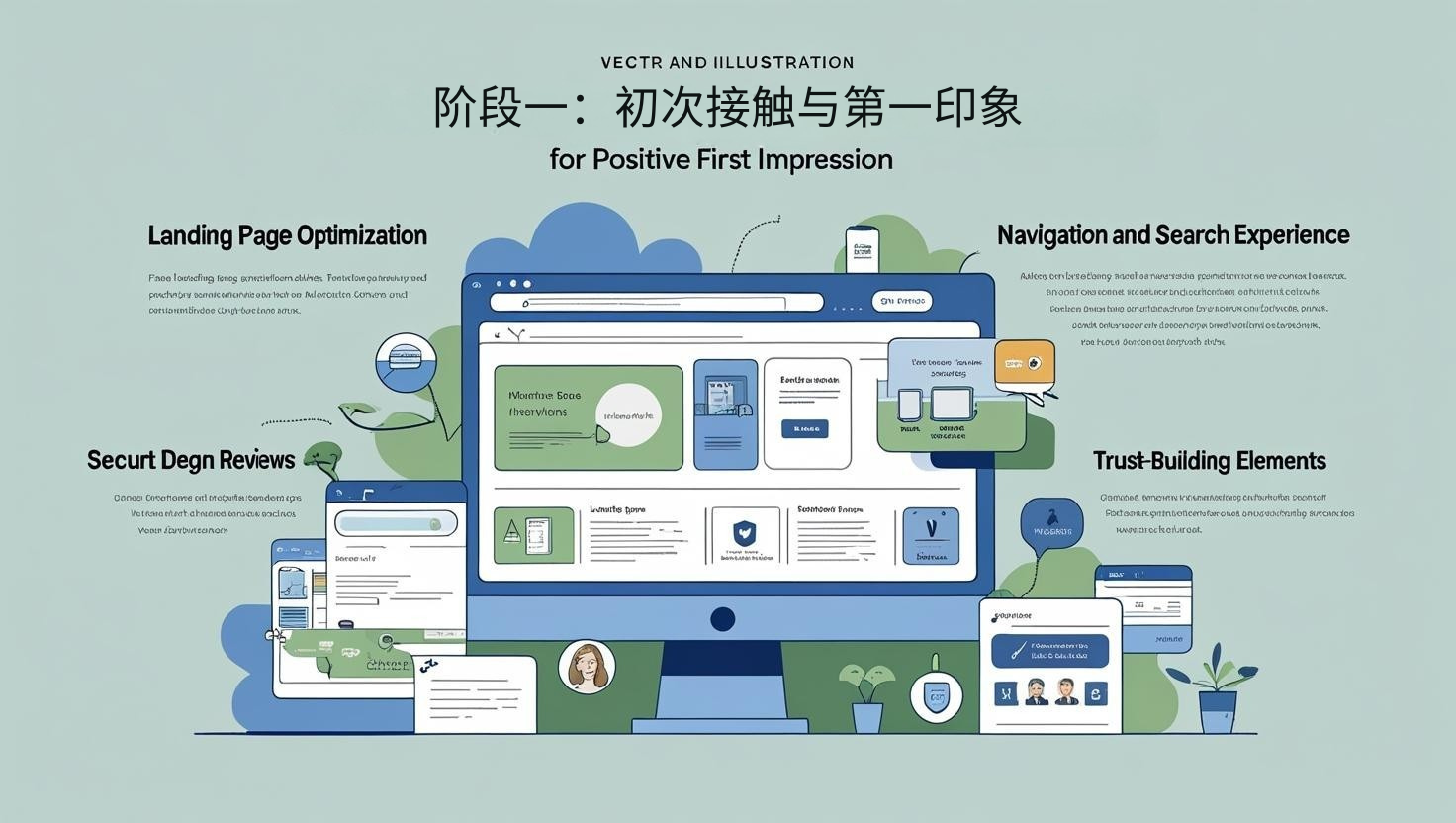
Stage 1: Initial Contact and First Impression

Phase 1: First Contact and First Impression

A visitor's first experience determines whether they will continue to explore your site:

  1. Landing Page Optimization Strategies:

    • Ensure page loads within 3 seconds (according to Google data, every 1-second increase in page load time decreases conversion rate by 12%)
    • Clearly communicate your value proposition and avoid information overload
    • Mobile responsive design (over 60% of shopping searches occur on mobile devices)
    • A/B test different headlines and above-the-fold content
  2. Navigation and Search Experience:

    • Implement predictive search and surface popular queries
    • Limit primary navigation options to 5-7 to reduce navigation difficulty
    • Use breadcrumbs to help users navigate
    • Product categorization should align with user thinking, not internal organizational structure
  3. Trust-building elements:

    • Strategically display social proof (reviews, media coverage) on the homepage
    • Highlight secure payment badges and privacy guarantees
    • Provide a detailed "About Us" and brand story
    • Show real team photos to add a human connection
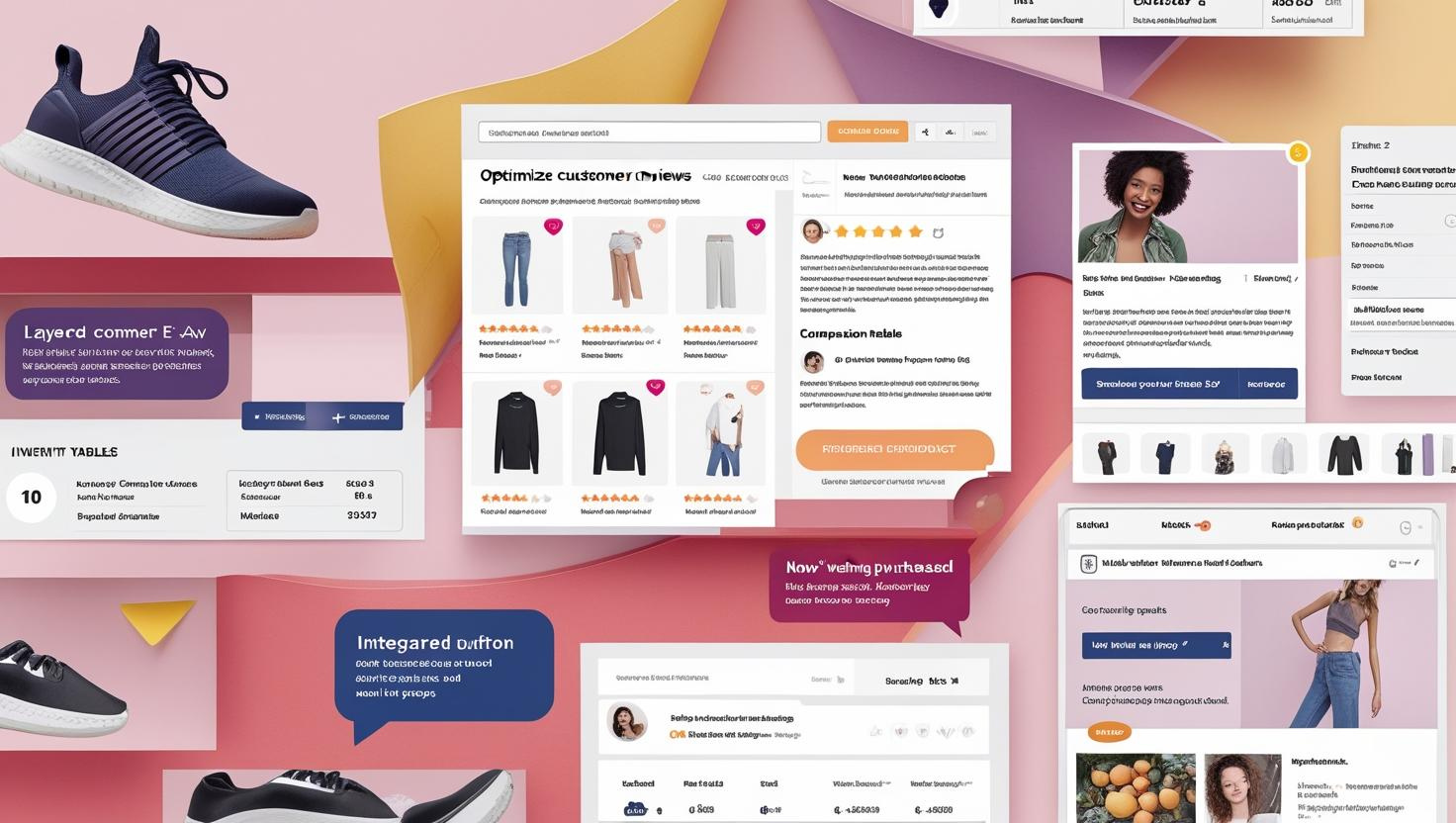
Stage 2: Consideration and Decision-Making Process

Stage 2: Consideration and Decision-Making

When visitors begin to seriously consider a purchase, they face more key questions:

  1. Product Page Optimization:

    • High-quality, multi-angle product images (according to Shopify data, increasing the number of product images from one to five can increase conversion rates by 30%)
    • Detailed, scan-friendly product descriptions
    • Clearly display inventory status and shipping times
    • Use comparison tables to highlight the differences between different models or styles
  2. Social Proof Strategy:

    • Display reviews in layers (by relevance, prioritize those with photos)
    • Implement a Q&A feature to answer common questions
    • Display real-time "Viewing Now" and "Purchased" notifications
    • Integrate user content from social platforms like Instagram
  3. Remove barriers to purchase

    • Provide detailed sizing guides and material information
    • Clear return and exchange policies and procedures
    • Calculators or tools to help choose the right product
    • Live chat support to answer last-minute questions
Stage 3: Purchase and First Experience

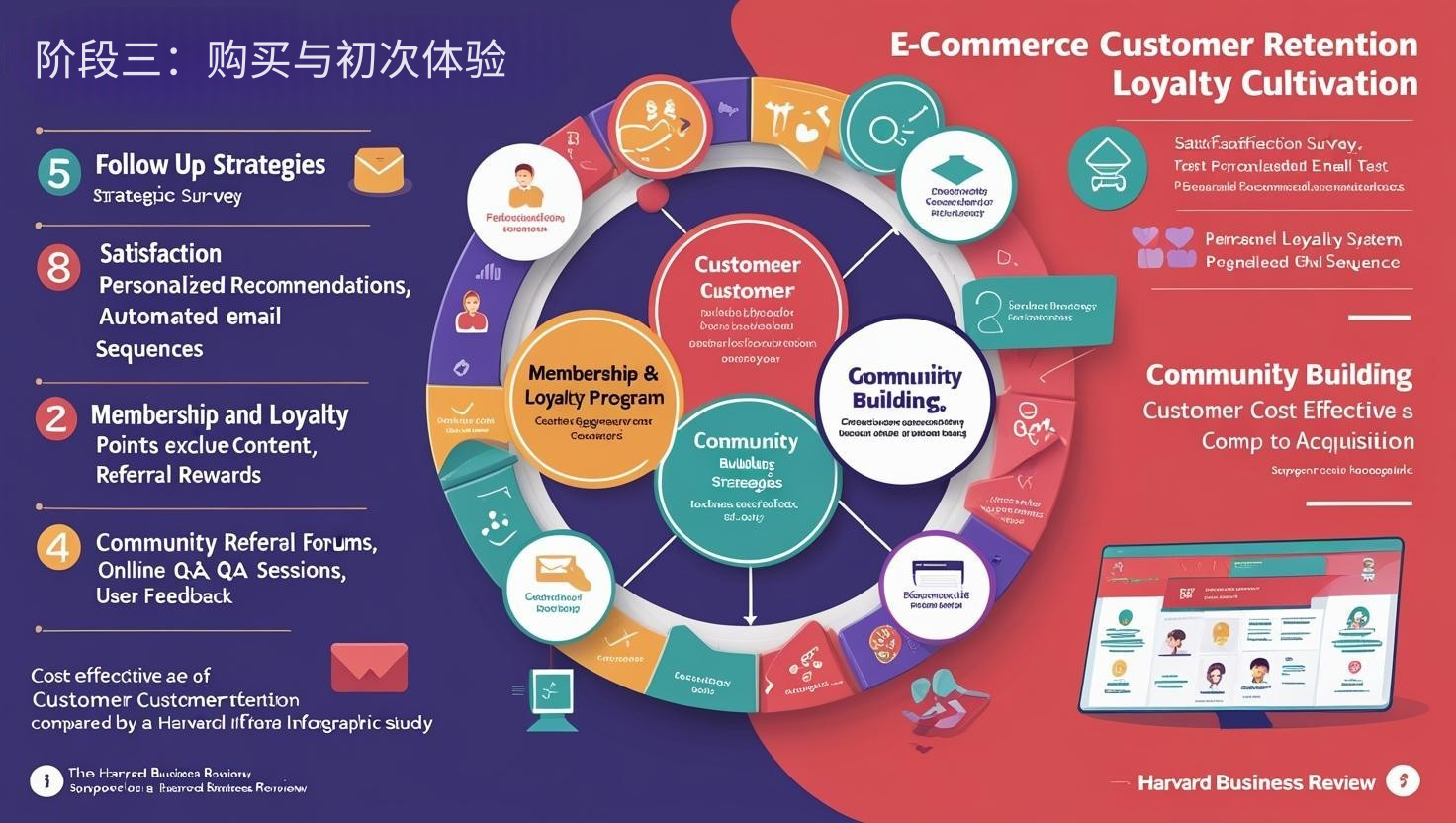
Stage 3: Purchase and First Experience

Successful conversion is just the midpoint of the journey, not the end:

  1. Checkout Process Optimization:

    • Simplify to 3-4 steps (Baymard Institute research shows that 17% of shopping cart abandonment is due to complex checkout processes)
    • Offer guest checkout options without mandatory registration
    • Support multiple payment methods (PayPal, credit cards, Apple Pay Pay, etc.)
    • Clearly display all fees to avoid "surprise" charges
  2. Order Confirmation and Expectation Management:

    • Detailed order confirmation page and email
    • Provide tracking information and estimated delivery time
    • Share product usage tips or suggestions
    • Set an appropriate communication frequency to avoid information bombardment
  3. Unboxing Experience Design:

    • Personalized packaging and thank-you notes
    • Product usage guide and care tips
    • Social media cards or tags that encourage sharing
    • Limited-time discount codes to encourage repeat purchases

Customer Retention and Loyalty Cultivation on E-commerce Websites

Customer Retention and Loyalty Cultivation on E-commerce Websites

Converting first-time buyers into loyal customers is the most cost-effective growth strategy:

  1. Follow-up Strategies:

    • Send satisfaction surveys 7-10 days after purchase
    • Provide relevant content and usage recommendations based on the purchased product
    • Set up automated email sequences to offer relevant products at the optimal time
    • Send recommendations for complementary products based on seasonality or usage cycles
  2. Membership and Loyalty Programs:

    • Design a points-based or tiered loyalty program
    • Offer exclusive content and priority access to new products or special events
    • Implement a referral reward program to encourage word-of-mouth communication
    • Periodically offer exclusive member discounts and surprise gifts
  3. Community-building strategies:

    • Create a community or forum for product enthusiasts
    • Hold online Q&A or livestream events
    • Encourage users to share their experiences and ideas
    • Solicit suggestions for product improvements and involve users in product development

According to Harvard Business Review, the cost of acquiring a new customer is 5-25 times higher than retaining an existing one. By systematically optimizing the customer journey, you can not only increase conversion rates but also cultivate a stable, loyal customer base, fueling sustainable growth.

Optimizing the customer journey isn't a one-time project, but a process of continuous improvement. Regularly collect data and feedback to understand how customer needs evolve and adjust your strategy accordingly. Remember, the best optimization comes from truly understanding your customers and delivering an experience that exceeds expectations at every touchpoint.


特色博客
Core web page indicators: Guide to foreign trade website building under Google’s new ranking standards

Core web page indicators: Guide to foreign trade website building under Google’s new ranking standards

This article provides the Core Web Vitals optimization framework verified by 7,200 companies, and solves the technical pain points of 92% user loss through global CDN deployment, religious compliance caching, on-demand loading and other strategies.

Sustainable design: How to integrate ESG concepts into your foreign trade official website

Sustainable design: How to integrate ESG concepts into your foreign trade official website

This article provides an ESG website building framework certified by the International Chamber of Commerce, and helps foreign trade companies win green purchase orders from the European Union and other countries through innovative designs such as carbon footprint visualization, renewable energy badges, and supply chain traceability.

GEO rapid ranking method for independent foreign trade stations: 7 days for brands to appear in ChatGPT target search term results

GEO rapid ranking method for independent foreign trade stations: 7 days for brands to appear in ChatGPT target search term results

This article focuses on the demand for fast 7-day ranking of GEO, an independent foreign trade station, and proposes a solution of "accurately focusing on core signals" to address the pain point of "slow optimization results" for foreign traders. The core content is divided into three parts: the first is the underlying logic of rapid ranking (ChatGPT prioritizes capturing precise keywords, incremental content, and multi-source linkage signals); the second is the 7-day implementation plan, which breaks down the tasks of "word mining and positioning, core page optimization, lightweight content creation, technology optimization, cross-channel traffic, active push, monitoring and fine-tuning" tasks on a daily basis. Each link is accompanied by tools, templates and camping light cases; the third is 5 pitfall avoidance guides (avoiding multiple keywords, plagiarism, neglecting video transcription, etc.). The full text has zero coding and low threshold, helping GEO novices to get their brands to appear in the ChatGPT target search term results within 7 days by focusing on 3 high-potential keywords and lightweight content.

Lightweight foreign trade independent station GEO content: How short videos + short copy can be efficiently captured by ChatGPT

Lightweight foreign trade independent station GEO content: How short videos + short copy can be efficiently captured by ChatGPT

This article focuses on the GEO content lightweight strategy for independent foreign trade websites, and proposes an efficient solution of "short video + short copywriting" in view of the pain points of foreign trade people who "lack the energy to make long content and have no professional editing ability". The core content is divided into three parts: the first is the logic of ChatGPT capturing lightweight content (information density priority, multi-modal signal linkage, scene-based matching requirements); the second is the 5-step implementation method (short video creation templates and tools, short copywriting formulas, independent station embedding positions, content optimization skills, cross-channel linkage and traffic); the third is 4 pitfall avoidance guides (avoiding valueless verification, vague expressions, lack of video transcription, and low update frequency). The full text provides scripts, copywriting templates and free tools that can be directly copied to help foreign trade companies achieve efficient crawling and accurate exposure of ChatGPT with low-threshold content.

How will AI reshape foreign trade website construction? PinShop’s AI website building practice

How will AI reshape foreign trade website construction? PinShop’s AI website building practice

This article reveals that PinShop has reconstructed the foreign trade website building process through innovations such as AI-driven industrial terminology generation, real-time certification verification, and religious compliance testing, and has been certified by authoritative organizations such as the International Chamber of Commerce.

With a limited budget, how to plan and build your foreign trade website in stages?

With a limited budget, how to plan and build your foreign trade website in stages?

This article provides a phased construction framework verified by 3,800 small and medium-sized enterprises. Through accurate demand positioning, dynamic certification phased deployment, religious compliance modularization and other solutions, a low-budget and high-conversion foreign trade website can be built.