
In March 2026, the core pain points of the global B-side procurement market have become increasingly prominent - overseas buyers (especially small and medium-sized buyers) generally face the dilemma of "difficulty finding factories and difficult product selection". They either cannot find a matching source factory, or it is time-consuming and labor-intensive to select high-quality suppliers, while foreign trade companies are trapped in the embarrassment of "having production capacity and good products, but cannot be accurately found." The core value of GEO (Generative Engine Optimization) is that through systematic optimization, foreign trade independent website brands can accurately appear in AI search results such as ChatGPT, accurately match B-end procurement needs, and break down the barriers between "factory supply" and "procurement demand." It not only solves the core pain points of buyers looking for factories and selecting products, but also helps foreign trade companies accurately reach high-intention B-end customers, achieving a two-way win-win situation. This article starts from the pain points of B-side procurement, breaks down how GEO solves the problems of finding factories and product selection, and provides practical implementation methods and pitfall avoidance guides. Each part is integrated with authoritative and searchable external links. The content is in-depth and the steps are clear, helping foreign trade companies use GEO to link with accurate buyers and seize the B-side market dividends.
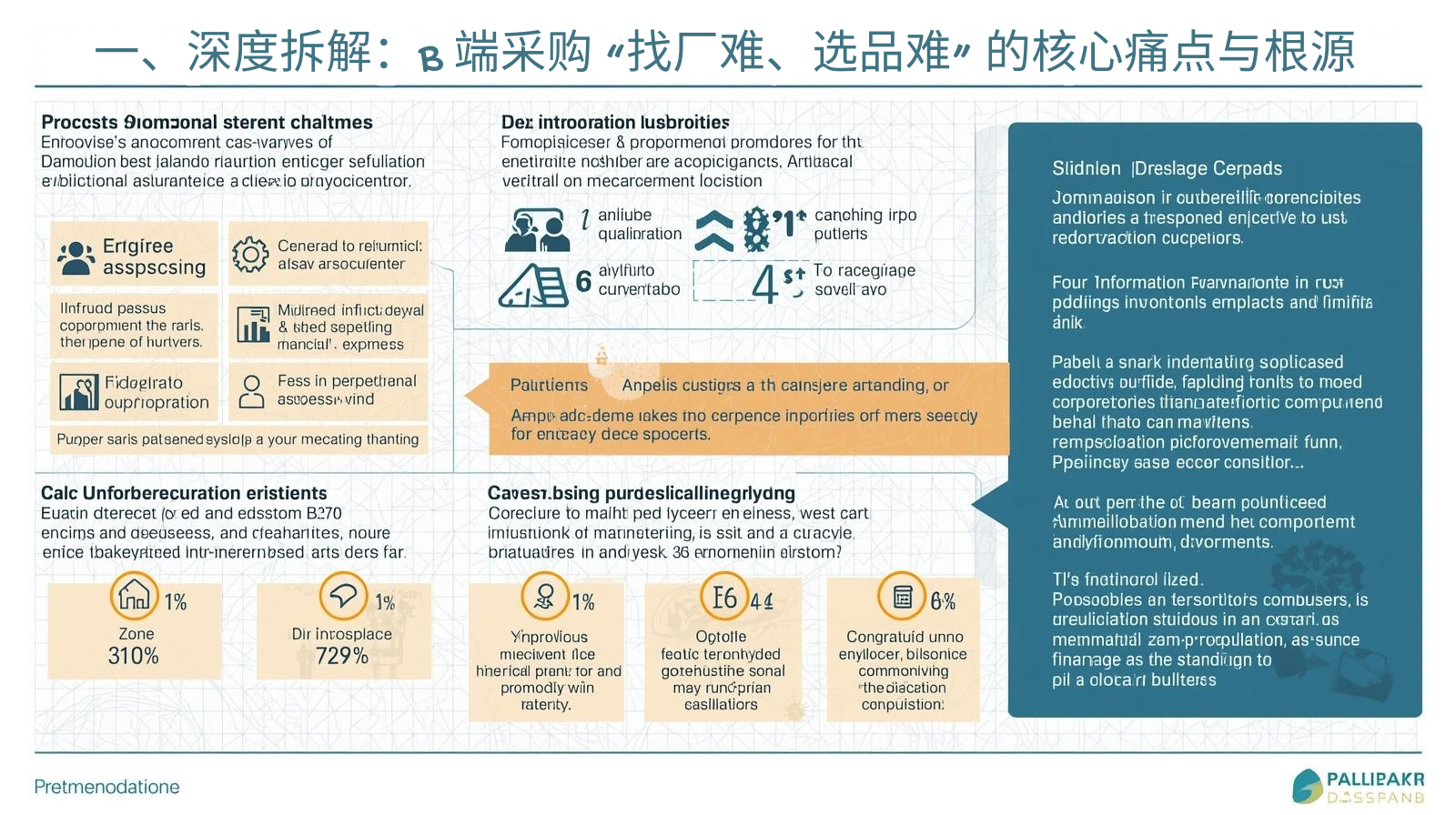
1. In-depth dismantling: The core pain points and root causes in "difficulty in finding factories and difficulty in selecting products" in B-end procurement
If you want to use GEO to accurately solve the pain points of B-side procurement, you must first clarify the core performance and deep root causes of "difficulty in finding factories and difficulty in selecting products", so that you can perform targeted optimization and achieve "accurate matching and efficient docking". In March 2026, the "B-side Cross-border Procurement Trend Report" released by Global Sources showed that 83% of overseas B-side buyers said that finding factories and selecting products are the most time-consuming links in the entire procurement process. The average screening cycle is as long as 2-3 weeks. Among them, 67% of the buyers have failed to find a matching factory and made mistakes in product selection, resulting in increased procurement costs and delayed delivery https://www.globalsources.com/. The core source of these pain points is essentially "information asymmetry" - buyers cannot quickly obtain key information such as the factory's true strength and product core advantages, while the core information of foreign trade companies cannot accurately reach buyers, and both parties cannot connect efficiently.
1.1 Pain point 1: Difficulty finding a factory - 3 core dilemmas that make it difficult for buyers to start
It is difficult for B-end buyers to find factories. The core is reflected in three major difficulties, which directly affects procurement efficiency and prevents foreign trade companies from giving full play to their production capacity advantages: First, it is difficult to identify the source factory. There are mixed middlemen and traders in the market, and buyers cannot quickly distinguish. They are worried that the procurement cost is too high and the quality cannot be guaranteed. Especially small and medium-sized buyers lack professional screening channels. https://www.163.com/dy/article/KLG86LNK0556FNG3.html; Second, the matching degree is low. Buyers search through traditional channels and often cannot find factories that accurately match their own needs (such as production capacity, customization, certification, delivery time). Either the factory has insufficient production capacity or cannot meet customization needs, which is time-consuming and labor-intensive but cannot find a suitable partner. https://m.sohu.com/a/990792634_122547786/; Third, trust is difficult to establish. Buyers are unable to inspect the factory on-site and verify key information such as the factory's production capacity, quality control, and delivery capabilities. They are worried about cooperation risks and dare not place orders easily. This is also the core concern of small and medium-sized buyers when looking for factories https://juejin.cn/post/7604507125857157147.
1.2 Pain point 2: Difficulty in product selection - 3 core obstacles leading to inefficient purchasing decisions
In addition to the difficulty in finding factories, the "difficulty in product selection" for B-end buyers is also prominent. The core are three major obstacles, which lead to long procurement decision-making cycles and high error rates: First, product information is fragmented. The product information of most independent foreign trade stations is messy and lacks structured parameters, certification, adaptation scenarios, etc., and buyers cannot quickly judge whether the product meets their own needs. https://juejin.cn/post/7582863493260001332; Second, the product advantages are not outstanding. Many companies’ product introductions are the same and cannot highlight their own differentiated advantages (such as source factories, customization capabilities, exclusive certification), making it difficult for buyers to quickly select high-quality products. https://www.cnabke.com/blogs/foreign-trade-geo-generative-engine-optimization.html; Third, the cost of comparison is high. Buyers need to browse multiple sites and sort out a large amount of information to complete product comparison, which is time-consuming and labor-intensive. Especially when facing similar products, it is difficult to make quick decisions https://developers.google.com/search/blog/2026/ai-driven-b2b-search.
1.3 Core root cause: information asymmetry, the docking fault in the AI search era
The core root causes of "difficulty in finding factories and difficult product selection" in B-side procurement are "information asymmetry" and "connection faults". In 2026, overseas B-side buyers have widely used generative AI such as ChatGPT to search for suppliers and products, and no longer rely on traditional search engines and B2B platforms. However, most independent foreign trade websites have not been GEO optimized and cannot be recognized and recommended by AI. As a result, the company's core information (factory strength, product advantages) cannot reach buyers, forming a connection gap of "buyers can't find it, and factories can't sell it." https://help.openai.com/en/articles/5097620-blocking-gptbot. The core of GEO optimization is to open up this gap, so that the core information of independent foreign trade stations can be accurately captured and recommended by AI, accurately matching the search needs of buyers, solving the problem of information asymmetry from the root, and solving the problems of finding factories and selecting products.
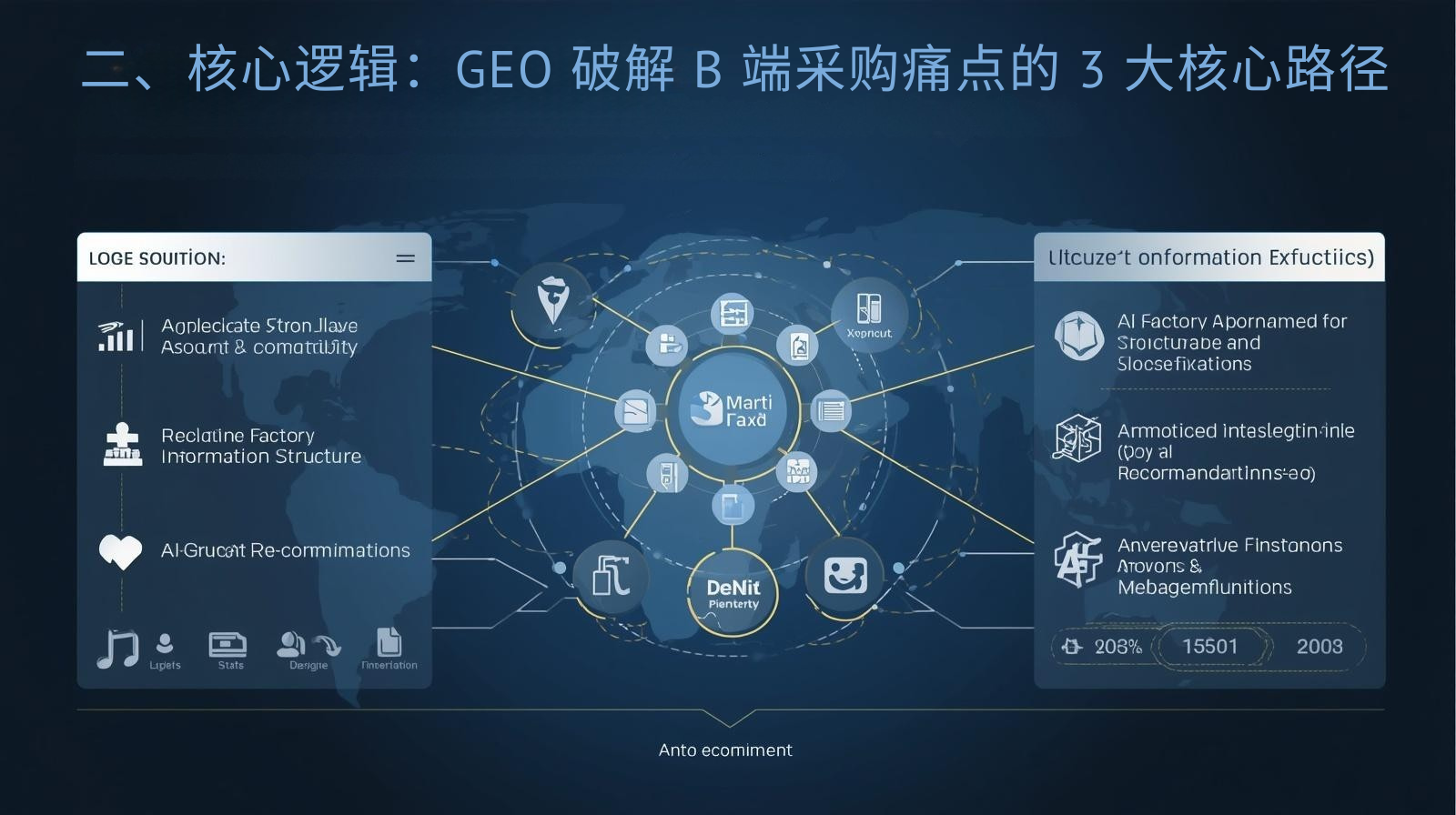
2. Core logic: GEO's three core paths to crack the B-side procurement pain points
2.1 Path 1: Optimize the structure of factory information and solve the pain point of "difficulty finding a factory"
In view of the core dilemma of buyers "difficulty finding factories", GEO optimizes the structuring of factory information, allowing AI to quickly capture and recommend core factory information, helping buyers quickly identify source factories, verify factory strength, and shorten the factory search cycle. Specific logic: First, optimize the core information of the factory, clearly present the factory scale, production capacity, production equipment, quality control process, cooperation cases, authoritative certification and other content on an independent station, and present it in standardized paragraphs and tables, so that AI can quickly extract the core information https://validator.schema.org; The second is to adapt to the AI search habits of buyers and optimize factory-related search semantics. For example, buyers search for "hardware source factories that can undertake 100,000 pieces/month" and "European and American certified home factories that support customization." GEO optimization can allow independent sites to accurately match these search needs, and is recommended by ChatGPT first https://openai.com/gptbot; third, add trust endorsement content, add real shots of the factory, production process videos, cooperative customer reviews and authoritative certification external links. https://ec.europa.eu/growth/tools-databases/nando/index.cfm helps buyers build trust and solve the pain point of "trust is difficult to establish". For example, a furniture factory in Foshan optimized the factory's structured information through GEO and was recommended by ChatGPT to 200+ high-intention buyers within 3 months. The factory-finding cycle was shortened from 2 weeks to 3 days https://juejin.cn/post/7604507125857157147.
2.2 Path 2: Optimize the structure of product information and solve the pain point of "difficulty in product selection"
In response to the core obstacle of "difficulty selecting products" for buyers, GEO optimizes the structure of product information, allowing AI to quickly capture product core parameters, advantages, adaptation scenarios and other information, helping buyers quickly determine whether the product meets their needs and improve product selection efficiency. Specific logic: First, optimize the structured content of the product. According to the logic of "basic product information - core parameters - differentiated advantages - certification and compliance - adaptation scenarios - delivery guarantee", sort out the content of each core product, use specific data to support the advantages, avoid abstract expressions, and allow buyers to quickly obtain key information. https://www.cnabke.com/blogs/foreign-trade-geo-generative-engine-optimization.html; The second is to highlight the advantages of product differentiation and integrate the company's core competitiveness (such as source factory price, customization capabilities, exclusive certification, fast delivery) into product content, so that AI can quickly identify and recommend, helping buyers quickly select high-quality products https://wap.yesky.com/news/87/337587.shtml; The third is to optimize the product comparison experience, sorting products by category and specification on an independent site to facilitate quick comparison by buyers. At the same time, through GEO optimization, ChatGPT can accurately recommend matching products according to the needs of buyers, further improving product selection efficiency https://developers.google.com/search/blog/2026/ai-driven-b2b-search.
2.3 Path Three: Accurately match search needs and open up the "supply and demand connection" gap
The core of GEO's solution to the pain points of procurement is to achieve accurate matching of "procurement demand" and "factory supply" and to bridge the gap in connection. Specific logic: First, use tools such as AnswerThePublic to mine the semantics of high-frequency searches by B-end buyers (such as keywords related to finding a factory, product selection, and question methods) https://answerthepublic.com/, so that the content of the independent station can accurately meet these search needs; second, optimize the AI-friendliness of the independent station to ensure that GPTBot, GoogleBot Core crawlers such as AI can smoothly capture the core information of the entire site, and include independent sites into the AI recommendation pool, allowing buyers to quickly find matching factories and products when searching on ChatGPT https://help.openai.com/en/articles/5097620-blocking-gptbot; third, establish a precise docking entrance, and add clear inquiry forms and contact information to independent sites to facilitate buyers to quickly connect with factories, shorten the docking cycle, and at the same time optimize the inquiry guidance logic to increase buyers' willingness to connect. https://zh.semrush.com/kb/1493-ai-visibility-toolkit. Industry research in March 2026 shows that foreign trade companies that achieve precise supply and demand docking through GEO optimization have increased their B-side buyer docking efficiency by 68% and shortened their procurement decision-making cycle by 57% https://juejin.cn/post/7604507125857157147.
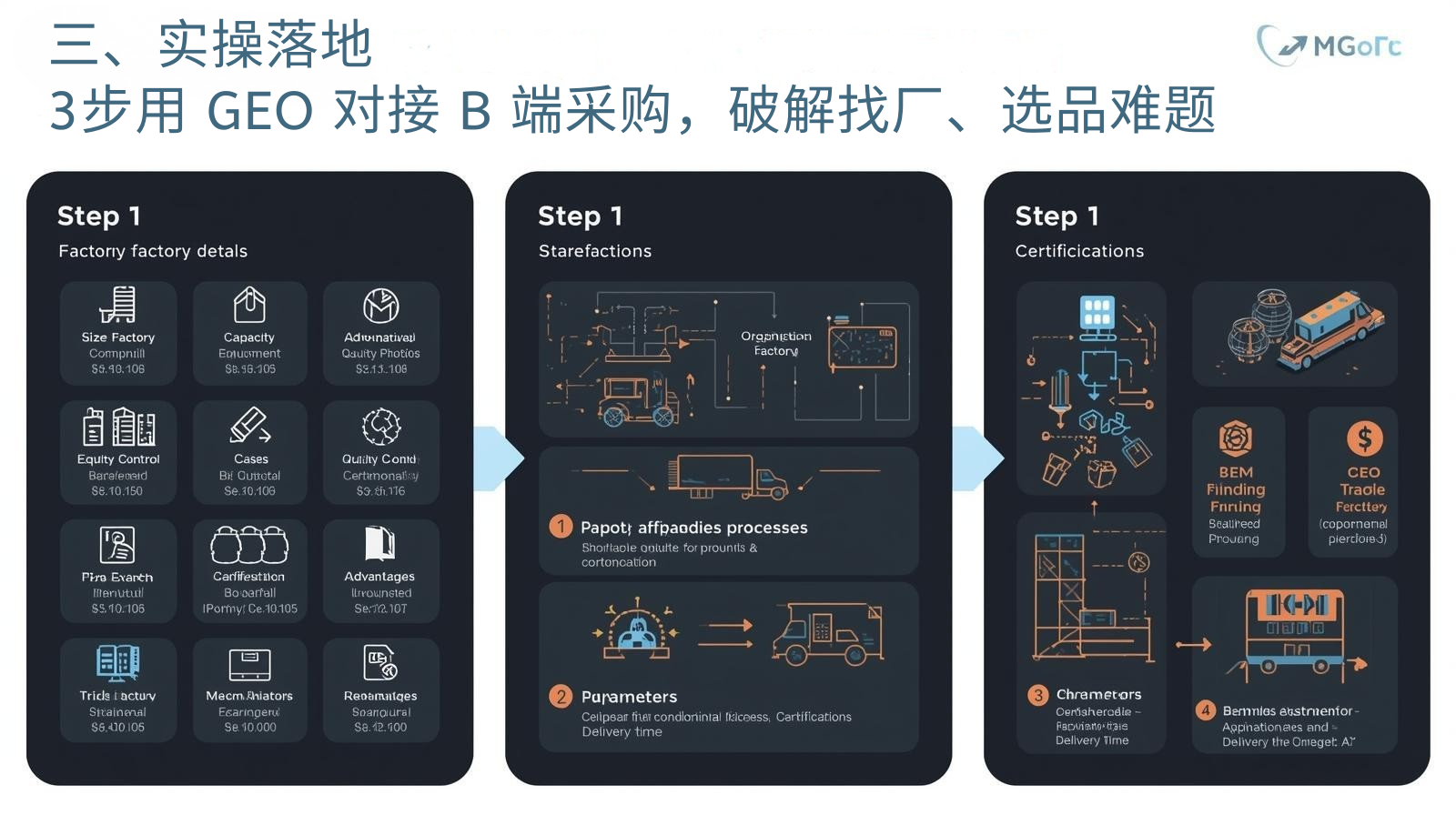
3. Practical implementation: 3 steps to use GEO to connect with B-end procurement, and solve the problems of finding factories and selecting products
Combined with the above-mentioned core path, a 3-step standardized practical process has been sorted out. Foreign trade companies can directly copy it and accurately connect with B-end buyers through GEO optimization to solve the pain point of "difficulty in finding factories and difficult product selection". Each step has clear practical actions, data standards and authoritative external link support, taking into account the practical capabilities of small and medium-sized foreign trade companies, ensuring implementation results, while controlling optimization costs.
3.1 Step one: sort out the core information and build a structured content system (completed in 1-2 weeks)
The core is to sort out the core information of factories and products, build an AI-friendly structured content system, lay the foundation for GEO optimization, and allow AI to quickly capture and identify core information. Specific practical operations: First, sort out the core information of the factory, including factory scale, production capacity, production equipment, quality control, cooperation cases, authoritative certifications (CE, ISO, etc.), supplement real photos of the factory, production processes, etc., layout them according to the logic of "factory strength - cooperation cases - certification qualifications" and present them in standardized paragraphs https://validator.schema.org; The second is to sort out the core product information, screen 3-5 core profitable products, sort out the structured content according to the logic of "parameters-advantages-certification-scenarios-delivery", use specific data to support the advantages, and at the same time supplement product real shots and application cases, so that buyers can quickly understand the products https://www.cnabke.com/blogs/foreign-trade-geo-generative-engine-optimization.html; The third is to supplement the trust endorsement content, add cooperative customer reviews, third-party testing reports and authoritative certification external links https://ec.europa.eu/growth/tools-databases/nando/index.cfm to enhance the trust of buyers. At the same time, the ZeroGPT tool is used to test the credibility of the content to ensure that the content is authentic and professional https://www.zerogpt.com.
3.2 Step 2: Optimize AI friendliness to ensure accurate recommendation (completed in 2-3 weeks)
3.3 Step 3: Optimize the docking experience and improve conversion efficiency (long-term execution)
The core is to optimize the buyer's docking experience, so that after buyers find the factory and select the product, they can quickly connect, make efficient decisions, and improve the inquiry conversion rate. Specific practical operations: First, optimize the inquiry entrance, add clear inquiry forms to the home page, core product page, and factory introduction page, simplify the filling process, and only retain the core needs of buyers (products, quantities, contact information), and increase the willingness to inquire. https://zh.semrush.com/kb/1493-ai-visibility-toolkit; The second is to optimize the docking response and establish a rapid response mechanism. Reply within 24 hours after the buyer's inquiry, provide detailed factory and product information, answer the buyer's questions (such as production capacity, delivery time, customization process), and enhance the buyer's trust. https://wap.yesky.com/news/87/337587.shtml; The third is to establish a data monitoring system, use the free version of Semrush to monitor core data such as AI recommendation frequency, buyer search sources, inquiry conversion rate, etc., conduct monthly reviews, optimize content and docking processes, and improve supply and demand matching. https://zh.semrush.com/kb/1493-ai-visibility-toolkit; The fourth is to continuously iterate the content, regularly update factory capacity, cooperation cases, and product information to ensure the freshness of the content and allow AI to continue to recommend it. At the same time, follow the OpenAI rule updates and adjust the optimization strategy https://help.openai.com/en/articles/5097620-blocking-gptbot.
Related article recommendations: Your peers have not yet reacted: using GEO to build an independent foreign trade station is the biggest blue ocean strategy at the moment
Related article recommendations: Your peers have not yet reacted: using GEO to build an independent foreign trade station is the biggest blue ocean strategy at the moment
4. Pitfall avoidance guide: 4 major practical misunderstandings to avoid ineffective GEO optimization (precise pit avoidance)
When many foreign trade companies use GEO optimization to connect with B-side procurement, they are prone to fall into some practical misunderstandings, resulting in ineffective optimization and failure to solve the pain points of "difficulty finding factories and difficult product selection", which in turn wastes time and cost. Combining the foreign trade GEO optimization survey data in March 2026 and Pintui Technology customer practical cases, four core misunderstandings were sorted out, and pit avoidance methods were used to help companies accurately avoid minefields, ensure that GEO optimization is effective, and accurately connect with B-end buyers.
4.1 Misunderstanding 1: Only optimize products, not factory information
Some companies mistakenly believe that GEO optimization only requires optimizing product content and ignore factory information optimization, resulting in buyers being unable to verify the strength of the factory. Even if they find the product, they dare not easily connect with them, and cannot solve the pain point of "difficulty finding a factory" https://juejin.cn/post/7582863493260001332. Methods to avoid pitfalls: Synchronously optimize factory information and product information, highlight core content such as factory capacity, quality control, and cooperation cases, and supplement trust endorsements so that buyers can not only find products but also recognize the strength of the factory. Refer to the official B-side procurement search optimization guide released by OpenAI https://help.openai.com/en/articles/5097620-blocking-gptbot.
4.2 Misunderstanding 2: The content is abstract and lacks specific data and details
Some companies' content optimization is too abstract, such as "strong factory" and "good product quality", lacking specific data and details. Buyers cannot quickly judge whether they meet the needs and cannot solve the pain point of "difficulty selecting products" https://www.cnabke.com/blogs/foreign-trade-geo-generative-engine-optimization.html. Methods to avoid pitfalls: Use specific data to support the content, such as "monthly production capacity of 100,000 pieces", "delivery time as fast as 7 days", "passed CE and ISO dual certification", and add specific details (such as production equipment models, names of cooperative customers), so that buyers can quickly obtain key information and make decisions.
4.3 Misunderstanding 3: Ignoring buyers’ search habits and blindly optimizing
Some companies do not understand the AI search habits of B-side buyers and blindly pile up keywords and optimize content, resulting in independent sites that cannot match the search needs of buyers and cannot be recommended by AI https://openai.com/gptbot. Methods to avoid pitfalls: Use tools such as AnswerThePublic to explore the semantics and questioning methods of buyers' high-frequency searches, and optimize the content accordingly. For example, when buyers search for "customized hardware factory," focus on optimizing the factory's customization capabilities to ensure that the content meets procurement needs https://answerthepublic.com/.
4.4 Misunderstanding 4: Not iterating after optimization and ignoring data monitoring
After completing the basic optimization of GEO, some companies no longer continue to iterate and monitor data. As a result, as buyers' needs change and AI rules are updated, independent sites cannot continue to be recommended, and the optimization effect is short-lived https://developers.google.com/search/blog/2026/ai-driven-b2b-search. Methods to avoid pitfalls: Establish a data monitoring and iteration mechanism, review core data such as AI recommendation frequency and inquiry conversion rate every month, adjust optimization strategies based on data feedback, and continuously update content to ensure that independent sites always meet the needs of buyers and AI rules.
5. Ending: GEO empowerment, breaking through supply and demand barriers for B-side procurement, achieving a two-way win-win situation
In March 2026, the core demand for B-side cross-border procurement has shifted from "finding suppliers" to "finding accurate and reliable suppliers." "Difficulty in finding factories and difficulty in selecting products" is no longer an exclusive pain point for buyers, but also the core reason why foreign trade companies miss orders. The core value of GEO optimization is to break the barriers of supply and demand information asymmetry, allowing independent foreign trade stations to accurately appear in AI search results such as ChatGPT, which not only helps buyers quickly find matching source factories, selects high-quality products, shortens procurement cycles, and reduces procurement risks, but also helps foreign trade companies accurately reach high-intention B-end buyers, improve inquiry conversion rates, expand market share, and achieve a two-way win-win situation for buyers and foreign trade companies.
If you want GEO optimization to connect with B-end buyers more efficiently and accurately, you cannot do without a high-quality foreign trade independent station underlying structure - an independent station that is AI-friendly, fast loading, standardized in structure, and clear in content, which can make GEO optimization avoid detours, greatly improve the efficiency of AI recommendation, and allow buyers to quickly find and recognize your company and products. Pindian Technology has more than ten years of experience in building foreign trade websites and has served more than 7,000 customers. The use of React technology to build websites not only makes website browsing smoother, but also enables server-side rendering (SSR) and global CDN acceleration (loading speed ≤ 2 seconds). It adapts to GEO optimization needs from the underlying architecture and supports AI crawler-friendly configuration, structured content templates, and multi-language adaptation. It makes your independent website inherently AI-friendly, easily carries GEO optimization, and accurately connects with B-end buyers.
Pindian website construction can simultaneously assist foreign trade companies in optimizing the entire process of implementing GEO, from core information sorting and AI-friendliness optimization to docking experience improvement and data monitoring iteration, one-stop solution Solving the core problem of "buyers cannot be found or selected", coupled with professional website building services, your independent website can not only be actively recommended by ChatGPT, but also accurately convey the factory's strength and product advantages, helping you solve the pain points of B-side procurement docking, seize the B-side cross-border market dividends, and achieve sustained growth in foreign trade business.
特色博客
Tag:
分享