

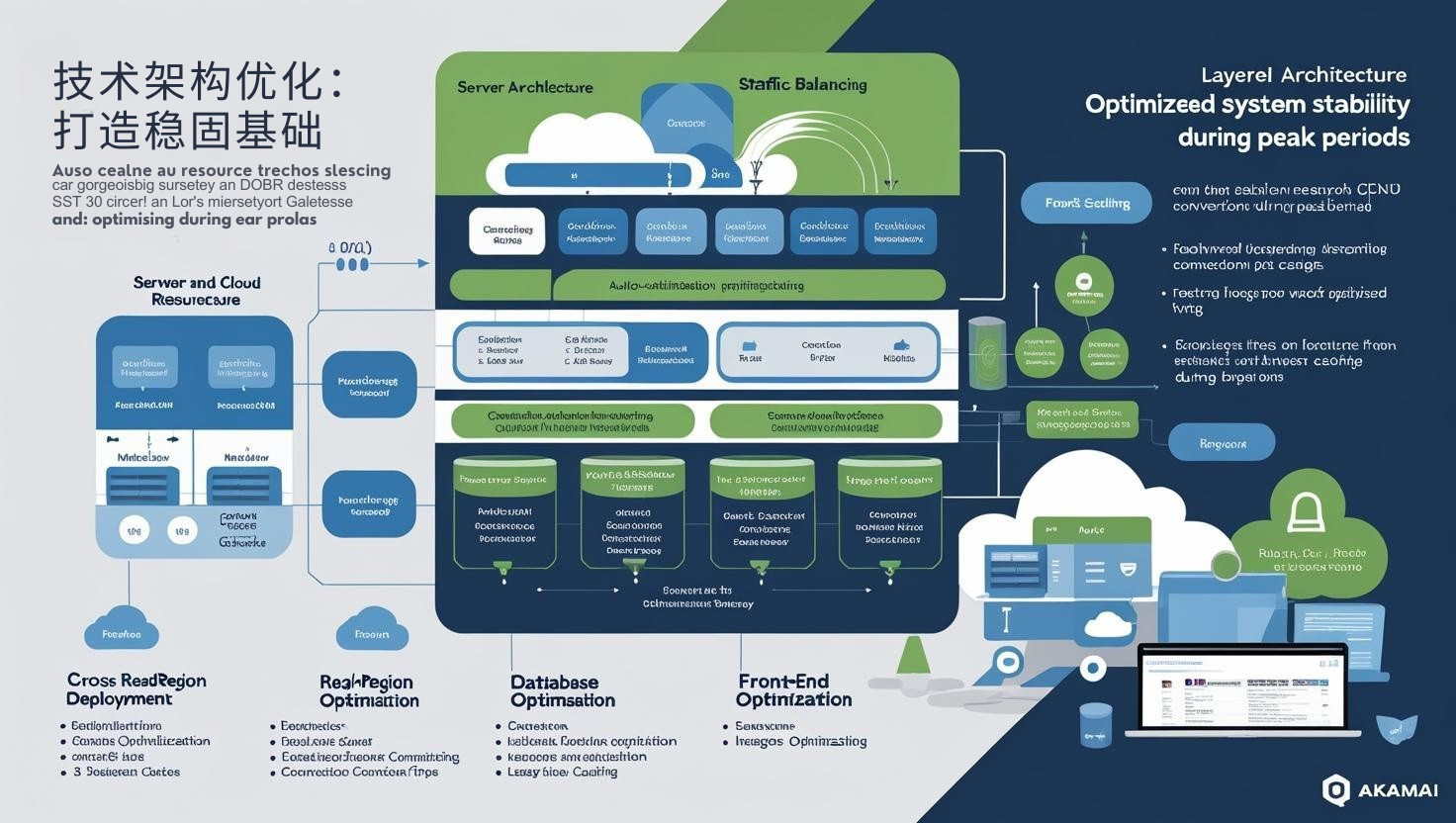
Technical Architecture Optimization: Building a Solid Foundation
System stability during peak periods begins with a sound technical architecture:
-
Server and cloud resource scaling strategies:
- Implement autoscaling configurations and set reasonable trigger thresholds (CPU utilization >70% for automatic scaling)
- Evaluate and reserve sufficient cloud resource quotas to avoid cloud service provider restrictions
- Consider cross-region deployments to distribute geographic risk and optimize global access speed
- Implement load balancing strategies to ensure even traffic distribution across servers
-
Key Database Optimization Points:
- Implement database read and write partitioning Distribute query load by optimising key queries and adding appropriate indexes. Configure a database connection pool to avoid connection resource exhaustion. Set a reasonable caching strategy to reduce database load. ul>
-
Front-end performance optimization tips:
- Implement a content delivery network (CDN) to distribute static resource loading pressure.
- Optimise image and resource loading (lazy loading, compression, WebP format).
- Implement a browser caching strategy to reduce duplicate resource requests.
- Simplify pages during peak traffic hours and temporarily remove non-core functionality and plugins.
According to Akamai research, every 100 millisecond increase in page load time leads to an average 7% decrease in conversion rate. During peak traffic periods, technical performance directly impacts sales results.
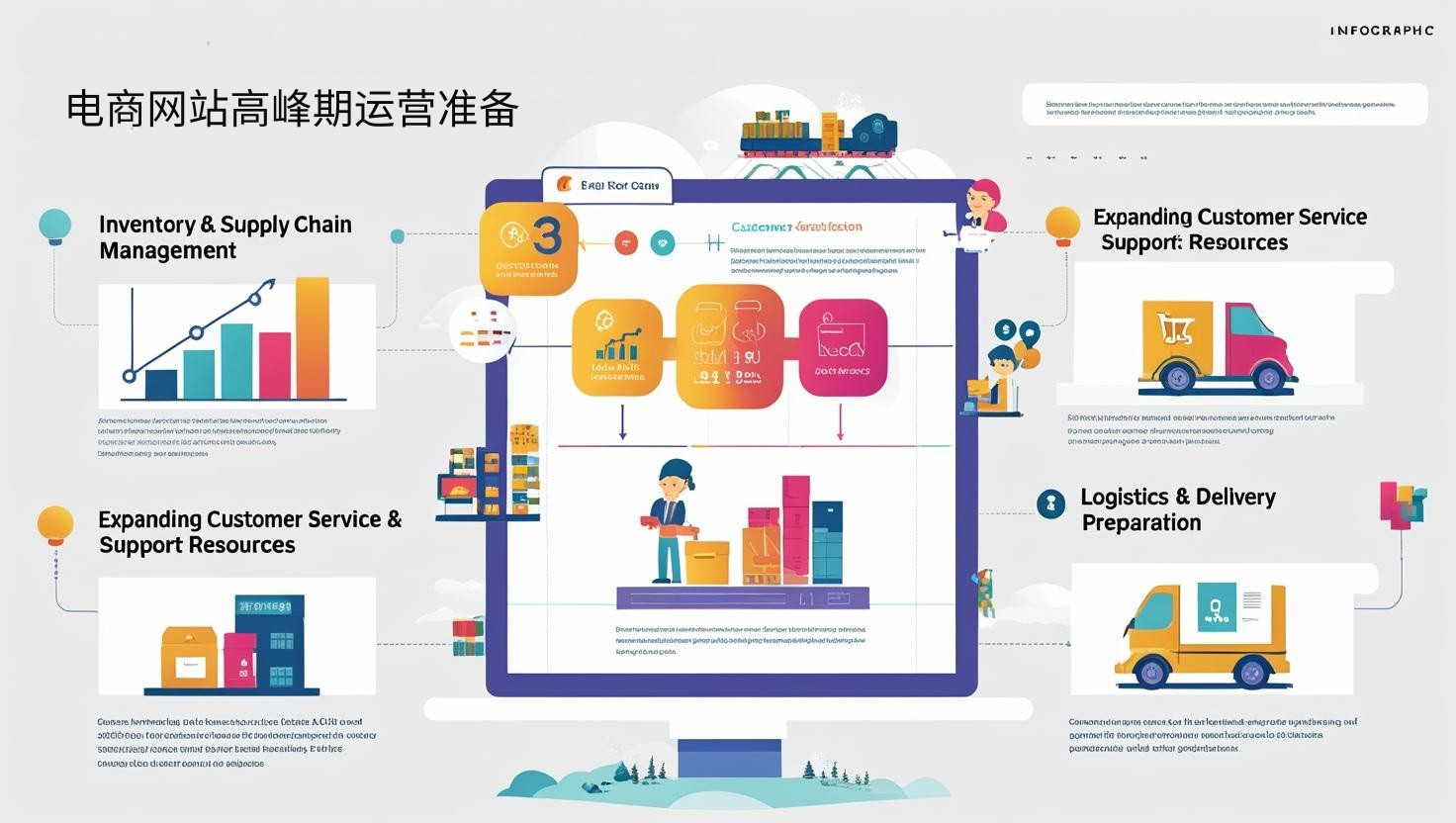
Preparing for Peak Season Operations on E-commerce Websites
In addition to technical optimization, operational processes also require special adjustments:
-
Inventory and Supply Chain Management:
- Predict sales volume based on historical data and trend analysis, and increase inventory of popular products in advance
- Establish special agreements with suppliers during peak season to ensure rapid replenishment channels
- Implement an inventory buffer strategy, reserving 10-15% safety stock
- Establish an inventory alert system to automatically notify when inventory falls below a threshold
-
Expanding customer service and support resources:
- Temporarily expand the customer service team, considering outsourcing or internal cross-departmental support.
- Create a dedicated document for frequently asked questions to expedite problem resolution.
- Optimize self-service features to reduce pressure on customer service representatives.
- Extend customer service hours to cover all peak hours.
-
Logistics and delivery preparation:
- Confirm peak capacity and early warning mechanisms with logistics partners.
- Optimize packaging processes to improve shipping efficiency.
- Adjust order processing priorities to ensure timely delivery.
- Develop a plan to address peak order delays, including a transparent communication strategy.
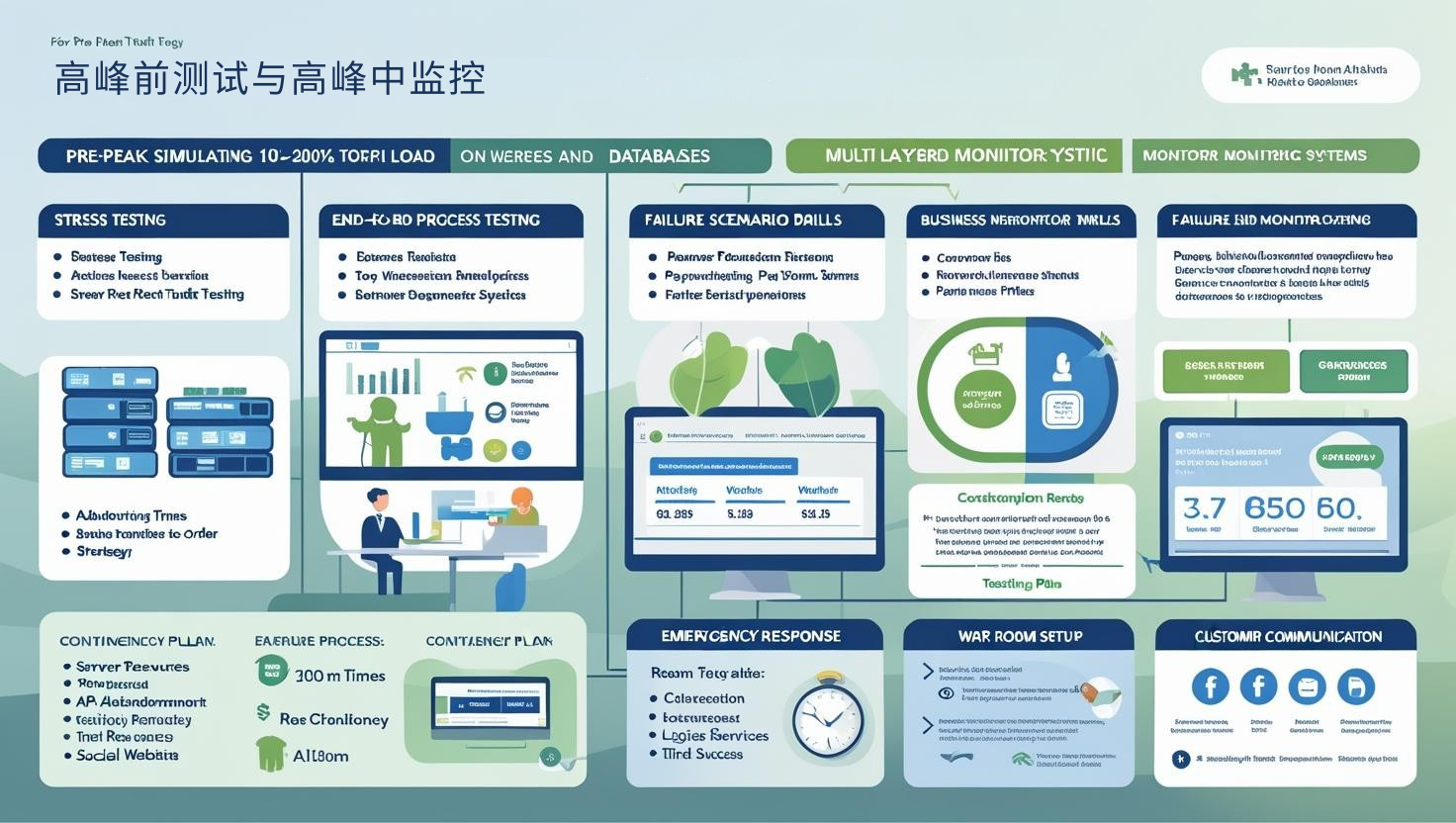
Pre-peak Testing and Monitoring During Peak Hours
Adequate testing and real-time monitoring are key to successfully managing peak hours:
-
Stress Testing and Simulation Drills:
- Perform full-system stress testing, simulating 150-200% of expected traffic
- Identify and resolve performance bottlenecks, focusing specifically on database and payment processes
- Perform end-to-end business process testing to ensure overall functionality
- Simulate failure scenario drills and test emergency response procedures
-
Multi-tiered Monitoring System:
- Technical Monitoring: Server resources, database performance, API response time
- Business Monitoring: conversion rate, shopping cart abandonment rate, order completion time
- User experience monitoring: page load time, functional error rate, payment success rate
- External dependency monitoring: payment gateway, logistics API, third-party service status
-
Emergency response mechanism:
- Establish a clear escalation process and responsible individuals
- Prepare pre-defined contingency plans, such as a simplified website and backup payment channels
- Set up a war room to centralize key personnel for real-time response
- Develop a transparent customer communication strategy, including social media notification templates
According to a PagerDuty report, companies with robust emergency response processes reduce incident resolution time by 56% and reduce revenue losses from service outages by 49%. Success during peak periods depends heavily on team preparation and coordination.
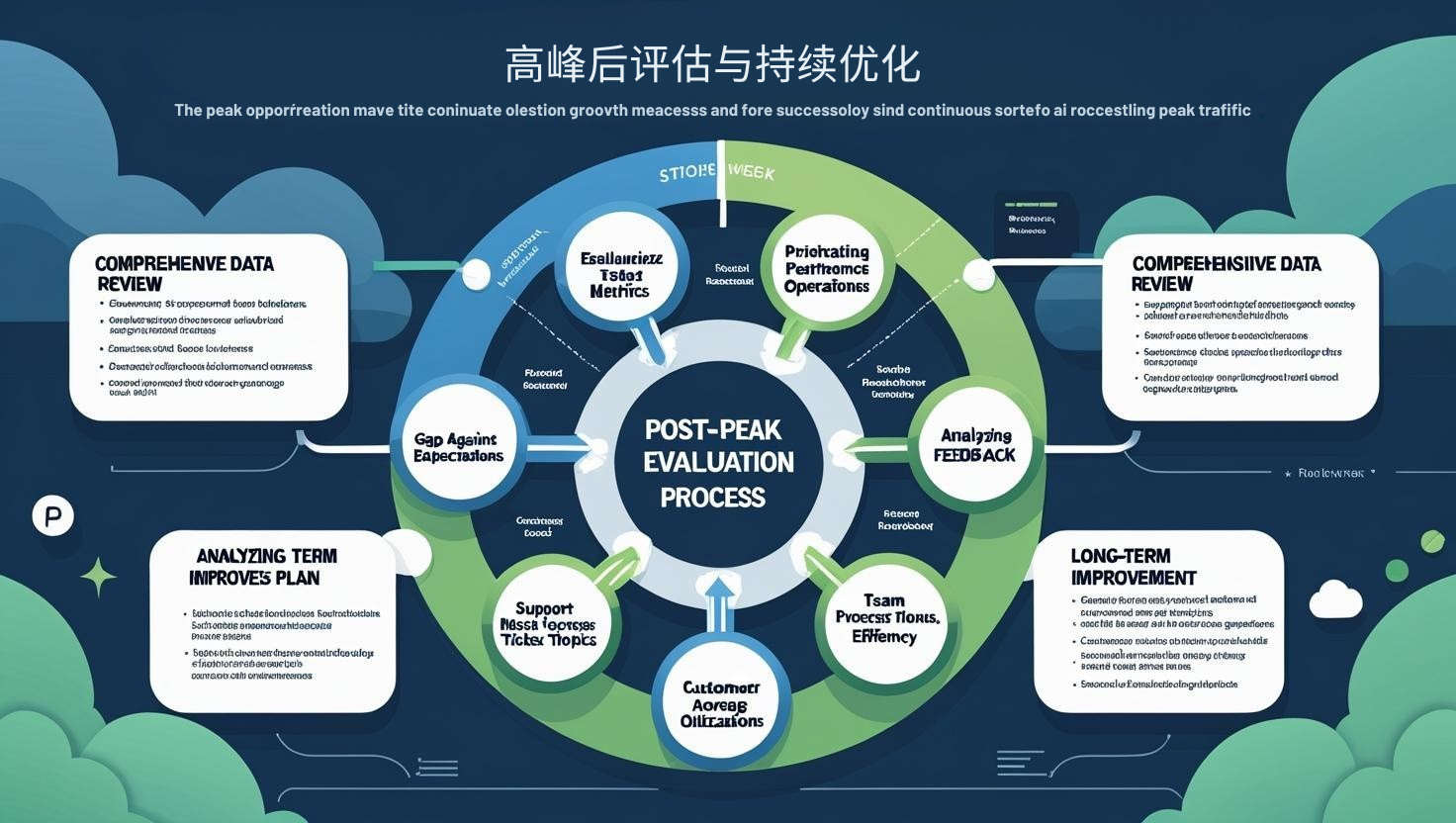
Post-peak evaluation and continuous optimization
Every peak period is a valuable learning opportunity:
-
Comprehensive data review:
- Analyze performance data: system bottlenecks, response time changes, error rates
- Evaluate business metrics: gaps from expectations, conversion rate changes, average order value performance
- Analyze customer feedback: social media sentiment, support ticket topics, review content
- Evaluate operational efficiency: Team collaboration, process flow, and resource utilization
-
Long-term improvement plan:
- Establish a technical debt inventory and prioritize key issues
- Update peak forecast models to incorporate new data
- Optimize resource allocation strategies to improve cost-effectiveness
- Improve contingency plans and develop corrective measures for identified weaknesses
Successfully handling traffic spikes requires close coordination between technology and operations. Systematic preparation not only ensures business continuity during critical sales periods but also significantly enhances user experience and brand image. Every peak period presents both a challenge and an opportunity to showcase your brand's expertise. Proper preparation will help you stand out from the competition.