After the implementation of GEO (Generative Engine Optimization), many independent foreign trade stations will fall into the dual problems of "exposure bottleneck" and "repurchase dilemma" - obviously they can get exposure when searching for "European outdoor furniture procurement" and "US FDA packaging supplier" on ChatGPT, but only 5% of users click to enter the website. Will consult, and less than 10% of customers who cooperate with us for the first time will make repeat purchases. The root of the problem is that most operators equate GEO with "ChatGPT exposure tool" but ignore its advanced value: GEO can not only bring initial exposure, but also run through the entire link of "ChatGPT search exposure → click consultation → first cooperation → long-term repurchase", becoming the core engine that drives the improvement of customer life cycle value. The truly effective GEO advanced strategy is to shift from "single point exposure" to "full link optimization", so that the GEO content in each link can take over the traffic of the previous link and pave the way for trust and demand for the next link. This article will break down the advanced practical methods of GEO, an independent foreign trade station, from the full-link perspective of "exposure→click→consultation→cooperation→repurchase". Each link provides code-free implementation solutions and data verification strategies to help you truly transform ChatGPT exposure into long-term and stable repurchase customers.
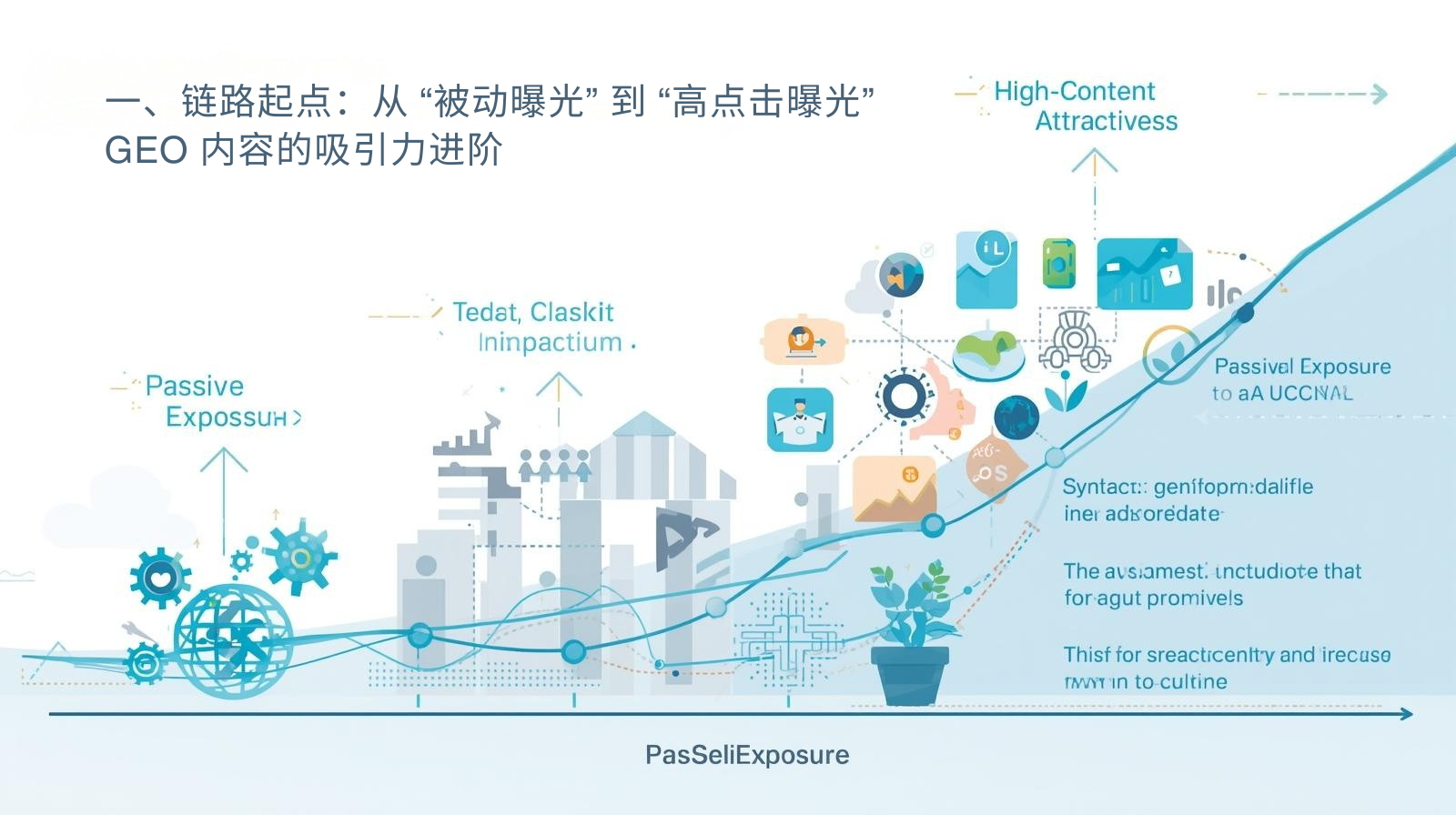
1. Link starting point: from "passive exposure" to "high click exposure" - the attractiveness of GEO content has advanced
The first step in GEO advancement is to break through the basic goal of "being seen" and shift to "being clicked first" - after all, exposure without clicks is just "invalid traffic". In the ChatGPT search results, whether your brand can be clicked depends on whether the GEO content "predicts the hidden needs of buyers" and conveys the unique value of "choosing you instead of competing products".
1.1 Core Strategy: Use “Demand Anticipation” GEO Content to Increase Click-through Rates
Traditional GEO content is mostly "listed information" (such as "XYZ European CE certified outdoor furniture, starting from MOQ 50"), while "demand prediction" content will actively associate buyers with hidden pain points (such as customs clearance, trial orders, after-sales), making ChatGPT recommendations more attractive. Specific operations need to be carried out around the "purchasing decision chain":
- Anticipate “compliance concerns”: Add “compliance implementation details” to the GEO content instead of just mentioning the certification name. For example, upgrading "EU CE certification" to "EU CE certification (EN 12521 standard) + German customs clearance agent list + EUR.1 certificate of origin assistance" meets the pain point of European buyers who are "worried about customs clearance delays";
- Predict "trial order risk": In response to the "small batch trial order" needs of small and medium-sized buyers, clarify the "trial order policy" in the content, such as "XYZ US FDA packaging - MOQ 50 and above, support 5 free samples, and place a batch order if the trial order is satisfactory" to solve the concern of "worry that the product does not meet expectations";
- Pre-judge "after-sales guarantee": Mention "localized after-sales service", such as "XYZ outdoor furniture European after-sales service: There are service outlets in Munich, Germany / Paris, France, response time ≤ 48 hours, commonly used accessories are in stock" to dispel the worry of "no after-sales service";
- Practical Case: Comparison of ChatGPT recommended content ——
Traditional version: "XYZ is a European CE certified outdoor furniture supplier" (click rate <1%);Advanced version: "XYZ European CE certified outdoor furniture - starting from MOQ 50, 5 samples will be sent for trial order, customs clearance in Germany will be completed in 3 days, and there will be an after-sales outlet in Munich" (click-through rate increased to 5%+).
1.2 Technical assistance: Use UTM parameters to target “high-value exposure sources”
To achieve "high click exposure", you also need to know "which ChatGPT exposure channels (such as specific keywords, recommended scenarios) have the highest click rate." This requires adding UTM parameters to the links to GEO content to facilitate subsequent data tracking. No code required and can be done in 1 minute:
- Generate UTM parameters: Use Google’s free “UTM Generator” (search for “Google Campaign URL Builder”) and fill in the 3 core parameters:
- Source: fill in “chatgpt” (make sure the traffic comes from ChatGPT);
- Medium: fill in according to the exposure scene, such as "ai-referral" (general recommendation), "keyword-search" (keyword search);
- Campaign: Fill in specific keywords or scenarios, such as “europe-ce-outdoor-furniture” (European CE outdoor furniture);
Example of generated link:
https://yourdomain/product/outdoor-furniture?utm_source=chatgpt&utm_medium=keyword-search&utm_campaign=europe-ce-outdoor-furniture;
- Embed GEO content: Embed links with UTM parameters into the GEO content recommended by ChatGPT (such as blogs, product page links) to ensure that after users click, the source of the traffic can be traced;
- Data analysis: Log in to Google Analytics (GA), enter "Get → All Traffic → Source/Medium", filter "Source = chatgpt", check the click-through rate and dwell time of different "Campaigns", prioritize the optimization of scenes with high click-through rates (such as "europe-ce-outdoor-furniture"), and continue to amplify high-value exposure.
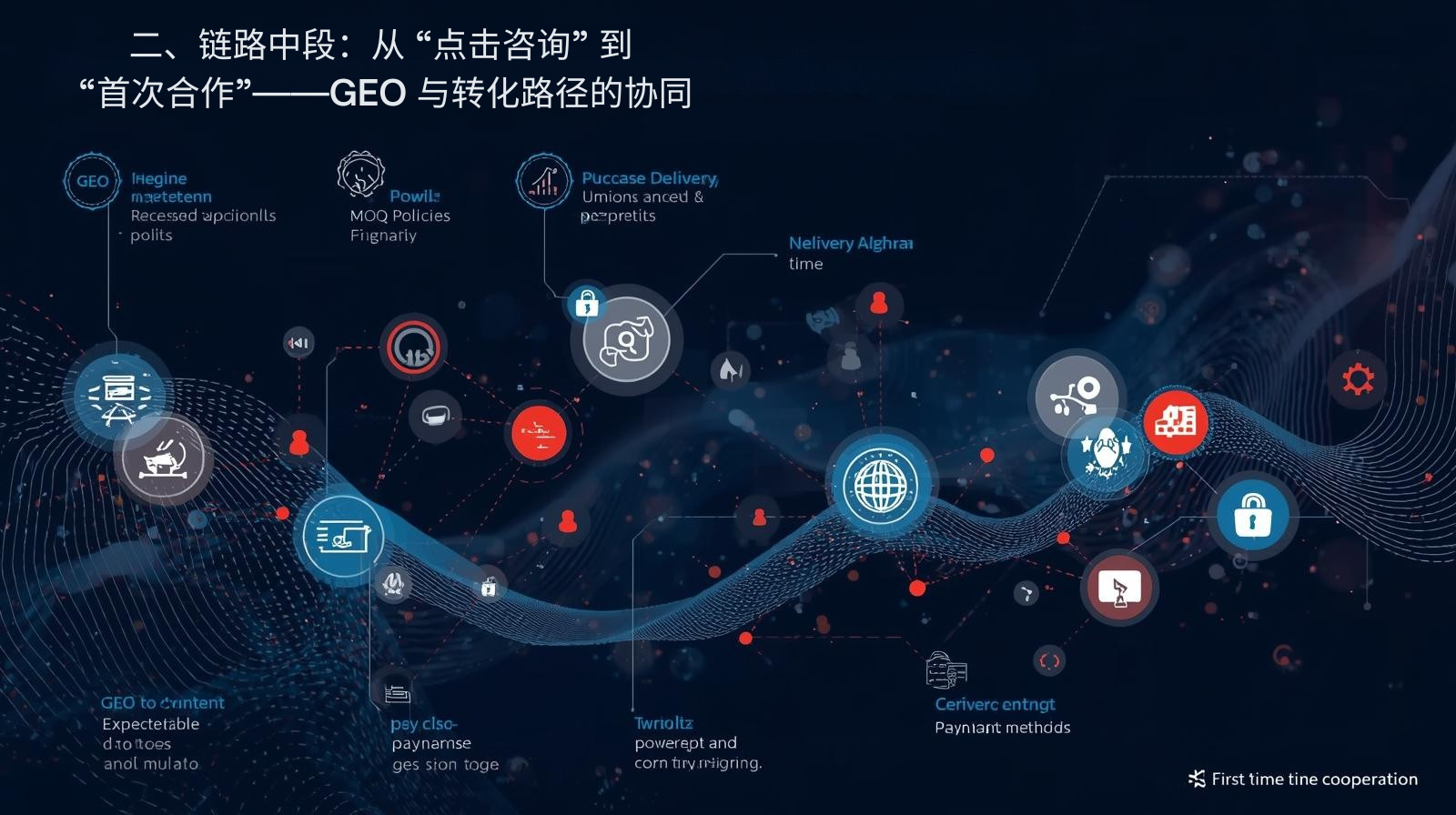
2. Middle section of the link: from "click to consult" to "first cooperation" - the collaboration between GEO and the conversion path
After obtaining high clicks, if the landing page cannot handle the traffic, or there are obstacles in the conversion path, it will still lead to "no consultation on clicks" and "no cooperation on consultation". The core mid-stage strategy of GEO Advanced is to deeply coordinate the GEO content of the landing page with the conversion path, and convert "intended users brought by ChatGPT" into "first-time cooperation customers".
2.1 Landing page optimization: precise alignment of GEO content and “purchasing decision point”
ChatGPT brings users with clear “GEO content expectations” (such as clicking after seeing “Trial order and sample delivery”). The landing page needs to quickly respond to this expectation and gradually guide them to consultation. Specific optimization is divided into 3 steps:
- "GEO information response" on the first screen: The first screen of the landing page must repeat the core value points in ChatGPT recommendations to prevent users from leaving because they "cannot find the expected information". For example, if the ChatGPT content mentions "5 free samples for trial order", the home screen of the landing page needs to highlight "XYZ Outdoor Furniture - 5 free samples for trial order, EU CE certification, German customs clearance assistance" in large fonts, forming a closed loop with the exposed content;
- Middle section "Dismantling of procurement decision-making points": According to the logic of "can cooperation → whether it is reliable → cooperation process", GEO content is used to dismantle decision-making points:
- Ability to cooperate: Add "specific policies starting from MOQ 50 (supports mixed payment), delivery cycle (15 days to Germany), payment method (30% advance payment)";
- Is it reliable: Display "CE certification number + EU official website query link, German customer purchase case in March 2025 (with customs clearance screenshots)";
- Cooperation process: use a flow chart to show "1. Consult and confirm requirements → 2. Send samples → 3. Sign contract → 4. Production and delivery → 5. Customs clearance assistance" to reduce decision-making complexity;
- End "low threshold consultation portal": Avoid using "complex forms" (such as filling in the company tax number and purchase volume), and replace it with "lightweight consultation portal":
- There is a “WeChat Consultation” button floating on the right side of the home screen (with a QR code attached, marked “Exclusive for ChatGPT users: Add WeChat sample collection policy”);
- Add a "1-minute consultation form" in the middle, just fill in "name + target market + demand (trial order/batch)", and automatically send the "Sample Application Guide" to the user's mailbox after submission;
- Practical results: After an outdoor furniture station was optimized in this way, the consultation rate of ChatGPT traffic increased from 5% to 15%, and the conversion rate from consultation to cooperation increased from 10% to 25%.
2.2 Trust enhancement: Use “full-link procurement evidence” to replace “general praise”
The core obstacle to the first cooperation is "lack of trust". The traditional "customer praise" can no longer meet the demand. "Full-link procurement evidence" needs to be used to strengthen trust. These evidences also need to be integrated into GEO content so that they can be delivered simultaneously when captured by ChatGPT:
- Visual + Verifiable Evidence of Compliance:
- Upload the "key page screenshot" of the CE/FDA certification (marked with the certification number and validity period), and add the "official query link" below (such as the EU CPNP official website, the US FDA registration page);
- Provide "customs clearance document templates" (such as EUR.1 certificate of origin, packing list), mark "ChatGPT users can obtain templates for free", and embed GEO blog content;
- Production evidence “scenarioization”:
- Take a "real-shot video of the production workshop" (30 seconds, showing raw material testing, production process, and quality inspection links), upload it to YouTube, embed the video on the landing page, and label the video title "XYZ Outdoor Furniture Production Process - Compliant with CE Standards";
- Use pictures to display the "Batch Quality Inspection Report" (including test items, qualified results, and test date), and the ALT text of the picture is marked with "XYZ April 2025 Batch Quality Inspection Report - EU Standard";
- Customer case “full link”:
- The case structure has been upgraded from "customer praise" to "needs → pain points → solutions → cooperation results → repurchase intention":
“Client: Camping Munich, Germany (collaboration in March 2025);Demand: Purchase 100 sets of outdoor tables and chairs, CE certification required + 15 days for delivery;Pain point: Worry about delays in customs clearance, which will affect opening in peak season;Solution: ① Provide CE certification documents in advance; ② Connect with German customs clearance agent; ③ Compress the production cycle to 12 days;Result: Customs clearance was completed in 3 days, the business opened on time, and the customer plans to repurchase 50 units in June”;
- The case is attached with "actual pictures of the layout in the customer's workshop" and "screenshots of customs clearance documents" to enhance the sense of reality.
- The case structure has been upgraded from "customer praise" to "needs → pain points → solutions → cooperation results → repurchase intention":
3. Link backend: from "first cooperation" to "long-term repurchase" - GEO drives the extension of the customer life cycle
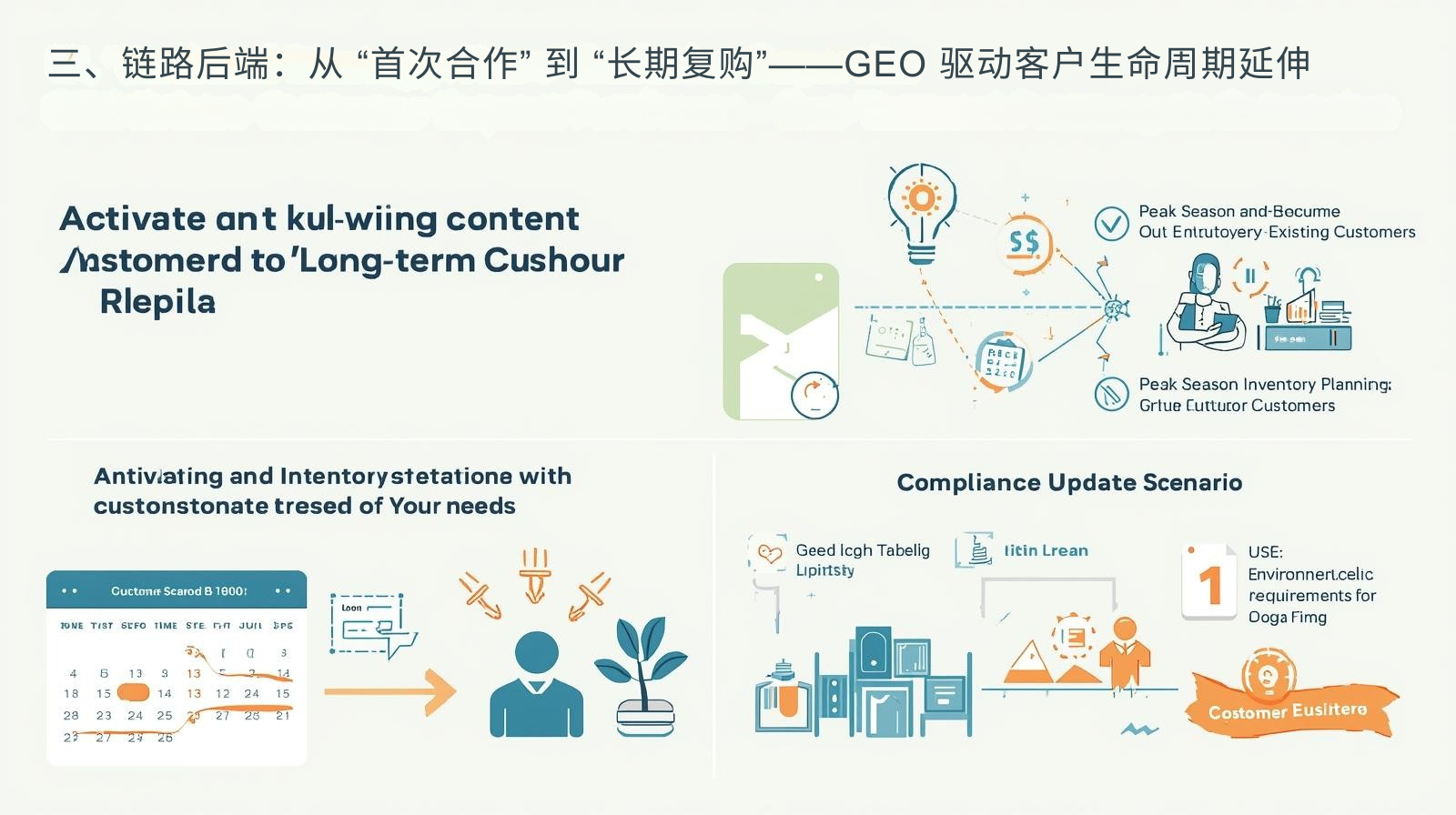
For independent foreign trade stations, "first cooperation" is just the beginning, and the real profit comes from "long-term repurchase". GEO's advanced back-end strategy is to convert one-time customers into "annual repeat purchase customers" through "Exclusive GEO Content for Old Customers" and "Demand Prediction and Reaching". This is also a blue ocean that most peers have not yet touched.
3.1 Activate the needs of old customers: use “scenario-based GEO content” to awaken repurchase intention
Old customers’ repurchase needs are often “hidden in scenes” (such as peak season stocking, new product testing, compliance updates) and need to be awakened with targeted GEO content, which can be divided into 3 types of scenarios:
- Peak season stocking scenario: Publish "Exclusive GEO content for old customers' peak season stocking" 1-2 months in advance, for example:
- Blog title: "2025 European Outdoor Furniture Peak Season Stocking Guide: Exclusive 10% Off for Old Customers + Priority in Production";
- Content highlights: "Peak season benefits for XYZ old customers: ① 10% off for orders placed before June 30; ② Increased production priority (5 days faster than new customers); ③ Free 'peak season inventory planning table' (based on historical purchasing data)";
- Method of contact: Send the blog link to old customers via email, with the title of the email marked "Exclusive to ChatGPT: Your European peak season stocking benefits have arrived";
- Compliance update scenario: When the target market's compliance policy changes, push "old customer compliance adaptation content" as soon as possible, for example:
- If the EU adds "environmental labeling requirements for outdoor furniture" in July 2025, it will release the "New EU Environmental Labeling Policy: XYZ old customers will upgrade their packaging labels for free";
- Content commitment: "When old customers repurchase, they can obtain packaging labels that comply with the new policy without paying extra, and a 'label compliance test report' will be provided simultaneously";
- New product testing scenario: Launch “new product small batch trial purchase” GEO content for old customers, for example:
- Marked on the product page: "Exclusive for old customers: 2025 new outdoor rattan chair - MOQ starts at 30 (40% lower than new customers). If you are satisfied with the trial purchase, you can replenish it in batches";
- Embed "New Product Test Case": "Mr. Schmidt, an old customer from Germany, tried to purchase 30 new rattan chairs, which were sold out within 2 weeks and 100 more have been purchased";
- Practical results: A certain packaging station used the "Peak Season Stocking + Compliance Update" GEO content to increase the repurchase rate of old customers from 8% to 22%, and the average repurchase order amount increased by 35%.
3.2 Optimization of repurchase paths: GEO collaboration from “passive waiting” to “active reaching”
Traditional repurchase relies on "customer active consultation". The advanced strategy is to actively reach through "GEO content + user behavior analysis" to shorten the repurchase path:
- "Precise touch" based on historical purchasing data:
- Use GA to analyze the "purchasing cycle" of old customers (for example, outdoor furniture customers repurchase once every 3 months on average), and push "personalized GEO content" 2 weeks before the repurchase window;
- Example: For German customers who "purchase 100 sets of tables and chairs for more than 3 months", send an email: "Hello! The outdoor tables and chairs you purchased 3 months ago are approaching the replenishment period. Click to view the "Exclusive Replenishment Guide for German Customers" and enjoy a 15% discount + free customs clearance assistance for repurchases";
- Exclusive “Repurchase Convenient Entry” for old customers:
- Create a "Repurchase Area for Old Customers" on the independent site, and mark the "Exclusive Rights" with GEO content: "Repurchase Area for Old Customers - No need to re-consult, directly select the historical product + quantity, and quote within 1 hour after submission";
- The link to the special area is delivered through a "customer-specific QR code" (sent by email or WhatsApp), and the "historical purchase record" is added to the QR code page (such as "Your last purchase: 100 sets of CE certified tables and chairs, you can directly use the compliance documents for repurchases");
- “Trust strengthening” after repurchase:
- After the old customer completes the repurchase, push the "After-sales Guarantee GEO Content", such as "XYZ Old Customer After-sales Commitment: 2-year Warranty + European Local Maintenance";
- The content includes an "exclusive after-sales link", which old customers can click to directly make an appointment for repairs and apply for accessories. It is also marked with "Based on your repurchase record, you can enjoy 1 free accessory replacement."
4. Full-link data closed loop: Let GEO optimize to continuously adapt to changes in demand
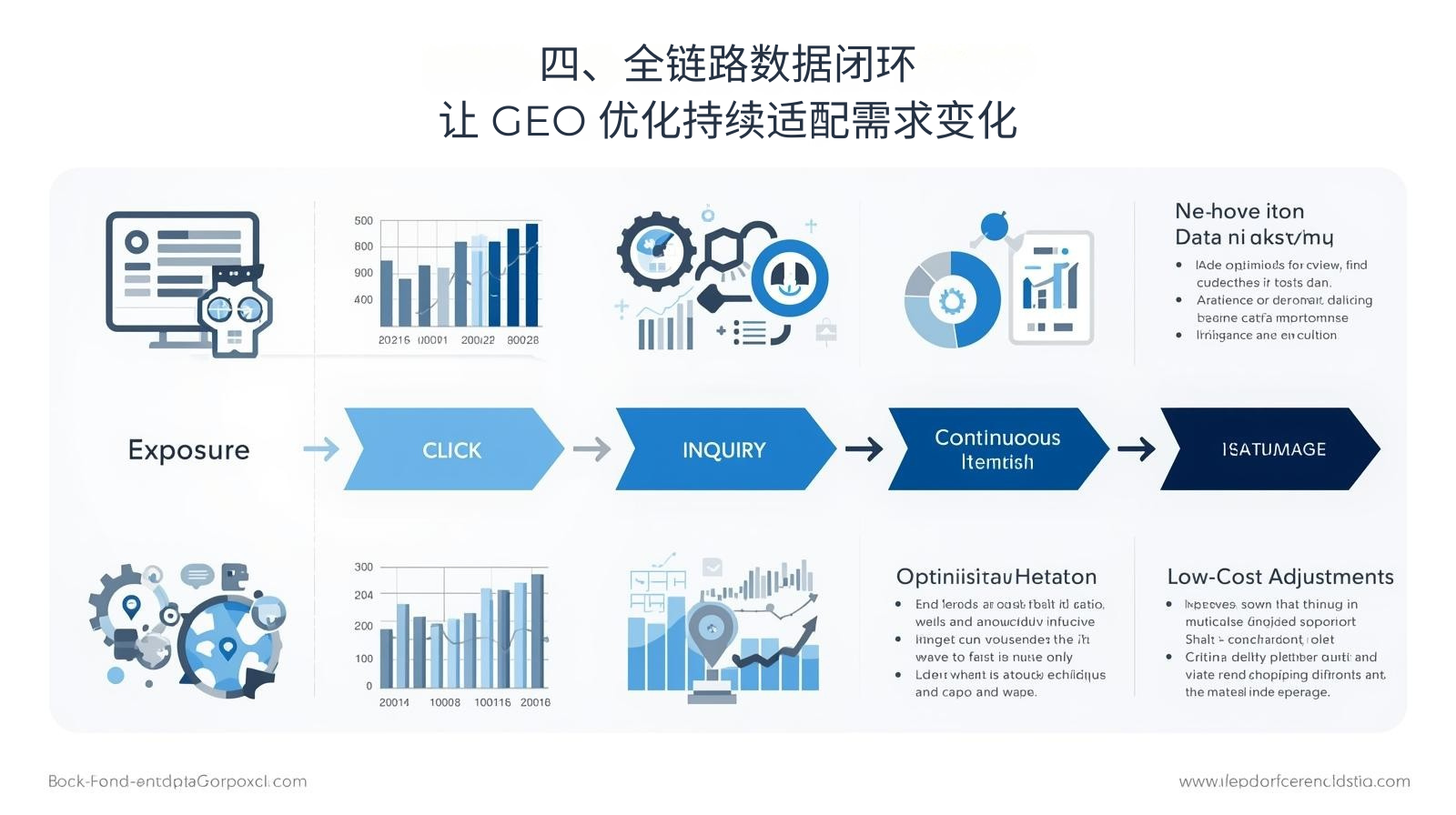
GEO full-link optimization is not a "one-time operation". It is necessary to find the "optimization nodes" of each link through data monitoring and continue to iterate. No complicated tools are needed, and free tools such as Google Analytics and Hotjar can be used to achieve closed data loop.
4.1 Full-link data monitoring: 3 core dimension positioning issues
Spend 1 hour a week and focus on the following 3 dimensions to determine whether the entire link is smooth:
- Exposure→Click dimension:
- Check the "landing page click-through rate" of "source = chatgpt" in GA. If the click-through rate of a keyword (such as "European CE outdoor furniture") is <2%, the GEO content recommended by ChatGPT needs to be optimized (such as supplementary trial order policy, after-sales outlets);
- Click → Consult Dimensions:
- Use the Hotjar heat map to check the "Consultation Button Click Position" on the landing page. If 80% of users click on the "Home Screen Floating Button", it means that the position is optimal and no adjustment is needed. If the number of clicks is low, the button needs to be changed to "Red + Large Font" and marked "ChatGPT User Exclusive Consultation";
- Consultation→Repurchase dimension:
- Use CRM to record the "time from first consultation to repurchase" and "repurchase triggering scenario". If 60% of repurchases come from "peak season stocking", focus on strengthening the GEO content of this scenario; if the repurchase cycle exceeds 4 months, a "repurchase reminder + exclusive benefits" need to be pushed in 3 months.
4.2 Data-driven iteration: small steps of adjustment, continuous optimization
Based on monitoring data, do "low-cost iteration" to avoid link fluctuations caused by large-scale adjustments:
- Iteration of the exposure link: If the click-through rate of "US FDA Packaging" is low, change the GEO content from "XYZ US FDA Packaging Supplier" to "XYZ US FDA Packaging - MOQ 50 and above, free test report, customs clearance in Los Angeles completed in 2 days", and test the click-through rate again next week;
- Repurchase link iteration: If the repurchase conversion rate of the "new product trial purchase" GEO content is low, reduce the MOQ from 30 to 20, and add the promise of "return and exchange if not satisfied with the trial purchase" and use A/B testing to compare the effect;
- Long-term iteration rhythm: Conduct a "full-link data review" once a month, and conduct a "GEO content major update" once a quarter (combined with market compliance changes and peak procurement season adjustments) to ensure that the content always adapts to the needs of old customers.
Related article recommendations: Pintui Technology’s perspective: The best independent foreign trade station in the future will be the one with the “most educational significance”
End
The advanced value of GEO, an independent foreign trade station, has never been "exposure improvement in a single link", but "full-link empowerment throughout the customer life cycle" - from "demand prediction" during ChatGPT search exposure, to "trust enhancement" after clicks, to "exclusive rights" during repurchase, every step of GEO content is for "Long-term cooperation" pave the way. While most of your peers are still worried about "whether ChatGPT can mention the brand," if you can achieve a closed loop of "exposure → consultation → repurchase" through full-link optimization, you can establish an "irreplaceable" competitive advantage in the era of AI traffic.
Starting today, you can start with "two small actions": one is to add UTM parameters to the links recommended by ChatGPT to lock in high-value exposure sources; the other is to create a "peak season stocking exclusive blog" for old customers to push historical purchasing customers. These two steps only take less than half a day, but they will allow you to take a crucial step towards "GEO advancement".
Remember, the ultimate goal of GEO optimization is not "more exposure", but "more valuable customers" - only when your GEO can be upgraded from "bringing clicks" to "bringing repeat purchases" can you truly master the foreign trade traffic password in the AI era.