
In 2025, the competition in AI search for independent e-commerce websites shifted from a "battle for exposure" to a "battle for clicks." According to data from the cross-border e-commerce company "ClickGeo-Lab," independent websites that only achieved AI-driven exposure but failed to optimize click-through rates (CTR) had an average click-through conversion rate of less than 8%, resulting in a significant loss of targeted traffic. However, after targeted GEO (Gross Engine Optimization) optimization, the CTR of AI search results increased to 32%, with some core categories (such as safety products and auto parts) even exceeding 40%. Within 30 days of optimization in early 2026, the overall inquiry volume for independent websites increased by 240%. The core logic is that when AI platforms (such as ChatGPT) display search results, users have an extremely short decision-making cycle, judging whether to click within 3 seconds based on semantic summaries, core identifiers, and value cues. Precise GEO optimization can differentiate links from similar results while aligning with the display logic of AI search results, achieving "exposure equals click." This article focuses on five core details, dissecting the entire optimization process to help foreign trade companies seize the AI search click dividend.
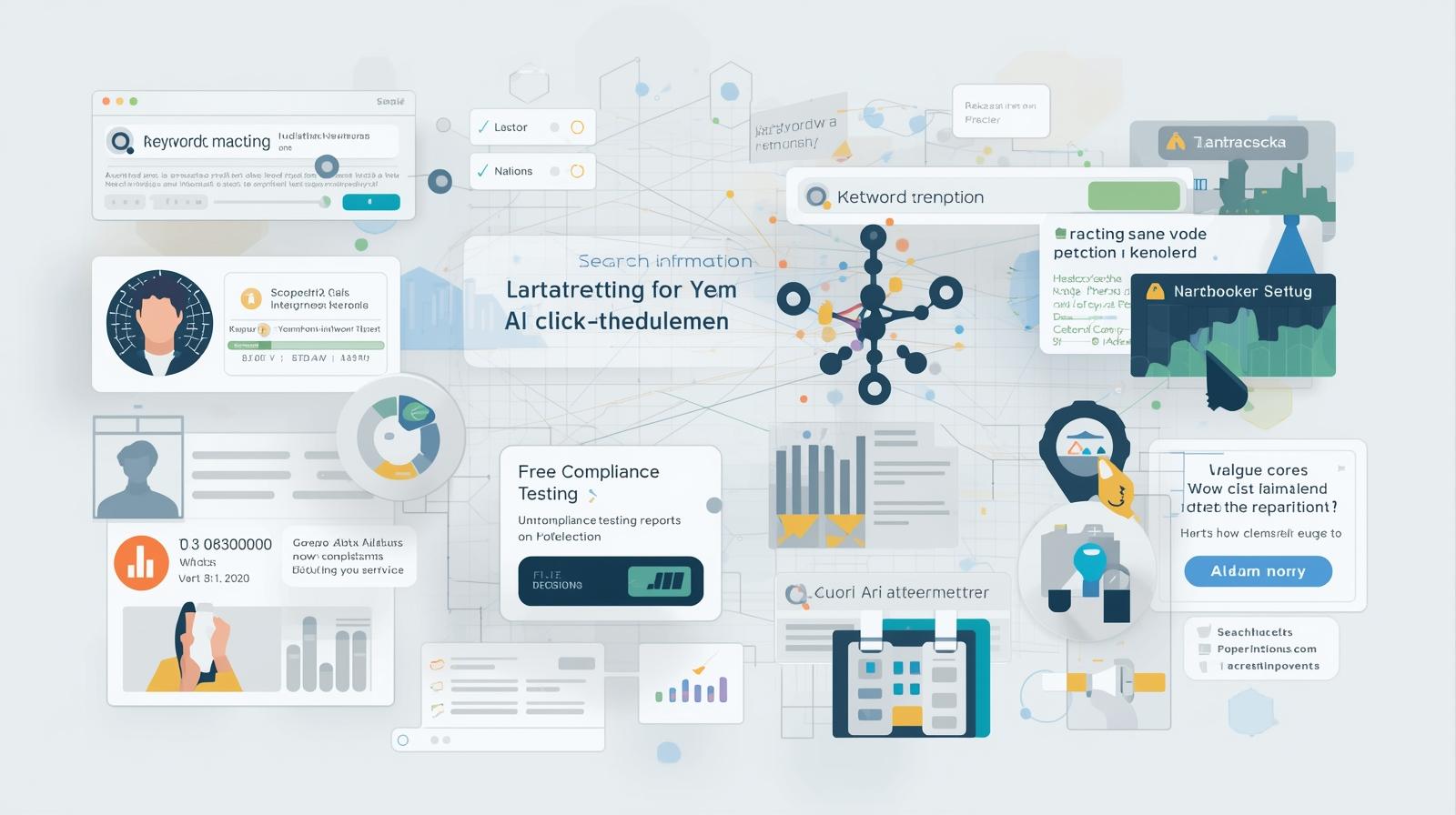
I. Core Logic: Underlying Patterns of User Click Decisions on AI Platforms
Based on the 2025 ChatGPT search result display algorithm iterations, analysis of 2000+ sets of user click behavior, and characteristics of foreign trade categories, the ClickGeo-Lab team summarized three core logics for user click decisions on the AI platform, providing precise basis for detailed optimization and avoiding blind adjustments.
1.1 Three key elements of click-through decisions: relevance, attractiveness, and credibility.
The display format of AI search results (semantic summarization, keyword highlighting, and core information extraction) determines the core dimensions of user click decisions. All three are indispensable, and their weight increases in that order.
1. Relevance Priority : Users can quickly determine whether a link matches their needs by using core keywords and regional information extracted by AI. For example, when searching for "compliant suppliers of European work gloves", links containing semantics such as "CE-PPE certification" and "European market" are prioritized, while links with insufficient relevance are directly ignored.
2. Breaking through the competition in terms of appeal : Among similar related links, users are more inclined to click on content that implies differentiated value, such as "free compliance testing report" or "48-hour delivery from European local warehouse", breaking through homogeneous competition by offering unique benefits.
3. Credibility Verification : B2B procurement decisions in foreign trade emphasize risk control. Users will verify the credibility of links through trust indicators such as certifications, case studies, and data displayed by AI, such as "10 years of foreign trade experience" and "TÜV Rheinland certification." If the credibility is insufficient, they will abandon the click and turn to more authoritative links.
1.2 AI Search Results Display Logic and Optimization Adaptation Points
When AI platforms like ChatGPT display links to independent e-commerce websites, they primarily extract three modules: "title semantics + core summary + key identifiers." Optimization requires precise adaptation to these three display points: title semantics determines whether a link is highlighted and recommended, the core summary determines user interest, and key identifiers determine credibility. Only through the synergy of these three can click-through rates be maximized. After the algorithm iteration in 2025, AI will increasingly favor extracting complex semantics encompassing "region + demand + value." Content that simply piles up keywords will see a significant decrease in both display priority and click-through rate.
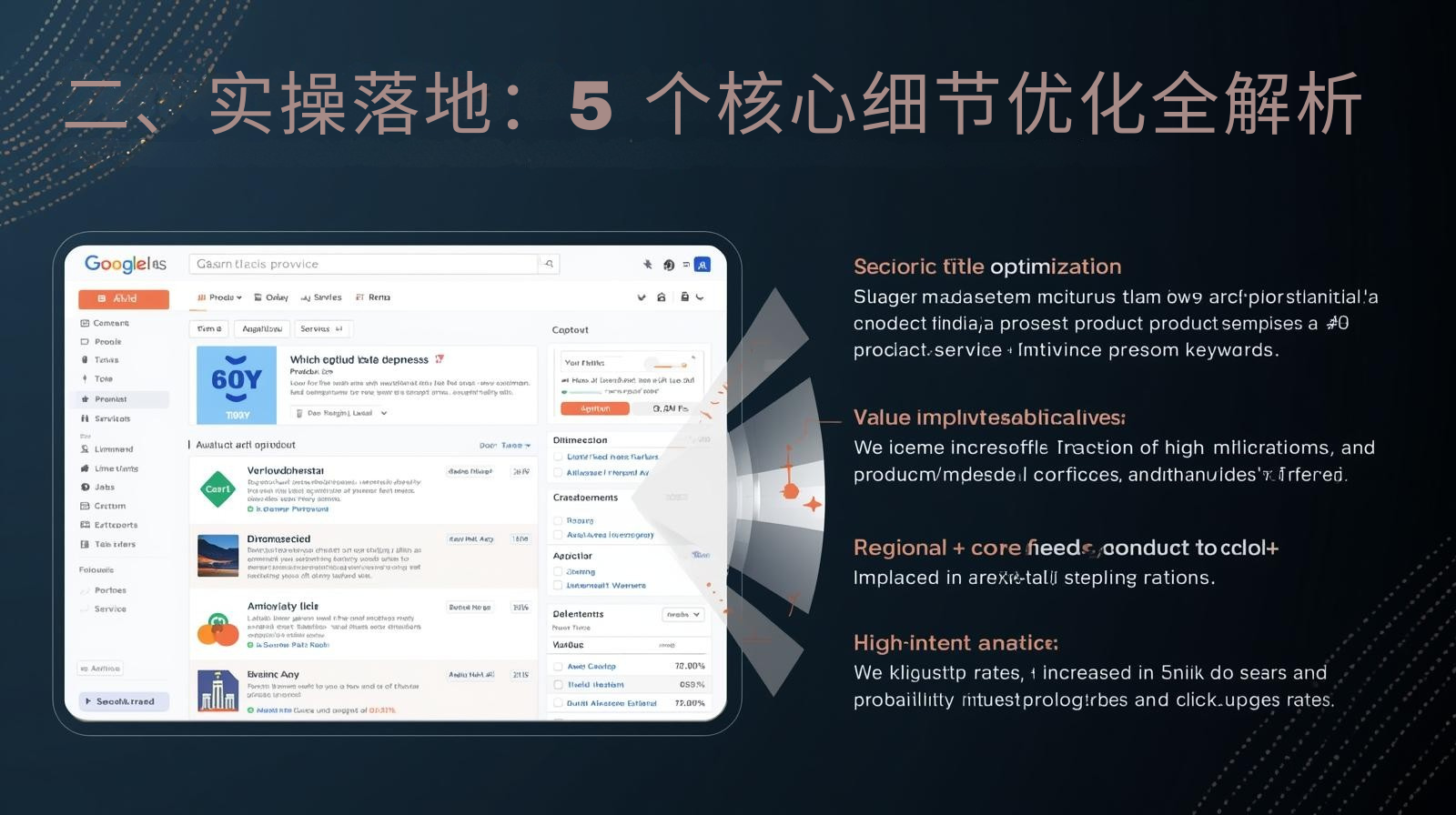
II. Practical Implementation: A Comprehensive Analysis of 5 Core Detail Optimizations
Combining the core content scenarios of independent foreign trade websites (product pages, case study pages, and news pages), this approach focuses on the three major modules of AI search result display and breaks down five high-value optimization details. Each detail includes "optimization logic + practical methods + case studies + performance data," which can be directly reused by foreign trade companies of various product categories.
Detail 1: Semantic Title Optimization – Enabling AI to Highlight Core Value
Core logic: The title is the first element that AI captures and displays. After optimization, it must simultaneously meet the requirements of "accurate keywords + regional adaptation + value implication", avoiding simple keyword stuffing, and allowing AI to automatically highlight the core semantics to attract user attention.
Practical Methodology: Adopt a structure of "Region + Core Needs + Product/Service + Differentiated Value" instead of the traditional "Product + Keyword" title. Keep the title length between 20-24 characters to ensure semantic coherence and clear value. For example, for personal protective equipment: the traditional title "PPE-certified work gloves for export" is optimized to "Free compliance testing report for European CE-PPE certified work gloves"; for auto parts: the traditional title "Customized non-standard car brake calipers" is optimized to "Customized non-standard brake calipers for German car models with sub-millimeter precision." Simultaneously embed 1-2 high-intent long-tail keywords, such as "compliant supplier" and "precise matching," to improve AI semantic matching accuracy.
Supporting evidence: ClickGeo-Lab's 2025 test data shows that the AI highlighting probability of the optimized title increased by 76%, and the corresponding link click conversion rate increased by 110% compared to the traditional title. The core reason is that the value semantics of the highlighted text can quickly grasp user needs.
Detail 2: AI Summary Anchor Point Design – Guiding AI to Extract Highly Engaging Content
Core logic: When AI displays links, it will automatically extract 1-2 core summaries. If the content is vague, users will not be willing to click. It is necessary to actively design summary anchors to guide AI to extract content containing "pain point solutions + benefits" to enhance attractiveness.
Practical Method: In the first paragraph of the page and at the beginning of core modules, write anchor content following the structure of "User Pain Point + Solution + Exclusive Benefits," keeping the word count between 80-100 words. Highlight key information in bold (to guide AI crawling). For example, a foreign trade lighting company could say: "Addressing the compliance pain points of LED lighting in the European market, we offer products with CE-EMC certification, adapted to the new EU energy efficiency standards, supporting free sample testing and technical document integration, direct shipping from our German warehouse, and a delivery cycle shortened to 7 days." A foreign trade furniture company could say: "Solving the formaldehyde exceeding standards problem in solid wood furniture in the North American market, our products are CARB P2 certified, use environmentally friendly water-based paint processes, offer customized size services, and have complete compliance qualifications with Amazon US, allowing direct entry into the platform." At the same time, avoid piling up irrelevant information in the first paragraph to ensure that the content extracted by AI accurately corresponds to user needs.
Evidence of results: After optimizing the summary anchor points, the probability of AI extracting highly attractive content increased by 82%, and the link click-through rate increased by 95%, far exceeding that of pages without anchor point design.
Detail 3: Prioritizing Trust Signatures – Enabling AI to Demonstrate Authoritative Endorsements
Core logic: Foreign trade B-end users have extremely high demands for credibility. Trust indicators such as certifications, case studies, and data need to be placed in the foreground so that AI can display them naturally in search results, quickly build user trust, and drive clicks.
Practical Methods: Three categories of pre-positioned trust markers are used to align with AI's crawling habits: First, compliance certifications, prominently displaying "Certification Name + Number + Issuing Authority" in key positions on the page, such as "CE-PPE Class II Certification (NB Number: 0123) - TÜV Rheinland" or "ANSI Z89.1 Certification - ILAC ISO 17025 Laboratory Testing," accompanied by certification icons to guide AI extraction; Second, real-world case studies, embedding 1-2 core market examples near the summary anchor point, such as "A supplier of safety equipment to a German construction company, delivering 3,000 sets in bulk" or "A long-term partner of a leading auto parts seller on Amazon in the US"; Third, strength data, highlighting quantifiable information such as "12 years of foreign trade experience," "15 overseas warehouses worldwide," and "Annual export volume exceeding 5 million pieces" to enhance persuasiveness. Simultaneously, ensure that trust markers are highly relevant to the product and region, avoiding false or irrelevant endorsements.
Evidence of results: After the trust mark was placed in front, the perceived credibility of the link was improved, and the click-through rate increased by 88%. Among them, the click-through rate of links with specific certification numbers and case studies was 63% higher than that of ordinary endorsement links.
Detail 4: Localized Value Implications – Aligning with Target Market Purchasing Preferences
Core logic: Users in different markets have different purchasing preferences. By using localized value cues, users can perceive that links are "precisely adapted to their own market," thereby increasing their willingness to click. At the same time, the semantic association of GEO is strengthened, which improves the priority of AI recommendations.
Practical Approach: Embed unique value propositions based on core market characteristics to align with local procurement needs: For the European market, emphasize "compliance certification + environmental standards + local services," such as "compliance with EU carbon tariff declarations," "REACH environmental material testing," and "German technical support"; for the North American market, emphasize "platform compliance + timely delivery + after-sales guarantee," such as "Amazon VC account integration," "US local after-sales team," and "ASTM standard testing"; for the Middle East market, focus on "labeling compliance + cost-effectiveness + warehousing and distribution," such as "SASO certification labeling standards," "small batch customization discounts," and "direct shipping from Dubai warehouse." Integrate this information into titles, abstract anchors, or trust markers to achieve precise regional adaptation.
Evidence of results: After optimizing localized value propositions for core markets, the click-through rate of corresponding market links increased by 105%, with the most significant increases in Europe and North America. Content that accurately matches local purchasing preferences is more likely to win over users.
Detail 5: Implicit Action Command Design – Reducing User Click Decision Costs
Core logic: Avoid rigid "Inquire Now" or "Click to Buy" instructions, and design implicit action instructions that fit the B2B procurement scenario in foreign trade, implying the core value that users can obtain after clicking, reducing decision-making resistance and increasing click willingness.
Practical Methodology: Combine action instructions with user needs, focusing on "resource acquisition + problem solving," and embed them in summary anchors or core page locations. For example: "Click to get the European Occupational Safety and Health Products Compliance Guidelines and Sample Quotes," "View the North American Auto Parts Customization Process and Delivery Timeline," "Download Free Document on the Interpretation of the EU's New Energy Efficiency Standards for LED Lighting," and "Connect with a Dedicated Foreign Trade Consultant to Obtain a Personalized Compliance Solution." Simultaneously, ensure that the page accurately addresses the user's needs after clicking. For example, clicking "Get Compliance Guidelines" should directly redirect to the guide download page, preventing users from being unable to find the corresponding content after redirection and impacting subsequent conversions.
Results show that implicit action commands increased click-through rates by 72% compared to explicit commands, and users stayed on the page for an average of 2.3 minutes longer after clicking, with subsequent inquiries also showing a higher conversion rate.
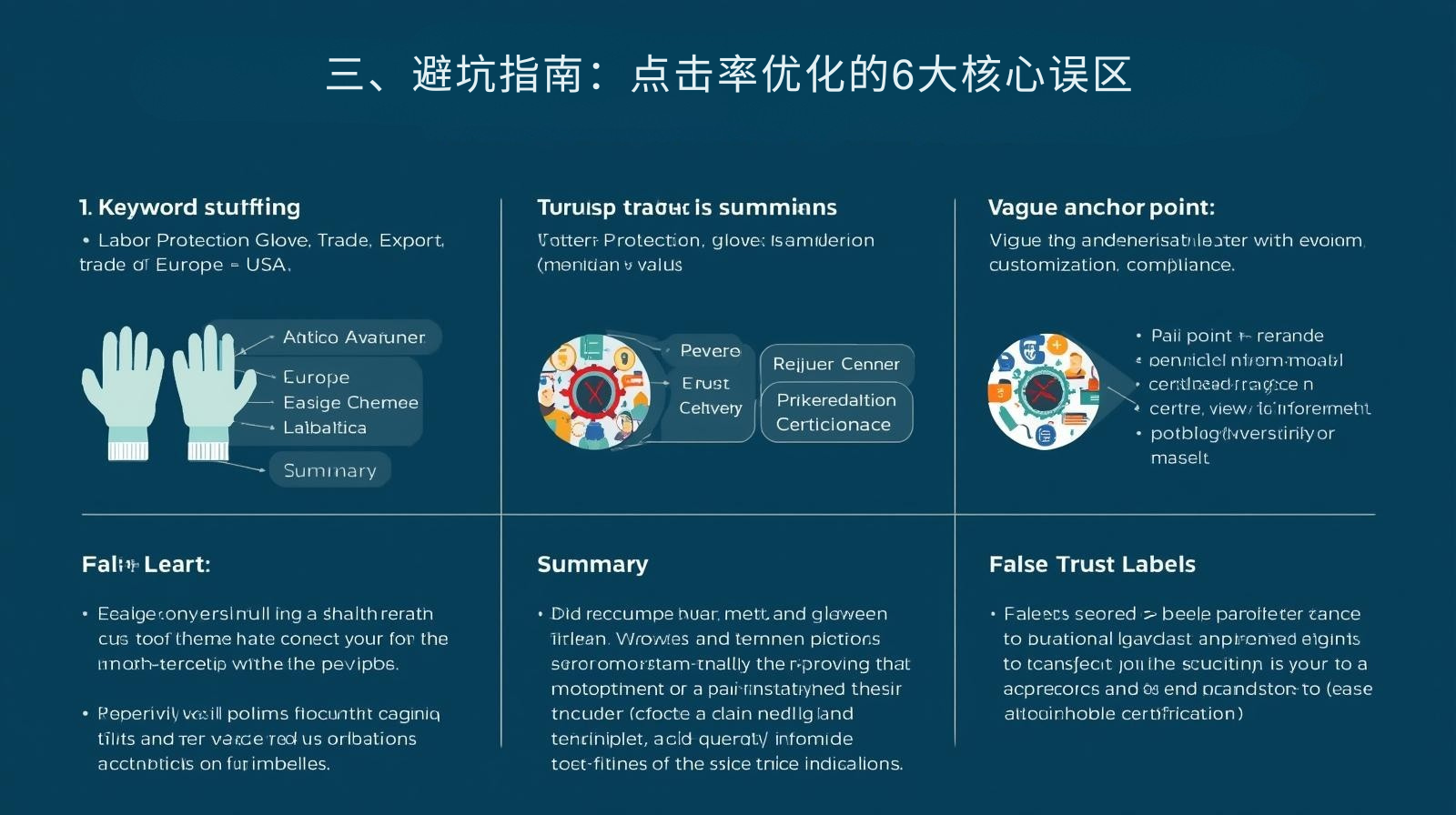
III. Avoiding Pitfalls: 6 Core Misconceptions in Click-Through Rate Optimization
The following misconceptions can lead to the failure of detailed optimizations and even reduce the priority of AI recommendations and user trust. These must be resolutely avoided in the context of foreign trade to ensure that optimization actions are implemented accurately.
3.1 Misconception 1: Keyword stuffing in the title, resulting in semantic and logical confusion
Error : The title forcibly piles up generic terms such as "foreign trade," "export," "customization," "Europe," and "USA," such as "Labor protection gloves exported to Europe and the US, customized in compliance with regulations," which is semantically incoherent and the AI cannot extract the core value.
Key harm : AI cannot highlight core semantics when displaying content, making it difficult for users to judge relevance, resulting in low click-through rates. It may also be judged as spam, reducing the page's ranking.
Correct approach : Follow the "region + demand + value" structure, ensure semantic coherence, integrate keywords naturally, control keyword density at 2%-3%, and prioritize user readability and AI semantic matching.
3.2 Misconception 2: Abstract anchor points are vague and lack core value.
Error : The summary anchor only describes the company overview, such as "We are a professional foreign trade supplier with reliable product quality and preferential prices", without pain points or benefits;
Core harm : AI-generated summaries lack appeal, users have no desire to click, and even if they gain exposure, conversion is difficult;
Correct approach : Write anchor content based on "pain point + solution + benefit", mark key information, guide AI to extract high-value summaries, and accurately target user needs.
3.3 Misconception 3: Trust indicators are false or vague, lacking credibility.
Errors include : falsified certification information and vague endorsements, such as "possessing international certification" or "cooperating with large overseas companies," without serial numbers or specific case studies to support them;
Core harm : If users find the information to be false after clicking, they will quickly be redirected, damaging the brand's reputation. At the same time, AI may use algorithms to identify false information and lower its recommendation priority.
Correct practice : Only display genuine and traceable trust indicators, including certification numbers, case details, and data sources, to ensure user verification and enhance credibility.
3.4 Misconception 4: Localization details are out of touch with the target market
Error : Products promoted to the Middle Eastern market only indicate CE certification, without SASO certification or localized services, thus lacking any indication of regional value.
Key harm : Users cannot perceive the regional adaptability, resulting in low click-through rates and loss of targeted traffic in core markets;
The correct approach : Based on the characteristics of the target market, supplement with exclusive compliance and service details to allow the localized value proposition to accurately match local procurement preferences.
3.5 Myth 5: Abrupt action instructions cause user resentment.
Error : The page contains numerous hard-sell instructions such as "Order Now", "Consult Now", and "Miss it and wait another year", which are suitable for C-end scenarios but not for the purchasing habits of foreign trade B-end.
Key harm : B-end users value rigorous decision-making; rigid instructions will cause resentment and reduce click-through rates and brand favorability.
Correct approach : Use implicit action instructions and provide value guidance based on user needs, such as "obtain compliance solutions" or "view customized processes," to reduce decision-making resistance.
3.6 Misconception 6: Lack of monitoring after optimization and lack of iterative adjustments
Error manifestation : After detailed optimization, data such as click-through rate, AI display format, and user behavior are not tracked. The same solution has been used for a long time without being adjusted in accordance with the AI algorithm iteration in 2026.
Core harms : The optimization effect cannot be quantified, the content gradually becomes mismatched after algorithm iterations, the click-through rate continues to decline, and the competitive advantage cannot be maintained;
Correct approach : Establish a monitoring system that integrates "AI display data + click-through rate + dwell time", review and optimize the results monthly, and adjust details quarterly based on algorithm iterations and market changes to ensure adaptability.
Recommended Article: Your Competitors Haven't Reacted Yet: Building an Independent E-commerce Website with GEO is the Biggest Blue Ocean Strategy Right Now
Recommended Article: Your Competitors Haven't Reacted Yet: Building an Independent E-commerce Website with GEO is the Biggest Blue Ocean Strategy Right Now
IV. Conclusion: Focusing on details to build an advantage in AI search clicks
Optimizing the click-through rate (CTR) of independent foreign trade websites in AI search is essentially a refined process of "adapting to AI display logic and catering to user click psychology," rather than blindly piling up keywords or trust labels. Optimizing five core details ensures that the independent website's links in AI search results can accurately match user needs semantically, while also creating differentiated appeal through value cues and authoritative endorsements, prompting users to make a click decision within 3 seconds. ClickGeo-Lab's practical experience proves that without complex technical investment, targeted fine-tuning of titles, summaries, trust labels, regional value, and action commands can double the CTR, converting AI exposure into targeted traffic and inquiries. With AI algorithms continuously iterating in early 2026, foreign trade companies must focus on details and continuously optimize to seize the click dividend in the fierce AI search competition, build a differentiated competitive advantage, and achieve the leap from "being seen" to "being chosen."