By March 2026, over 62% of overseas B2B buyers were already accustomed to using AI tools like ChatGPT and Google Gemini to find suppliers, rather than directly opening search engines. Your competitors were using GEO (Generative Engine Optimization) to have AI proactively recommend their independent websites, while you were still hesitating about whether to spend heavily on rebuilding your website. In fact, for the vast majority of foreign trade companies, implementing GEO is a far higher priority than building a completely new website . It doesn't require overhauling the existing architecture, large investments, or a lengthy development cycle, yet it directly opens up the core entry point for AI-driven customer acquisition.
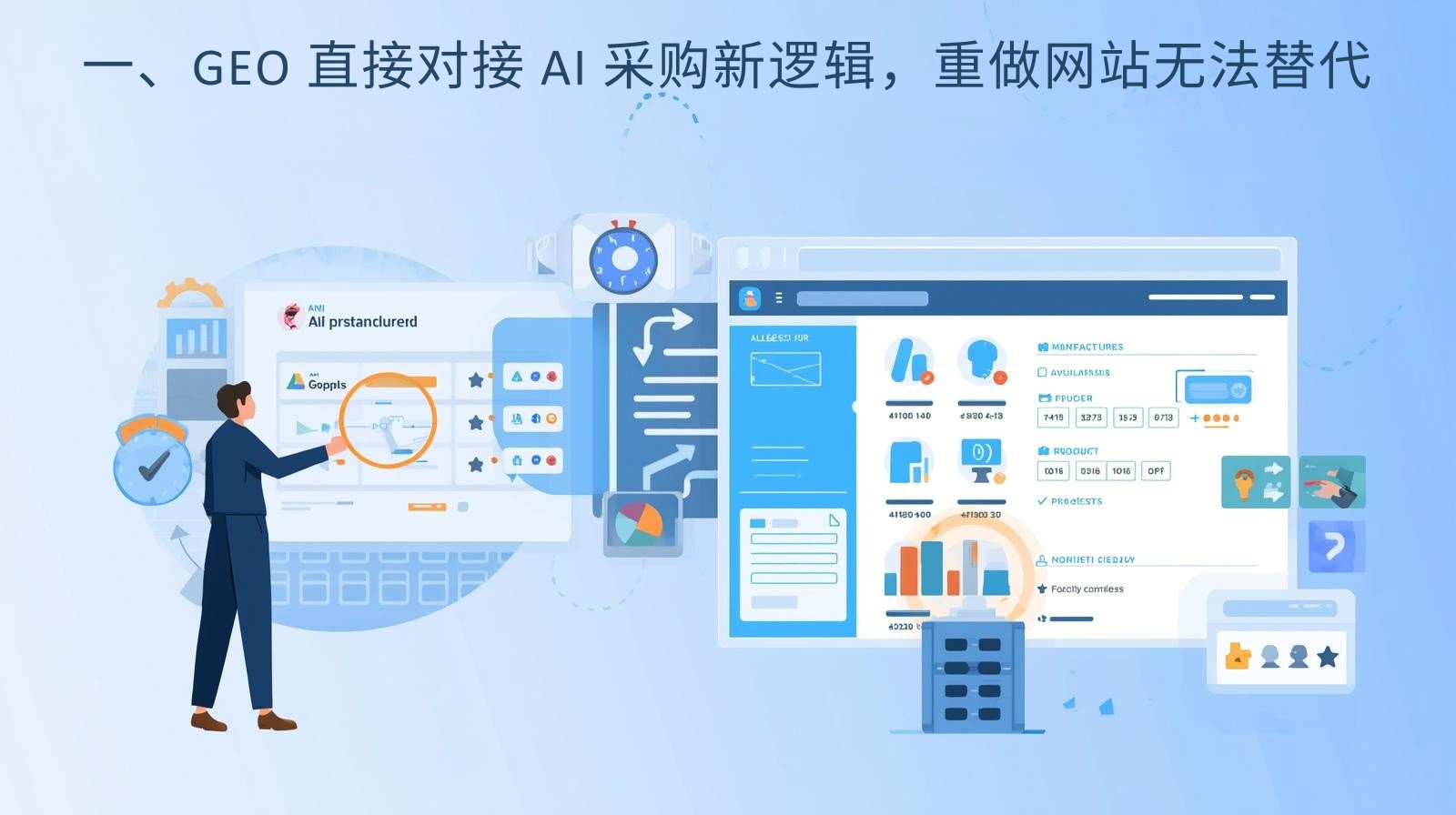
I. GEO's direct integration with AI-driven procurement logic is something that cannot be replaced by rebuilding a website.
The purchasing path of overseas buyers has completely changed. Users no longer flip through pages of Google rankings, but directly ask AI "recommend Chinese manufacturers of XX products". Whoever can have their information extracted and cited by AI first will get the first batch of inquiries. This is the underlying logic of customer acquisition that cannot be solved by rebuilding the website. GEO's core is to transform independent website content into structured information that AI can read, trust, and directly reference . This allows ChatGPT to use your company's qualifications, product parameters, certifications, production capacity, and delivery capabilities as authoritative sources of answers when responding to user questions. Traditional website redesigns, which only optimize visuals and interactions, fail to enable AI to understand the commercial value of the page content. OpenAI's GPTBot crawling specification, updated in March 2026, explicitly states that AI crawlers prioritize structured, factual, and verifiable company information, rather than aesthetically pleasing page designs ( https://openai.com/gptbot ). Whether your website was built 1 year ago or 3 years ago, as long as you complete the GEO adaptation, you can immediately enter the AI recommendation pool. Rebuilding your website can only improve the user browsing experience, but it cannot automatically gain AI exposure opportunities. The customer acquisition efficiency of the two differs by 3-5 times.
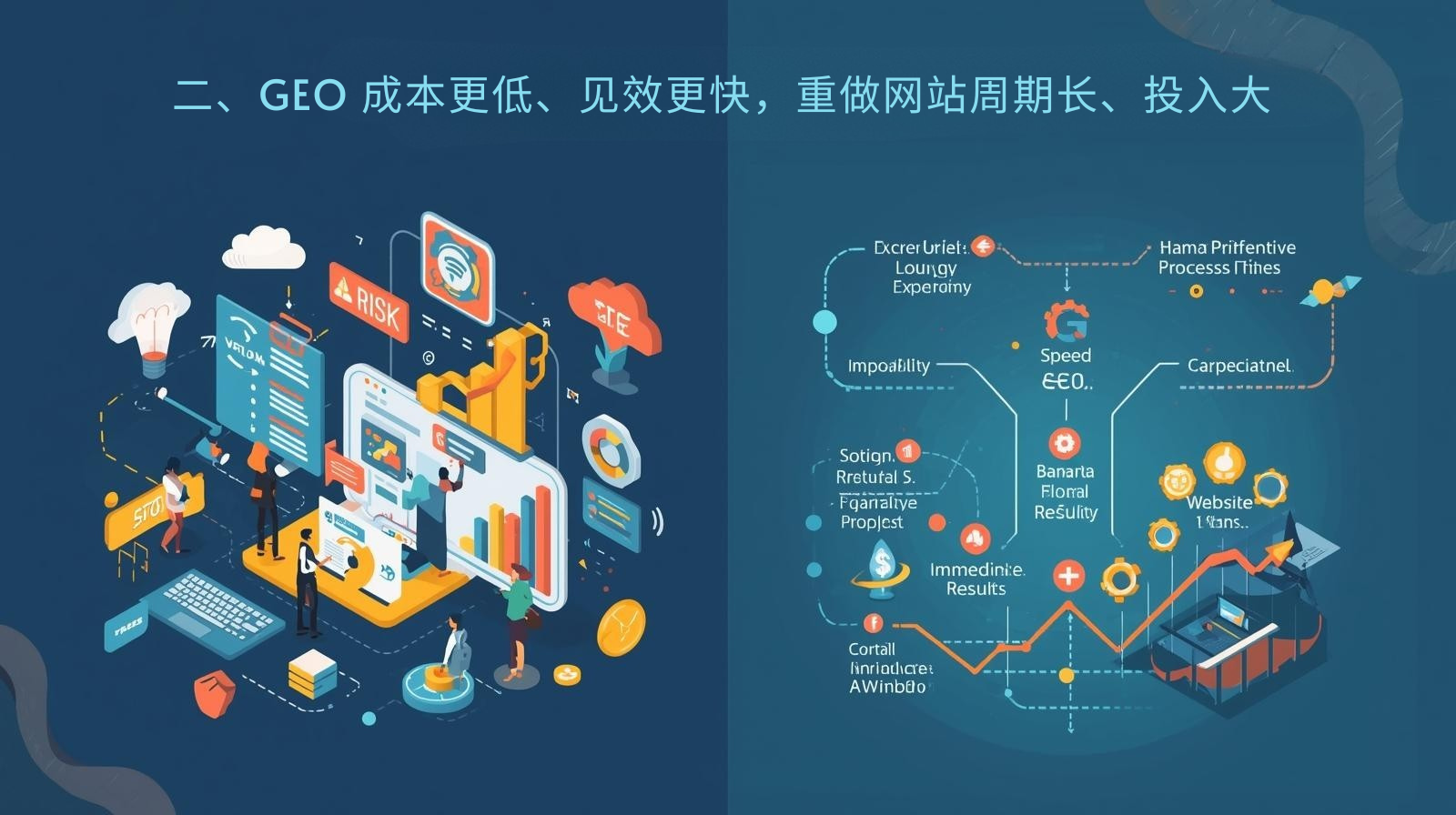
Second, GEO is lower in cost and faster in results, while rebuilding a website is time-consuming and requires a large investment.
Building a new independent e-commerce website typically takes 1-3 months and costs anywhere from tens of thousands to hundreds of thousands of yuan. It also involves risks such as data migration, page adjustments, and traffic fluctuations. In contrast, GEO optimization involves upgrading the content and structure of an existing website, and the core configuration can be implemented in 1-2 weeks. The cost is only 1/5 or even less of building a new website. Practical application of GEO does not require complex code. Simply standardize and organize product parameters, certifications, company information, and FAQs, grant GPTBot crawling permissions, and supplement with authoritative trust signals. This will allow AI to quickly identify your site. Data from the cross-border e-commerce industry in 2026 shows that independent websites that have completed basic GEO optimization can appear in ChatGPT related searches in an average of 21 days, while rebuilding a website usually takes 2-3 months to restore the original traffic level. For most small and medium-sized foreign trade enterprises, funds and time are very limited. The more stable and higher-return choice is to first use GEO to seize the AI traffic dividend and then gradually iterate the website based on inquiry data. Blindly rebuilding the website will only waste resources and miss the window of opportunity.
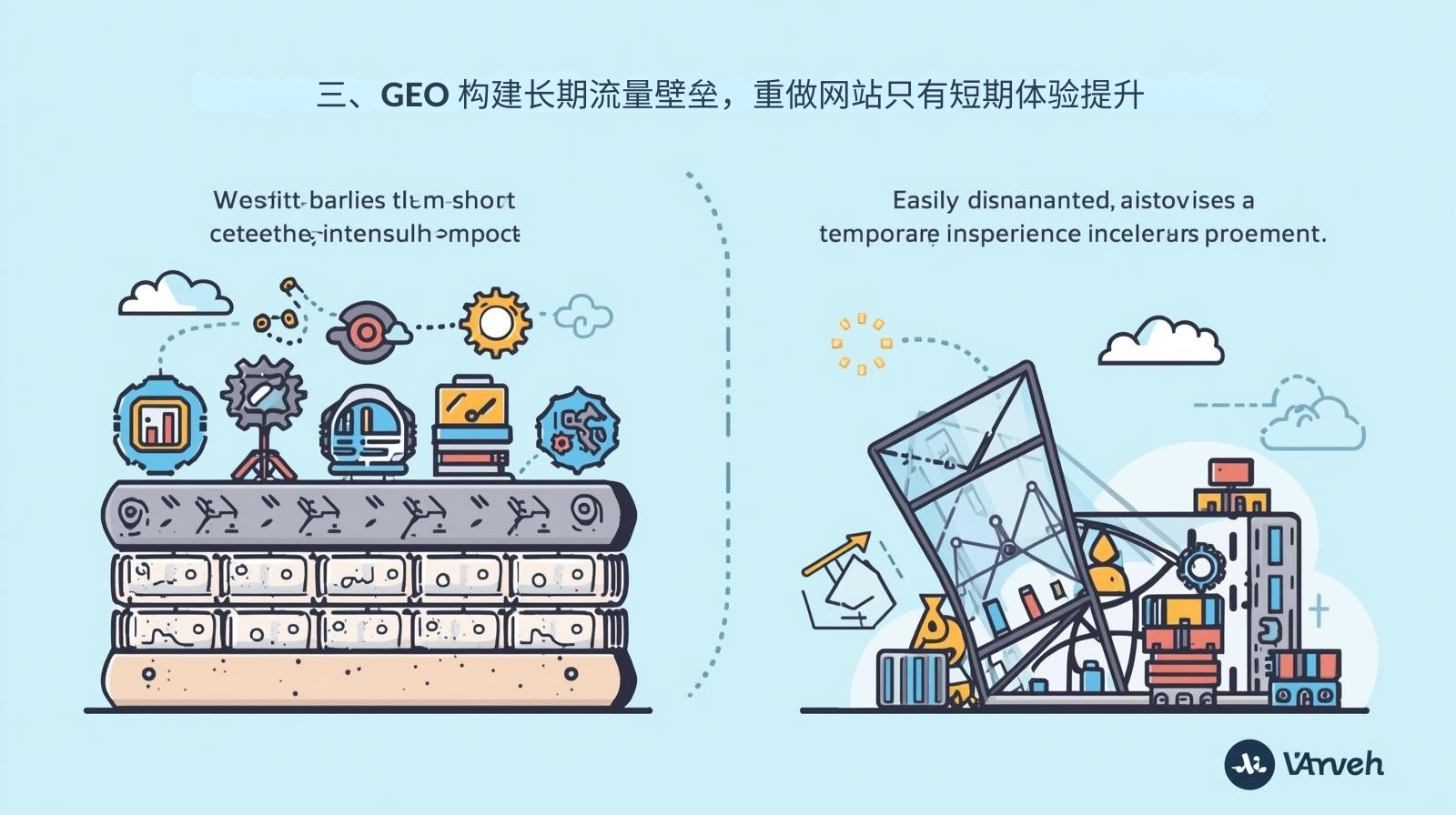
Third, GEO builds a long-term traffic barrier; redesigning the website only provides a short-term improvement in user experience.
The value of GEO optimization compoundes over time. The more times your site is cited by AI and the more complete your content, the higher your trust weight in the AI model. Even without advertising, you can continue to receive free and accurate inquiries. In contrast, rebuilding a website is just a one-time experience upgrade and does not have a long-term cumulative effect. GEO transforms independent websites from "display pages" into trusted knowledge nodes within the AI ecosystem through structured data, authoritative endorsements, semantic matching, and cross-platform information consistency. Google's 2026 AI Search Report mentions that sites with complete schemas and entity information have a 3.7 times higher probability of being featured in AI overviews ( https://developers.google.com/search/blog/2026/ai-overviews ). While your competitors are still spending money to rebuild their websites and compete on page design, you have already occupied a core position in AI search through GEO. This traffic barrier brought about by AI algorithms is difficult to surpass once established, while website visuals and interactions can be imitated and overtaken at any time.
Recommended Article: Your Competitors Haven't Reacted Yet: Building an Independent E-commerce Website with GEO is the Biggest Blue Ocean Strategy Right Now
Recommended Article: Your Competitors Haven't Reacted Yet: Building an Independent E-commerce Website with GEO is the Biggest Blue Ocean Strategy Right Now
First, establish a GEO (Geographical Organization), then iterate on the website – this is the correct path for foreign trade in 2026.
In 2026, the competition among independent e-commerce websites will no longer be about "whose website looks better," but rather "who gets prioritized for recommendations by AI." Implementing GEO (Google Adoption Optimization) doesn't require rebuilding your website, yet it allows existing sites to immediately access AI-driven procurement traffic—at a lower cost, with faster results and longer-lasting value. This is a core action that every e-commerce company should prioritize.
If your independent website hasn't been optimized for GEO yet, or you're unsure how to get your brand found on ChatGPT, consider choosing a website building partner that understands AI-powered customer acquisition. PinDian Technology boasts over ten years of experience in building websites for foreign trade, serving over 7000 clients. Built with React technology, their websites offer a smoother browsing experience and faster loading. Their underlying architecture is naturally compatible with GPTBot crawling and GEO optimization, providing a one-stop solution for content structuring, trust signal enhancement, and AI semantic adaptation. This ensures your independent website maintains consistent exposure in AI tools like ChatGPT, steadily generating high-quality overseas inquiries.