
Core SEO Strategies for Foreign Trade Websites: Key Steps and Tools for Improving Google's Organic Traffic

  • Independent website marketing and promotion
  • Independent website operation strategy
Posted by 广州品店科技有限公司 On Sep 22 2025

In the globalized world of foreign trade, organic traffic from Google is a key source of high-quality customer acquisition. This article, focusing on core SEO strategies for foreign trade websites, details key steps such as keyword research, website architecture optimization, integrating content with technology, and applying tools to help companies increase organic traffic and achieve efficient customer acquisition in the international market. By implementing a sound SEO strategy, foreign trade websites can steadily improve their rankings and enhance customer conversion rates.
1. Keyword Research and Long-Tail Coverage

1. Keyword Research and Long-Tail Coverage

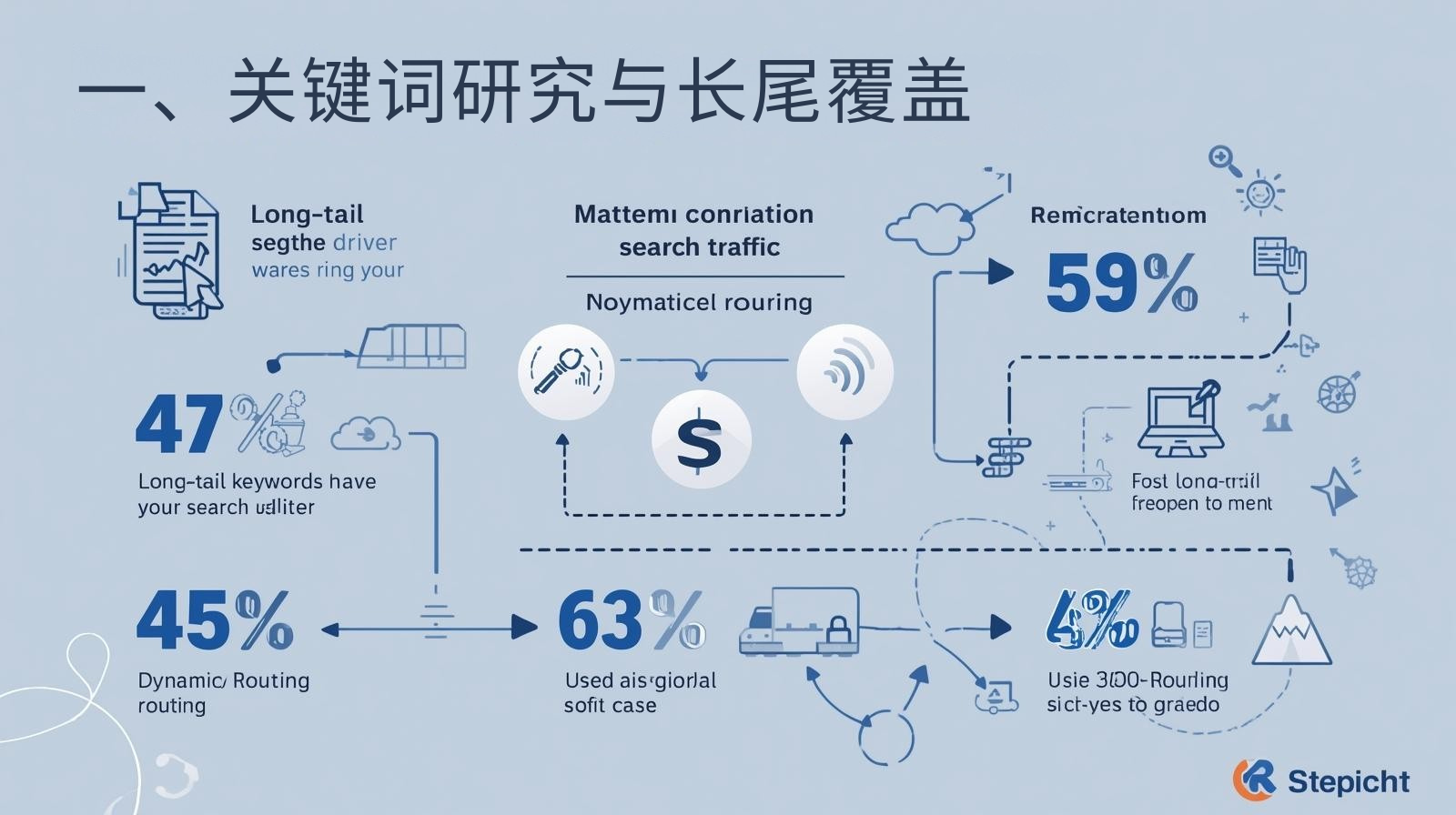
Keywords are the foundation of SEO for foreign trade websites. In addition to core product keywords, long-tail keywords are even more effective in attracting targeted customers. According to Google Search Central , approximately 70% of search traffic comes from long-tail keywords, making them particularly suitable for foreign trade companies seeking to attract high-potential customers.

Practical strategy:

  • Use Google Keyword Planner , Ahrefs , or SEMrush to analyze high-value keywords for your target market and language.

  • Divide keywords into core words and long-tail words, and plan them to different pages or articles

  • In React/Next.js foreign trade websites, dynamic routing can be combined to generate corresponding pages to cover more search needs
2. Website Architecture and Technical Optimization

2. Website Architecture and Technical Optimization

SEO for foreign trade websites relies not only on content but also on technical support. Reasonable website architecture and page performance are crucial for organic traffic.

Core technology strategy:

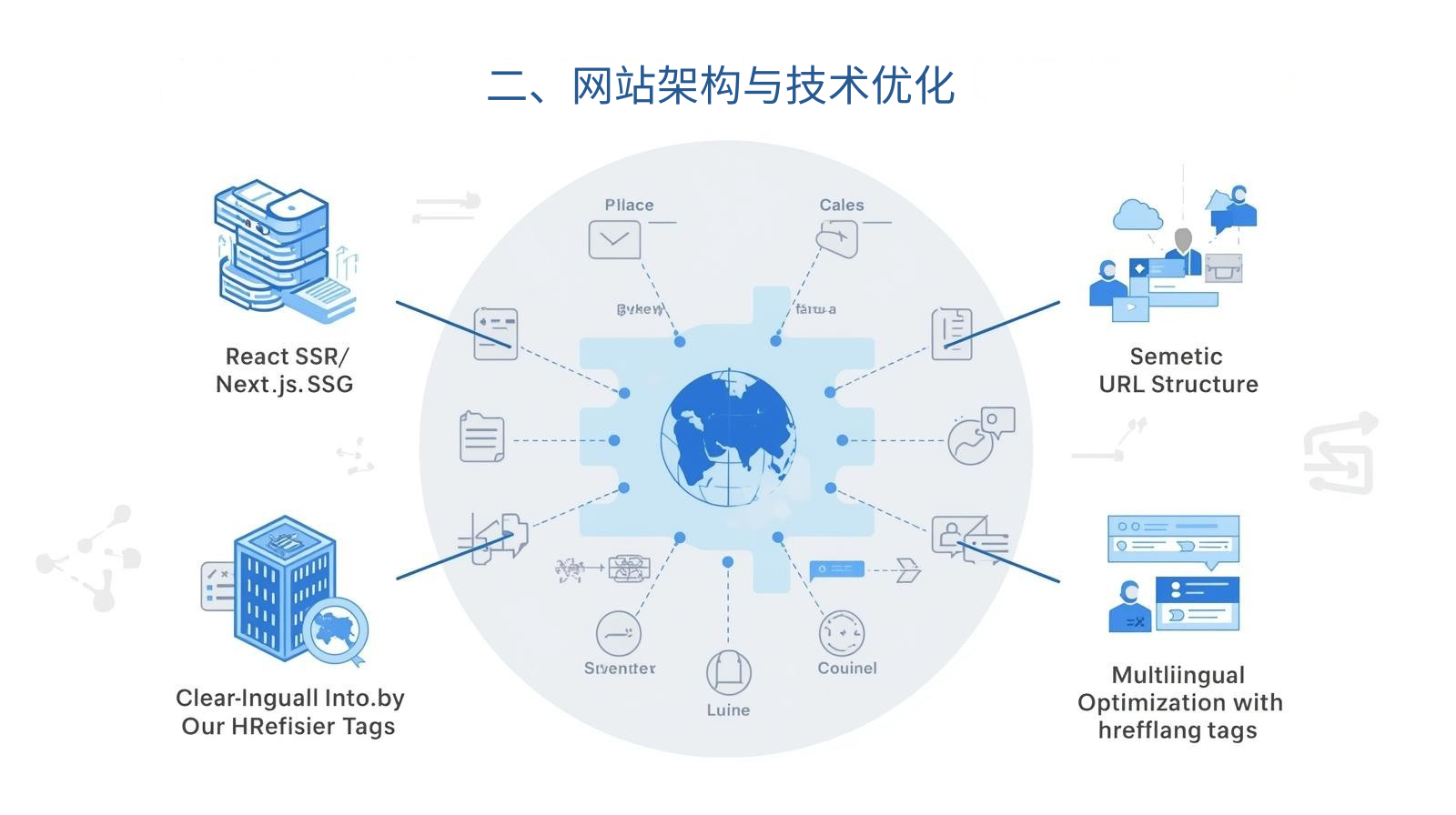
  1. React SSR/Next.js SSG : Server-side rendering ensures that search engines can crawl complete content, while providing fast first-screen loading and improving user experience.

  2. Clear URL structure : Semantic URLs (such as /en/products/wooden-table ) help search engines understand the topic of the page.

  3. Internal linking and multilingual optimization : Use hreflang tags to mark multilingual pages to improve international market inclusion and accessibility.

According to a survey by the World Trade Organization (WTO) , high-performance, crawlable, and multilingual websites are more likely to gain natural traffic and customer trust in cross-border trade.
3. Content Strategy: From Optimization to Continuous Updates

3. Content Strategy: From Optimization to Continuous Updates

High-quality content is the core of the continued growth of foreign trade website SEO. Content strategy includes:

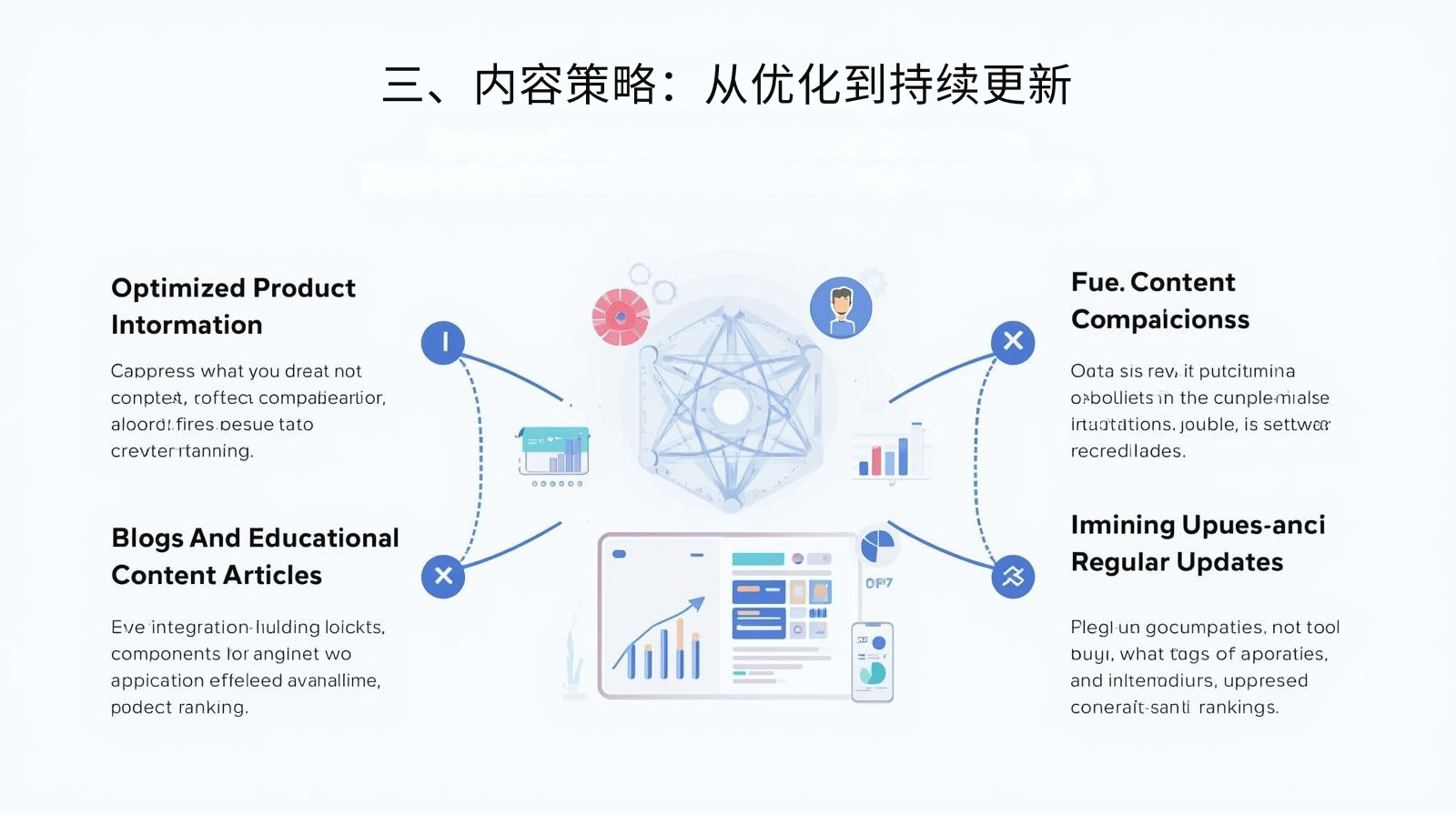
  • Product information optimization : title, description, H1/H2 tags match target keywords

  • Blogs and educational content : Articles focusing on industry issues and application scenarios can cover long-tail keywords and increase search exposure.

  • Content update mechanism : Use data analysis to regularly update old pages to ensure information timeliness and search engine crawling frequency

Combined with React componentization, dynamic rendering of content and SEO meta tags can be achieved, providing Google with accurate and rich page information, thereby improving rankings.

4. SEO Tools and Monitoring

4. SEO Tools and Monitoring

Scientific use of SEO tools is the guarantee of traffic optimization:

  • Google Search Console : Monitor indexing status, keyword rankings, and crawling issues

  • Google Analytics : Analyze visitor sources, behavior, and conversions

  • Ahrefs/SEMrush : Competitor analysis, keyword expansion, and backlink monitoring

Through data-driven adjustment strategies, we can achieve continuous SEO optimization of foreign trade websites and steady growth of natural traffic.

Related articles recommended: Must-read for foreign trade website building: Using React framework to build a high-performance SEO independent website

Improving Google's organic traffic for foreign trade websites requires the synergy of keywords, technology, content, and tools. Core strategies include:

  1. Accurate keyword research, covering core and long-tail search needs

  2. Technical optimization, React SSR/Next.js achieves fast rendering and multi-language support

  3. Continuous optimization and updating of content to increase search engine crawling frequency and user stickiness

  4. Data monitoring and iteration to ensure SEO strategy implementation and sustainable improvement

By scientifically implementing these strategies, foreign trade websites can achieve traffic recovery and sustained growth, and enhance their competitiveness in the international market.

👉 Want to quickly boost your website's organic traffic and customer conversion rate ? Choose Pinshop . We offer React/Next.js website building, SEO optimization, and content management solutions to help businesses achieve global customer acquisition and steady growth!


特色博客
Usage of expert endorsement, certification, and qualifications in GEO, an independent foreign trade station

Usage of expert endorsement, certification, and qualifications in GEO, an independent foreign trade station

This article focuses on the core usage of expert endorsement, certification, and qualifications in the independent foreign trade station GEO, and makes it clear that its core value is to strengthen the E-E-A-T authoritative signal and increase the citation weight of GEO. Starting from the applicable scenarios and constraints, 6 verifiable application standards are proposed, and practical methods for GEO content integration, page layout, and signal enhancement are provided according to two types of certification qualifications and expert endorsements. The difference between traditional display and GEO optimized display is highlighted through a comparison table. Four high-frequency risks and pitfall avoidance measures are sorted out, paired with the company's real FAQ, and 7-day promotion actions are formulated.

Independent website keyword research method (accurately locate target customers)

Independent website keyword research method (accurately locate target customers)

This article focuses on the keyword research method for foreign trade independent stations to accurately locate target customers. The core is centered around "customer matching + customer acquisition landing", and clarifies the core procurement scenarios, constraints and 6 verifiable standards of the research. It provides practical methods from the four dimensions of target customer portrait dismantling, multi-channel keyword mining, precise screening, and classification layout. Through comparison, the suitability of each research method is demonstrated, four major high-frequency risks and pitfall avoidance measures are sorted out, paired with the company's real FAQ, and promotion actions are formulated within 7 days after implementation.

How to improve GEO ranking using a question-and-answer structure

How to improve GEO ranking using a question-and-answer structure

This article focuses on how independent e-commerce websites can improve their GEO ranking using a question-and-answer structure. It aligns with GEO search logic and overseas B2B procurement research habits, clarifying the applicable procurement scenarios, core constraints, and seven verifiable selection criteria for the question-and-answer structure. Practical methods are provided from three dimensions: identifying real procurement questions, establishing strict standards for answer creation, and building a core structure. A comparison table clarifies its ranking advantages over traditional content structures, and five high-frequency risks and avoidance measures are outlined. Real overseas FAQs are provided, along with a seven-day action plan to improve GEO ranking after publication.

How to improve GEO ranking using a question-and-answer structure

How to improve GEO ranking using a question-and-answer structure

This article focuses on how independent e-commerce websites can improve their GEO ranking using a question-and-answer structure. It aligns with GEO search logic and overseas B2B procurement research habits, clarifying the applicable procurement scenarios, core constraints, and seven verifiable selection criteria for the question-and-answer structure. Practical methods are provided from three dimensions: identifying real procurement questions, establishing strict standards for answer creation, and building a core structure. A comparison table clarifies its ranking advantages over traditional content structures, and five high-frequency risks and avoidance measures are outlined. Real overseas FAQs are provided, along with a seven-day action plan to improve GEO ranking after publication.

Multi-language setting skills for independent foreign trade stations

Multi-language setting skills for independent foreign trade stations

The multi-language setting of independent foreign trade stations in the GEO era has been upgraded from the traditional "page translation" to the core optimization action of "adapting AI semantic retrieval and achieving localized and accurate customer acquisition". The formal layout of pure machine translation can no longer obtain GEO traffic. Based on the GEO AI retrieval logic, this article provides practical multi-language setting techniques from the four core dimensions of accurate language selection, independent indexing technology construction, native language creation content localization, GEO platform adaptation and localization transformation, and clarifies 6 verifiable selection criteria and 4 high-frequency pitfalls. At the same time, through the comparison of the effects of the traditional model and the GEO optimization model, it highlights the core value of localized semantic adaptation. Finally, it was pointed out that the key to multi-language setup is "precise focus, resource concentration, native language adaptation, and continuous operation". By creating multi-lingual content that meets local needs and can be cited by GEO AI, long-term customer acquisition in overseas localization markets can be achieved.

Long content vs. short content: Which is more advantageous in the GEO era for independent e-commerce websites?

Long content vs. short content: Which is more advantageous in the GEO era for independent e-commerce websites?

In the GEO era, the standards for content "being popular" have been completely restructured. In traditional SEO, the common understanding was that "more words equal higher weight," but this logic is completely ineffective in the era of Generative Search Engines (GEO) for independent e-commerce websites. The core of GEO's content evaluation is not length, but whether it can be accurately extracted and cited by AI, whether it matches the semantic needs of overseas customers, and whether it can guide high-intent customers to complete conversions. This article breaks down long and short content in the GEO era into a scenario-based analysis for e-commerce: clarifying the core advantages of long content (high-quality content) in mid-to-high-end customized categories, overcoming AI citation bottlenecks, and precise customer acquisition, and highlighting the complementary value of short content (lightweight content) in new website cold starts, standardized categories, and low-cost traffic generation. Ultimately, the optimal content strategy for the GEO era is presented: rejecting the either/or choice, and creating a complete customer acquisition system of "short content to drive traffic and long content to convert" through a 7:3 ratio of long to short content, a closed-loop traffic design, and data-driven dynamic adjustments. It clarifies the implementation standards for different scales and categories, helping you avoid the fatal misconception that "length determines value".