Optimization strategy of social sharing buttons on foreign trade websites

  • Independent website marketing and promotion
  • Independent website operation strategy
  • Foreign trade website
Posted by 广州品店科技有限公司 On Aug 23 2025

On foreign trade websites, social sharing buttons not only increase brand exposure but also guide potential customers to spread product information via social networks, generating more traffic and business opportunities. According to the International e-commerce group (IMRG) , optimized sharing buttons can increase website content sharing rates by approximately 20%-30% (reference link: IMRG ). This article will share strategies for optimizing social sharing buttons on foreign trade websites to help businesses increase user engagement and conversion rates.

1. Clarify social sharing goals and platform selection

Different companies and products are suited to different social platforms. Before optimizing your share buttons, you need to clearly define your goals:

  • Brand exposure : Choose platforms suitable for B2B foreign trade business, such as Facebook and LinkedIn.

  • Content promotion : Combine with platforms with rich visual content such as Instagram and Pinterest to increase product display and dissemination rate.

  • User interaction : Leverage instant messaging tools such as WhatsApp and Telegram to enhance customer communication and conversion opportunities.

According to a survey by the International Trade Center (ITC) , choosing the right social platform for the target customer group can significantly increase content sharing and click-through rates.

2. Button layout and visual design

Button layout and design directly affect user click-through rate. Optimization strategies include:

  • Prominent locations : Place sharing buttons at the top and bottom of product pages and in prominent locations on content pages to ensure easy access for users.

  • Mobile adaptation : Adapt button size and arrangement based on user devices to enhance touch experience.

  • Visual consistency and brand style : Colors and icons should be consistent with the style of the website while ensuring recognizability.

Nielsen Norman Group research shows that visually clear and easy-to-use sharing buttons can increase user click-through rates by 15%-25%.

3. Provide multiple sharing options and smart prompts

Optimizing the share button function can increase users' willingness to share:

  • Multiple sharing channels : not only mainstream social platforms are provided, but also email, copy link and other methods can be added to meet the needs of different users.

  • Smart prompts : When users finish browsing or add items to the shopping cart, prompts “Share to social platforms” to guide natural sharing.

  • Statistical feedback : Display the number of shares or hot tags to enhance user participation and trust.

According to research by the Internet Society (ISOC) , adding interactive prompts for social buttons can increase sharing rates by approximately 10%-15%, especially for cross-border foreign trade websites.

4. Technical implementation and loading optimization

The technical implementation of social sharing buttons also affects user experience and SEO:

  • Asynchronous loading : Use asynchronous loading of sharing plug-ins to avoid affecting page loading speed and improve website access experience.

  • SEO friendly : Ensure that the shared link contains the product title, description and image to facilitate search engine crawling and increase organic traffic.

  • Cache optimization : Reduce each loading call, improve response speed, and maintain stable performance especially during peak traffic periods.

Combined with IMRG's recommendations, optimization technology can not only increase the sharing rate, but also improve the overall SEO performance of the website, bringing more potential customers to the foreign trade website.
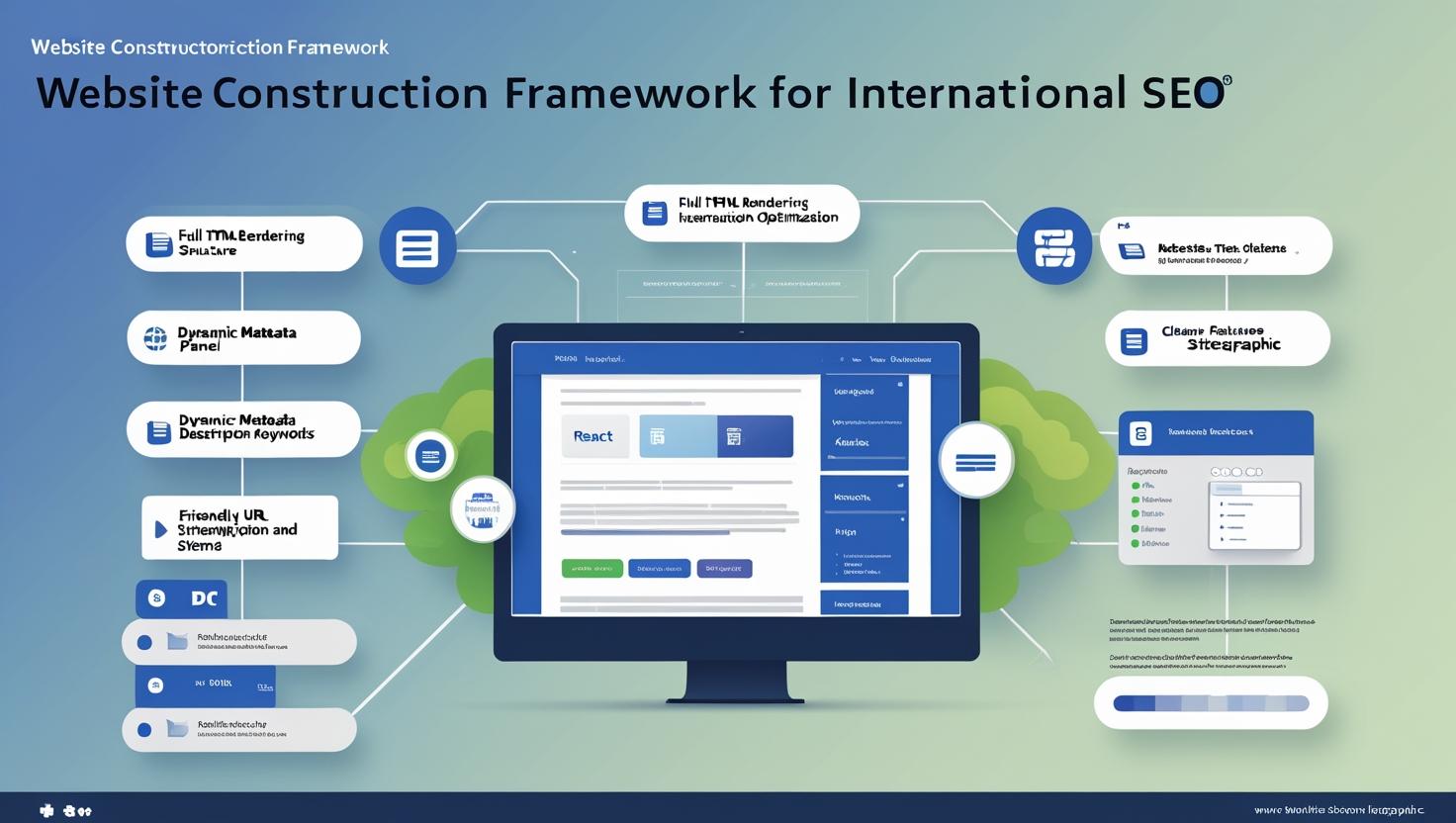
The technical implementation of social sharing buttons on foreign trade websites also affects user experience and SEO

5. Data monitoring and continuous optimization

Social sharing optimization is an iterative process that requires continuous adjustment of strategies through data analysis:

  • Sharing data analysis : Monitor the number of shares, click sources, and conversion effects through Google Analytics or your own backend.

  • A/B testing : Test different button positions, styles, and copy to find the most effective solution.

  • Update your strategy regularly : Optimize your sharing strategy based on changes in user behavior, social platform policy updates, or new trends to maintain long-term stability.

Through continuous monitoring and optimization, companies can achieve higher user engagement and conversion rates on their foreign trade websites.

Summarize

Optimizing social sharing buttons not only increases user engagement and brand exposure, but also brings in potential customers and actual conversions. By identifying target platforms, optimizing layout and design, providing diverse sharing functions, technical optimization, and data-driven iteration, companies can maximize the value of their foreign trade websites.

With the Pinshop website building platform , businesses can easily integrate social sharing modules, supporting multi-platform display, data tracking, and personalized settings, helping foreign trade websites increase user sharing rates and business growth. Experience the Pinshop website building platform now and let social sharing power your business expansion.

Pinshop foreign trade website construction system

Recommended article: Implementation ideas of intelligent recommendation system for foreign trade websites


特色博客
PinTui Technology: One-stop solution for independent e-commerce websites (GEO)

PinTui Technology: One-stop solution for independent e-commerce websites (GEO)

This article revolves around the core concept of "PinTui Technology: A One-Stop GEO Solution for Independent Websites in Foreign Trade," incorporating the latest industry data from March 2026 (Jiemian News GEO Selection Guide, Beijing News GEO Panorama Report), PinTui Technology's 7000+ practical cases from foreign trade clients, and authoritative and verifiable backlinks (OpenAI, Google, Semrush, etc.). It is divided into four core chapters (including sub-headings): "Pain Points of GEO Optimization in Foreign Trade," "PinTui's One-Stop Solution," "Core Advantages," and "Practical Cases." It deeply analyzes the four core pain points for foreign trade companies implementing GEO, breaks down PinTui Technology's "diagnosis-optimization-implementation-iteration" full-process solution, elucidates its four core advantages, and provides three practical case studies from different industries to verify the effectiveness. Adhering to long sentence formatting requirements, it avoids complex technical descriptions, and integrates all backlinks naturally into the text, balancing professionalism and practicality. This helps foreign trade companies understand the value of PinTui Technology's GEO solution and assists them in efficiently implementing GEO strategies. It also provides a standardized article summary, meta description, and specified slugs, and concludes with a natural recommendation of PinTui's website building service.

Foreign trade independent station GEO cycle: How long does it take to see the real effect of AI search?

Foreign trade independent station GEO cycle: How long does it take to see the real effect of AI search?

This article focuses on the core of "Foreign trade independent station GEO cycle: how long it takes to see the real effect of AI search", combined with the latest industry data in March 2026 (AB customer GEO effect evaluation report, Google AI Search Guide), foreign trade practical cases and authoritative checkable external links (OpenAI, Google, Semrush, etc.), divided into four core chapters (including subdivided secondary titles) of "the underlying logic of the cycle, staged dismantling, core influencing factors, and practical shortening methods", and provide an in-depth analysis of the complete cycle of 1-3 months of GEO optimization, clarifying Optimization actions and effect performance at different stages, analyzing the five core factors that affect the effectiveness time, and providing four directly implementable cycle shortening methods, which meet the requirements of long sentence formatting, without complex technical descriptions, and all external links are naturally integrated into the text, taking into account both professionalism and practicality, helping foreign trade companies rationally view the GEO cycle and quickly obtain the real results of AI search. At the same time, a standardized article summary, meta description and designated slug are provided, and at the end, the product store website building service is naturally promoted.

Foreign trade independent station GEO compliance: the prerequisite for long-term stability and being recommended by AI

Foreign trade independent station GEO compliance: the prerequisite for long-term stability and being recommended by AI

This article focuses on the latest AI platform rules in March 2026, clarifying that GEO (Generative Engine Optimization) compliance is the core prerequisite for foreign trade independent websites to be recommended by AI such as ChatGPT in the long term. It unfolds from the three core dimensions of content compliance, crawler access compliance, and privacy data compliance. It combines OpenAI, Google official policies, and EU GDPR and other regulatory requirements to provide practical standards and self-inspection processes that can be directly implemented to help foreign trade companies avoid violation risks and maintain AI Admission qualifications are recommended, and the compliance advantages of Pindian Technology’s React foreign trade website building service are introduced at the end of the article.

Independent foreign trade station GEO: Solve the problem of “difficulty in finding factories and product selection” in B-side procurement

Independent foreign trade station GEO: Solve the problem of “difficulty in finding factories and product selection” in B-side procurement

This article focuses on the core of "GEO, an independent foreign trade station: solving the difficulty of finding factories and selecting products for B-end procurement", combined with the latest industry data in March 2026 (Global Sources B-end Procurement Trend Report, OpenAI AI Procurement Search Report), foreign trade practical cases and authoritative external links (OpenAI, Google, Global Sources, etc.), divided into four core chapters (including breakdown of procurement pain points, GEO cracking path, practical implementation methods, pitfall avoidance guide) (including subdivided secondary titles), in-depth analysis of B-end procurement factory finding and product selection It provides 3 major GEO cracking paths and 3-step standardized practical procedures to sort out 4 common practical misunderstandings and pitfall avoidance methods. It meets the requirements of long sentence formatting and has no complex technical descriptions. All external links are naturally integrated into the text, taking into account both professionalism and practicality, and helping foreign trade companies use GEO to connect with accurate B-end buyers.

Foreign Trade Independent Station GEO Cost Control: Optimization Ideas for Spending Less and Producing Results

Foreign Trade Independent Station GEO Cost Control: Optimization Ideas for Spending Less and Producing Results

This article focuses on the core of "GEO Cost Control of Independent Foreign Trade Stations: Optimization Ideas for Spending Less and Producing Results", combined with the latest industry data in March 2026 (Pintui Technology GEO Cost Optimization Report, Google Foreign Trade AI Search Report), practical cases of small and medium-sized foreign trade companies and authoritative external links (OpenAI, Google, Semrush, etc.), divided into "cost composition and pain points, low-cost optimization direction, practical control "Manufacturing Techniques and Pitfall Avoidance Guide" four core chapters (including subdivided secondary titles), deeply analyze the cost structure and waste pain points of GEO optimization, provide three major low-cost optimization directions, practical control skills for each link, sort out four common cost waste misunderstandings and pitfall avoidance methods, meet the long sentence formatting requirements, without complicated technical expressions, all external links are naturally integrated into the text, taking into account professionalism and practicality, helping small and medium-sized foreign trade companies to implement GEO optimization at the lowest cost. At the same time, a standardized article summary, meta description and designated slug are provided, and at the end, the product store website building service is naturally promoted.

GEO, an independent e-commerce platform for foreign trade: Making AI a sustainable customer acquisition asset for businesses.

GEO, an independent e-commerce platform for foreign trade: Making AI a sustainable customer acquisition asset for businesses.

This article revolves around the core concept of "GEO for Independent Foreign Trade Websites: Making AI a Sustainable Customer Acquisition Asset for Enterprises." Combining the latest industry data from March 2026 (OpenAI official report, Google Foreign Trade AI Search report), practical foreign trade case studies, and authoritative, verifiable backlinks (OpenAI, Google, SGS, etc.), it is divided into three core chapters (including sub-headings): "Breaking Through Cognition," "Practical Implementation," and "Long-Term Guarantee." It delves into the underlying logic of AI becoming a sustainable customer acquisition asset, provides a standardized 3-step practical implementation process, addresses 4 common pitfalls and avoidance methods, adheres to long sentence formatting requirements, avoids complex technical descriptions, and integrates all backlinks naturally into the text, balancing professionalism and practicality. It helps foreign trade enterprises activate the potential of AI for customer acquisition using GEO and accumulate long-term customer acquisition assets. It also provides standardized article summaries, meta descriptions, and specified slugs, and naturally promotes its website building service at the end.