In the next decade, will independent foreign trade websites without a GEO strategy struggle to survive?

  • Independent website industry application
  • Independent website operation strategy
  • Foreign trade stations
Posted by 广州品店科技有限公司 On Nov 21 2025

Traffic cliff warning: Ten-year trend chart from 2025 to 2035

Google's search share declined from 92% in 2023 to 78% in 2024, while ChatGPT's weekly active users exceeded 400 million during the same period. A survey of overseas B2B procurement managers showed that 67% of respondents used ChatGPT to directly find suppliers at least once in 2024. With the model iteration speed doubling annually, it means that after 2030, AI will provide 3-5 brand answers at a time, leaving the remaining 99% of websites without even a chance to be featured—without a GEO strategy, one is voluntarily giving up the main battlefield of the next decade.
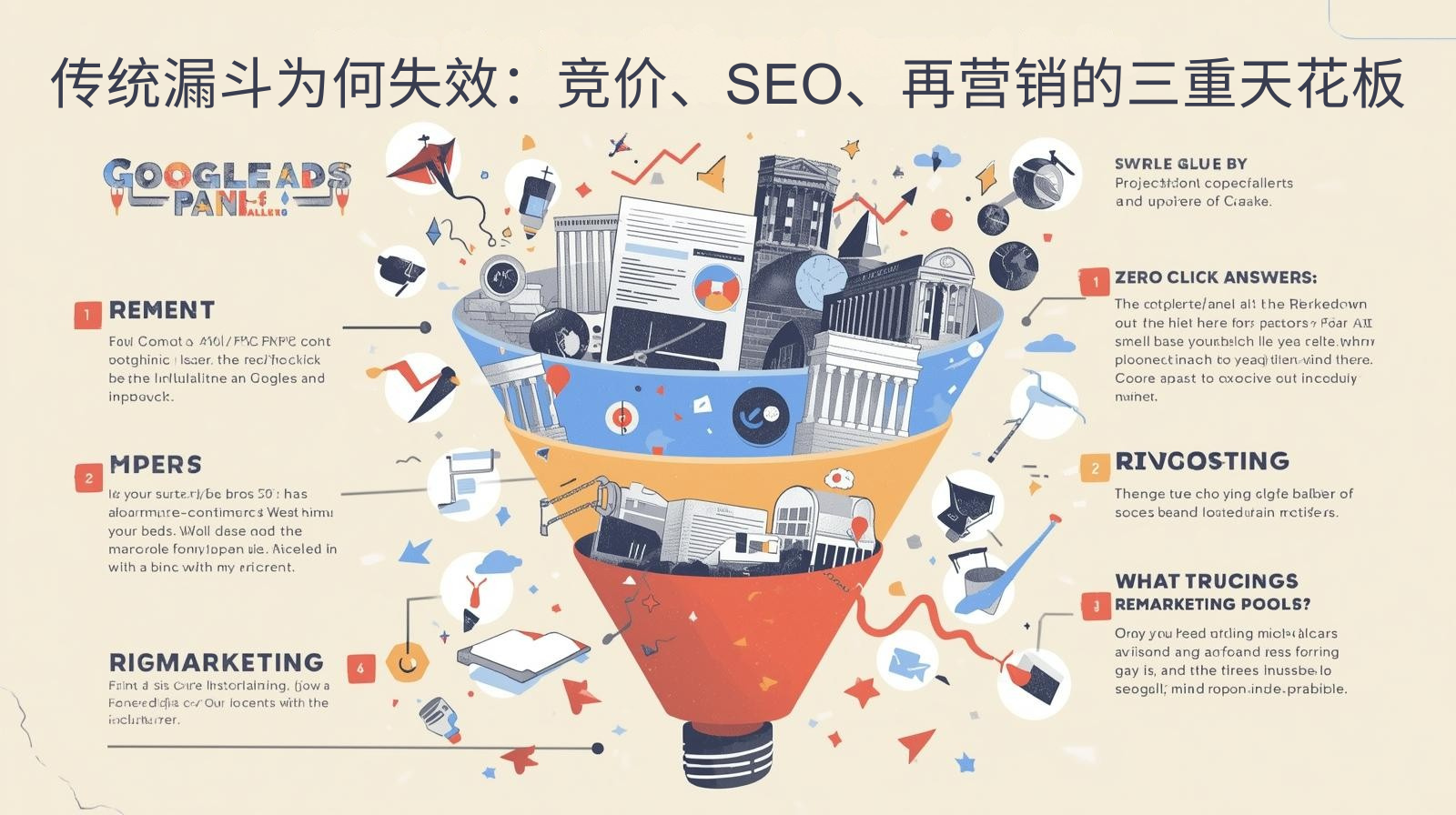
Why Traditional Funnels Fail: The Triple Ceiling of PPC, SEO, and Remarketing

Why Traditional Funnels Fail: The Triple Ceiling of PPC, SEO, and Remarketing

In the past, independent e-commerce websites relied on "Google Ads to attract new users → SEO content seeding → remarketing for profit." However, starting in 2025, Google Search Console and Bing Copilot introduced "zero-click answers," allowing users to obtain complete solutions without visiting any website. As a result, the remarketing audience pool shrank by 60%, while CPC continued to soar. More critically, backlinks and content update cycles are measured in months, while AI training windows are measured in days—the traditional pace is destined to lag behind algorithm iterations.
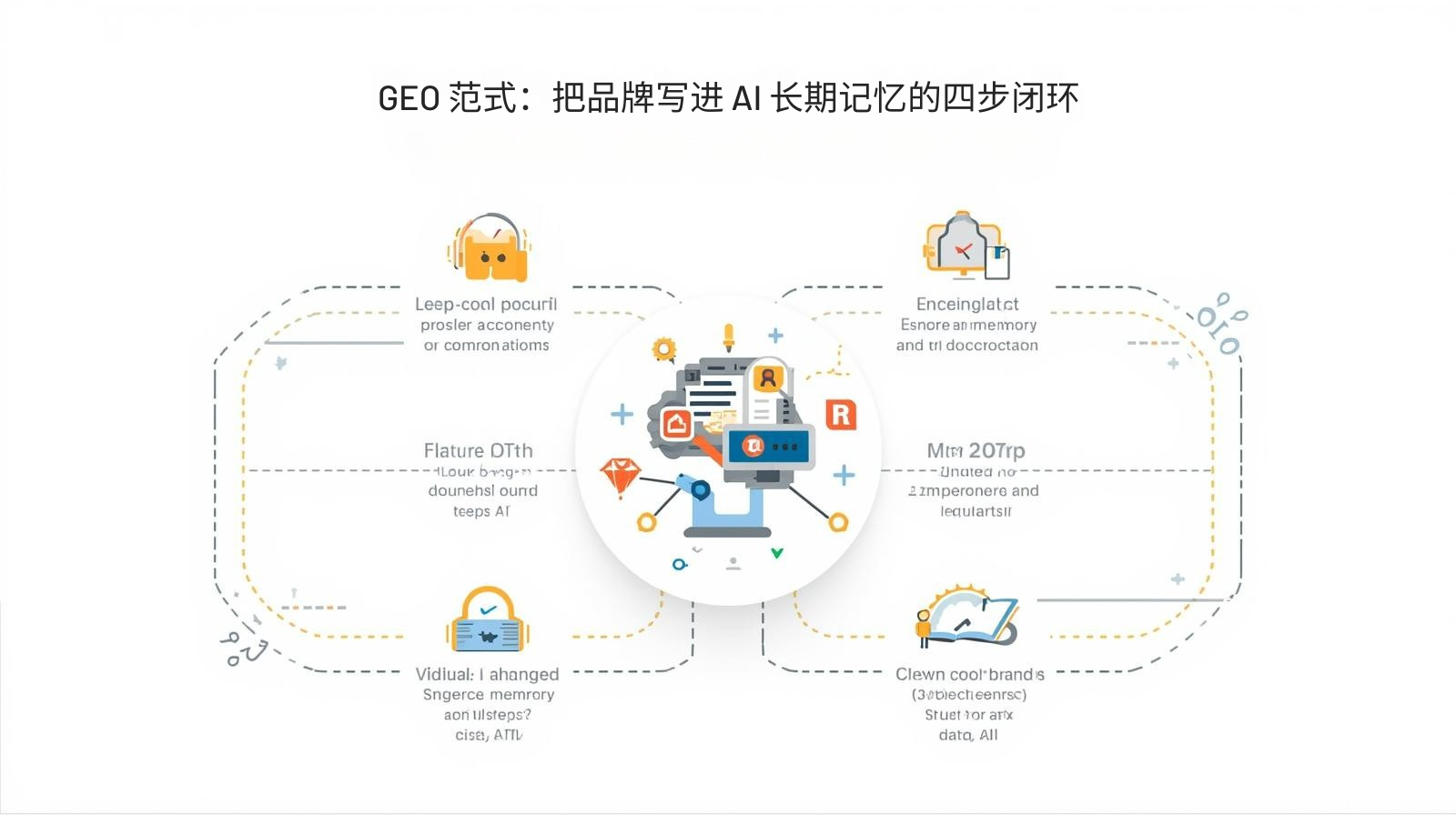
GEO Paradigm: A Four-Step Closed Loop to Incorporate Brands into AI's Long-Term Memory
GEO Paradigm: A Four-Step Closed Loop to Incorporate Brands into AI Long-Term Memory

Step 1: Semantic Pinning: Lock in entities with a single sentence, compressing "product keywords + pain point scenario + timeliness + region + certification" into no more than 65 characters, for example, "FDA silicone collapsible cup $3.50 FOB Shenzhen 15 days to Hamburger". This sentence must appear simultaneously in H1, meta tags, YouTube chapters, Reddit post titles, and TikTok captions to ensure cross-platform entity consistency, which AI cannot bypass when compressing answers.

Step 2 Evidence Drawer: Millisecond-level trusted signals are used to upload BRC certificates, SGS migration tests, German customer unloading videos, and Reddit reviews, all with a unified naming convention of "Brand-Product-Certification-Year". The filenames are keywords, and the ALT text is exactly the same as the filename. Then, the files are marked with schema.org/Product, Review, and VideoObject to ensure that the AI can capture and reference them within 0.1 seconds.

Step 3 Vector Engine: Turn old emails into 24-hour top sales. Cut five years' worth of emails, WhatsApp voice messages, and technical briefings into 512-character blocks, store them using the free Pinecone vector library, integrate with LangChain templates, set the temperature to 0.2, and force the system prompt to add the brand name and CTA "Schedule a video factory visit now" to the end.

Step 4 Automated Sales: One-click PI + Video Factory Visit. After the Chatbot recognizes the keyword "PO ready", it automatically pops up Calendly and generates a draft PI email with real-time inventory screenshots. The average time from conversation to PI is 4 minutes, which is 96% shorter than traditional emails.
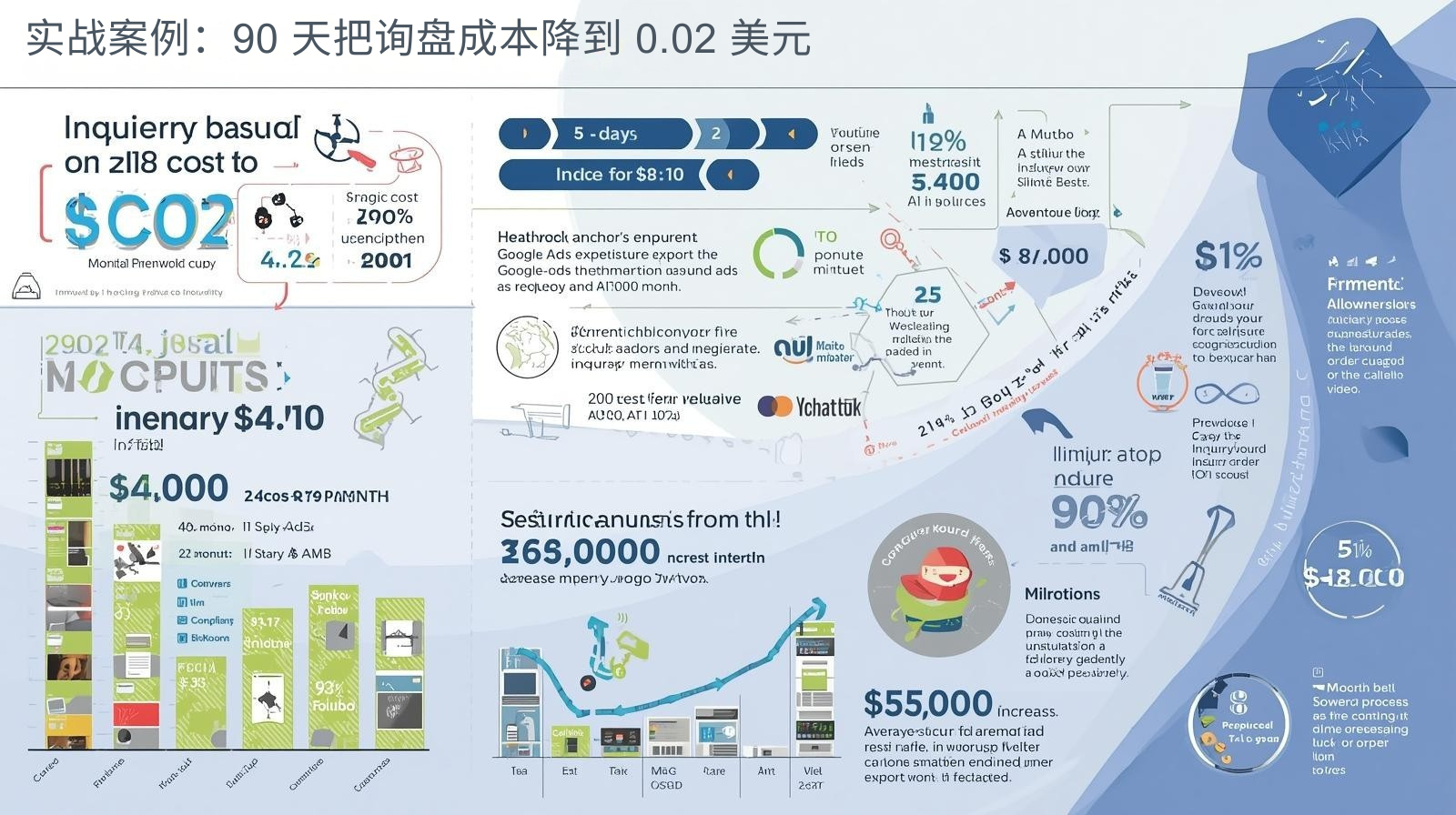
Real-world case study: Reducing inquiry costs to $0.02 in 90 days

Background: Shenzhen-based SiliconSip (a manufacturer of silicone collapsible cups) exports $12 million annually. Previously, Google Ads consumed $80,000 per month, with an inquiry cost of $4.1 per inquiry. Actions: A four-step closed-loop process was fully implemented, with semantic anchors appearing simultaneously in 12 YouTube chapters, 3 Reddit AMAs, and 8 TikTok short videos. Results: First mention by ChatGPT on day 30; cited by Perplexity on day 60; 34,000 inquiries from AI sources on day 90, with an average order value of $28,000, an inquiry cost of $0.02, and a 205-fold increase in ROI.

7-Day Crash Course for Small and Medium Enterprises

Day 1: Review materials: Rename all certificates, customer feedback images, and quotation emails to "Brand-Product-Keyword-Year"; Day 2: Upload evidence: Export the first page of the certificate as an 800x600 image using Canva, with the ALT text matching the filename; Day 3: Semantic pin launch: Modify H1 tags, meta tags, YouTube section, and Reddit post titles; Day 4: Vector library deployment: Use a Colab one-click script to embed email slices into Pinecone; Day 5: Chatbot launch: Copy and paste the button code to integrate with WhatsApp Business; Day 6: Monitor backlinks: Check daily using the Perplexity API to see if the brand is in the Top 3; Day 7: Optimize backlinks: Post a Reddit AMA and link back to the official website if the brand is not in the Top 3.

20 zero-code actions that can be performed tonight

1. Change H1 to a semantic pin; 2. Synchronize meta titles; 3. Write certificate ALT as keyword strings; 4. Copy H1 to YouTube chapter titles; 5. Enable WebP for free with Cloudflare; 6. Make FAQ questions more conversational, such as "Can I receive my goods within 15 days?"; 7. Change chat button text to "Ask AI for PI"; 8. Add WhatsApp links to buttons; 9. Mark customer logo walls with an Organization schema; 10. Change 404 pages to "Let AI help you find products"; 11. Use Hotjar screen recording to observe AI visitors; 12. Change the newsletter lure to "Free sample scheduling"; 13. Use GA4 for AI traffic segmentation; 14. Add CO2 declarations to invoice templates; 15. Mark customer case studies with a Project schema; 16. Run a brand name citation check monthly; 17. Include NFC cards in packages for real-time inventory screenshots; 18. Use Make.com to add chatbots. 19. Break down long blog posts into 300-word conversation cards; 20. Use Rich Results Test to check schema errors daily.

Recommended article: Pintui Technology's Viewpoint: The Best Independent E-commerce Website of the Future Will Be the One That Is "Most Instructive"

Conclusion: Only one chance left to get on board after a ten-year window.

In 2035, the procurement process will be simplified to a single sentence: "ChatGPT, give me three of the most reliable suppliers." Without a GEO strategy, your brand won't even be mentioned by AI; complete the four steps tonight, and 90 days later you will see your brand name in the ChatGPT answers for the first time—at that moment, you will have already secured the order bonus for the next decade.

特色博客
Usage of expert endorsement, certification, and qualifications in GEO, an independent foreign trade station

Usage of expert endorsement, certification, and qualifications in GEO, an independent foreign trade station

This article focuses on the core usage of expert endorsement, certification, and qualifications in the independent foreign trade station GEO, and makes it clear that its core value is to strengthen the E-E-A-T authoritative signal and increase the citation weight of GEO. Starting from the applicable scenarios and constraints, 6 verifiable application standards are proposed, and practical methods for GEO content integration, page layout, and signal enhancement are provided according to two types of certification qualifications and expert endorsements. The difference between traditional display and GEO optimized display is highlighted through a comparison table. Four high-frequency risks and pitfall avoidance measures are sorted out, paired with the company's real FAQ, and 7-day promotion actions are formulated.

Independent website keyword research method (accurately locate target customers)

Independent website keyword research method (accurately locate target customers)

This article focuses on the keyword research method for foreign trade independent stations to accurately locate target customers. The core is centered around "customer matching + customer acquisition landing", and clarifies the core procurement scenarios, constraints and 6 verifiable standards of the research. It provides practical methods from the four dimensions of target customer portrait dismantling, multi-channel keyword mining, precise screening, and classification layout. Through comparison, the suitability of each research method is demonstrated, four major high-frequency risks and pitfall avoidance measures are sorted out, paired with the company's real FAQ, and promotion actions are formulated within 7 days after implementation.

How to improve GEO ranking using a question-and-answer structure

How to improve GEO ranking using a question-and-answer structure

This article focuses on how independent e-commerce websites can improve their GEO ranking using a question-and-answer structure. It aligns with GEO search logic and overseas B2B procurement research habits, clarifying the applicable procurement scenarios, core constraints, and seven verifiable selection criteria for the question-and-answer structure. Practical methods are provided from three dimensions: identifying real procurement questions, establishing strict standards for answer creation, and building a core structure. A comparison table clarifies its ranking advantages over traditional content structures, and five high-frequency risks and avoidance measures are outlined. Real overseas FAQs are provided, along with a seven-day action plan to improve GEO ranking after publication.

How to improve GEO ranking using a question-and-answer structure

How to improve GEO ranking using a question-and-answer structure

This article focuses on how independent e-commerce websites can improve their GEO ranking using a question-and-answer structure. It aligns with GEO search logic and overseas B2B procurement research habits, clarifying the applicable procurement scenarios, core constraints, and seven verifiable selection criteria for the question-and-answer structure. Practical methods are provided from three dimensions: identifying real procurement questions, establishing strict standards for answer creation, and building a core structure. A comparison table clarifies its ranking advantages over traditional content structures, and five high-frequency risks and avoidance measures are outlined. Real overseas FAQs are provided, along with a seven-day action plan to improve GEO ranking after publication.

Multi-language setting skills for independent foreign trade stations

Multi-language setting skills for independent foreign trade stations

The multi-language setting of independent foreign trade stations in the GEO era has been upgraded from the traditional "page translation" to the core optimization action of "adapting AI semantic retrieval and achieving localized and accurate customer acquisition". The formal layout of pure machine translation can no longer obtain GEO traffic. Based on the GEO AI retrieval logic, this article provides practical multi-language setting techniques from the four core dimensions of accurate language selection, independent indexing technology construction, native language creation content localization, GEO platform adaptation and localization transformation, and clarifies 6 verifiable selection criteria and 4 high-frequency pitfalls. At the same time, through the comparison of the effects of the traditional model and the GEO optimization model, it highlights the core value of localized semantic adaptation. Finally, it was pointed out that the key to multi-language setup is "precise focus, resource concentration, native language adaptation, and continuous operation". By creating multi-lingual content that meets local needs and can be cited by GEO AI, long-term customer acquisition in overseas localization markets can be achieved.

Long content vs. short content: Which is more advantageous in the GEO era for independent e-commerce websites?

Long content vs. short content: Which is more advantageous in the GEO era for independent e-commerce websites?

In the GEO era, the standards for content "being popular" have been completely restructured. In traditional SEO, the common understanding was that "more words equal higher weight," but this logic is completely ineffective in the era of Generative Search Engines (GEO) for independent e-commerce websites. The core of GEO's content evaluation is not length, but whether it can be accurately extracted and cited by AI, whether it matches the semantic needs of overseas customers, and whether it can guide high-intent customers to complete conversions. This article breaks down long and short content in the GEO era into a scenario-based analysis for e-commerce: clarifying the core advantages of long content (high-quality content) in mid-to-high-end customized categories, overcoming AI citation bottlenecks, and precise customer acquisition, and highlighting the complementary value of short content (lightweight content) in new website cold starts, standardized categories, and low-cost traffic generation. Ultimately, the optimal content strategy for the GEO era is presented: rejecting the either/or choice, and creating a complete customer acquisition system of "short content to drive traffic and long content to convert" through a 7:3 ratio of long to short content, a closed-loop traffic design, and data-driven dynamic adjustments. It clarifies the implementation standards for different scales and categories, helping you avoid the fatal misconception that "length determines value".