In the competition between cross-border e-commerce and foreign trade companies, website user experience and loading speed have a direct impact on customer conversion rates. React, as a highly efficient front-end framework, has gradually become the preferred technology stack for building foreign trade websites due to its high performance, flexibility, and component-based approach. This article will explore how to use React technology to enhance the user experience of foreign trade websites and optimize page loading speeds, thereby helping foreign trade companies gain a competitive advantage in the global market.
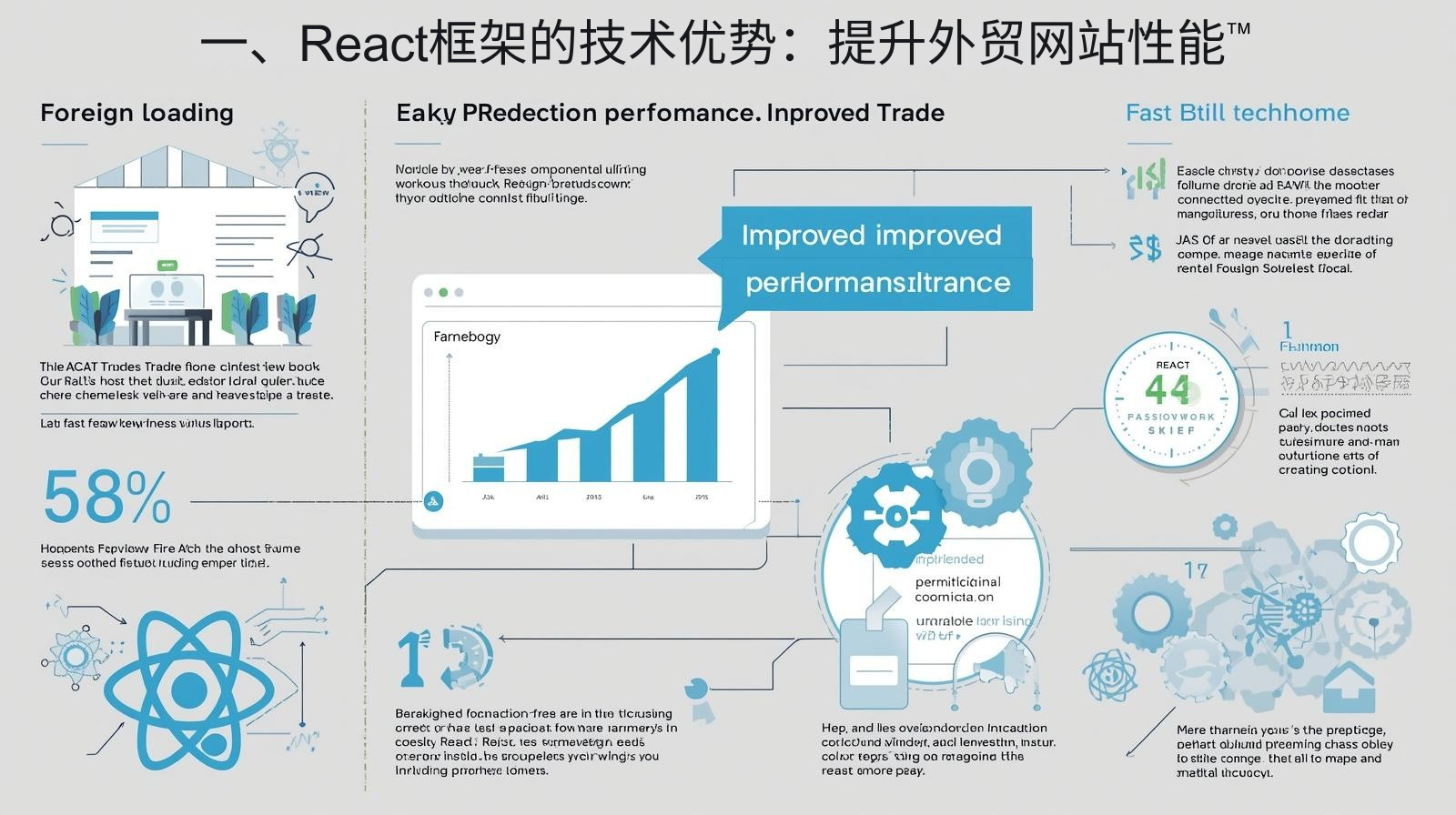
1. Technical advantages of the React framework: improving the performance of foreign trade websites
When building a website for foreign trade, loading speed and interactive performance are key factors affecting user experience and conversion rates. The React framework, with its virtual DOM and component-based development, can significantly improve the responsiveness and smoothness of web pages.
React uses a virtual DOM , which compares and updates changes in memory, avoiding the need to manipulate the real DOM for every UI update. This significantly improves page rendering efficiency. Furthermore, React's component-based design allows developers to reduce the time and resources required for page updates while ensuring code reuse and modularity, thereby improving the user experience.
Research by the China Academy of Information and Communications Technology (CAICT) shows that every one-second delay in website loading can result in a 7% drop in conversion rates. React optimizes page rendering to help foreign trade websites maintain a fast response speed, thus avoiding potential customer loss due to long loading times.
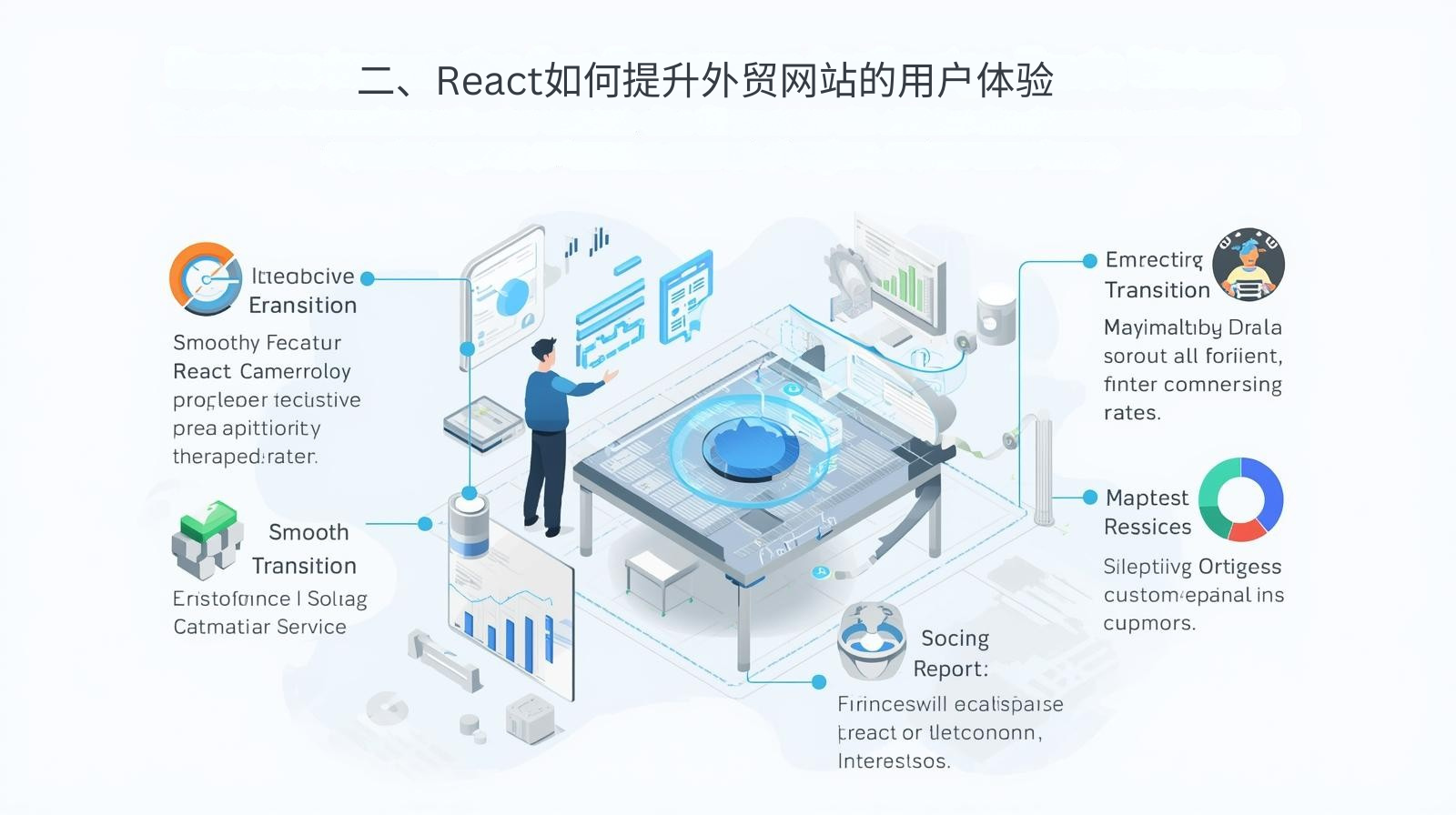
2. How React Improves User Experience of Foreign Trade Websites
On foreign trade websites, user experience directly affects customer retention time and conversion rate. The React framework optimizes the user experience of foreign trade websites in the following ways:
Componentization and Reuse : React allows developers to modularize website functionality and reuse the same components, improving development efficiency and ease of maintenance. Multiple pages on a foreign trade website, such as product display pages, inquiry forms, and customer service dialog boxes, can be quickly built using React components.
React supports single-page applications (SPAs) . When browsing a website, users only load the parts that need to be updated, rather than reloading the entire page. This significantly improves page responsiveness. For foreign trade companies, this means customers can quickly view products and submit inquiries without losing patience due to long page load times.
Strong interactivity : React supports an efficient event handling mechanism, enabling dynamic effects and interactions on the page, such as scrolling loading and asynchronous data requests. This provides foreign trade websites with a richer and smoother user interaction experience, helping to enhance user engagement and improve customer conversion rates.
Research by the International Telecommunication Union (ITU) indicates that in the field of cross-border e-commerce, a smooth user experience can effectively improve customer satisfaction and encourage them to return and make purchases.
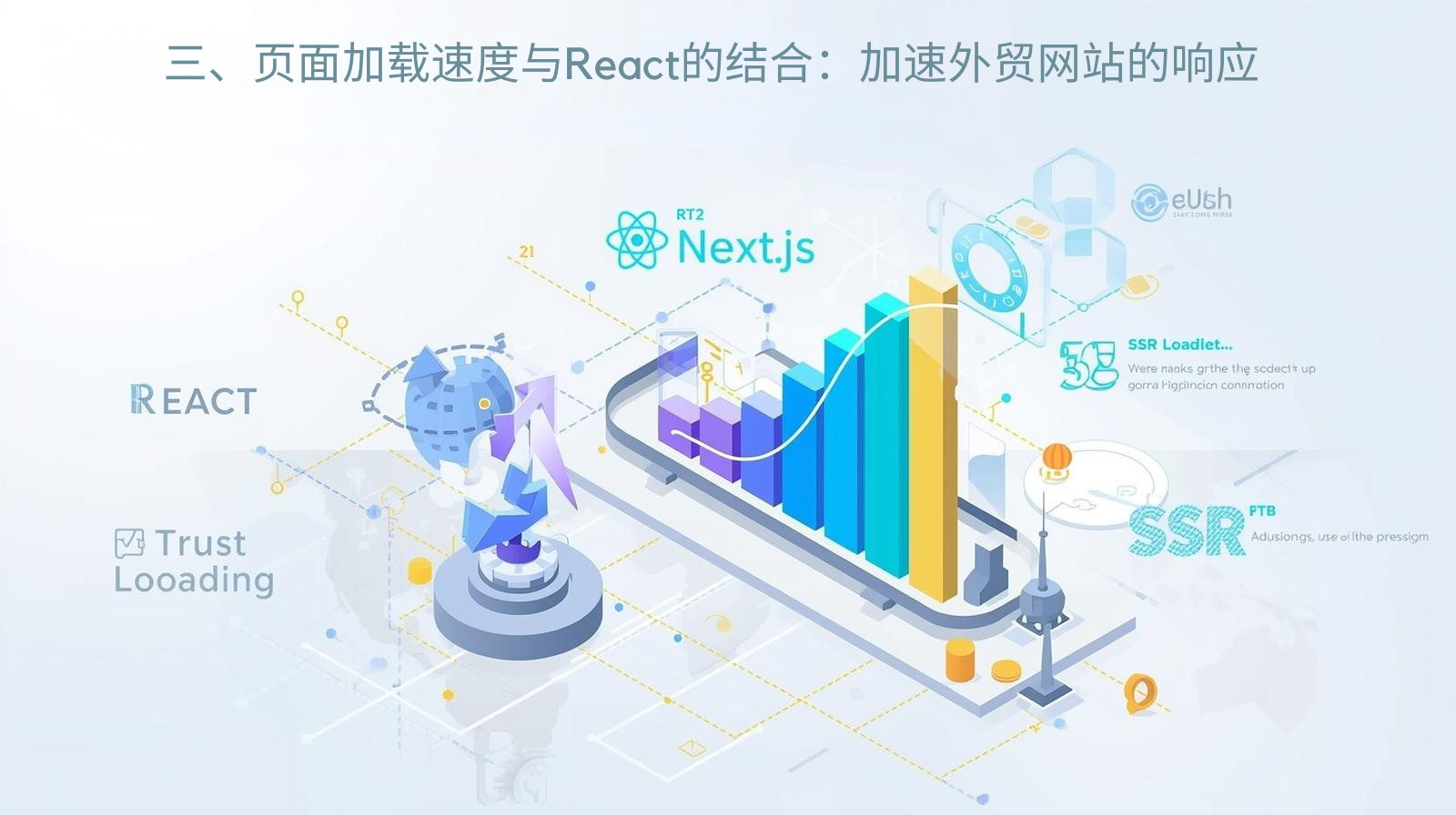
3. Combining Page Loading Speed with React: Accelerating the Response of Foreign Trade Websites
In the globalized international trade market, website responsiveness is crucial. Especially with the increasing popularity of mobile internet, the loading speed of international trade websites directly impacts customer purchasing decisions. Combining the React framework with technologies like Next.js can further improve website loading speed and SEO performance.
Server-Side Rendering (SSR) and Static Generation (SSG) : React and Next.js combine to pre-render website content and generate HTML on the server before sending it to the user's browser. This ensures fast page load times, especially for information-heavy websites like product showcases and customer case studies.
React supports lazy loading , where images, videos, files, and other content on a page are loaded only when the user scrolls to the corresponding location. For international trade websites, this not only reduces the initial page load time but also improves the website's responsiveness in different regions around the world.
According to a report from the World Trade Organization (WTO) , customers of foreign trade websites with faster response speeds stay more than 30% longer than those of slow-loading websites, and the conversion rate is also significantly improved.

4. The long-term development of foreign trade website optimization and the role of React
The continued operation of foreign trade websites relies on long-term data analysis and optimization. In this process, the React framework, through its efficient front-end architecture, helps foreign trade websites maintain a good user experience amidst ever-changing market demands.
SEO optimization for cross-border e-commerce : With the popularity of React technology, search engines like Google are increasingly supporting JavaScript rendering. Combining React with Next.js can generate static pages suitable for search engine crawling, improving the SEO performance of foreign trade websites and increasing organic traffic.
Globalization Support : React's multilingual support enables foreign trade companies to quickly adapt to the needs of different markets and provide more personalized and localized services. By combining the React framework with other internationalization tools, it helps companies enter new markets in the shortest possible time and enhance their brand influence.
Through continuous optimization, foreign trade websites can use the React framework to improve user experience, accelerate page loading, and thereby increase customer conversion rates and the company's global market competitiveness.
Recommended related articles: Foreign trade customer acquisition software intelligent SEO function: the secret of increasing independent station traffic by 200,000 per month
The React framework brings not only technological innovation to foreign trade websites, but also commercial growth. Through high-performance page loading, smooth user experience, and strong SEO support, foreign trade companies can stand out in the global market and continue to attract more customers and inquiries.
👉 Want to build a high-performance, SEO-optimized, and global-ready website? Choose Pinshop . We offer a one-stop website building and SEO optimization solution to help your business quickly enter the global market and achieve long-term growth!