
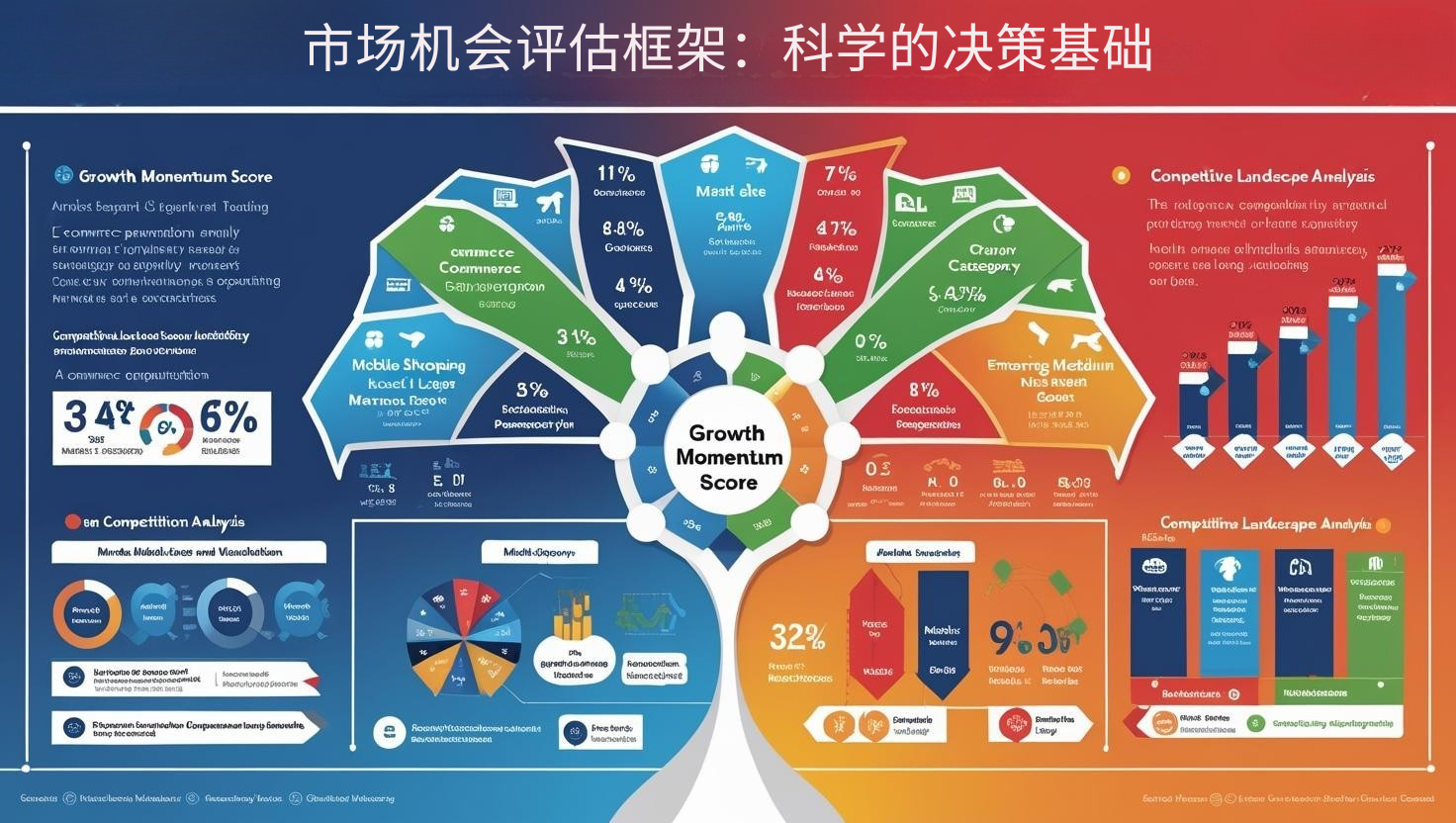
 Market Opportunity Assessment Framework: A Scientific Basis for Decision-Making
Market assessment determines the direction of expansion. According to research by Boston Consulting Group, market selection based on comprehensive data improves return on investment by an average of 127% compared to decisions based on intuition.
Build a Multi-Dimensional Market Assessment System
-
Market Size and Growth Dynamics: Analyze e-commerce penetration and annual growth trends in target markets; examine the online market size and consumer potential of specific categories; assess mobile shopping penetration and growth rates; study market share and trends in local and cross-border e-commerce; consider seasonal fluctuations and consumer cycles; analyze demographics and middle-class growth; and pay special attention to accelerated growth opportunities in emerging small and medium-sized markets. A key strategy is the "Growth Momentum Score," which examines not only absolute size but also growth rate and future potential. Research shows that this forward-looking approach can identify approximately 32% of high-growth opportunities in advance, avoiding the pursuit of mature and saturated markets.
-
Competitive Landscape and Entry Barriers: Assess market competition intensity and the presence of major players; analyze market share between local companies and international brands; examine competitive concentration and the strength of dominant players in vertical sectors; research success stories and failures of similar foreign trade companies; evaluate product differentiation and brand positioning opportunities; consider regulatory barriers and local protectionist tendencies; and pay special attention to digital marketing costs and customer acquisition challenges. Research shows that companies entering moderately competitive markets (neither oversaturated nor completely uncompetitive) achieve, on average, 47% higher initial growth rates and 41% lower customer acquisition costs than those entering extremely competitive markets.
-
Operational Ease and Resource Alignment: Assess language barriers and localization complexity; examine logistics infrastructure and delivery challenges; analyze payment practices and system compatibility; research challenges with customer service coverage and time zone management; assess the complexity of legal compliance and tax structures; consider the intellectual property protection environment; and pay special attention to the alignment of a company's existing resources with market demand. A systematic approach is "resource fit scoring," which systematically matches market demand with company capabilities. Research shows that this matching analysis can improve early-stage market operational efficiency by approximately 53%, significantly reducing trial-and-error costs.
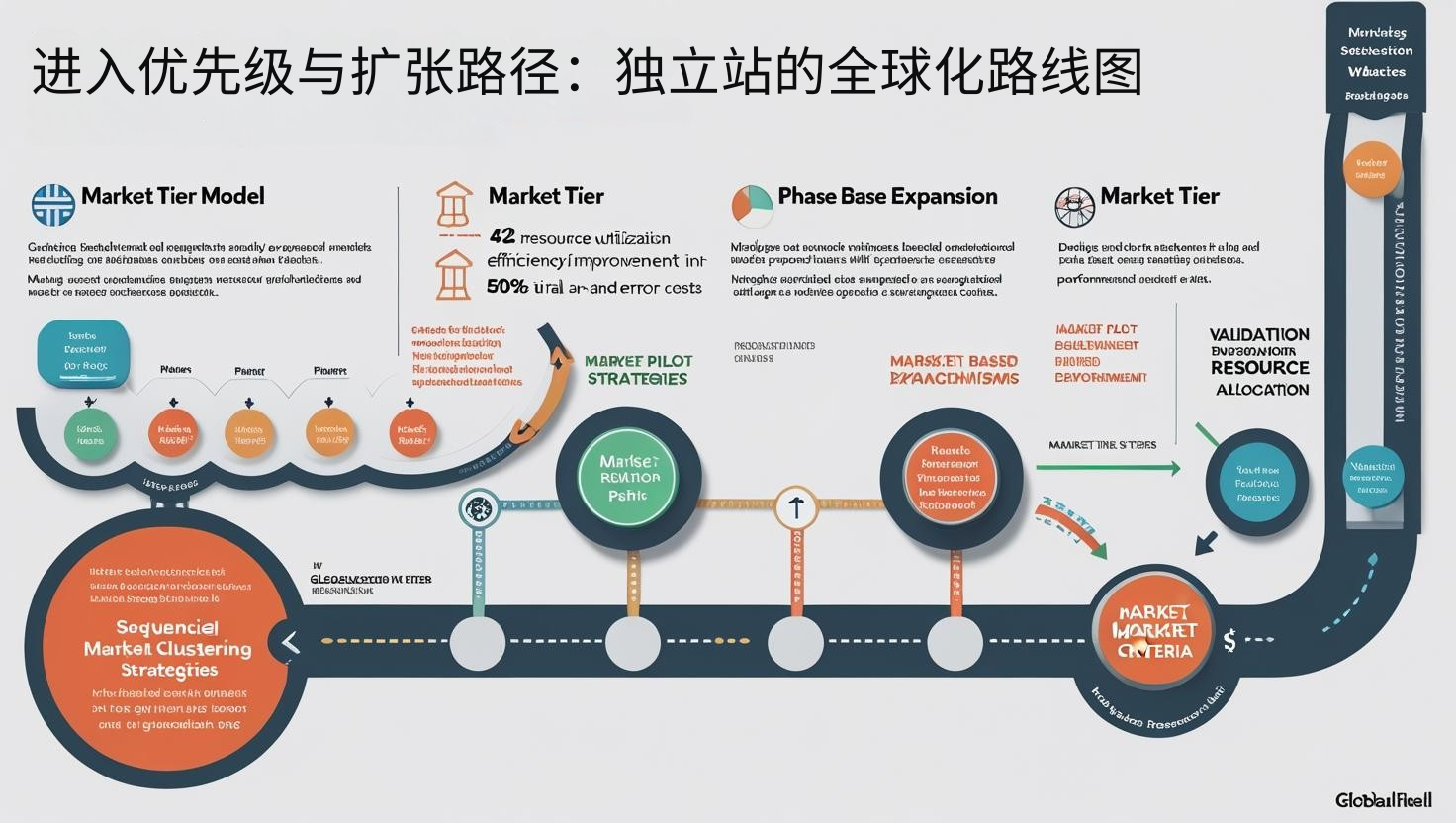 Entry Priorities and Expansion Paths: A Globalization Roadmap for Independent Websites
Prioritization strategy determines resource efficiency. According to Gartner research, companies that adopt a phased market entry strategy achieve an average 156% higher return on investment than those that expand simultaneously into multiple markets.
Design an orderly market entry sequence
-
Market clustering and grouping strategy: Create market clusters based on similarities (such as language, geography, culture, and economic development stage); design a market portfolio strategy to balance high-growth and stable markets; consider establishing regional hub markets to radiate to neighboring countries; analyze synergies and resource sharing potential between markets; develop market similarity scores to guide expansion paths; consider product-market fit groupings; and pay special attention to the value of transfer learning between markets. An effective strategy is the "market tier model," which divides global markets into three to four entry tiers. Research shows that this structured expansion can improve resource utilization efficiency by approximately 42% while reducing trial and error costs by 50%.
-
Phase-Based Expansion and Milestone Design: Create clear market expansion phase definitions and goals; design validation-based phase advancement criteria; consider market pilot strategies to mitigate initial risks; develop rapid market testing mechanisms to assess initial response; establish performance-based resource allocation adjustments; design market exit criteria and processes; and pay special attention to early success metrics and decision point design. Research shows that companies that implement clear phase advancement criteria reduce internationalization losses by an average of approximately 64% compared to competitors with unstructured expansion, while also accelerating expansion by 29% because they are able to more quickly identify and exit inefficient markets.
-
Seasonality and Timing Optimization: Analyze e-commerce peak periods and shopping seasons in different markets; consider matching product seasonality with market characteristics; research market events and holiday opportunities; evaluate competitive behavior and market dynamics; consider external environmental factors (such as exchange rates and trade policy changes); design the optimal market entry window; and pay special attention to balancing first-mover effects and market readiness. One strategic approach is the "Timing Optimization Matrix," which systematically evaluates the advantages of entering at different time windows. Research shows that entering at the optimal time can improve first-year market performance by approximately 37%, significantly accelerating market penetration.
 Localization Depth and Resource Allocation: Differentiation Strategy for Target Markets
Localization strategy determines market penetration. According to research by Common Sense Advisory, appropriate localization investment can increase sales conversion rates by up to 70%, while excessive or insufficient localization can also undermine profitability.
Build a Resource-Efficient Localization Framework
-
Localization Degree and Resource Model: Create a framework for assessing the depth of localization based on market importance and cultural distance; design a tiered localization plan, from basic translation to deep cultural adaptation; evaluate the return on investment of different localization elements (language, content, visuals, functionality, and services); consider market-specific localization priorities; develop a resource allocation model that balances breadth and depth of coverage; design a phased localization path that deepens as market performance evolves; and prioritize localization at key conversion points. A highly effective strategy is "impact localization," focusing resources on the elements that most influence purchasing decisions. Research shows that this focused approach can achieve 80% of the results at 30% of the cost of full localization.
-
Application of Technology and Automation: Evaluate the applicability of technology tools for different localization tasks; consider a hybrid model of machine translation and human editing; research the value of template-based design for cross-market expansion; develop localization workflows and management systems; consider the internationalization architecture design of content management systems; evaluate multilingual SEO tools and processes; and pay special attention to the optimal combination of technology and human resources. Research shows that companies that strategically utilize technology save an average of 43% in localization costs compared to purely manual processes, while also accelerating time to market by approximately 57%, creating the conditions for rapid market response.
-
Synergy between Local Teams and Global Resources: Design the optimal structure and division of labor between local and global teams; evaluate the localization needs of different functions (marketing, customer service, content, operations); consider regional team strategies for market groupings; explore the balance between outsourcing and internal capability building; develop global and local knowledge sharing mechanisms; design cross-market learning and best practice dissemination systems; and pay special attention to the balance between cultural understanding and business efficiency. A successful model is the "core-satellite team structure," which maintains a strong global core team and establishes lightweight, market-specific teams. Research shows that this structure can improve cross-market collaboration efficiency by approximately 39% while maintaining necessary local sensitivity.
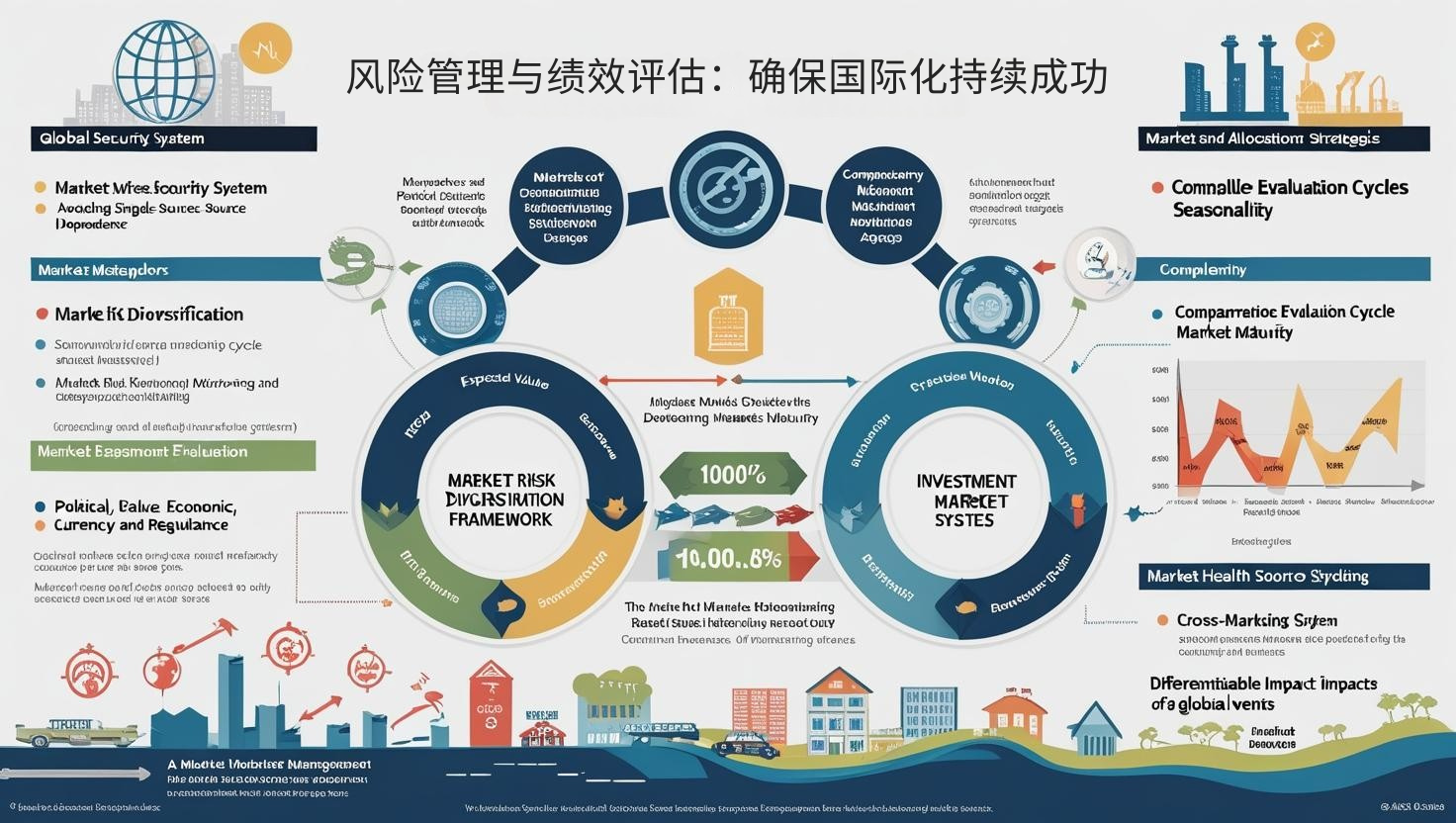 Risk Management and Performance Evaluation: Ensuring Sustained Internationalization Success
Risk management determines long-term sustainability. According to PwC research, international companies that implement systematic risk management have an average five-year survival rate that is 35% higher than those that respond passively to risk.
Building a Healthy Global Security System
-
Market Diversification and Risk Balancing: Design a market portfolio diversification strategy to avoid single-source reliance; establish a market risk assessment framework, monitoring, and early warning system; consider the diversification of political, economic, currency, and regulatory risks; assess the complementary effects of different market cycles and seasonality; establish a market weight adjustment mechanism to respond to changing risks; develop a systemic risk mitigation plan; and pay special attention to the differentiated impacts and responses of global events. One strategic approach is "dynamic market allocation," which adjusts resource allocation based on risk changes and performance. Research shows that this flexible strategy can reduce business volatility by approximately 28% while optimizing overall returns.
-
Performance Indicators and Evaluation Framework: Create a KPI system and expected values specific to each market's development stage; design a comparative evaluation model that considers market maturity; develop an investment return cycle and break-even analysis; consider indicators that balance short-term performance with long-term value building; establish a market health scoring system that goes beyond simple sales data; design a cross-market benchmarking mechanism; and pay special attention to the impact of different market characteristics on evaluation criteria. Research shows that companies using a stage-adapted assessment framework reduce false market exits by an average of 40% compared to companies using a standardized assessment framework. They also improve resource optimization by 35%, avoiding premature abandonment of markets with long-term potential.
-
Learning Systems and Knowledge Management: Establish cross-market learning and experience sharing mechanisms; create a market entry model library and case analysis system; design a systematic market testing and hypothesis verification framework; develop a process for identifying and disseminating best practices; consider establishing market expert networks and knowledge communities; design failure analysis and experience extraction processes; and pay special attention to differentiated learning extraction across different market types. A highly effective mechanism is a "pattern recognition system" that systematically records and analyzes success and failure patterns across different markets. Research shows that this structured learning approach can increase the success rate of new market entries by approximately 44% by avoiding repeating mistakes and replicating successful factors.
In today's rapidly developing global digital economy, a systematic market entry strategy has become a key factor in the international success of cross-border e-commerce companies. By establishing a scientific market assessment framework, designing a structured expansion path, implementing differentiated localization strategies, and building a comprehensive risk management system, companies can significantly improve their internationalization success rate, optimize resource allocation efficiency, and achieve sustainable global growth. The key is to avoid the temptation of "blooming everywhere" and adopt a strategic focus and phased expansion, ensuring that each internationalization step is based on solid data and a clear strategy.
Related article recommendations: https://pinshop.cn/zh-Hans/blog/what-is-independent-site-for-business