
In an environment where global e-commerce competition is increasingly fierce, customer feedback has become the core driving force for product innovation and improvement. According to McKinsey's research, companies that systematically use customer feedback to optimize their product have an average of 28% higher annual revenue growth than those that respond passively. For cross-border enterprises that operate self-built websites, it is particularly important to establish effective feedback collection and product improvement mechanisms, because they usually lack the data advantages and user base of large platforms. Forrester's survey shows that 71% of B2C consumers believe businesses should improve their products and services based on their feedback, while PwC's data shows that 65% of customers believe that brands that actively respond to feedback are more trustworthy and loyal than brands that ignore customer voices. However, according to HubSpot, only 42% of foreign trade companies have structured customer feedback collection systems, while only about 23% can effectively convert feedback into specific product improvements. This situation is particularly common in cross-border e-commerce, as language barriers, cultural differences and geographical distances increase the difficulty of effectively collecting and understanding customer feedback from around the world. This article will explore how to build a systematic customer feedback collection and product improvement mechanism for cross-border enterprises, and transform the voices of global customers into continuous product competitiveness.
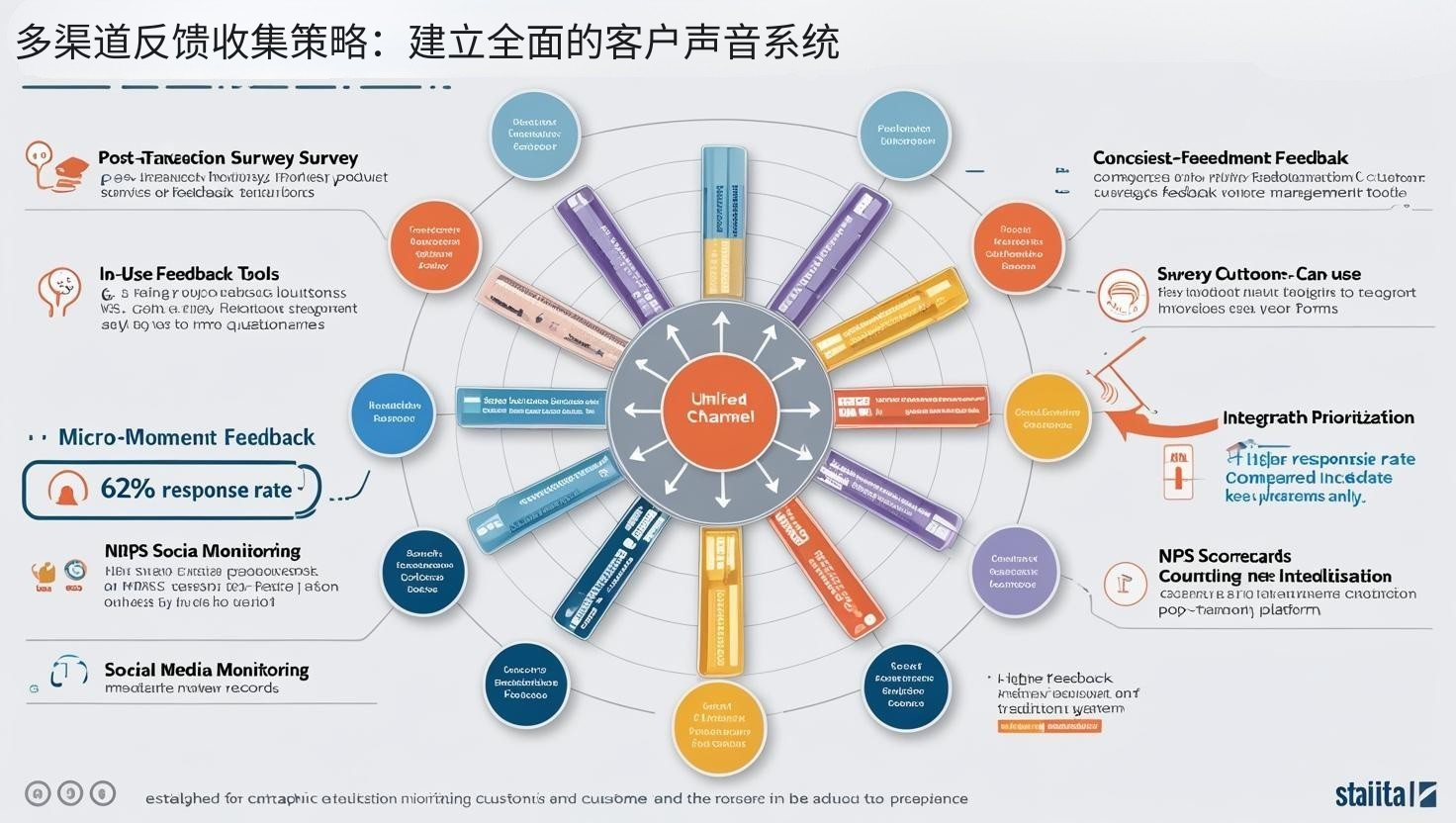 Multi-channel feedback collection strategy: Establish a comprehensive customer voice system
Multi-channel collection is crucial. According to Qualtrics' research, businesses using three or more feedback channels receive an average of 43% more comprehensive customer insight than businesses collected by a single channel.
Build an ubiquitous feedback ecosystem
-
Combined with active collection and passive monitoring: Design a multi-touch active survey system, including post-transaction, in-use and regular satisfaction assessment; implement website embedded feedback tools, such as floating buttons or pop-up questionnaires; create concise product evaluation forms to balance comprehensiveness and completion rates; develop instant feedback mechanisms, such as NPS or simple score cards; set up passive monitoring tools to track social media mentions and comments; implement customer service interaction record analysis, and mine indirect feedback. An underestimated but extremely effective strategy is "micro-moment feedback", which collects brief, targeted feedback at key nodes in the customer journey, and studies show that this approach improves the response rate by about 62% on average than traditional long questionnaires.
-
Cross-channel feedback integration and synchronization: Establish a centralized feedback management platform to integrate customer feedback from all channels; create a unified feedback classification and labeling system to facilitate cross-channel analysis; design a feedback priority evaluation framework to distinguish urgent and long-term problems; implement automated data collection and synchronization mechanisms to reduce manual collation; consider using API to connect various feedback channels and systems; develop feedback verification mechanisms to confirm the generality of problems.
-
Incentive and Participation Mechanism Design: Design attractive feedback incentive mechanisms such as points, discounts or exclusive benefits; create a layered incentive plan to provide higher rewards for more detailed and valuable feedback; consider non-material incentives such as feature previews or impact recognition; implement transparent feedback impact displays so that customers can see the changes they produce. Research shows that transparent mechanisms that demonstrate feedback impacts can improve the proportion of high-quality feedback more than simple rewards, increasing depth feedback by about 38%.
 Feedback Analysis and Insight Extraction: Data Intelligent Driven Improvement
Feedback analysis is the core value. According to Aberdeen Group's research, companies that use advanced analytical tools to process customer feedback improve on average 57% of their insights and 72% of their feedback processing efficiency than those that analyze manually.
Build an intelligent feedback understanding system
-
Qualitative and quantitative data integration: Design a structured feedback coding framework to convert text feedback into quantifiable data; implement sentiment analysis to evaluate the emotional polarity and intensity of feedback; develop topic clustering technology to automatically identify common topics in feedback; create feedback priority scoring systems that combine frequency, emotion and business impact; use word frequency and semantic analysis to identify key concepts and terms. An advanced strategy is "hybrid method analysis", which uses qualitative deep understanding and quantitative pattern recognition, and studies have shown that this approach can improve insight accuracy by about 35%.
-
Problem classification and prioritization: Establish a multi-dimensional feedback classification system, including categories such as product functions, quality, user experience, etc.; develop a framework for problem severity assessment based on the scope and depth of impact; create a view of customers segmenting specific problems to understand the unique challenges of different groups; implement feedback aggregation mechanism to identify the universality of similar problems. A strategic analysis is "impact matrix assessment", which takes into account the impact of the problem on customer experience and the technical/resource requirements to address, and studies show that this approach can improve resource allocation efficiency by about 43%.
-
Comparative analysis across products and markets: Implement horizontal comparison analysis of product lines to identify common problems and product-specific challenges; develop a market comparison framework to understand the differentiated needs of customers in different regions; analyze feedback comparisons between new and old products, track improvement effects and continuous challenges; examine the feedback differences between different customer groups on the same product. An insightful analysis is the "Expectation-Experience Gap Map", which compares the gap in customer expectations and actual experiences in different markets and products. Research shows that this approach can detect about 32% of hidden opportunities.
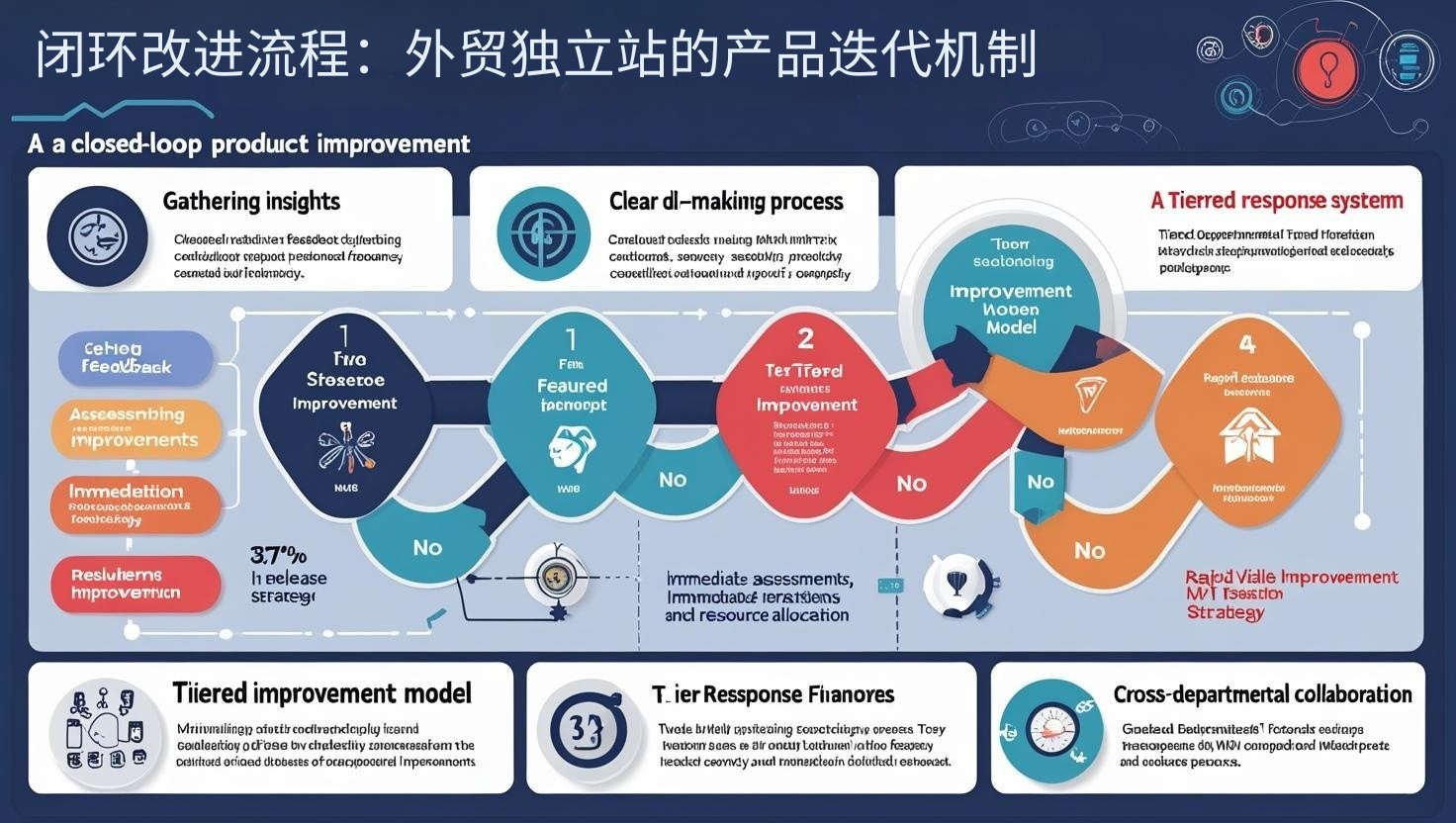 Closed-loop improvement process: product iteration mechanism of independent foreign trade stations
The closed-loop process ensures actual improvement. According to Bain & Company's research, companies that establish a complete closed-loop feedback processing process achieve an average of 33% higher customer satisfaction improvement than companies that only collect analytical feedback.
Building a system from insight to action
-
Product Improvement Decision Framework: Establish a structured feedback evaluation matrix to comprehensively consider the frequency, severity and complexity of problem solving; create clear improvement decision-making processes, including evaluation, prioritization and resource allocation; develop hierarchical response systems to distinguish between immediate repairs, planned improvements and long-term transformation; design cross-departmental collaboration mechanisms to ensure a balance between product, technology and business perspectives. An efficient strategy is the "hierarchical improvement model", which divides product changes into three levels: fine-tuning, functional enhancement and structural improvement. Research shows that this approach can improve improvement efficiency by about 37%.
-
Quick iteration and verification loop: Implement agile product improvement process to shorten the cycle from feedback to implementation; design a minimum feasible improvement (MVI) method to quickly verify solution effectiveness; create an improvement test framework to verify changes through A/B testing or limited user groups; develop phased release plans to balance improvement speed and product stability. An innovative strategy is "progressive feature release", which tests improvements through phased rollouts of regional or user groups, and studies show that this approach can reduce the risk of failure by about 42%.
-
Customer communication and expectation management: Design a feedback response notification system to inform customers that their feedback has been received and processed; create an improvement roadmap publicity mechanism to transparently display the changes to be implemented; develop a personalized follow-up system to inform customers who provide important feedback about progress; implement improvement comparison display to highlight changes and response speed. Research shows that companies that implement transparent feedback response communications receive an average of 47% higher customer satisfaction improvements than those that keep changing opaque.
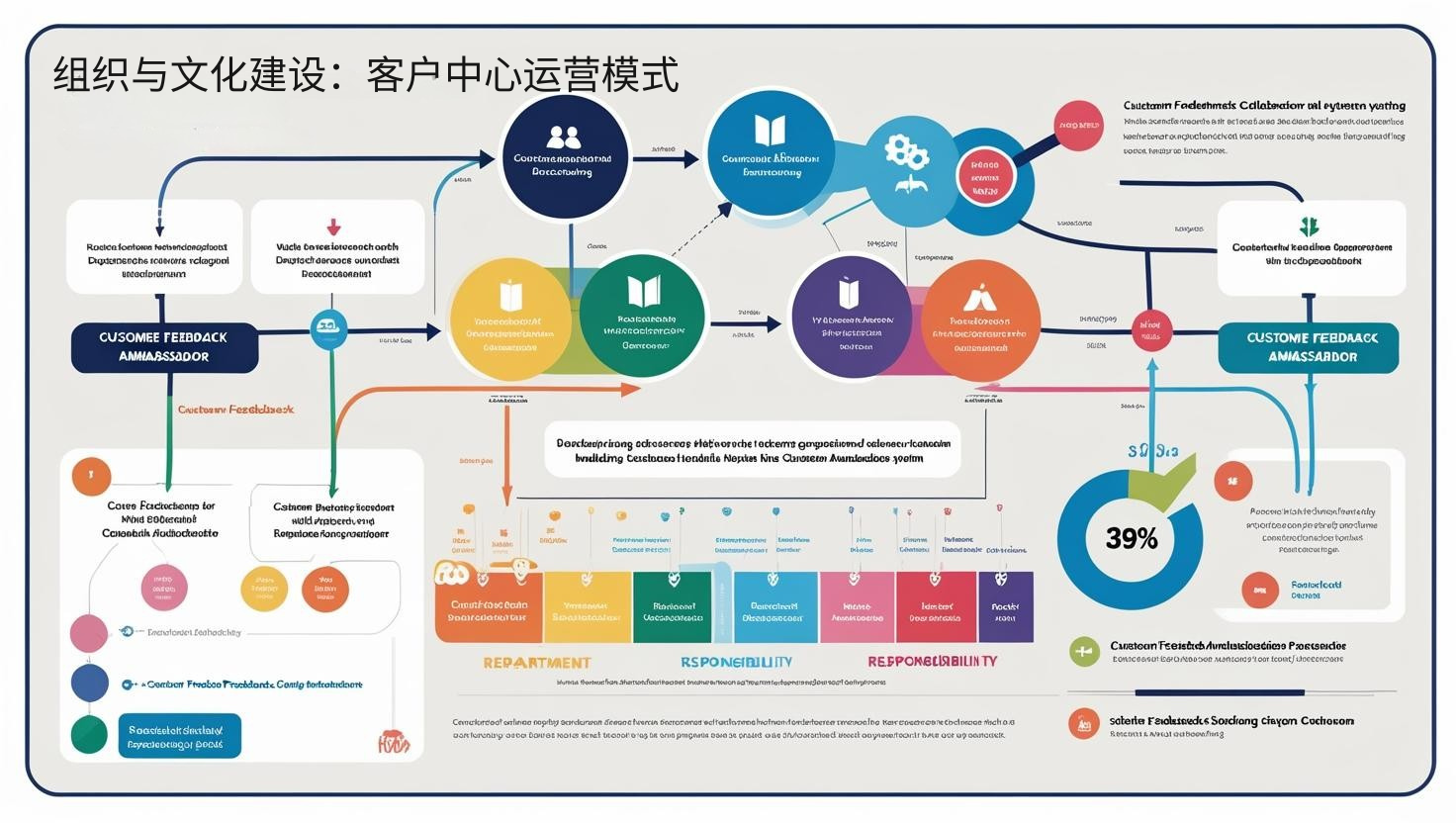 Organization and cultural construction: customer center operation model
Organizational culture is the basis for long-term success. According to Deloitte's research, companies with a strong customer feedback-oriented culture achieve an average of 41% higher employee engagement and a 27% lower product defect rate than process-oriented companies.
Build a customer-centric organizational system
-
Cross-departmental collaboration and clear responsibilities: Design a clear feedback processing responsibility matrix to clarify the role of each department in the feedback process; create a cross-functional product improvement team and integrate different professional perspectives; establish a feedback sharing and forwarding mechanism to ensure that the information reaches the appropriate responsible persons; implement regular feedback review meetings and gather multiple departments to jointly evaluate important feedback. An efficient organizational strategy is the "customer feedback ambassador" system, where a dedicated person is assigned to each department to be responsible for customer feedback transmission and follow-up. Research shows that this method can improve feedback processing efficiency by about 39%.
-
Employee empowerment and skills building: Develop customer feedback interpretation training to improve employees' ability to understand feedback from different cultural backgrounds; create product knowledge bases to help the team understand functional background and original design intentions; implement root cause analysis training to enhance in-depth problem solving capabilities; design customer empathy plans to enable employees to better understand customer perspectives. Research shows that companies that implement comprehensive feedback processing training improve feedback resolution satisfaction on average by about 33% compared to those that have not been trained.
-
Continuous learning and knowledge management: Establish a knowledge base of feedback models and insights, accumulate customer understanding and product wisdom; design feedback processing case study systems to record successful experiences and lessons learned; implement regular feedback trend analysis and sharing meetings; create market-specific customer understanding documents to record special needs in different regions. A systematic strategy is the "feedback learning cycle", which systematically records and analyzes the processing process of each important feedback. Research shows that this structured learning can improve the efficiency of solving similar problems in the future by about 37%.
Today, with increasingly fierce global e-commerce competition, establishing an effective customer feedback collection and product improvement mechanism has become a key competitive advantage for foreign trade companies. Through systematic multi-channel feedback collection, intelligent analysis and insight extraction, closed-loop improvement processes and a customer-centric organizational culture, enterprises can transform the voice of global customers into continuous product optimization and innovation, and build a product experience that truly meets the needs of various markets. The key is to treat feedback processing as a strategic process rather than a passive response, establishing a complete system from collection to action, and ensuring that customer voices truly translate into product competitiveness.
Related articles recommended:https://pinshop.cn/zh-Hans/blog/what-is-independent-site-for-business