

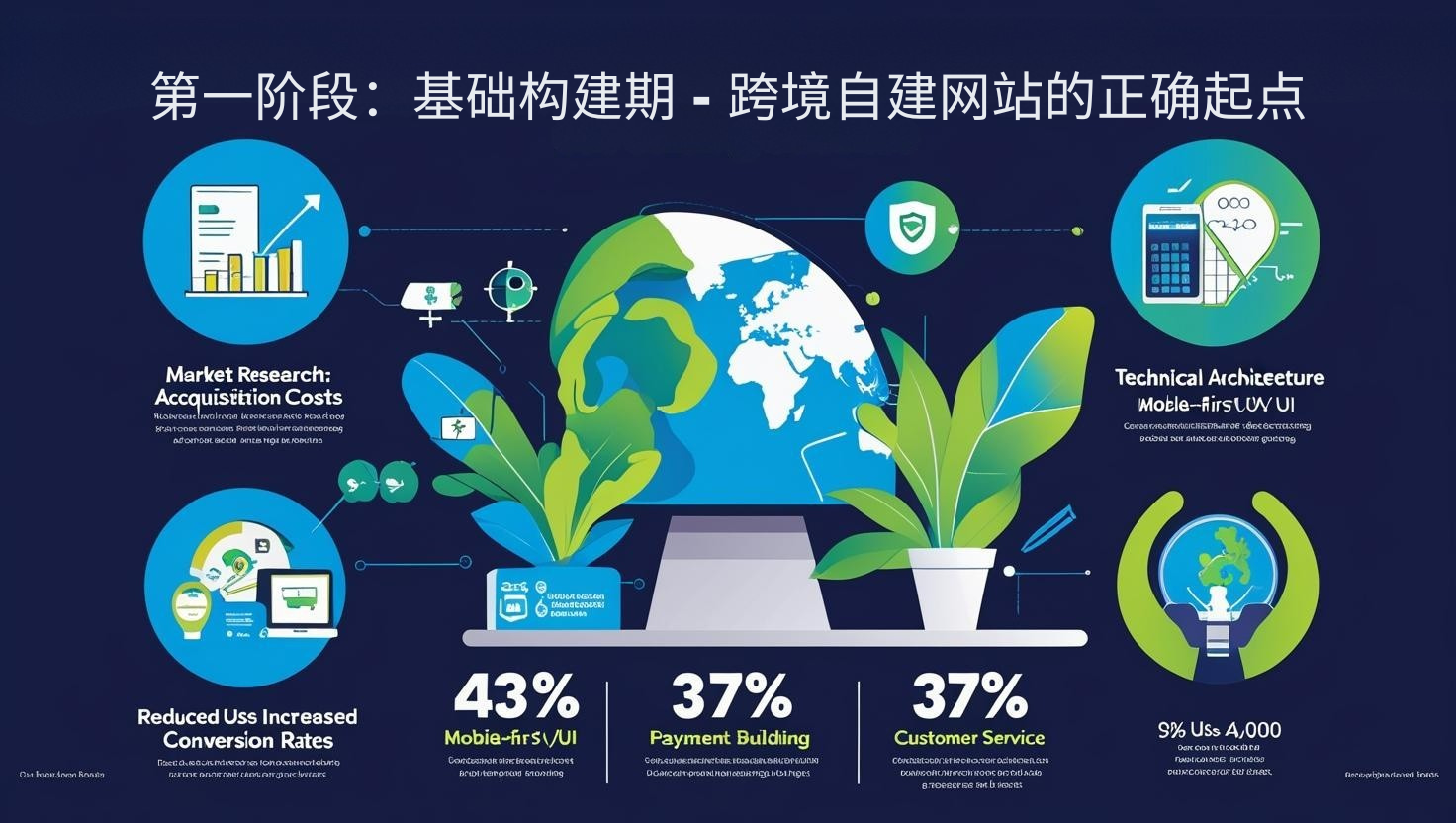
 Phase One: Building the Foundation - The Right Starting Point for Self-Building a Cross-Border Website
The foundational phase determines long-term potential. According to research by the Baymard Institute, the quality of the initial e-commerce infrastructure directly impacts subsequent scalability by as much as 65%.
Build a Solid Foundation for Growth
-
Precise Market Positioning and Product Strategy: Conduct in-depth market gap and demand research; create a highly differentiated product positioning; assess product-market fit (PMF) and demand validation; analyze the competitive landscape and blue ocean opportunities; consider the feasibility of niche market penetration strategies; evaluate the breadth and depth of the initial product portfolio; and pay special attention to cultural adaptability and demand differences in cross-border markets. A key strategy is "micro-niche focus," focusing on extremely small but high-demand market segments. Research shows that this strategy can reduce customer acquisition costs for e-commerce startups by approximately 43% while increasing conversion rates by approximately 37%.
-
Efficient Technical Foundation: Select a scalable e-commerce platform and technical architecture; build a mobile-first user experience and interface design; implement basic analytics and data collection infrastructure; ensure a smooth payment process and checkout experience; evaluate the scalability of inventory management and logistics solutions; establish basic customer service and communication channels; and pay special attention to access speed and experience consistency for users around the world. Research shows that the correct initial technology selection can determine approximately 35% of later operational efficiency and expansion costs, making it one of the most critical investment decisions during the foundational phase.
-
Initial Traffic and Validation Strategy: Implement a low-cost, targeted user acquisition strategy; establish a foundational SEO architecture and content base; test the effectiveness and economics of small-scale paid advertising; consider using content marketing and social media to build an initial presence; evaluate the early feasibility of partnerships and affiliate marketing; establish a minimum viable retargeting and retention system; and focus specifically on the quality and conversion intent of initial traffic, rather than pure volume. A highly effective strategy is "small-scale multi-channel testing," testing multiple customer acquisition channels with a minimal budget. Research shows that this approach can identify the optimal customer acquisition path approximately 62% earlier than a single-channel strategy.
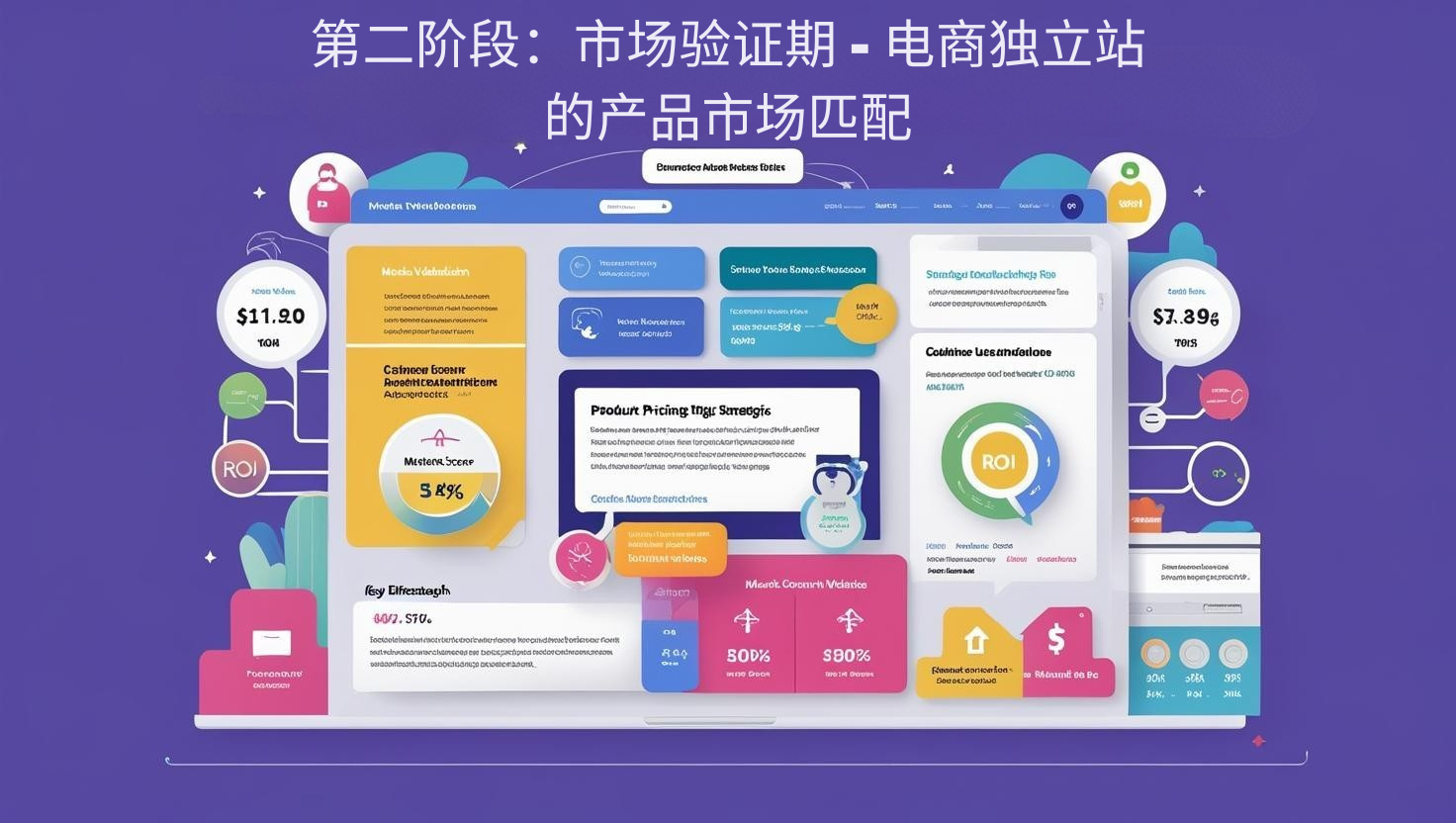 Phase 2: Market Validation - Product-Market Fit for E-commerce Independent Sites
The validation phase determines the direction of development. According to Y Combinator data, e-commerce sites that complete sufficient validation during this phase save an average of 47% on marketing costs compared to competitors who expand directly without validation.
Achieving Key Growth Breakthroughs
-
Optimizing Product-Market Fit: Systematically collect and analyze initial user feedback and behavioral data; fine-tune product positioning and value proposition; optimize product portfolio and pricing strategies; assess differences between initial user demographics and desired targets; prioritize product iteration and improvement; create a quantitative framework for evaluating product-market fit (PMF); and pay particular attention to analyzing differences in product acceptance across different markets. Key metrics include Net Promoter Score (NPS) and Must-Have Score. Research shows that products with an NPS greater than 50 achieve approximately 2.7 times the organic growth rate of average products, making them the gold standard for market validation.
-
Customer Acquisition Channel Validation and Optimization: Compare and test the cost of customer acquisition (CAC) and return on investment (ROI) of different acquisition channels; optimize ad targeting and creative to improve conversion efficiency; evaluate the long-term value of different content types and SEO strategies; test a small but diverse marketing mix; consider the balance between initial brand building and direct response marketing; establish a data-driven framework for marketing spending decisions; and pay special attention to controlling the ratio of customer acquisition cost to customer lifetime value (LTV). Research shows that finding an acquisition channel with a CAC:LTV ratio of <1:3 during the validation phase is one of the most reliable indicators of future profitability. Successful websites test an average of 7-9 channels before finding the optimal choice.
-
Conversion Rate Optimization and User Experience Improvement: Implement a systematic conversion funnel analysis and optimization strategy; optimize key elements of product pages and checkout processes; test the effectiveness of different trust symbols and social proof; evaluate the conversion impact of price presentation and promotional strategies; consider streamlining registration and purchase processes to reduce friction; establish a basic A/B testing process and prioritization framework; and pay special attention to optimizing and streamlining the mobile conversion path. A highly effective strategy is "micro-conversion focus," which identifies and optimizes the biggest leaks in the conversion funnel. Research shows that this targeted approach can increase overall conversion rates by an average of approximately 29%, making it more effective and less risky than a complete redesign.
 Stage 3: Initial Growth - Scaling Challenges for Self-Built Cross-Border Websites
The initial growth phase determines the speed of expansion. According to FirstRound Capital's analysis, e-commerce websites that implement the right expansion strategy during this phase achieve an average annual growth rate of 71% higher than their competitors who do not systematically expand.
Building a Growth Engine and Operations System
-
Building a Scalable Customer Acquisition System: Develop a multi-channel customer acquisition strategy and resource allocation model; establish a systematic expansion and optimization process for paid advertising; create a long-term asset-building plan for content marketing and SEO; assess the scalability potential of social media and influencer marketing; consider the systematic development of affiliate marketing and partnership channels; design incentive mechanisms for customer referrals and word-of-mouth marketing; and pay special attention to the differentiated adjustments to customer acquisition strategies in different markets. A key framework is the "Channel Portfolio Optimization Matrix," based on a three-dimensional assessment of CAC, scalability, and stability. Research shows that this approach can increase overall customer acquisition efficiency by approximately 33% while reducing the risk of relying on a single channel.
-
Operational Efficiency and Process Optimization: Create standardized processes for order processing and logistics operations; optimize inventory management and supply chain forecasting systems; establish scalable processes and response standards for customer service; assess automation and tool support needs for key business processes; consider the appropriate design of initial team structures and responsibilities; build basic financial forecasting and cash flow management models; and pay special attention to efficiency bottlenecks and regional differences in cross-border operations. Research shows that companies that establish standardized operating processes during the initial growth phase save an average of 26% in operating costs compared to ad-hoc companies, while also increasing customer satisfaction by approximately 31%, laying the foundation for later scalability.
-
Establishing a Data-Driven Decision-Making System: Implement a comprehensive business metric tracking and analysis framework; create a data-centric decision-making process and priority setting; establish a regular review mechanism for key performance indicators (KPIs); evaluate the initial application of predictive analytics and trend identification; consider the strategic application of customer segmentation and behavioral analysis; design a foundation for an experimental culture and testing framework; and pay special attention to the integration, analysis, and comparison of data from different markets. A highly effective approach is to focus on core metrics, identifying and intensively tracking the 3-5 indicators that best predict business health. Research shows that this streamlined approach improves decision-making quality by approximately 47% compared to tracking a large number of metrics, making it particularly suitable for teams in growth phases with limited resources.
 Stage 4: Rapid Expansion - Systematic Growth of Self-Built E-Commerce Websites
The expansion phase determines market position. According to Deloitte research, e-commerce websites that implement a systematic expansion strategy during this phase achieve an average 64% higher market share growth than competitors that expand opportunistically.
Establish a Scaled Growth System
-
Systematically Replicate Growth Models: Systematize proven growth strategies into replicable processes and templates; develop a systematic methodology for scaling successful product lines and categories; establish a standard framework for entering new markets and localizing; evaluate economies of scale and marginal impact across business model components; consider a systematic approach to strategic partnerships and ecosystem building; create a cross-functional growth team and accountability matrix; and pay special attention to bottleneck identification and capacity planning across different business segments. One strategic framework is the "growth flywheel model," which connects key business drivers into a self-reinforcing loop. Research shows that this approach can increase overall growth by approximately 41% while reducing growth volatility by approximately 33%.
-
Efficient Team Expansion and Organizational Structure: Design an organizational structure and reporting lines that align with business scale; establish cross-functional teams with clear roles and collaborative mechanisms; create training and mentoring systems to quickly onboard new members; evaluate decision frameworks for internalizing versus outsourcing key functions; consider effective management strategies for remote and international teams; establish a systematic framework for performance management and incentives; and pay special attention to balancing maintaining an entrepreneurial culture with introducing structured management. Research shows that companies that establish systematic talent management during expansion improve team productivity by an average of 39% compared to competitors who employ temporary staffing, while also reducing turnover by approximately 46%, a key foundation for sustained, high-growth growth.
-
Capital Efficiency and Financing Strategy: Create a framework for evaluating capital allocation and return on investment (ROI); optimize working capital management and cash flow cycles; assess inventory turnover and asset utilization efficiency; consider the capital needs and priorities of different growth areas; establish a systematic approach to financing planning and financial forecasting; design investor relations and capital markets strategies; and pay special attention to optimizing capital structure at different stages of growth. A key strategy is "growth portfolio management," which views capital allocation as a portfolio rather than a single decision. Research shows that this approach can increase return on capital by approximately 27% while reducing growth volatility by approximately 35%. It is particularly suitable for optimizing resources during periods of rapid expansion.
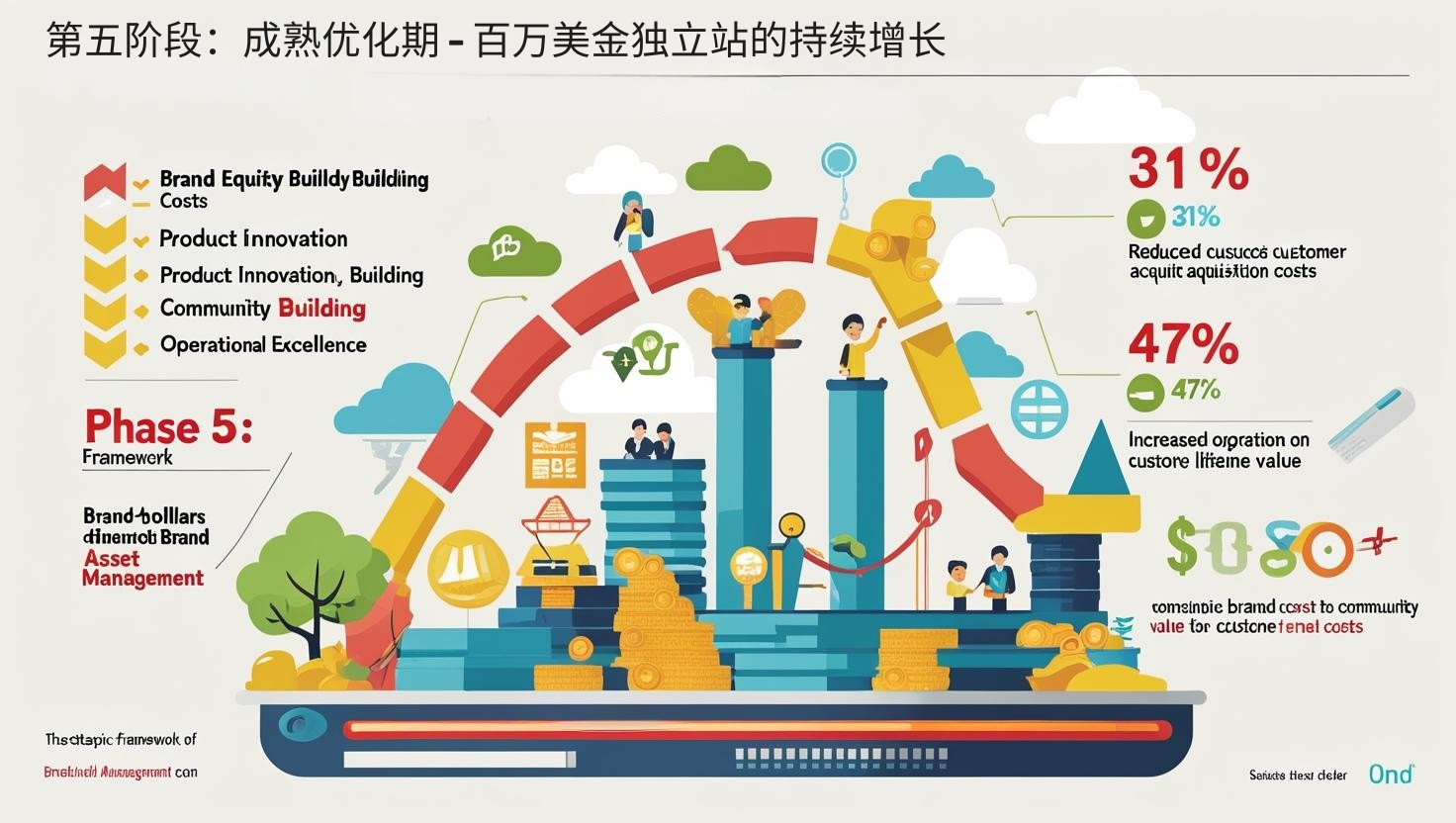 Stage 5: Mature Optimization Stage - Sustained Growth of Million-Dollar Independent Websites
Maturity determines long-term value. According to McKinsey analysis, e-commerce websites that focus on system optimization during this stage achieve an average profit margin of 56% and a valuation increase of 83% compared to competitors that focus solely on growth.
Building Long-Term Competitive Advantage
-
Brand Equity and Differentiation: A strategic shift from transactional marketing to brand equity building; creating a long-term brand positioning and user mindshare strategy; evaluating systematic investments in product innovation and experience differentiation; considering the long-term value of community building and user ecosystems; establishing a framework for brand equity valuation and management; designing synergy strategies for brand expansion and new business lines; and paying special attention to balancing global branding with local relevance. One strategic framework is "brand equity management," which views brands as core assets rather than marketing activities. Research shows that this approach can reduce customer acquisition costs by approximately 31% while increasing customer lifetime value by approximately 47%, creating a true long-term competitive advantage.
-
Operational Excellence and Profit Optimization: Implement a systematic methodology for lean operations and continuous improvement; develop an end-to-end supply chain optimization and cost control strategy; evaluate the returns of automation and technology investments through systematic analysis; consider data-driven approaches to pricing strategies and product portfolio optimization; establish refined management of customer segmentation and differentiated service models; design strategic plans to optimize economies of scale and marginal costs; and pay special attention to synergies and regional optimization within global operations. Research shows that mature companies that implement systematic operational optimization achieve an average 33% higher EBITDA margin and a 22% improvement in customer satisfaction compared to purely growth-oriented companies, demonstrating that growth and efficiency can coexist.
-
Data Assets and Intelligent Decision Making: Establish an enterprise-wide data strategy and governance framework; create advanced application models for predictive analytics and scenario planning; evaluate the strategic application of machine learning and AI in core business processes; consider deep integration of customer data platforms and personalization systems; design an organizational structure that fosters a culture of experimentation and data-driven innovation; establish dedicated teams for business intelligence and decision support; and pay special attention to global standards for data privacy and compliance. A cutting-edge strategy is the "Decision Intelligence System," which deeply integrates data science with business domain knowledge. Research shows that this approach can improve the quality of key decisions by approximately 43% and increase market response speed by approximately 37%, creating a sustainable competitive advantage.
Amidst increasingly fierce global e-commerce competition, understanding the phased characteristics of business development has become a critical element for cross-border companies to achieve sustainable growth. By identifying their current phase, grasping key growth levers, and addressing phase-specific challenges, companies can avoid common pitfalls, optimize resource allocation, accelerate business expansion, and ultimately achieve the leap from zero to a million-dollar business. The key is to view e-commerce growth as a systematic project rather than a single sprint, and to find the optimal balance between growth and efficiency, speed and quality, and scale and flexibility at each stage.
Related article recommendations: https://pinshop.cn/zh-Hans/blog/what-is-independent-site-for-business