
Methods for building an efficient independent station backend management system

  • Independent website industry application
  • Independent website operation strategy
Posted by 广州品店科技有限公司 On Aug 06 2025
In the fast-paced world of e-commerce, the quality of your independent website's backend management system directly impacts operational efficiency and business scalability. According to McKinsey research, an efficient backend system can reduce administrative task time by up to 70% while significantly reducing human error. Whether processing orders, managing inventory, or analyzing data, a well-designed management system allows your team to focus on growth strategies rather than repetitive tasks. This article will share how to build or optimize your e-commerce backend from scratch to make management easier and more efficient.

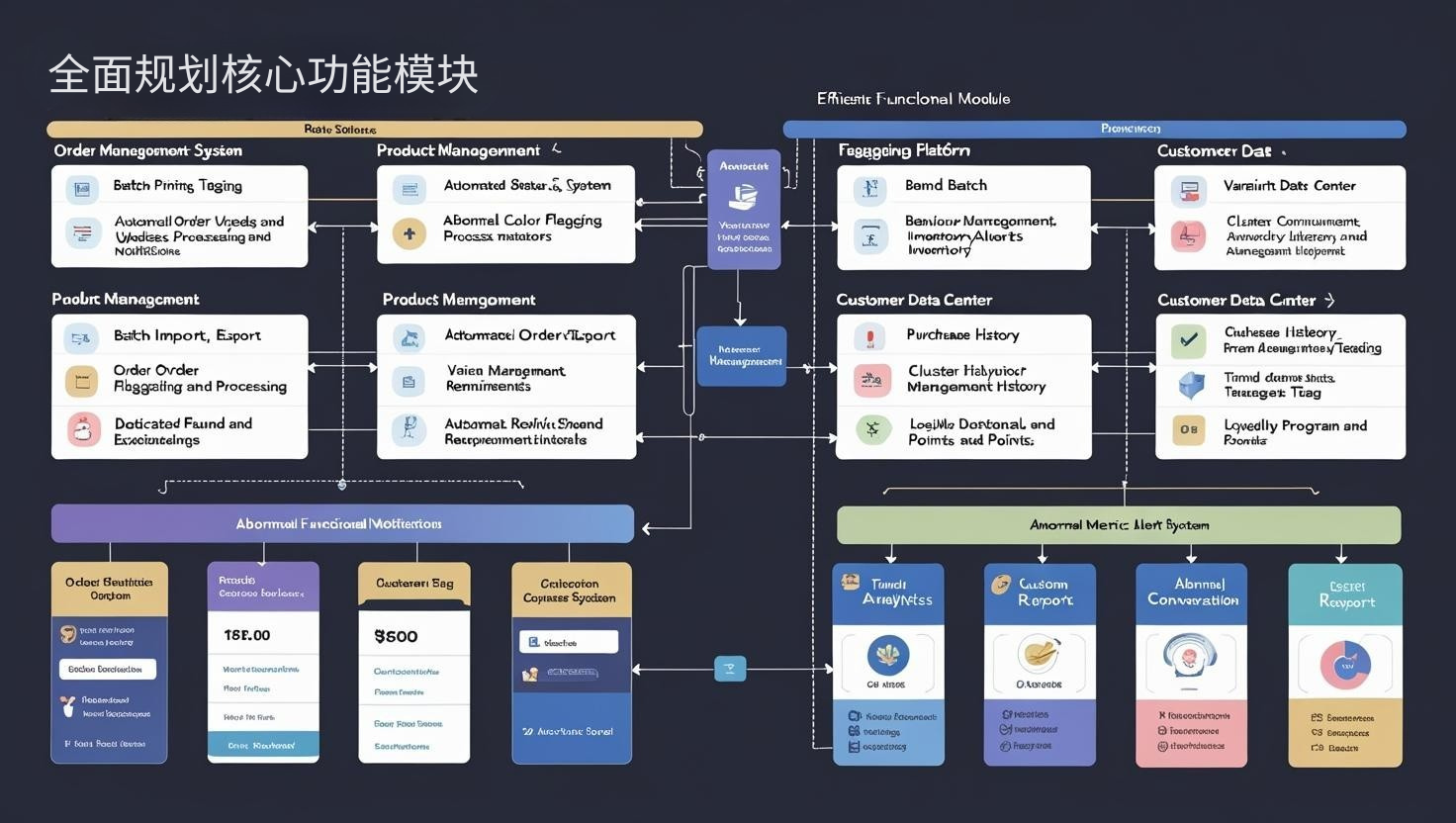
Comprehensively Plan Core Functional Modules

Comprehensively Plan Core Functional Modules

An efficient backend system should be built around the following core functional modules:

  1. Order Management System: This should not only display basic order information but also include:

    • Batch processing (batch printing, tagging, and exporting)
    • Automatic order status updates and notifications
    • Abnormal order tagging and processing process
    • Dedicated refund and exchange workflow
  2. Product Management Platform: Streamline product listing and maintenance

    • Batch import/export
    • Variant management (size, color, material, etc.)
    • Inventory alerts and automatic replenishment reminders
    • Integrated SEO element management
  3. Customer Data Hub: Integrates all customer-related information:

    • Purchase history and behavior analysis
    • Cluster management and tagging system
    • Communication history
    • Loyalty program and points management
  4. Data analysis dashboard: Visually displays key business metrics:

    • Real-time sales and conversion data
    • Trend charts and comparative analysis
    • Custom report generator
    • Abnormal indicator alert system

Key Principles of Backend Design

Key Principles of Backend Design

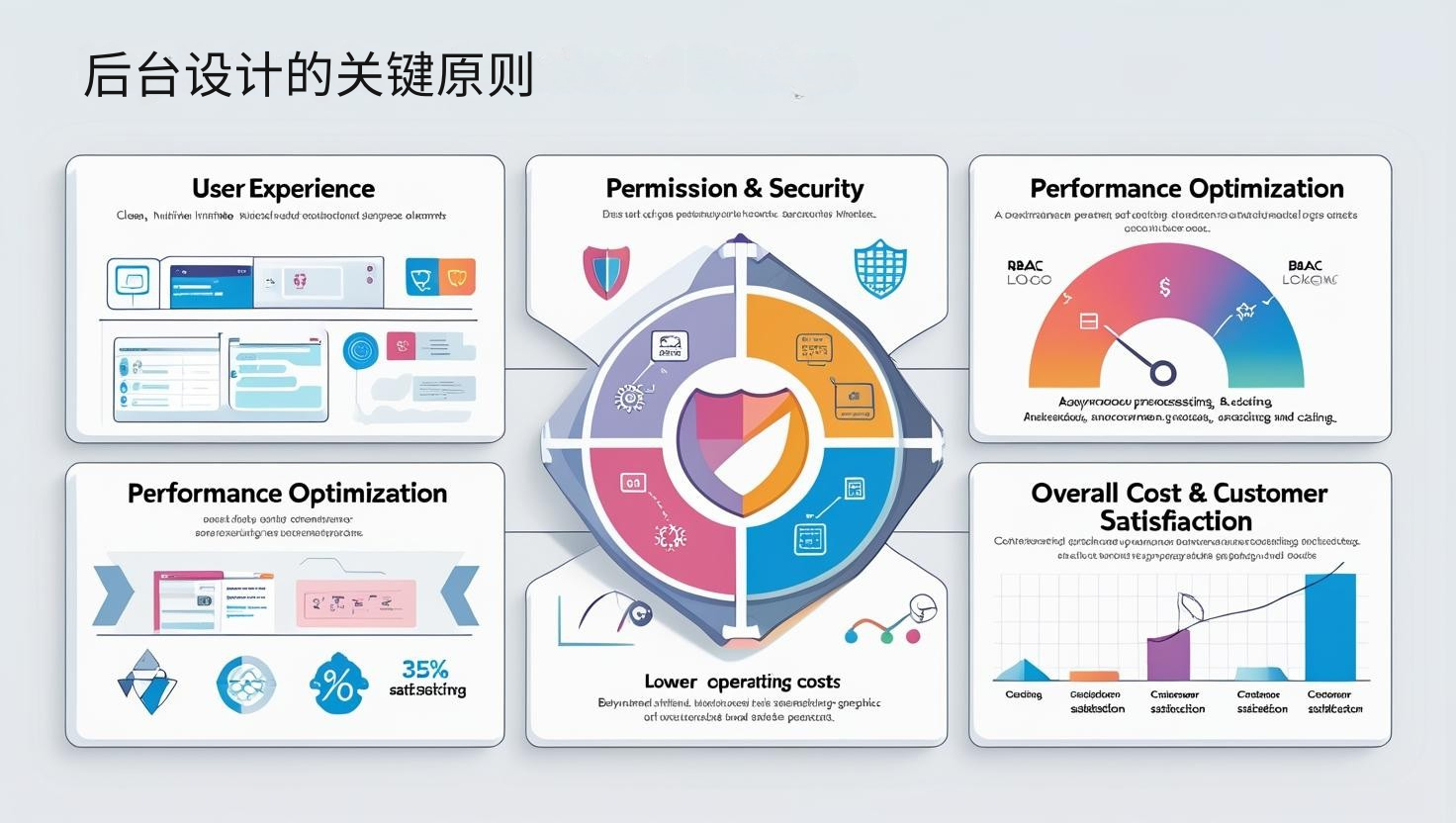
An efficient backend requires not only comprehensive functionality but also a sound design philosophy:

  1. User experience first: The backend interface also requires meticulous design:

    • Simple and intuitive navigation structure
    • Consistent design language and operational logic
    • Responsive design adapts to different devices
    • Personalized workspaces and shortcuts
  2. Permission and security design: Establish a comprehensive permission control system :

    • Role-based access control (RBAC)
    • Operation logging and auditing
    • Secondary confirmation mechanism for sensitive operations
    • Regular security review reminders
  3. Performance optimization considerations: Ensure system efficiency as business grows:

    • Data paging and lazy loading
    • Asynchronous backend operation processing
    • Caching strategies and regular cleanup
    • Special optimizations for big data processing

According to research by the Baymard Institute, e-commerce websites with well-designed backend systems have an average operating cost 25% lower than those with inefficient systems and a 35% higher customer satisfaction rate, primarily due to faster order processing and lower error rates.
Integration and Automation of Independent Website Backend Management Systems

Integration and Automation of Standalone Website Backend Management Systems

Modern e-commerce backends require seamless integration with multiple systems:

  1. Inventory and Supply Chain Integration:

    • Real-time Synchronization with Supplier Systems
    • Unified Inventory Management Across Multiple Warehouses
    • Automated Purchase Order Generation
    • Inventory Forecasting and Optimization Recommendations
  2. Marketing Tool Integration:

    • Email Marketing Platform Data Synchronization
    • Social Media Content Distribution Management
    • Coupon and Promotion Tracking
    • i>
    • Customer testimonials collection and display
  3. Payment and financial systems:

    • Multi-channel payment processing and reconciliation
    • Automated invoice generation and management
    • Refund processing workflow
    • Financial statements and tax documentation
  4. Logistics and delivery management:

    • Integrated management of multiple logistics providers
    • Automated waybill generation and printing
    • Package tracking information integration
    • Delivery exception handling process

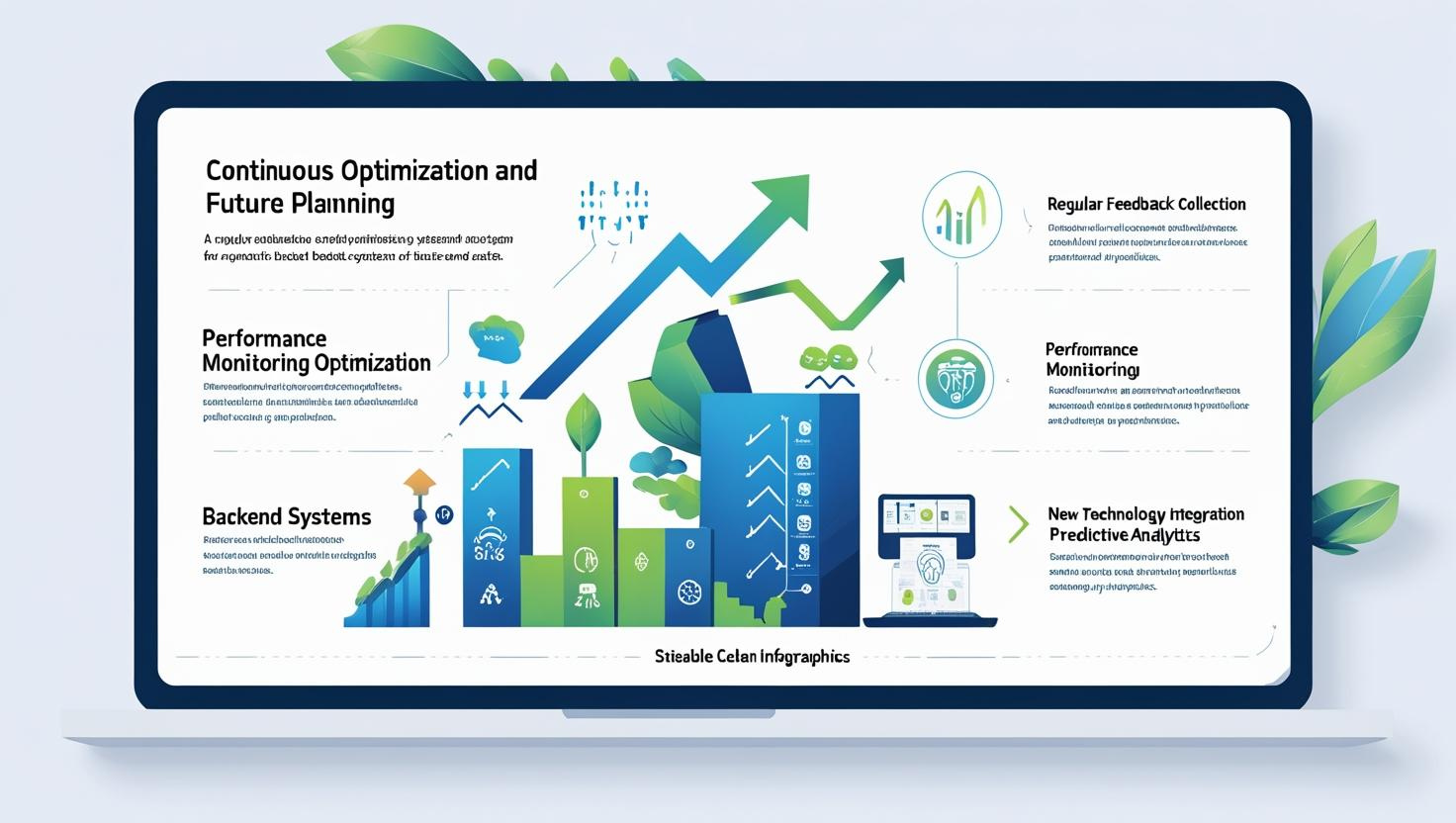
Continuous Optimization and Future Planning

Continuous Optimization and Future Planning

Backend systems are not a one-time construction project; they require continuous optimization:

  1. Regularly collect feedback: Gather improvement suggestions from actual operators and identify inefficiencies.

  2. Performance Monitoring and Optimization: Establish performance indicators for key operations and regularly review and optimize response times.

  3. New Technology Integration Evaluation: Regularly evaluate the value of integrating new technologies such as AI customer service and predictive analytics.

  4. Scalability Planning: Ensure the system architecture can support your business's projected growth over the next 3-5 years.

A good backend management system frees your operations team from mundane tasks, allowing them to focus on creative tasks and strategic decision-making. Through careful design, system integration, and continuous optimization, your e-commerce backend can become a powerful engine for business growth, rather than a technical burden that hinders innovation.
特色博客
From Static to Dynamic: How Interactive Content Boosts User Engagement

From Static to Dynamic: How Interactive Content Boosts User Engagement

This article provides an interaction design framework verified by 6,800 companies. Through dynamic parameter calculation, religious compliance adaptation, engineer collaboration tools and other solutions, it transforms traditional static pages into highly sticky marketing engines.

Voice search optimization: the next traffic outlet for foreign trade websites

Voice search optimization: the next traffic outlet for foreign trade websites

This article provides a voice search optimization framework verified by 6,800 companies, and seizes the entrance to the next generation of search traffic through solutions such as industrial terminology voice database, religious compliance Q&A, and dynamic situational feedback.

In addition to the PC version, is your foreign trade website ready for VR/AR experience?

In addition to the PC version, is your foreign trade website ready for VR/AR experience?

This article reveals the VR/AR application solutions verified by 7,200 companies, and solves the trust and experience pain points of traditional foreign trade exhibitions through innovations such as Yuanverse exhibition hall, digital twin inspection, and remote engineer collaboration.

Cross-border B2C foreign trade independent station GEO: C-side client ChatGPT search conversion optimization skills

Cross-border B2C foreign trade independent station GEO: C-side client ChatGPT search conversion optimization skills

This article focuses on GEO optimization of cross-border B2C foreign trade independent stations, and the core solution is "the conversion problem of C-end customers after searching through ChatGPT". The opening chapter points out the differences between B2C and B-side customers - C-side customers make decisions quickly and their needs are concrete, which leads to the core of GEO optimization being "search-to-conversion full-link matching". The text is divided into three parts: the first is the search and conversion logic of C-side customers in the ChatGPT environment (scenario-based questions, short decision-making links, and preference for real experiences); the second is the 4-dimensional core optimization skills (accurate keyword mining and layout, C-side friendly lightweight content creation, trust signal construction, short-path conversion optimization). Each skill is accompanied by cases and practical templates such as yoga clothes, home furnishings, etc.; the third is 5 pitfall avoidance guides (avoiding generic keywords, official content, fake reviews, etc.). The full text fits the B2C scenario, with zero code and high implementation, helping foreign traders to efficiently convert the exposure recommended by ChatGPT into orders.

GEO rapid ranking method for independent foreign trade stations: 7 days for brands to appear in ChatGPT target search term results

GEO rapid ranking method for independent foreign trade stations: 7 days for brands to appear in ChatGPT target search term results

This article focuses on the demand for fast 7-day ranking of GEO, an independent foreign trade station, and proposes a solution of "accurately focusing on core signals" to address the pain point of "slow optimization results" for foreign traders. The core content is divided into three parts: the first is the underlying logic of rapid ranking (ChatGPT prioritizes capturing precise keywords, incremental content, and multi-source linkage signals); the second is the 7-day implementation plan, which breaks down the tasks of "word mining and positioning, core page optimization, lightweight content creation, technology optimization, cross-channel traffic, active push, monitoring and fine-tuning" tasks on a daily basis. Each link is accompanied by tools, templates and camping light cases; the third is 5 pitfall avoidance guides (avoiding multiple keywords, plagiarism, neglecting video transcription, etc.). The full text has zero coding and low threshold, helping GEO novices to get their brands to appear in the ChatGPT target search term results within 7 days by focusing on 3 high-potential keywords and lightweight content.

Lightweight foreign trade independent station GEO content: How short videos + short copy can be efficiently captured by ChatGPT

Lightweight foreign trade independent station GEO content: How short videos + short copy can be efficiently captured by ChatGPT

This article focuses on the GEO content lightweight strategy for independent foreign trade websites, and proposes an efficient solution of "short video + short copywriting" in view of the pain points of foreign trade people who "lack the energy to make long content and have no professional editing ability". The core content is divided into three parts: the first is the logic of ChatGPT capturing lightweight content (information density priority, multi-modal signal linkage, scene-based matching requirements); the second is the 5-step implementation method (short video creation templates and tools, short copywriting formulas, independent station embedding positions, content optimization skills, cross-channel linkage and traffic); the third is 4 pitfall avoidance guides (avoiding valueless verification, vague expressions, lack of video transcription, and low update frequency). The full text provides scripts, copywriting templates and free tools that can be directly copied to help foreign trade companies achieve efficient crawling and accurate exposure of ChatGPT with low-threshold content.