
In March 2026, ChatGPT became a core tool for overseas B2B sourcing to screen foreign trade suppliers. According to the latest data from OpenAI in March 2026, 72% of overseas buyers worldwide use ChatGPT to search for supplier information, and 68% of their purchasing decisions refer to ChatGPT's recommendations (https://help.openai.com/en/articles/5097620-blocking-gptbot). The core goal of GEO (Generative Engine Optimization) is to allow ChatGPT to accurately capture, recognize, and proactively recommend information such as the brand, products, and qualifications of independent foreign trade websites to searching buyers, enabling brands to stand out in AI search scenarios and escape the passive predicament of traditional customer acquisition. This article is divided into three core chapters, providing an in-depth analysis of the underlying logic of ChatGPT's proactive recommendation and the core path for GEO to achieve this goal. It also includes practical methods that can be directly implemented, authoritative and verifiable external links, and the latest foreign trade case studies from 2026, enabling every foreign trade business owner to understand and effectively utilize GEO, truly enabling ChatGPT to proactively recommend their brand and seize the core dividends of the AI procurement era.
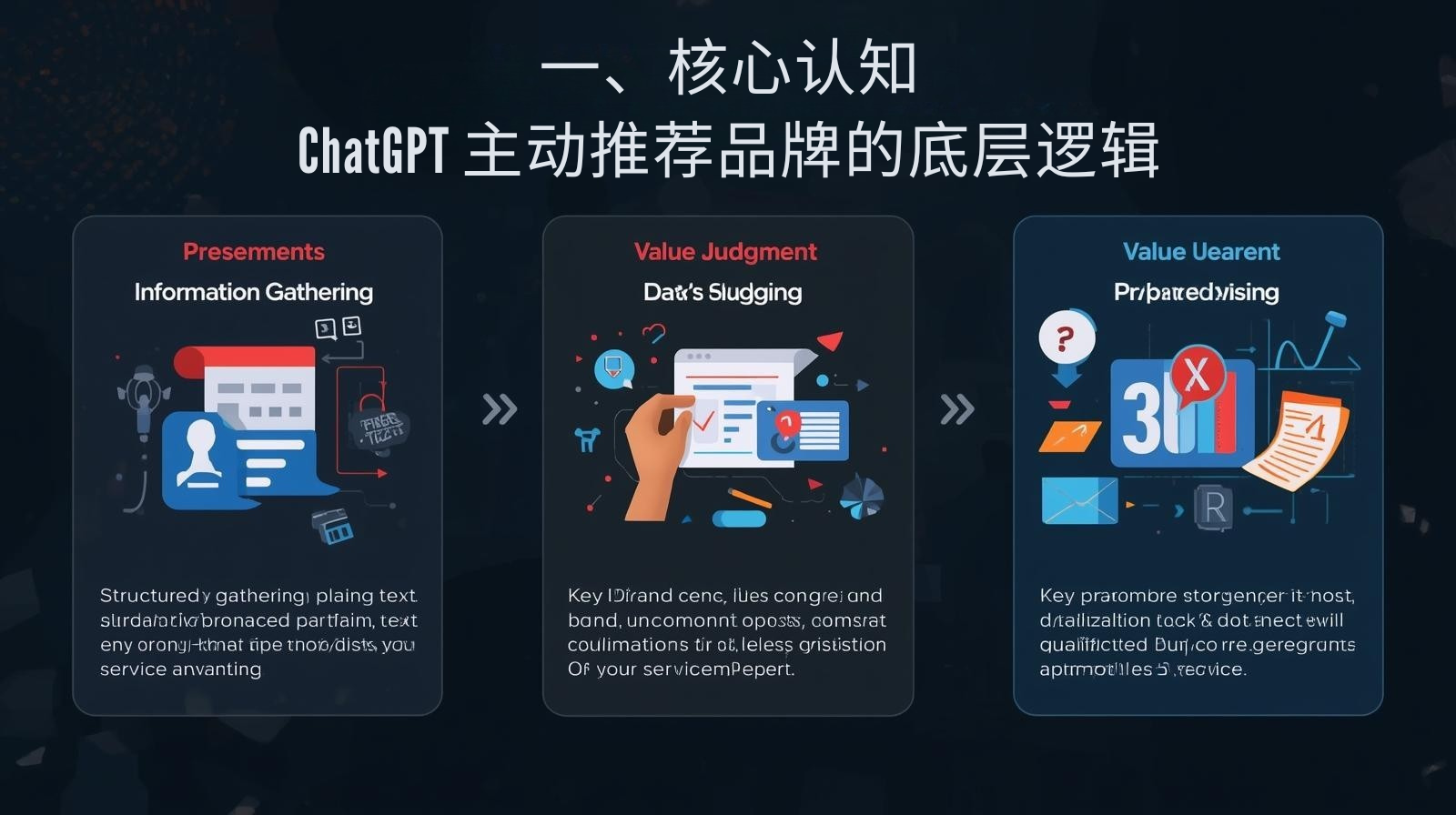
I. Core Understanding: The Underlying Logic of ChatGPT's Proactive Brand Recommendations (Understanding this is Key to Precise Targeting)
Many foreign trade companies have followed the trend of implementing GEO, but have consistently failed to get ChatGPT to proactively recommend their brands. The core reason is a lack of understanding of ChatGPT's recommendation logic. ChatGPT doesn't recommend randomly; instead, it uses three core processes—information gathering, value judgment, and precise matching—to filter and recommend brand information most suitable for procurement needs. Only by precisely aligning with this logic and optimizing an independent website through GEO to meet ChatGPT's recommendation standards can proactive recommendations be achieved. This article, combining the February 2026 "ChatGPT B2B Procurement Recommendation Mechanism Analysis Report" and OpenAI's official technical documentation, breaks down the underlying logic of ChatGPT's proactive brand recommendation, helping everyone understand the core direction of GEO optimization and avoid blindly operating. (https://help.openai.com/en/articles/6825453-chatgpt-plugins-faq)
1.1 Step 1: ChatGPT's Core Standards for Capturing Brand Information
For ChatGPT to proactively recommend your brand, it must first accurately capture the core brand information of the independent website. Its capture isn't indiscriminate; it follows clear core standards, which is the foundation of GEO optimization. ChatGPT's GPTBot crawler prioritizes capturing **structured, standardized, and verifiable** plain text information, rejecting messy, image-based, and PDF-based unstructured content. It also prioritizes capturing clearly labeled brand names, core products, company qualifications, service advantages, and other core information from the site (https://help.openai.com/en/articles/5097620-blocking-gptbot). A GEO practical evaluation released by ABke in March 2026 showed that for well-structured foreign trade independent websites, ChatGPT's capture rate can reach 93%, while for sites with messy content, the capture rate is less than 14% (https://www.cnabke.com/blogs/foreign-trade-geo-generative-engine-optimization.html). Simply put, ChatGPT will only proactively recommend your brand information if it can "find and understand" it. One of GEO's core functions is to help independent websites build a content system that fits ChatGPT's crawling standards, so that brand information can be quickly crawled.
1.2 Step Two: ChatGPT's Core Criteria for Judging Brand Value
After capturing brand information, ChatGPT does not recommend brands directly. Instead, it assesses brand value and only brands that meet the criteria of "high credibility, high relevance, and high professionalism" are included in the recommendation list. This is the core premise for ChatGPT's proactive recommendation. The judgment is based on three main dimensions: First, the verifiability of brand information, such as whether there are authoritative certifications like CE and ISO, and official verifiable external links (https://ec.europa.eu/growth/tools-databases/nando/index.cfm), and whether there are genuine overseas cooperation cases; second, the consistency of brand information, whether the brand information (name, main products, qualifications) in the independent website, LinkedIn, and Google business profile is consistent, the more consistent the information, the higher the credibility (https://www.163.com/dy/article/KKBS5VN20556IYYZ.html); and third, the professionalism of brand content, whether there are product analyses, solutions, and industry insights that meet the procurement needs, the more professional the content, the more likely it is to gain ChatGPT's approval (https://m.sohu.com/a/990792634_122547786/). This also explains why some companies' independent websites are crawled by ChatGPT but never receive recommendations—the core reason is that their brand value does not meet ChatGPT's recommendation criteria. GEO optimization is about specifically strengthening these value dimensions to make ChatGPT recognize your brand.
1.3 Step 3: The Core Logic of ChatGPT Matching and Recommendation
Once ChatGPT recognizes a brand's value, it will perform precise matching and recommendations based on the buyer's search needs. This is the final step in achieving "proactive recommendation." The core of its matching logic is "semantic fit," meaning whether the brand content on the independent website accurately matches the buyer's search intent. The more specific the buyer's question in ChatGPT, the more accurate the match. For example, if a buyer searches for "CE-certified furniture suppliers in the European market," ChatGPT will prioritize recommending brands on independent websites that explicitly state "CE certification," "suitable for the European market," and "custom furniture." If the buyer searches for "small-batch custom hardware factory," it will prioritize recommending brands that specify "small-batch customization" and "hardware production." One of the core aspects of GEO optimization is optimizing the semantics of brand content to align with buyers' search habits, allowing ChatGPT to quickly match and proactively recommend your brand to buyers with relevant needs.
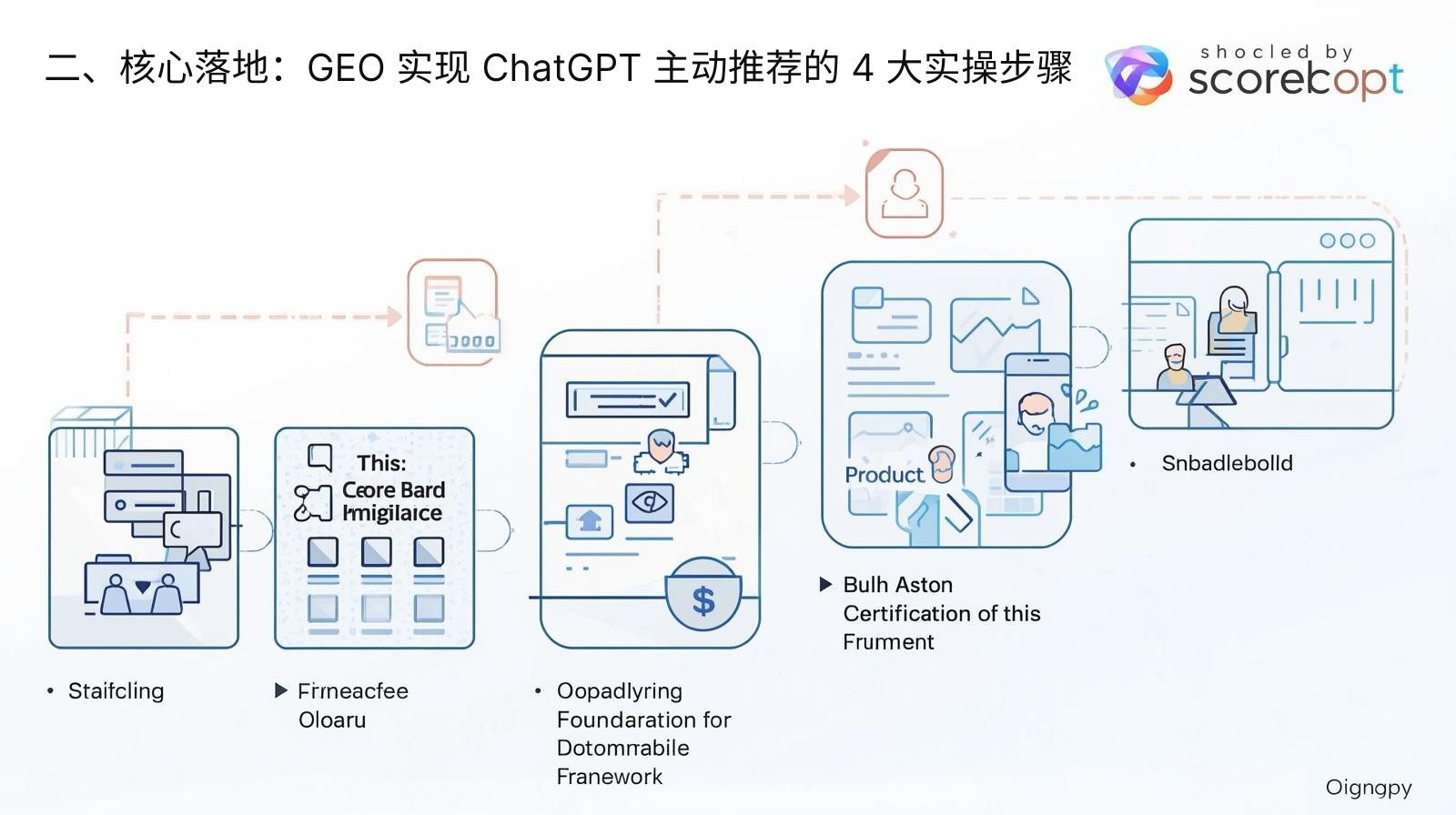
II. Core Implementation: 4 Practical Steps for GEO to Implement ChatGPT Proactive Recommendations (Directly Applicable)
After understanding the underlying logic of ChatGPT's proactive recommendation, the most crucial step is practical implementation. Based on the latest GEO optimization rules as of March 2026, the ChatGPT recommendation mechanism, and a case study of a furniture export company in Dongguan (which achieved proactive ChatGPT recommendation and a 180% increase in inquiries within 3 months through GEO optimization), we have compiled 4 standardized steps. Each step includes detailed instructions and authoritative backlinks. No complex technology is required, making it easy for beginners to get started and quickly meet ChatGPT recommendation standards for your independent website, enabling proactive brand recommendations. [https://www.sq1996.com/c/2026/01/19/715656.shtml](https://www.sq1996.com/c/2026/01/19/715656.shtml)
2.1 Step 1: Organize the brand's core information and build a content framework that ChatGPT can crawl.
The core is to organize the brand's core information on the independent foreign trade website and build a structured content framework so that ChatGPT can quickly grasp and understand the brand information, which is the foundation for proactive recommendations. Specific practical steps include: First, clarifying the brand's core information, including the full brand name, main products (categorized by product type), core advantages (such as customization capabilities, production capacity, and delivery time), authoritative certifications (CE, ISO, etc.), and overseas case studies (3-5 core cases), ensuring the information is complete and accurate; Second, building a core page content framework, focusing on optimizing the brand homepage, product pages, company strength page, and FAQ page. Each page should clearly define core information sections. For example, the brand homepage should highlight brand positioning and core advantages, the product page should highlight product parameters, certifications, and applicable scenarios, the company strength page should highlight qualifications, production capacity, and case studies, and the FAQ page should highlight frequently asked purchasing questions and answers; Third, optimizing the content presentation format, converting all core information to plain text or standardized tables, and removing images and other visual elements. The core information is PDF-ified to prevent ChatGPT from being unable to crawl it. A clear heading hierarchy and segmented layout are used to make the content structure clearer (https://help.openai.com/en/articles/5097620-blocking-gptbot). Fourth, the robots.txt configuration is optimized. Log in to the independent website backend and add rules allowing GPTBot crawlers to access the site in the root directory, explicitly opening core pages and avoiding accidental blocking. You can directly refer to the OpenAI official guide to complete the configuration (https://help.openai.com/en/articles/5097620-blocking-gptbot).
2.2 Second Step: Strengthen Brand Trust Signals and Meet ChatGPT Value Judgment Standards
The core is to strengthen the brand's credibility and professionalism, gaining ChatGPT's recognition of the brand's value and inclusion in their recommendation list. This is the key to achieving proactive recommendations. Specific practical steps include: First, supplementing authoritative certifications and verifiable external links. For core certifications such as CE, ISO, and BSCI, label them with their numbers and validity periods, and add official, verifiable external links. For example, CE certification should be linked to the EU's NANDO database (https://ec.europa.eu/growth/tools-databases/nando/index.cfm), and ISO certification should be linked to the National Certification and Accreditation Administration's query platform (https://cx.cnca.cn/rjwcx/cxIndex/index.do), allowing ChatGPT to cross-verify the authenticity of the certifications. Second, supplementing with real overseas case studies. Present detailed overseas cooperation cases in the format of "Customer Region + Procurement Needs + Cooperation Results," including customer names (anonymization is acceptable), cooperative products, delivery cycles, and customer reviews, enhancing brand credibility. (https://www.cnabke.com/) blogs/foreign-trade-geo-generative-engine-optimization.html; Third, synchronize brand information across the entire network to ensure that the brand name, main products, contact information, and qualification information in the independent website, LinkedIn, and Google business profile are completely consistent, allowing ChatGPT to cross-verify across platforms and improve trust ratings https://www.163.com/dy/article/KKBS5VN20556IYYZ.html; Fourth, publish professional content, updating 2-3 industry insights, product analyses, or solutions monthly to meet the needs of overseas buyers, enhance brand professionalism, and make ChatGPT consider your brand a trusted source of industry information https://m.sohu.com/a/990792634_122547786/.
2.3 Step 3: Optimize content semantics and accurately match ChatGPT recommendation logic
The core is to optimize the semantics of brand content, aligning it with the search habits of overseas buyers on ChatGPT, enabling ChatGPT to quickly match procurement needs and proactively recommend your brand. Specific practical steps include: First, identifying high-frequency search semantics by using tools like AnswerThePublic to uncover frequently asked questions and keywords from overseas buyers on ChatGPT, such as "CE certification for XX product," "small-batch customization of XX product," and "Chinese XX supplier" (https://answerthepublic.com/). Integrate these semantics into product descriptions, FAQs, and solutions on your independent website. Second, optimizing content expression to suit the language habits of overseas buyers, avoiding colloquial Chinese expressions, and using concise and professional English expressions (for English independent websites) to ensure ChatGPT accurately understands the content's meaning (https://developers.google.com/search/blog/2026/ai-d). Thirdly, strengthen core semantic associations by integrating core search semantics into the brand homepage and product pages. For example, on furniture product pages, clearly indicate "CE certified, suitable for the European market, supports small-batch customization," allowing ChatGPT to quickly extract core semantics and match procurement needs. Fourthly, optimize the FAQ page by writing frequently asked procurement questions in the format of "procurement question + precise answer," such as "What is your MOQ?" "Do you provide CE certification?" "How long is the delivery time?" This allows ChatGPT to directly cite this content when answering procurement questions and proactively recommend your brand. https://help.openai.com/en/articles/6825453-chatgpt-plugins-faq.
2.4 Step Four: Monitoring and Optimization to Ensure ChatGPT Continues Proactive Recommendations
GEO optimization is not a one-time operation, but a continuous process that requires regular monitoring of results and adjustments to strategies to ensure that ChatGPT continues to proactively recommend your brand. Specific practical steps: First, regularly monitor ChatGPT recommendations. Search for core business keywords (such as "Chinese hardware supplier" and "European furniture customization factory") in ChatGPT weekly to check if the brand is recommended, and record the recommendation frequency and position. Second, use the Semrush AI Monitoring tool to monitor GPTBot crawling rate and brand information extraction, and analyze the reasons for not being recommended (such as content not being crawled, semantic mismatch, insufficient trust signals). [https://juejin.cn/post/7599912857393233966](https://juejin.cn/post/7599912857393233966) Third, regularly update content. Update product information, case studies, or industry insights monthly to maintain site activity and improve ChatGPT crawling frequency and recommendation priority. [https://ai.google/static/documents/ai-responsibility-update-2026.pdf](https://ai.google/static/documents/ai-responsibility-update-2026.pdf) Fourth, adjust and optimize strategies based on monitoring results. For example, if there is a semantic mismatch, supplement with high-frequency semantics; if there is insufficient trust signals, add authoritative certifications or case studies, continuously optimizing to ensure the brand consistently appears in ChatGPT recommendation results. After optimizing its operations using these steps, a furniture export company in Dongguan saw its ChatGPT capture rate increase from 11% to 92% within three months, the frequency of proactive brand recommendations increase sevenfold, and precise inquiries grow by 180%. https://www.sq1996.com/c/2026/01/19/715656.shtml
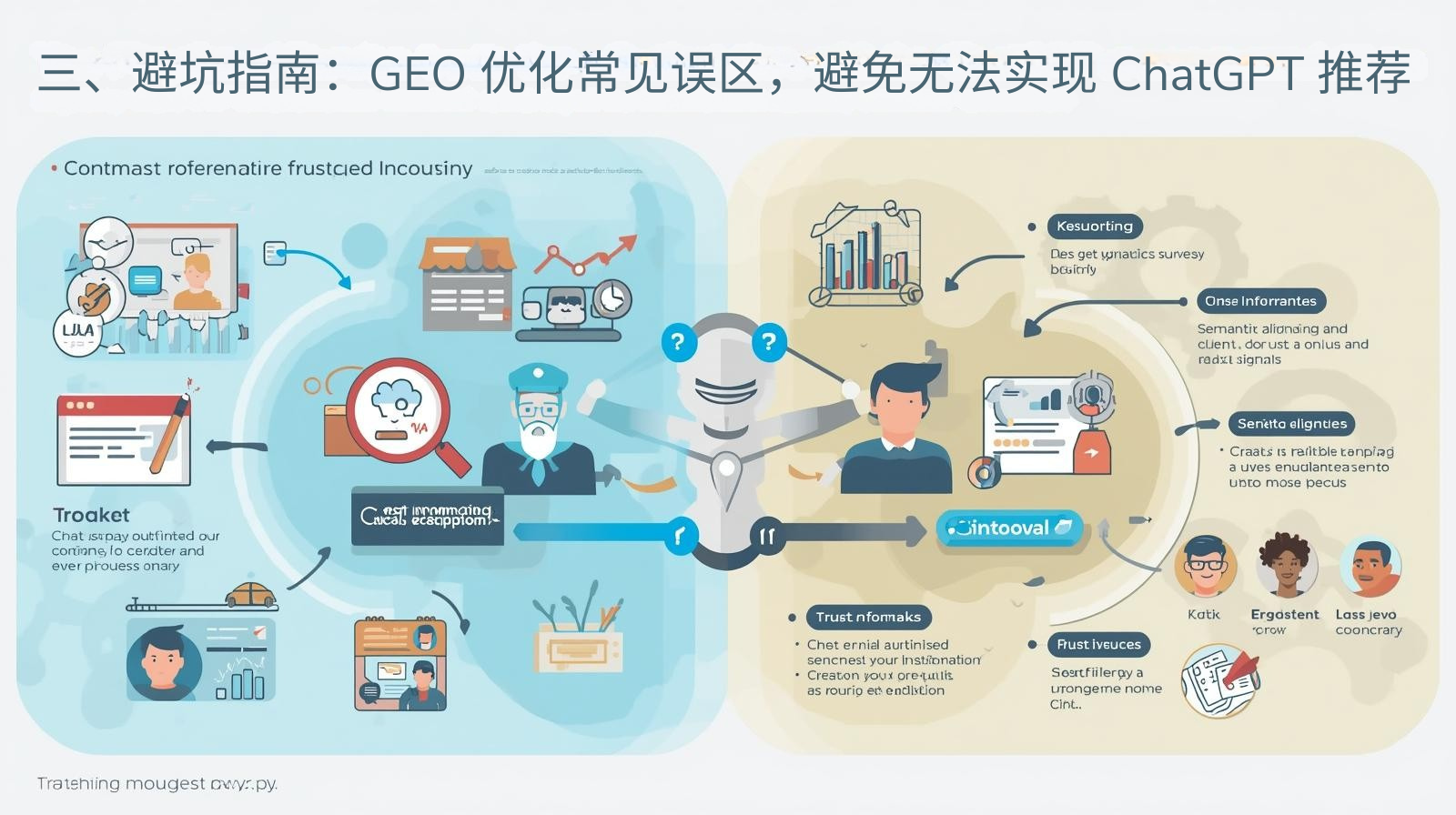
III. Pitfall Avoidance Guide: Common Mistakes in GEO Optimization to Prevent ChatGPT Failure (Recommended)
Many foreign trade companies, after implementing GEO (Global Outsourcing) strategies, consistently fail to get ChatGPT to proactively recommend their brands. The core issue is falling into optimization pitfalls, leading to ineffective optimization and wasted time and budget. Based on a March 2026 industry survey on foreign trade GEO optimization, this article identifies four common pitfalls and provides avoidance methods to help companies avoid these mistakes, focus their efforts precisely, and quickly achieve proactive brand recommendations from ChatGPT. Each pitfall is relevant to practical foreign trade scenarios, and the methods are supported by authoritative backlinks to ensure their feasibility. https://wap.yesky.com/news/87/337587.shtml
3.1 Misconception 1: Equating GEO with SEO and blindly stuffing keywords
The most common misconception is confusing GEO with traditional SEO, believing that simply stuffing keywords will get ChatGPT to actively recommend your brand. This is not the case. SEO optimizes for search engines, focusing on keyword ranking, while GEO optimizes for ChatGPT, focusing on content structuring, semantic relevance, and trust signals. Blindly stuffing keywords not only fails to get ChatGPT to recommend your brand but will also be judged as low-quality content, reducing its crawl rate. The solution: Abandon keyword stuffing and focus on optimizing content structuring and semantic relevance. Incorporate high-frequency semantics and naturally integrate core keywords to ensure professional, fluent content that aligns with ChatGPT's recommendation logic.
3.2 Misconception 2: Ignoring the verifiability of content and simply piling up false information.
Some companies, in their rush to gain ChatGPT recommendations, blindly pile up fake qualifications and case studies, neglecting ChatGPT's core criterion—verifiability. ChatGPT verifies the authenticity of brand information through external links and cross-platform information; false information is directly judged as low credibility and will not receive a recommendation (https://m.sohu.com/a/971809127_122543407/). The solution: All brand information (qualifications, case studies, production capacity) must be verifiable and verifiable. Supplement with authoritative and verifiable external links, avoiding exaggeration and falsehoods, and ensuring that ChatGPT can cross-verify to improve brand credibility (https://ec.europa.eu/growth/tools-databases/nando/index.cfm).
3.3 Misconception 3: Stopping after one optimization and neglecting continuous updates
Many companies believe that a single GEO optimization is a one-time solution for continuous ChatGPT recommendations. However, ChatGPT's recommendation mechanism is constantly updated and prioritizes active and fresh content. Independent websites that haven't been updated in a long time will have their trust level lowered by ChatGPT and will gradually stop being recommended (https://help.openai.com/en/articles/6825453-chatgpt-plugins-faq). To avoid this pitfall: Establish a regular update mechanism, updating product information, case studies, or industry insights monthly to maintain site activity. Regularly monitor the optimization effect and adjust your optimization strategy according to changes in ChatGPT's recommendation mechanism (https://ai.google/static/documents/ai-responsibility-update-2026.pdf).
3.4 Misconception 4: Ignoring basic site adaptation, resulting in ChatGPT's inability to crawl.
Some companies focus on optimizing content but neglect the basic compatibility of their independent websites. For example, slow site loading speeds, using pure JavaScript client-side rendering, and mistakenly blocking the GPTBot crawler can prevent ChatGPT from crawling brand information. Even with well-optimized content, proactive recommendations won't be possible (https://juejin.cn/post/7596890557546348590). Solutions: Optimize basic site configurations, use server-side rendering (SSR) to ensure GPTBot can crawl content, optimize site loading speed using Google PageSpeed Insights (keeping loading speed under 2 seconds in major overseas markets, https://pagespeed.web.dev/), correctly configure robots.txt, and do not block the GPTBot crawler (https://help.openai.com/en/articles/5097620-blocking-gptbot).
Related Articles: Your Competitors Haven't Reacted Yet: Building an Independent E-commerce Website with GEO is the Biggest Blue Ocean Strategy Right Now
Related Articles: Your Competitors Haven't Reacted Yet: Building an Independent E-commerce Website with GEO is the Biggest Blue Ocean Strategy Right Now
IV. Conclusion: Seize the AI-driven procurement opportunity and make ChatGPT a powerful tool for brand customer acquisition.
By March 2026, ChatGPT had become a core entry point for overseas buyers to screen suppliers. Having ChatGPT proactively recommend your brand was no longer just a "bonus," but an essential tool for foreign trade companies to seize the benefits of AI-driven procurement. GEO's core objective is to optimize your brand to meet ChatGPT's capture, judgment, and matching standards, enabling proactive recommendations and allowing your brand to stand out in AI search scenarios. This frees you from the passive limitations of traditional customer acquisition and generates more precise procurement inquiries.
To efficiently achieve ChatGPT proactive recommendations, a high-quality underlying architecture for your independent e-commerce website is essential. A well-structured, fast-loading website that is compatible with GPTBot crawlers and supports structured content presentation can improve GEO optimization efficiency by over 50%, enabling ChatGPT to quickly crawl and recognize your brand, making GEO optimization twice as effective. PinDian Technology has over ten years of experience in building e-commerce websites, serving over 7000 clients. Utilizing React technology, our websites not only offer a smoother browsing experience but also support server-side rendering (SSR) and global CDN acceleration (loading speed ≤2 seconds). Our underlying architecture is adapted to GEO optimization needs, supporting plain text core information presentation, GPTBot crawler-friendly configuration, structured content building, and authoritative trust modules. This ensures your e-commerce website is inherently ChatGPT-friendly, easily achieving proactive brand recommendations.
PinDian website building can simultaneously assist foreign trade enterprises in implementing integrated GEO optimization. From brand information sorting and content structure optimization to trust signal strengthening and routine monitoring and iteration, it provides a one-stop solution to the core problem of "not being able to get ChatGPT to actively recommend your brand." Coupled with professional website building services, it ensures that your independent website can be actively recommended by ChatGPT and accurately convey your brand's core advantages, achieving a seamless end-to-end connection between AI recommendations and inquiry conversion. Whether you've just built your foreign trade independent website or have been operating it for years and want to connect with ChatGPT traffic, PinDian Technology can help you seize the opportunities of the AI procurement era with professional website building and optimization services, making ChatGPT a powerful tool for customer acquisition and achieving long-term growth in your cross-border business.