By February 2026, overseas B2B procurement had fully shifted to AI-driven dialogue, with over 47% of enterprise buyers prioritizing tools like ChatGPT and Google Gemini for supplier searches. This was even earlier than traditional search engines, and independent websites without GEO optimization were proactively dropping from buyers' candidate lists. GEO (Generative Engine Optimization) is a system that allows independent websites to be correctly read, trusted, and recommended to overseas buyers by AI. It's no longer an optional bonus, but a fundamental capability that foreign trade companies must possess in the AI era. This article combines the latest industry data, authoritative official guidelines, and practical implementation tips to help you transform your independent website into a high-quality supplier source prioritized by AI.

I. The trend is set: If you don't adopt GEO (Google, Amazon, Google), your independent website will "disappear" in the AI era.
1.1 AI restructures the procurement path, rendering traditional traffic rules ineffective.
In 2026, overseas buyers' methods of finding suppliers have shifted from "search - click - compare" to "AI providing direct answers." Treble's latest report in February 2026 shows that 47% of enterprise buyers prioritize using AI tools when initiating procurement. Traditional search traffic continues to migrate to AI-powered dialogue. Sites that only focus on SEO and not GEO will gradually lose exposure opportunities (https://www.tmcnet.com/usubmit/2026/02/25/10337821.htm ). AI doesn't provide results based on keyword ranking; instead, it filters based on information completeness, authenticity, and authority. GEO is the only path to get your site into the AI recommendation pool.
1.2 The fundamental difference between GEO and traditional SEO: From "ranking up" to "gaining trust"
Traditional SEO focuses on page ranking and clicks, while GEO aims to be understood, cited, and recommended by AI. Traditional SEO relies on keywords and links, while GEO relies on structured information, authoritative qualifications, and genuine capabilities. Traditional SEO traffic comes from clicks, while GEO traffic comes from direct AI recommendations and brand endorsements. Semrush data from February 2026 shows that only 53% of domains in AI mode responses overlapped with the top 10 organic search results, indicating that SEO alone is no longer sufficient to cover the core traffic of the AI era. (https://www.semrush.com/blog/ai-mode-google-search-2026/ )
1.3 Export-oriented factories need GEOs even more: Physical advantages are AI's favorite.
A factory's production capacity, certifications, delivery time, customization capabilities, workshop photos, and patent qualifications are all strong signals for AI to determine a trustworthy supplier. For factories that have completed GEO optimization, AI-sourced inquiries can account for more than 35%, and are more accurate, have stronger negotiating power, and higher repurchase rates. AI has already completed the first round of trust screening for you.
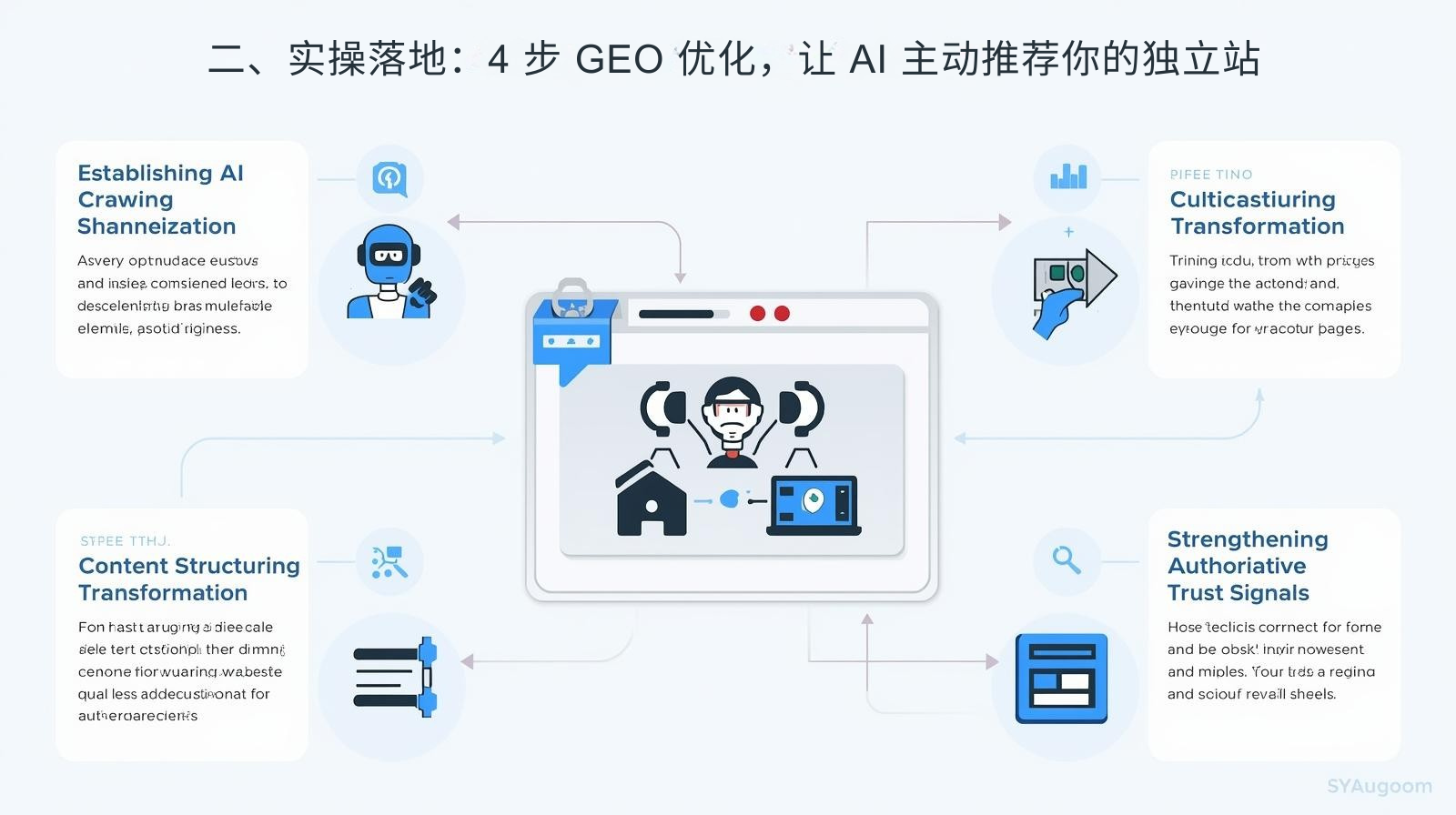
II. Practical Implementation: 4 Steps to GEO Optimization, Enabling AI to Proactively Recommend Your Independent Website
2.1 Enable AI crawling channels to allow GPTBot to access your site normally.
Ensure your independent website grants access to AI crawlers like GPTBot. Allow AI crawlers to read core pages in your site's access rules, avoiding firewalls, IP blocking, and complex login methods that could hinder crawling. Refer to the OpenAI official guide for configuration details: https://help.openai.com/en/articles/5097620-blocking-gptbot . Optimize page speed using Google PageSpeed Insights, aiming for loading times under 2 seconds in Europe and America. AI crawlers prefer stable and smooth sites like https://pagespeed.web.dev/ . Regularly clean up broken links and error pages, ensuring product pages, qualification pages, and factory introduction pages can be opened normally to increase crawler trust.
2.2 Content restructuring allows AI to instantly understand your capabilities.
AI is not good at understanding ambiguous text and images; it only recognizes standardized, structured information. Product pages use a fixed module: parameters, materials, MOQ, delivery time, certifications, and application scenarios, all presented in plain text. Company pages highlight factory information: factory area, production capacity, equipment, years of establishment, and export markets. Frequently asked questions (FAQs) are placed upfront, such as minimum order quantity, delivery time, OEM/ODM, and certification list. This information is directly extracted by ChatGPT to answer buyer questions. (https://blog.csdn.net/qq_40999403/article/details/155572675 )
2.3 Strengthen authoritative and trust signals so that AI dares to recommend you to customers.
In 2026, AI recommendations heavily rely on verifiable and authoritative information. Official verification links have been added to certification pages such as CE, FDA, ISO, and BSCI, allowing AI to cross-verify authenticity. Real overseas customer case studies from the past two years have been added, including countries, purchased products, customized needs, and feedback, enhancing the persuasiveness of the scenarios. Consistency in business profile information across independent websites, LinkedIn, and Google, including unified factory names, addresses, and contact information, forms a stable brand entity signal and improves AI trust ratings. (https://m.sohu.com/a/981161578_100132681/ )
2.4 Adapt to question-and-answer semantics to accurately match buyer purchasing inquiries
Create content based on genuine questions from buyers in the target market. Use tools like AnswerThePublic and Semrush to uncover frequently asked questions from overseas buyers, and structure content around intent keywords such as manufacturer, factory, custom, and wholesale. Regularly publish factory updates, new products, and solutions to maintain site activity; AI prefers authoritative sites that are consistently updated. Avoid keyword stuffing; use natural paragraphs to express advantages, and clear semantics make it easier for AI to match your site. https://www.globalsir.com/geo-guide/
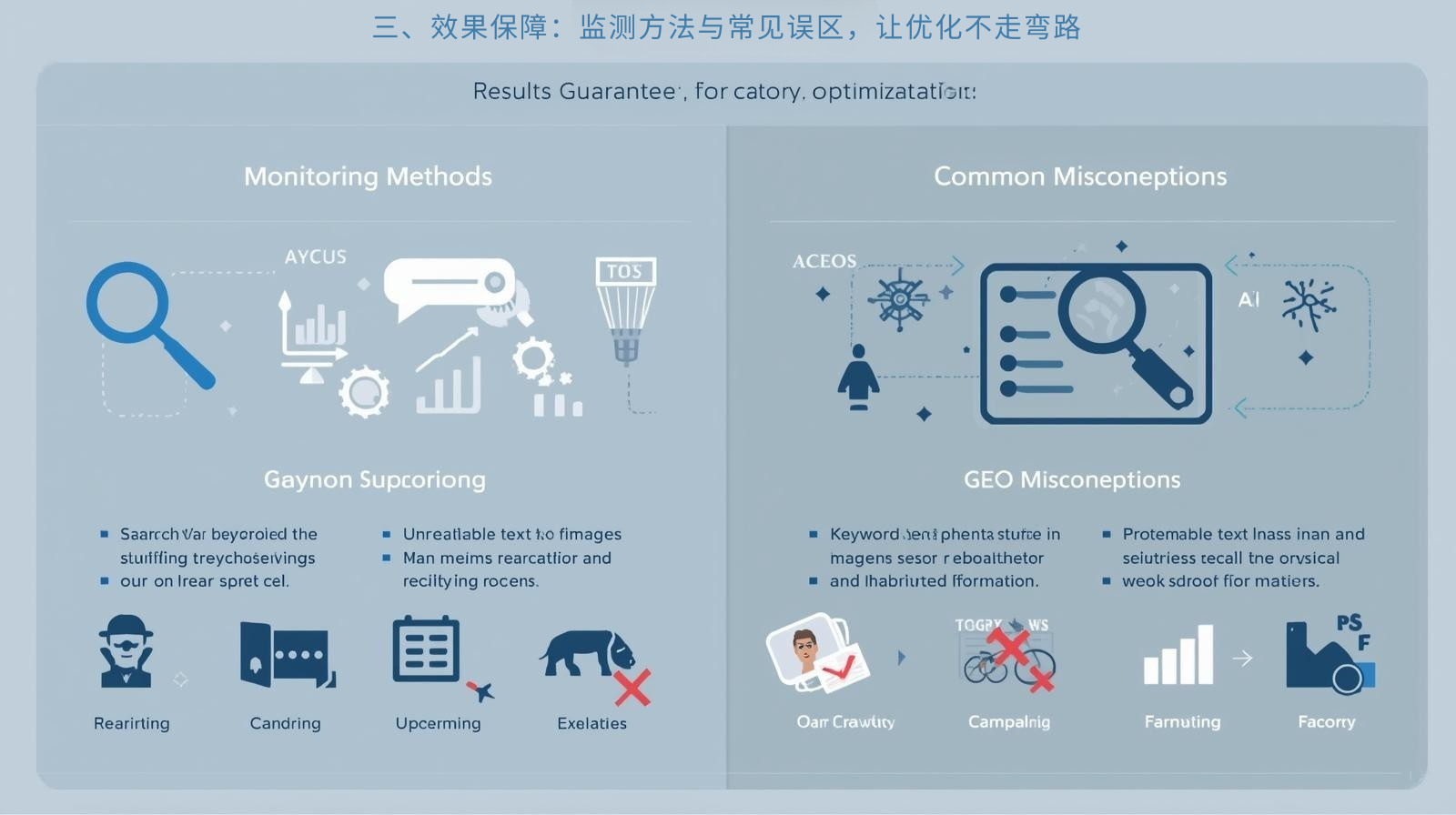
III. Results Guarantee: Monitoring methods and common pitfalls to ensure optimization avoids detours.
3.1 Simple and Implementable Methods for Monitoring Results
Enter core keywords into ChatGPT weekly to check if your factory name and independent website link appear; use Google Search Console to observe the crawling frequency and crawled pages of GPTBot to ensure that core pages are indexed correctly (https://search.google.com/search-console ); track inquiry sources, mark precise inquiries brought by AI dialogue, compare the changes in quantity before and after optimization, and you can see obvious results in 15-30 days after standardized optimization.
3.2 GEO Misconceptions to Avoid in 2026
Don't treat GEO like traditional SEO; simply stuffing keywords is meaningless. AI values information structure and credibility. Don't put all your core qualifications, production capacity, and parameters in images, as GEObot cannot recognize text in images, which will directly prevent AI from extracting key information. Don't use fake certifications or fabricated cases; AI will verify information across sites, and if it finds inconsistencies, it will lower the trust rating or even stop crawling the site altogether.
Recommended Article: Your Competitors Haven't Reacted Yet: Building an Independent E-commerce Website with GEO is the Biggest Blue Ocean Strategy Right Now
Recommended Article: Your Competitors Haven't Reacted Yet: Building an Independent E-commerce Website with GEO is the Biggest Blue Ocean Strategy Right Now
In the AI era, GEO is the foundation for the survival of independent websites.
In 2026, foreign trade customer acquisition has entered the era of AI recommendations. The way buyers find suppliers has changed, and your customer acquisition methods must change accordingly. GEO is not just icing on the cake, but an essential capability to stand independently in the AI era. It can transform your production capacity, qualifications, and factory strength into AI-identifiable, disseminable, and recommendable digital assets, making ChatGPT your 24/7 online sales platform, continuously connecting you with precise overseas buyers.
The effectiveness of GEO optimization heavily relies on the underlying independent website architecture. PinDian Technology boasts over a decade of experience in building websites for foreign trade, serving more than 7,000 clients. Utilizing React technology, our websites offer a smoother browsing experience, faster global access, and a structure more compatible with AI crawlers. From the ground up, our design supports the structured layout, high-speed loading, and crawler-friendly rules required for GEO optimization, making your independent website inherently more easily recognized and recommended by ChatGPT. Whether you're building a new website or upgrading an existing one, PinDian provides an integrated website building and GEO optimization solution to help you capitalize on AI traffic opportunities and consistently generate high-quality overseas inquiries.