
A 2026 global cross-border e-commerce market report shows that global cross-border e-commerce sales reached $6.3 trillion, a year-on-year increase of 18.2%. Among these, overseas buyers' searches for keywords such as "cross-border logistics tracking" and "foreign trade order logistics progress" through AI platforms like ChatGPT and Google Gemini increased by an average of 213% per month. However, the current situation is that over 85% of independent foreign trade websites can only provide basic tracking numbers, lacking logistics tracking visualization capabilities and failing to optimize their logistics search logic for AI platforms using GEO. This results in even products with competitive pricing being hampered by a lack of transparency in logistics information, causing users to hesitate and miss out on significant potential conversion opportunities. A top 10 Amazon home goods seller in Shenzhen achieved a remarkable turnaround within three months by integrating cross-border logistics tracking visualization and GEO precision optimization. Their ranking for the keyword "cross-border logistics tracking" on the AI platform jumped from 15th to 3rd. User trust increased by 189% due to the increased logistics transparency, and order confirmation conversion rate rose by 132%. This case demonstrates that the synergy between GEO optimization and cross-border logistics tracking visualization is crucial for accurately matching AI search intent with users' right to know about their logistics, making "real-time logistics visibility and clear progress tracking" the core competitive advantage for independent websites in AI-driven customer acquisition.
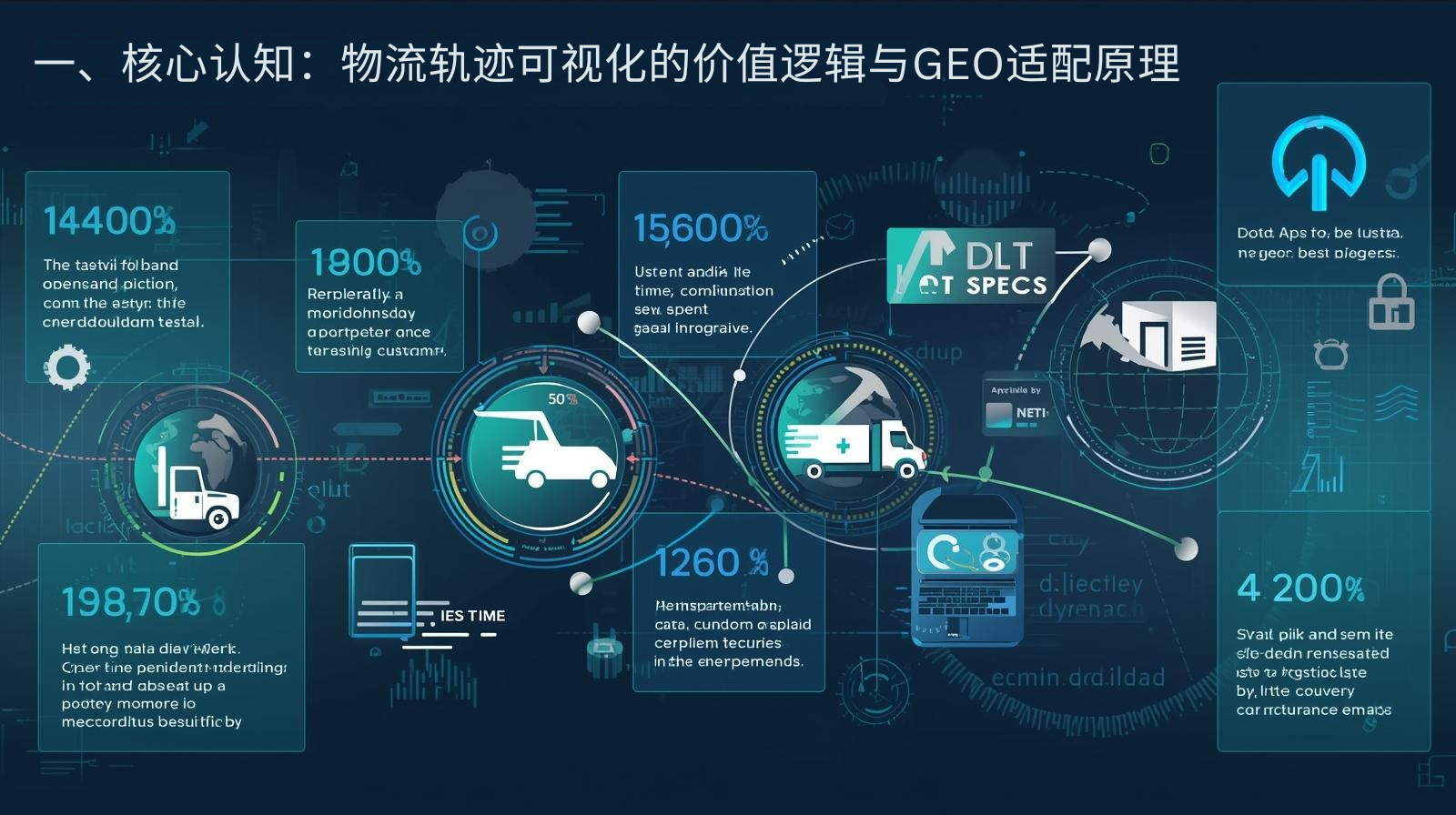
I. Core Understanding: The Value Logic of Logistics Track Visualization and the Principle of GEO Adaptation
The core of the GEO+ cross-border logistics tracking visualization solution for independent foreign trade websites addresses the pain points of "numerous nodes and information asymmetry throughout the entire cross-border logistics chain." It integrates a solution that can display the real-time tracking of the entire process from "domestic pickup to international transportation, customs clearance, and last-mile delivery." Through generative engine optimization (GEO) for semantic adaptation and content structuring, the AI platform quickly identifies the site's core advantage of "real-time tracking of logistics," enabling precise matching and priority recommendations when buyers search for information related to "cross-border logistics progress." This model breaks the traditional misconception of "focusing only on transactions and neglecting the logistics experience," achieving a closed loop of "product transaction + logistics transparency + AI exposure." It is a key path to breaking down trust barriers in cross-border logistics and improving user retention.
1.1 Why is logistics trajectory visualization a core advantage for AI search customer acquisition?
Against the backdrop of intensified cross-border trade competition in 2026, logistics tracking visualization is no longer a "value-added service" but a "basic necessity." Its core value for AI search customer acquisition is reflected in three dimensions, directly determining conversion rates:
1. Accurately match AI's core search intent: When overseas buyers search for suppliers through AI, "can the logistics progress be viewed in real time" and "is the order delivered safely" are the core demands. According to eMarketer's 2026 survey data, 72% of buyers will prioritize suppliers that support logistics tracking visualization. The AI platform will use "transparent logistics information" as a core matching factor, and its recommendation weight is 5.1 times higher than that of sites that only provide logistics tracking numbers.
2. Addressing the pain points of trust in logistics and improving conversion and repurchase efficiency: Cross-border logistics involves many links and long cycles. The traditional model, which only provides tracking numbers, leaves users unable to know whether the goods have been loaded onto the ship, whether customs clearance is going smoothly, or when delivery will take place, easily leading to anxiety and distrust. According to the "2026 Cross-border E-commerce Logistics Industry White Paper," 45% of sellers have customer complaints due to opaque logistics tracking, 60% of buyers have given negative reviews due to logistics anomalies, and repurchase rates have dropped by 40%. However, with the implementation of track visualization, users can view the progress of each node in real time (such as "loaded onto the ship," "customs clearance in progress," "last mile delivery in progress"), and can even predict the estimated delivery time, significantly reducing anxiety and significantly improving conversion intention and repurchase rates.
3. Establish a differentiated competitive advantage and strengthen AI trust weight: Currently, most foreign trade enterprises have not yet deployed logistics tracking visualization. Once integrated, it can create a significant differentiated advantage. At the same time, visualization solutions in cooperation with authoritative logistics service providers (such as Transworld, 4PX, and Wanyitong) can strengthen AI's trust assessment of sites. For example, by integrating with Transworld's full-link visualization system, an Amazon SPN service provider, AI will determine that the site has "compliant logistics services and a high-quality user experience," further improving the recommendation priority.
1.2 The core of GEO's adaptation to logistics trajectory visualization: enabling AI to "understand" logistics advantages
Many foreign trade companies mistakenly believe that "accessing the tracking visualization function solves everything." However, without leveraging GEO (Gross Earth Optimization) to convey logistics advantages, AI cannot identify the logistics service capabilities of a station and will still fail to achieve accurate exposure. The core of adapting GEO to logistics tracking visualization lies in enabling AI to quickly grasp and understand the logistics advantages of a station. This core logic can be broken down into two points:
1. Semantic Adaptation: Use standardized expressions that AI can recognize to clearly convey core information such as "visual coverage, real-time updated nodes, query methods, and anomaly warnings," avoiding vague expressions. For example, "Supports visualization of the entire logistics trajectory of cross-border orders, covering four major links: domestic pickup, international transportation, customs clearance, and last-mile delivery, with real-time updates of 12 core nodes. Users can query by entering the order number, and anomalies will be alerted within 15 minutes," rather than simply labeling it as "Supports logistics trajectory query."
2. Content Structuring: Present logistics visualization-related information in a structured manner according to the logic of "visualization function - query process - node description - anomaly handling". Use clear section divisions and core keyword annotations to enable AI to quickly capture core information, while making it easy for users to understand intuitively. For example, set up a separate "logistics trajectory query" section to display query entry, node explanation, frequently asked questions and other content in categories.
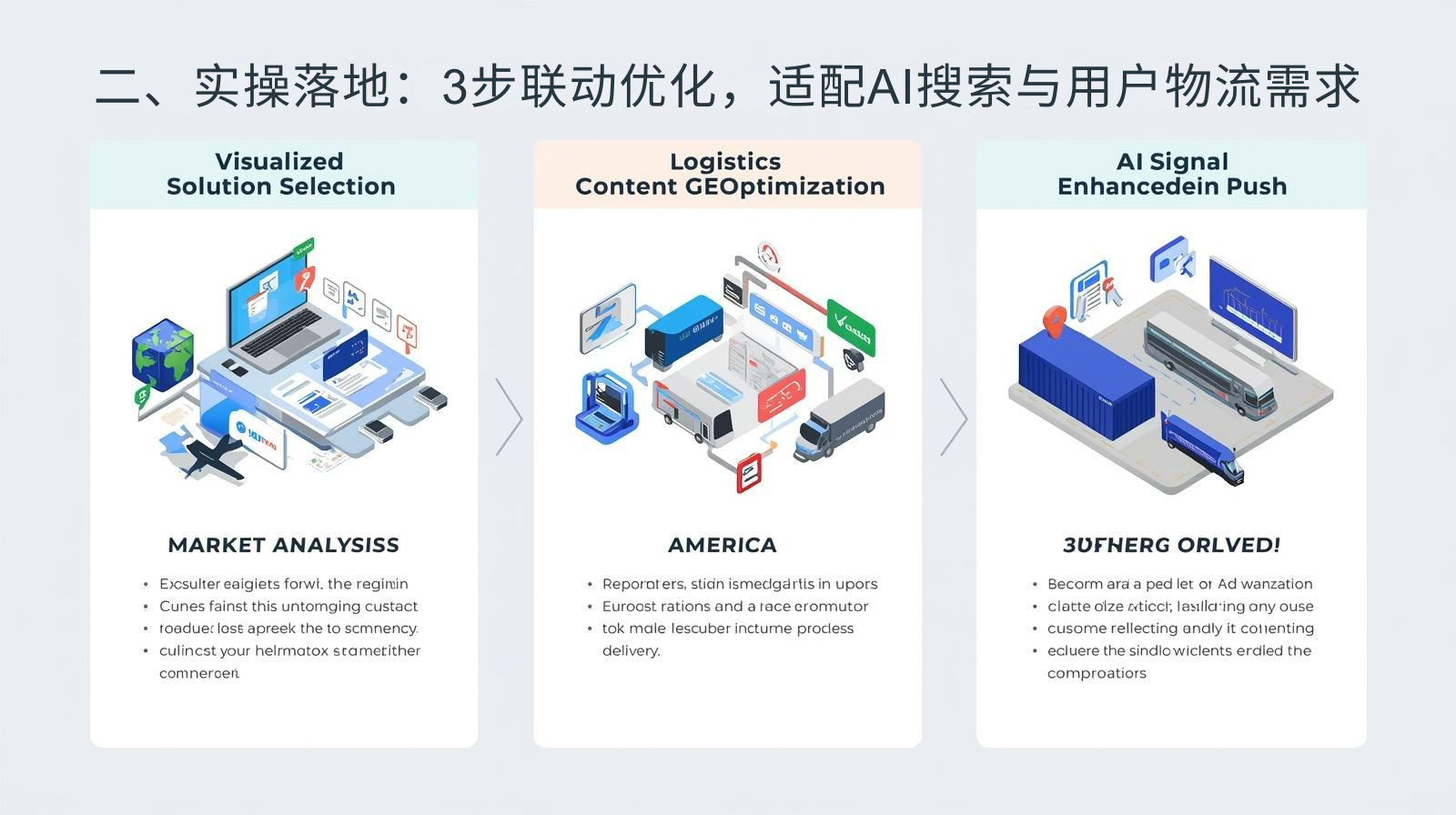
II. Practical Implementation: Three-Step Collaborative Optimization to Adapt to AI Search and User Logistics Needs
Based on practical cases of Amazon home furnishing sellers in Shenzhen, as well as the search intent rules of the AI platform in 2026 and the cooperation requirements of mainstream logistics service providers (such as Transworld, 4PX, and Wanyitong), we have summarized a three-step core practical solution: "Visualized Solution Selection - Logistics Content GEO Optimization - AI Signal Enhancement Push". Each step has clear implementation details and execution standards, which can be directly applied to achieve "logistics adaptation + AI precise exposure".
2.1 Step 1: Selection of Cross-border Logistics Tracking Visualization Solution (7-10 days) – Precisely Adapting to Market and Demand
The core objective is to select a comprehensive, rapidly updated, and adaptable visualization solution for independent websites, taking into account the logistics characteristics of the target market (such as Europe, America, and Southeast Asia), to lay the foundation for subsequent GEO optimization. The core practical steps are as follows:
1. Target Market Logistics Characteristics Analysis: Prioritize focusing on 1-2 core target markets and analyze their core logistics characteristics and user needs: ① US and Europe: Multiple logistics links (sea/air freight + customs clearance + last-mile delivery). Users are concerned about customs clearance progress and last-mile delivery timeliness. Prioritize solutions that support full-chain visibility for FBA first-leg and commercial express delivery. For example, the US market needs to cover customs clearance points in ports such as Los Angeles and New York, while the European market needs to cover overseas warehouse nodes in Germany and the UK. ② Southeast Asia (Singapore and Malaysia): Shorter logistics cycles. Users are concerned about domestic pickup and local delivery progress. Prioritize solutions that support mobile visualization and real-time SMS notifications.
2. Selection of Mainstream Visualization Solutions (Prioritizing Authoritative Institutions to Enhance AI Trust): Based on market characteristics, three core visualization solutions are selected to ensure comprehensive coverage and superior user experience: ① Integrated Solution for Logistics Service Providers (Strong Compliance, High AI Trust Weight): Such as KuaShiTong's Logistics ERP + DO2DO Intelligent System, which supports full-link trajectory visualization from "domestic pickup to international transportation to customs clearance to last-mile delivery," updating 12 core nodes in real time (order placement, pickup, loading, departure, arrival, customs declaration, customs clearance completion, last-mile pickup, delivery in progress, expected receipt, receipt completion, and anomaly alerts). Users can query the order number with one click, and it also provides three-way notification (SMS, email, and system message) within 15 minutes for abnormal situations. It supports API integration with independent websites for seamless site embedding; ② Third-party tracking integration solutions (broad coverage, suitable for SMEs in foreign trade): For example, 4PX's "Global Tracking Treasure" system integrates data from 100+ transportation channels such as sea freight, air freight, and express delivery, covering more than 200 countries and regions worldwide. It supports embedding query portals on independent websites, allowing users to view the entire tracking process by entering the tracking number, with an error of ≤4 hours; Wanyitong's WMS overseas warehouse management system enables full-process visualization of "inventory-outbound-delivery" for overseas warehouse orders, and even supports video monitoring of "picking-packing-shipping" for dropshipping orders; ③ Platform integration visualization solutions (suitable for platform sellers): For example, Amazon sellers can access the Amazon FBA logistics tracking visualization function, embedding the Amazon logistics query interface on their independent websites, allowing users to view the FBA first-leg and last-leg logistics progress in real time, while also linking to official Amazon logistics information to improve credibility.
3. Solution Implementation Preparation: Complete cooperation and integration with the selected service provider, and clarify core information (for subsequent GEO optimization): visualization coverage links, core update nodes, query methods (order number/logistics tracking number), anomaly warning mechanism, cooperation authorization certificate, and official cooperation link. For example, after cooperating with Transitworld, it is clarified that "it supports visualization of 12 nodes in the entire chain, order number query entry, 15-minute anomaly warning, has Amazon SPN service provider authorization, and cooperation link: https://www.transitworld.com/".
2.2 Second Step: Logistics Content GEO Optimization (15-20 days) – Enabling AI and Users to Understand Logistics Advantages
The core objective is to optimize the selected visualization scheme information through GEO to present it in a structured and semantic way, enabling AI to quickly grasp the core advantage of "real-time viewing of logistics tracks," while allowing users to intuitively understand the query methods and progress. The core practical steps are as follows:
2.2.1 Layout of logistics content on core pages (adapting to AI crawling priority)
Prioritize AI crawling (Homepage > Product Page > Logistics Tracking Page > Order Center) to precisely position logistics visualization content, ensuring core advantages are prioritized: ① Homepage (Core Advantages First): Set up a "Real-time Logistics Track Visualization" module below the first screen banner, using icons and brief text to highlight core advantages, such as "Cross-border Order Full-Link Track Track Available | 12 Core Nodes Updated in Real Time | Anomaly Warning 15 Minutes Await," and indicate the authoritative partner institutions (such as "Official Cooperation with TransWorld and 4PX Express"); set up a "Logistics Tracking" shortcut linking to a dedicated logistics tracking page; ② Product Page (Scenario-based Matching, Alleviating Purchasing Concerns): Near product prices and the order button, label the logistics visualization service, such as "This product supports full-link cross-border logistics tracking, from domestic pickup to overseas receipt, every step of the progress is visible in real time, and the tracking entry is available after placing the order," naturally integrating core keywords (such as "Cross-border Logistics Track Visualization Foreign Trade Supplier" and "Real-time Logistics Progress Furniture Manufacturer").
2.2.2 Deep optimization of the logistics query page using GEO (core adaptation to AI recognition)
Build an independent "Logistics Tracking" page, presenting complete information in a structured and logical manner to enhance AI's recognition of logistics advantages: ① Optimized page title: Incorporating core keywords, such as "Cross-border Logistics Tracking - Real-time Progress of Foreign Trade Orders Across the Entire Chain, Visual Tracking of 12 Nodes"; ② Core content sections (sorted by AI preferences): The first section, "Query Entry," includes an order number query box (labeled "Enter the order number to query the entire logistics progress"), with query instructions below (e.g., "The track can be queried within 24 hours after the order is shipped"); The second section, "Visualized Coverage Nodes," uses a table to display "Node Name - Update Time - Core Description," such as "Domestic Pickup - Within 2 Hours - Logistics Provider Has Picked Up the Package" and "Customs Clearance Completed - Within 1 Hour - Goods Have Passed Customs Inspection in the Target Country," highlighting the user value of each node (e.g., "Real-time updates of clearance nodes to avoid anxiety about unknown delays"); The third section, "Query Process Guide," uses step-by-step text to explain the query process, such as "1. Place an order and complete payment; 2. Obtain the order number after shipment; 3. Enter the order number on this page; 4. Click to query and view the real-time logistics track; 5. Receive notifications of abnormal situations (SMS/email); The fourth section, "Frequently Asked Questions (FAQ)," features answers to frequently asked questions, such as "Q: How often is the logistics track updated? A: Core nodes (loading, customs clearance, last-mile pickup) are updated within 1 hour, and other nodes are updated within 2-4 hours to ensure real-time and accurate progress"; The fifth section, "Partner Service Providers and Compliance Certifications," allows you to upload authorization certificates and qualification documents from logistics service providers (with the numbers and official query links), such as "Transitworld Cooperation Authorization Certificate (Number: TW-2026-SPN008), query link: https://www.transitworld.com/authorize/".
2.2.3 Semantic optimization of logistics content (adapting to AI semantic understanding)
Optimize the semantic description of logistics-related content to ensure AI can accurately identify logistics advantages and suitable scenarios: ① Natural layout of core keywords: Integrate core keywords such as "visualized cross-border logistics trajectory," "logistics progress of foreign trade orders," "real-time logistics query," and "visualized customs clearance progress" naturally into page titles, first paragraphs, and subheadings to avoid keyword stuffing; ② Standardized semantic description: Adopt the expression logic of "supports XX scenario + XX visualization service + core advantages," such as "We support full-chain logistics trajectory visualization services for cross-border orders in the European and American markets, covering both sea and air transport, with 12 core nodes updated in real time. Users can monitor order progress at any time, and receive early warnings for abnormal situations"; ③ Supplement scenario-related content: Add user cases to the logistics query page, such as "In January 2026, a US buyer used our logistics trajectory query function to track the progress of 1,000 sets of furniture orders in real time. When the customs clearance process required verification of declaration documents, they received an early warning of anomalies, promptly supplemented the documents, avoided a 7-day delay, and achieved 100% customer satisfaction," strengthening AI's trust assessment of logistics advantages.
2.3 Step 3: AI Signal Enhancement Push (Starts in 3-5 days, continues long-term) – Increases recommendation weight
The core objective is to proactively convey the message of "supporting logistics trajectory visualization" to the AI platform, accelerating content inclusion and improving recommendation ranking, and ensuring the site is prioritized in searches related to "cross-border logistics trajectory query". The core practical steps are as follows:
1. Structured Signal Optimization: Optimize logistics content according to AI-preferred formats, clearly distinguish sections such as "Query Entry," "Coverage Nodes," and "Query Process" using H2-H3 headings, present node information in tables, and showcase core advantages in lists; add alt text (e.g., "Cross-World Cooperation Authorization Certificate - Supports Full-Link Visualization of Cross-Border Logistics") to images such as logistics service provider authorization certificates and node diagrams to enable AI to recognize image information; optimize site maps by separately labeling the logistics modules on logistics query pages and product pages, and submitting them to the ChatGPT site administrator platform, Google Search Console, and Bing Webmaster Tools to proactively guide AI crawlers across multiple platforms.
2. Multi-channel signal push: ① AI platform signal submission: Submit an application for "Logistics trajectory visualization information update" through the ChatGPT official website administrator portal, highlighting that "the site has integrated with the authoritative logistics visualization solutions of TransWorld and 4PX Express, supporting real-time trajectory query of the entire cross-border order chain, updates of 12 core nodes, 15-minute alerts for anomalies, and adapting to the logistics needs of foreign trade users," accelerating the AI's recognition of logistics advantages; ② External signal supplementation: Publish content such as "Cross-border logistics trajectory query guide" and "Tips for tracking the logistics progress of foreign trade orders" on overseas social platforms such as LinkedIn and Twitter (e.g., "How can US buyers track foreign trade order logistics in real time? Full-chain visualization query tutorial"), marking core keywords and links to the independent website's logistics query page to guide the AI crawler to capture external signals; on B2B platforms such as Global Sources and Made-in-China, improve enterprise logistics service information, marking visualization solutions consistent with the independent website and links to partner institutions to form a linkage between internal and external signals.
3. Continuous optimization and maintenance: Regularly update logistics visualization solution information, such as adding supported transportation channels, optimizing node update timeliness, and supplementing the qualifications of cooperative service providers; analyze the ranking changes of relevant keywords for "cross-border logistics trajectory query" on the AI platform every month and optimize the semantic description of logistics content; regularly collect user feedback and optimize the query page experience (such as simplifying query steps and increasing mobile adaptation) to strengthen the AI trust weight.
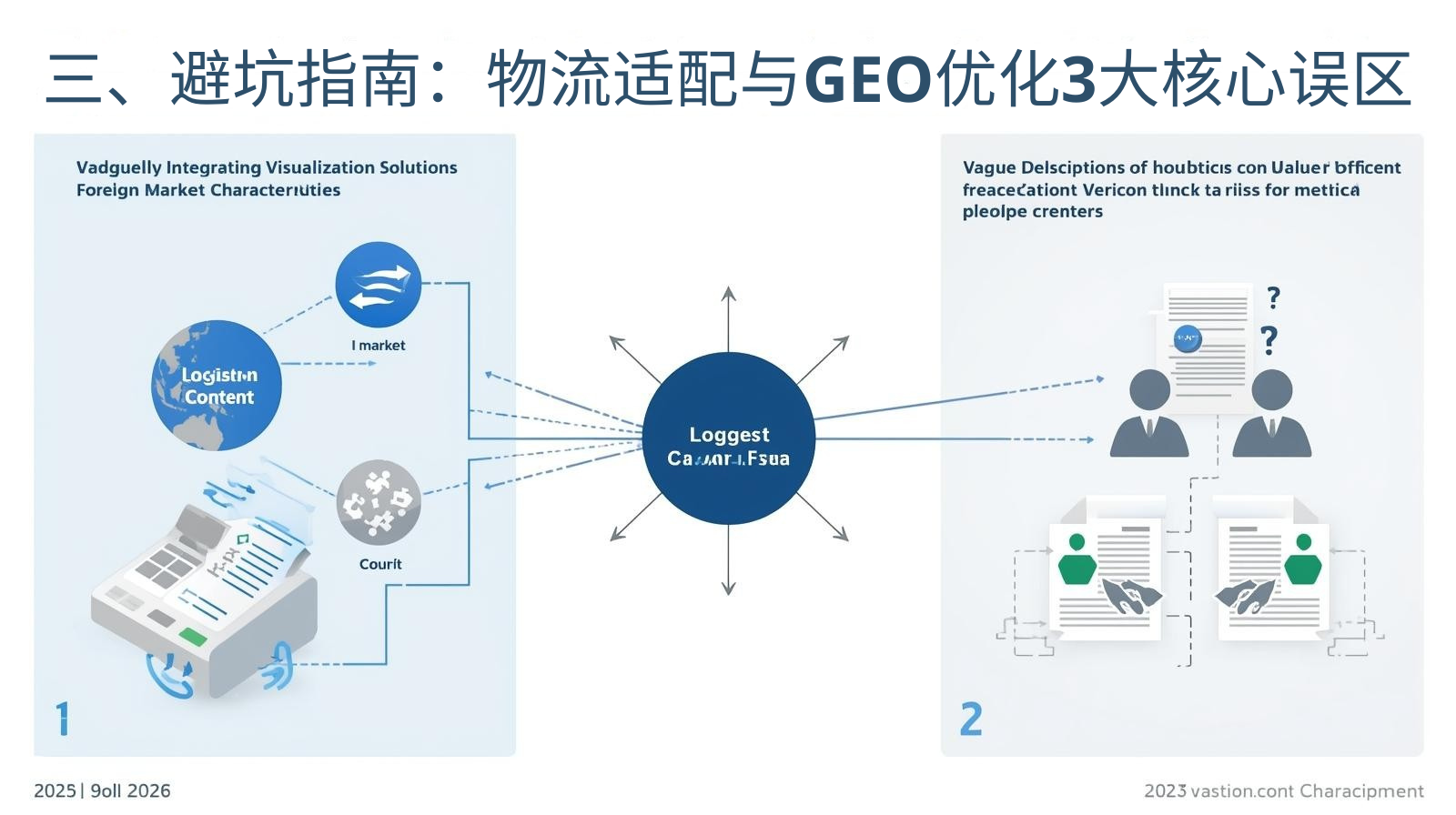
III. Avoiding Pitfalls: 3 Core Misconceptions about Logistics Adaptation and GEO Optimization
Based on practical cases from 2025-2026, foreign trade enterprises are prone to falling into three major pitfalls in GEO+ cross-border logistics trajectory visualization optimization, leading to AI's inability to recognize logistics advantages, poor user experience, and even a crisis of trust. These pitfalls must be resolutely avoided:
3.1 Misconception 1: Blindly adopting visualization solutions without adapting to the characteristics of the target market.
Errors include : failing to understand the logistics characteristics of the target market and blindly integrating visualization solutions (e.g., integrating a visualization system that only supports Southeast Asian logistics when targeting the US market); and integrating unqualified, slow-updating niche logistics visualization channels in an attempt to reduce costs.
Key risks : Users cannot track the logistics of orders in the target market, rendering the logistics service ineffective; unqualified solutions will be judged as "high-risk" by AI, reducing the overall recommendation weight of the site and potentially leading to the leakage of user information; a Dongguan electronics foreign trade company, due to accessing a niche and unqualified visualization channel in the US market, not only had a user query success rate of less than 15%, but was also marked as a "high-risk logistics service site" by ChatGPT, resulting in a significant drop in its core keyword search rankings;
Correct approach : First, analyze the logistics characteristics of the target market, then select a suitable visualization solution from an authoritative organization (such as TransWorld or 4PX); ensure that the solution has the ability to connect with logistics data in the corresponding market, and retain cooperation authorization certificates and qualification documents.
3.2 Misconception 2: Vague descriptions of logistics information prevent AI and users from understanding the advantages.
Errors include : simply labeling "Supports logistics tracking" without specifying the visualization coverage, update nodes, query methods, or exception handling mechanisms; the logistics content is disorganized, unstructured, and core information is obscured by redundant content;
Key risks : AI cannot recognize the logistics visualization capabilities of a website and cannot obtain accurate matches for searches related to "cross-border logistics tracking"; users are unclear about how to track the logistics and what progress they can view, causing them to hesitate about placing an order, resulting in a bounce rate of over 84%; according to data from the "2026 Cross-border E-commerce Customer Experience Survey," websites with vague descriptions of logistics information have a 78% lower user conversion rate than websites with standardized displays.
Correct approach : Clearly label the visualization coverage process, core nodes, query methods, and anomaly warning mechanisms; present the query process and cooperation qualifications in a structured manner; use standardized semantic expressions to convey logistics advantages and avoid vague wording.
3.3 Misconception 3: Ignoring the timeliness of trajectory updates and anomaly handling, thus eroding user trust.
Errors include : delayed track updates after implementing the visualization solution (core nodes not updated for more than 24 hours); lack of after-sales support for abnormal situations, making it impossible to resolve issues such as track stagnation and cargo delays in a timely manner; and false labeling of logistics nodes (e.g., labeling "loaded" when the goods have not been loaded).
Core harm : Users completely lose trust in the site due to delayed or false tracking updates, leading to numerous customer complaints and negative reviews; AI, through user feedback and data verification, will permanently lower the site's recommendation weight if it discovers untimely or false tracking updates; a Foshan hardware foreign trade company experienced multiple order cancellations in January 2026 due to delayed logistics tracking updates (the clearance point was not updated for 3 days), resulting in a 12-place drop in its AI recommendation ranking within one month;
Correct practice : Choose a visualization solution with guaranteed update timeliness (core nodes updated within 1-4 hours); set up a dedicated after-sales channel for logistics anomalies (such as WhatsApp customer service, email), and promise a 24-hour response; strictly prohibit false labeling of logistics nodes and ensure that the tracking information is true and accurate.
Recommended Article: Your Competitors Haven't Reacted Yet: Building an Independent E-commerce Website with GEO is the Biggest Blue Ocean Strategy Right Now
Recommended Article: Your Competitors Haven't Reacted Yet: Building an Independent E-commerce Website with GEO is the Biggest Blue Ocean Strategy Right Now
IV. Conclusion: Logistics Transparency + GEO Optimization: Unlocking New Momentum for AI-Driven Customer Acquisition in Cross-Border Trade
In 2026, the core competitiveness of cross-border foreign trade has extended from "products and prices" to "end-to-end service experience," and logistics trajectory visualization is a core element of this end-to-end service. The AI platform's search and matching of "cross-border logistics trajectory query" related needs essentially reflects the core pain points of buyers. Only through deep integration of GEO optimization and logistics trajectory visualization, enabling AI to accurately identify the logistics advantages of each site and allowing users to monitor order progress in real time and experience security and convenience, can a company gain a competitive edge in the fiercely competitive cross-border market.
The value of cross-border logistics tracking visualization lies not in "access to visualization functions," but in "whether it adapts to market characteristics, whether it is real-time and accurate, and whether it can be understood by AI and users." By accurately selecting visualization solutions, structurally optimizing logistics content, and continuously strengthening AI signal pushes, independent sellers can stand out in searches related to "cross-border logistics tracking," breaking down trust barriers in logistics and achieving precise customer acquisition and conversion. A case study from a Shenzhen Amazon home furnishing seller has proven that as long as the right optimization direction is found and precise implementation is carried out, GEO+ cross-border logistics tracking visualization can adapt to AI search needs and win the long-term trust of overseas buyers.
In 2026, global cross-border trade will continue to deepen, and AI platforms will further improve their matching logic for logistics service demands. Foreign trade companies that can proactively implement logistics trajectory visualization and GEO optimization will undoubtedly gain a foothold in global market competition and achieve long-term stable development of their cross-border business. Take action now: analyze the logistics characteristics of your target market, select a suitable visualization solution, and build a logistics content GEO optimization system. Let AI prioritize your services, and let overseas buyers choose you with confidence.