
Foreign Trade Website Operation Guide: How to Improve Customer Conversion Rate Through Data-Driven Development | Pinshop

  • Independent website operation strategy
Posted by 广州品店科技有限公司 On Sep 18 2025

Foreign trade websites are not only a showcase for products and company strengths but also a crucial tool for attracting global buyers. However, improving customer conversion rates on foreign trade websites remains a challenge for many business owners and foreign trade decision-makers. This article explores how to use a data-driven approach to analyze the operational status of foreign trade websites, identify areas for optimization, and ultimately improve customer conversion rates. Combining authoritative data with industry best practices, this article provides a practical guide to help businesses achieve efficient conversion from traffic to sales.
1. The necessity of data-driven foreign trade website operations

1. The necessity of data-driven foreign trade website operations

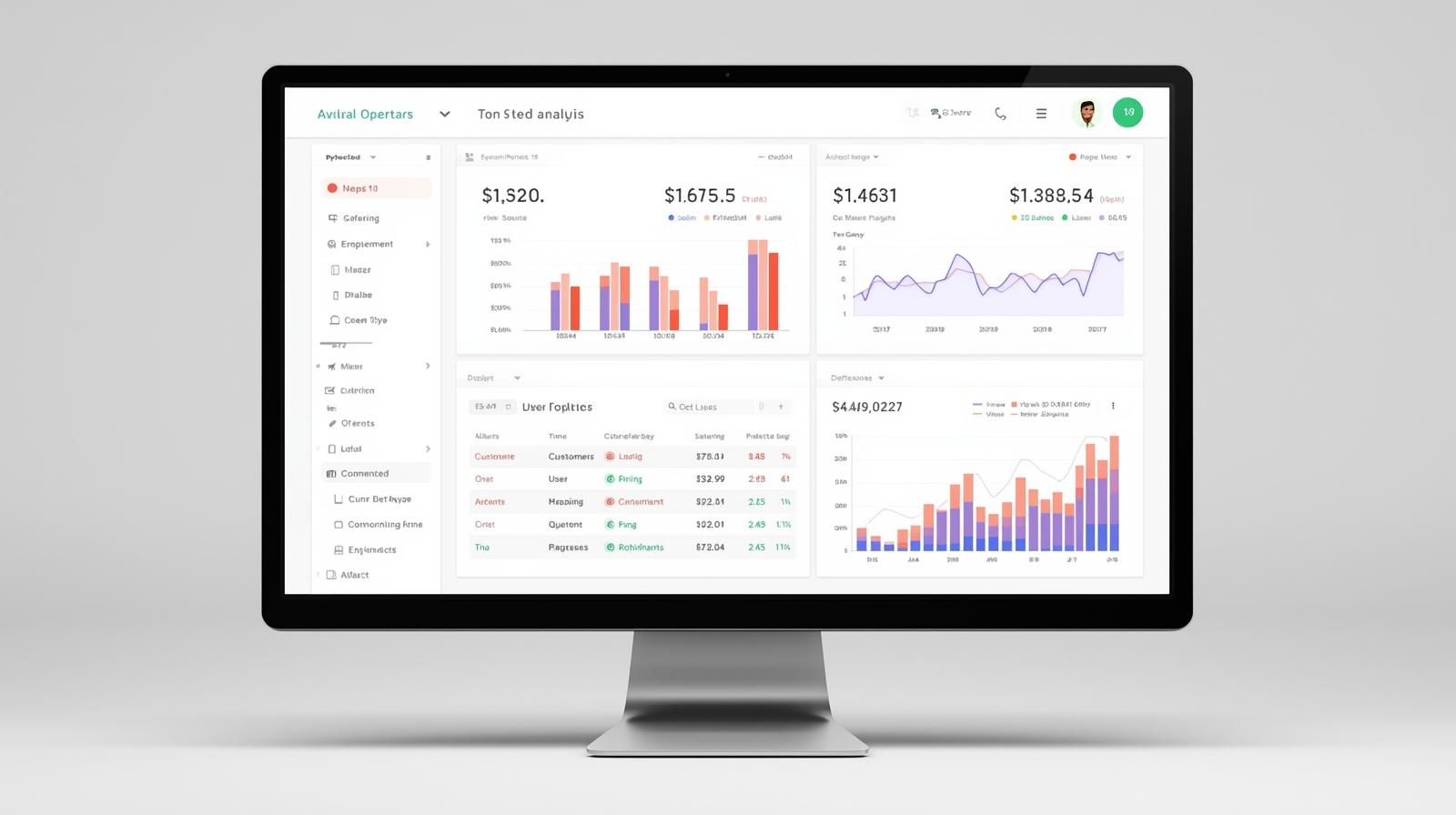
The operation of foreign trade websites relies not only on traditional marketing methods, but also on data analysis to gain insights into customer needs and behaviors. According to research by the International Telecommunication Union (ITU) , data-driven decision-making has become the key to improving the competitiveness of global companies.
By comprehensively analyzing data from foreign trade websites, companies can better understand the following aspects:

  • Customer Source : Know whether customers came to your website through search engines, social media, or direct visits.

  • Customer behavior : Analyze users’ time spent on the website, pages viewed, click-through rate, etc., to determine their interests and purchasing intentions.

  • Conversion Path : Determine the customer's conversion path from initial visit to final inquiry or purchase, identify loss points and optimize them.

With these data, foreign trade website operators can adjust their strategies more accurately and improve customer conversion rates.
2. How do foreign trade websites use data to improve conversion rates?

2. How do foreign trade websites use data to improve conversion rates?

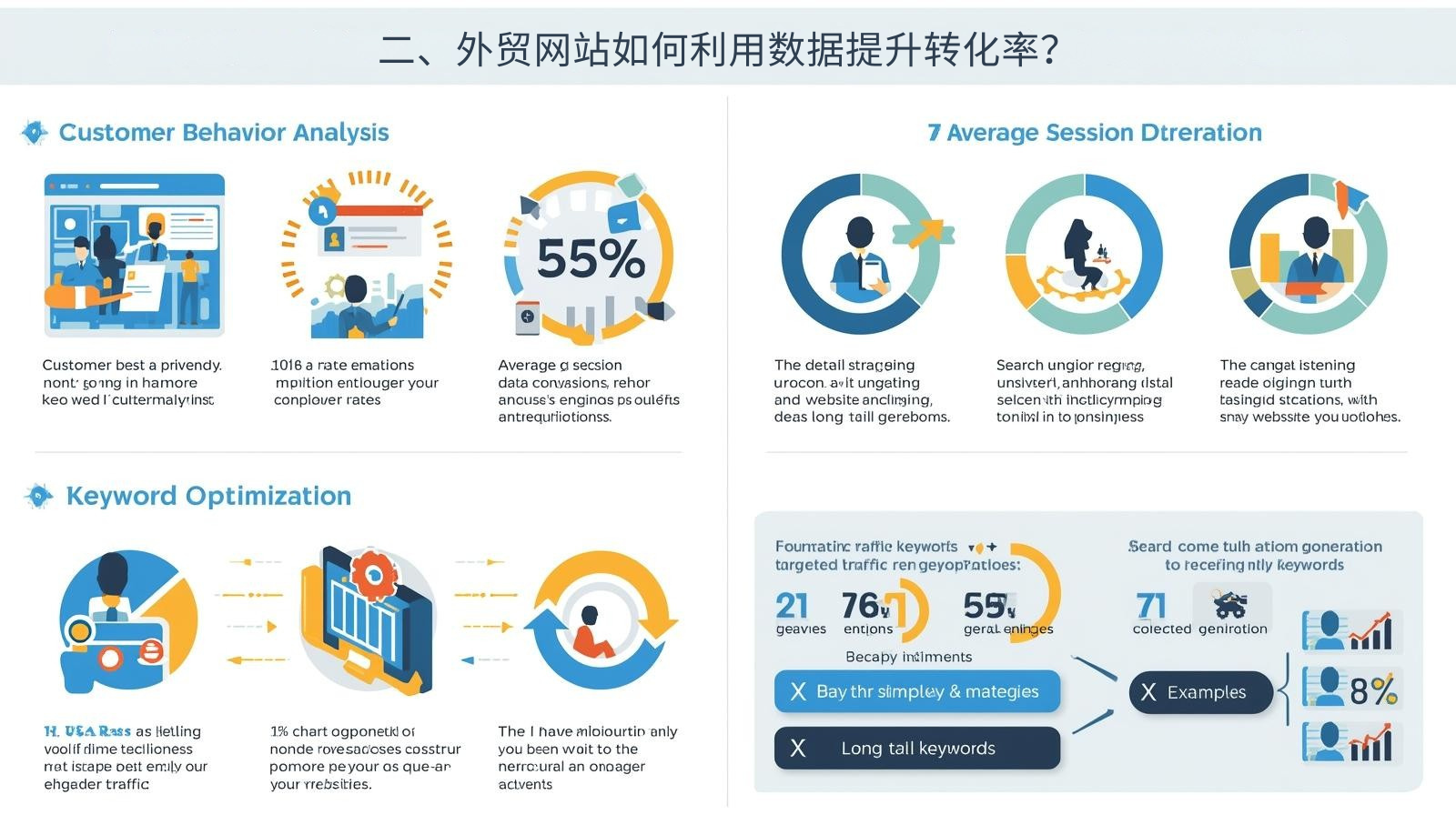
  1. Customer behavior analysis: Gain insights into user needs <br data-start="735" data-end="738">Analyze user behavior and interaction data through tools such as Google Analytics. Specifically, analyze the following key indicators:

  • Bounce rate : If the website has a high bounce rate, it means that the website content fails to arouse the interest of customers, and the homepage content, navigation and product display need to be optimized.

  • Average session duration : By improving the quality of page content, you can increase the time users spend on your website, thereby increasing conversion rates.

  • Conversion Path : Analyze the customer's path from browsing products to placing orders, and identify potential conversion barriers, such as cumbersome registration processes and payment delays.
    With this data, the operations team can quickly identify problems and improve conversion rates by adjusting pages or optimizing user experience.

  1. Keyword optimization: precise traffic diversion <br data-start="1017" data-end="1020">Through data analysis of search engines, find out the most commonly used keywords by target customers, and optimize the website content so that it occupies a better position in the ranking of these keywords.
    According to research by the China Academy of Information and Communications Technology (CAICT) , foreign trade companies can obtain high-quality search traffic through precise keyword optimization.
    For example, based on user needs, keyword layout can be made in segmented markets to improve search rankings in specific areas.

  • Long-tail keywords : Long-tail keywords targeting specific needs are more likely to bring in accurate traffic, especially searches involving specific products.

  • Localized SEO : Targeting users in different countries and regions, we perform localized keyword optimization to increase search exposure in specific markets.

  1. A/B Testing and Optimization <br data-start="1317" data-end="1320">Optimize every detail of your foreign trade website through A/B testing. By creating two versions of a page, test the impact of different elements (such as button color, CTA copy, etc.) on user behavior, and select the most effective page version to improve conversion rate.
    A report by the World Trade Organization (WTO) indicates that websites optimized using A/B testing can generate 30% more conversions than unoptimized sites.

  2. Social media and external link building: Expand exposure <br data-start="1501" data-end="1504">Foreign trade websites not only rely on internal traffic, but also need to enhance brand exposure through social media and external link building. By publishing relevant industry content on major social platforms, you can attract external traffic and guide customers to visit the foreign trade website.
    Establishing high-quality external links can improve the authority of the website and enhance the search engine's recognition of the website.
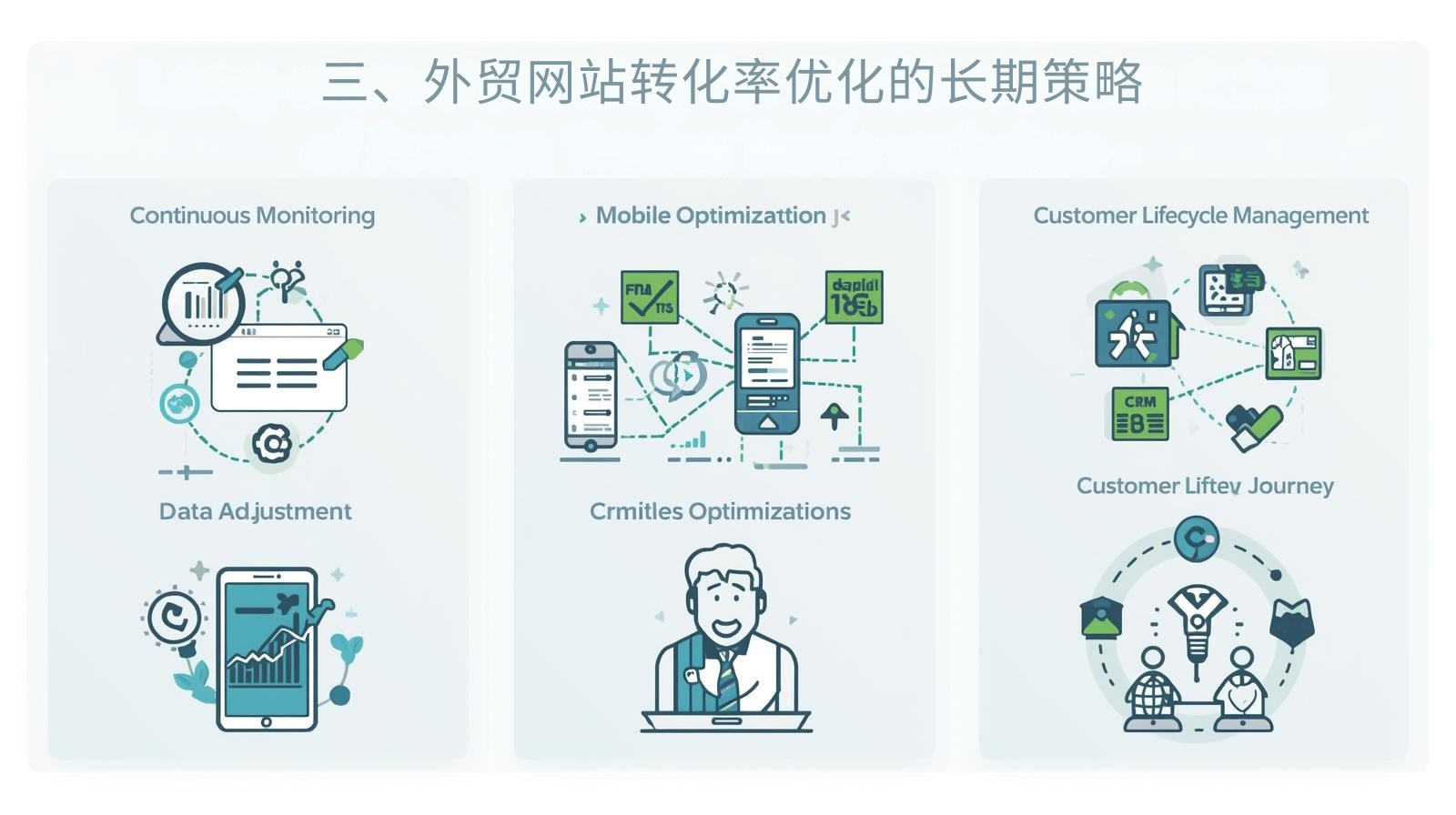
3. Long-term strategy for optimizing conversion rates of foreign trade websites

3. Long-term strategy for optimizing conversion rates of foreign trade websites

  1. Continuous Monitoring and Data Adjustment <br data-start="1663" data-end="1666">Website conversion rate optimization is an ongoing process. Foreign trade website operators should regularly check data to identify new optimization points. By constantly adjusting website content, layout, keyword strategy, etc., ensure that the website always maintains the best conversion state.

  2. Mobile optimization <br data-start="1761" data-end="1764">According to a report from the International Telecommunication Union (ITU) , approximately 60% of global foreign trade traffic comes from mobile devices. Therefore, ensuring that the performance of foreign trade websites on mobile devices is consistent with that on desktops is an important step in improving conversion rates.

  3. Customer Lifecycle Management <br data-start="1879" data-end="1882">Use the CRM system to manage the customer lifecycle, implement personalized marketing based on customer behavior data and interaction history, and improve customer repurchase rate and loyalty.

Recommended related articles: Foreign trade customer acquisition software intelligent SEO function: the secret of increasing independent station traffic by 200,000 per month

Through data-driven strategies, foreign trade websites can more accurately understand customer needs and optimize conversion paths, thereby increasing inquiry rates and sales. Business owners and foreign trade decision-makers should prioritize data analysis and customer behavior research, leveraging this data to continuously optimize foreign trade website operations and improve overall conversion rates.

👉 If you're looking to improve customer conversion rates and gain greater global market exposure through efficient foreign trade website construction and optimization , choose the Pinshop platform and let us provide a one-stop solution for your foreign trade business, helping you easily acquire global customers!


特色博客
Pintui Technology: GEO one-stop solution for independent foreign trade station

Pintui Technology: GEO one-stop solution for independent foreign trade station

This article introduces the GEO (Generative Engine Optimization) one-stop solution for the independent foreign trade station of Pintui Technology. It focuses on AI capture and trust rules and provides fully closed-loop implementation services from the four modules of structured website building, content system, technology adaptation, and data operation. It also clarifies the 30-60 day standardized implementation process and combines the latest AI rules and authoritative external links in March 2026 to help the independent foreign trade station appear stably in ChatGPT search results and achieve sustainable AI customer acquisition.

GEO Structured Layout for Independent Foreign Trade Websites: AI&#39;s Favorite Page Structure

GEO Structured Layout for Independent Foreign Trade Websites: AI&#39;s Favorite Page Structure

This article focuses on the core of GEO (Geometric Orientation) for independent e-commerce websites in 2026—structured layout—clearly pointing out that the key to AI crawling and recommendation lies in page structure rather than visual effects. The article details AI-friendly structures for four core pages: homepage, product pages, company introduction pages, and compliance pages, providing directly replicable layout templates. Based on the latest official rules from Google, OpenAI, Semrush, and others in 2026, it summarizes six golden rules of structured layout and a three-step implementation method, accompanied by authoritative and verifiable backlinks throughout, helping e-commerce companies quickly build AI-favored page structures and increase their exposure and recommendation probability on ChatGPT.

GEO for independent e-commerce websites is not about optimizing the website, but about optimizing AI cognition.

GEO for independent e-commerce websites is not about optimizing the website, but about optimizing AI cognition.

This article revolves around the core concept that &quot;GEO for independent foreign trade websites is not about optimizing the website, but about optimizing AI cognition.&quot; It combines the latest industry data from March 2026 (China Daily GEO Analysis Report, &quot;GEO Generation Search Optimization White Paper,&quot; NetEase News GEO Evaluation), practical foreign trade case studies, and authoritative backlinks (OpenAI, Google, Semrush, etc.). Divided into four core chapters (including sub-headings): &quot;GEO Core Cognition,&quot; &quot;Four Dimensions of AI Cognition Optimization,&quot; &quot;3 Steps to Practical Implementation,&quot; and &quot;6 Pitfall Avoidance Guidelines,&quot; this article delves into the underlying logic of GEO optimization for AI cognition. It breaks down directly implementable cognition optimization methods and practical processes, avoiding common pitfalls, adhering to long sentence formatting requirements, avoiding complex technical descriptions, and seamlessly integrating all backlinks into the text. Balancing professionalism and practicality, this article helps foreign trade companies avoid the misconception of &quot;website optimization&quot; and achieve precise customer acquisition for independent websites through optimizing ChatGPT cognition.

Why do 90% of independent e-commerce websites fail to see results despite implementing GEO (Geometric Orientation)?

Why do 90% of independent e-commerce websites fail to see results despite implementing GEO (Geometric Orientation)?

This article revolves around the core question, &quot;Why do 90% of independent foreign trade websites fail to see results despite implementing GEO?&quot; It combines the latest industry data from March 2026 (Jiemian News GEO Ineffective White Paper, China Academy of Information and Communications Technology GEO Report, Gartner Research Report), practical foreign trade case studies, and authoritative, verifiable backlinks (OpenAI, Google, Semrush, etc.). Divided into four core chapters (including subheadings): &quot;The Core Truth Behind GEO Ineffectiveness,&quot; &quot;4 Core Reasons for Ineffectiveness,&quot; &quot;4-Step Rectification Plan,&quot; and &quot;5 Common Pitfalls to Avoid,&quot; this article delves into the underlying logic behind the ineffectiveness of 90% of GEO campaigns. Paired with real-world case studies, it provides directly implementable rectification solutions, breaks down common pitfalls, and adheres to a concise, well-structured format. Avoiding complex technical descriptions, all backlinks are seamlessly integrated into the text, balancing professionalism and practicality. This helps foreign trade companies accurately identify the root causes of GEO ineffectiveness, avoid internal conflicts, and ensure GEO truly functions effectively for precise customer acquisition via ChatGPT. It also provides standardized article summaries, meta descriptions, and specified slugs, and concludes with a natural recommendation of a product store website building service.

How long does it take for an independent e-commerce website doing GEO (Google Originator) to be found on ChatGPT?

How long does it take for an independent e-commerce website doing GEO (Google Originator) to be found on ChatGPT?

This article focuses on the core question, &quot;How long does it take for an independent foreign trade website to be found in ChatGPT after implementing GEO?&quot; It combines the latest industry data from March 2026 (Gartner forecast report, China Academy of Information and Communications Technology GEO report, and Jiemian News practical guide), foreign trade case studies, and authoritative backlinks (OpenAI, Google, Semrush, etc.). Divided into four core chapters (including sub-headings): &quot;Effective Time for Different Base Sites,&quot; &quot;Core Influencing Factors,&quot; &quot;Practical Acceleration Solutions,&quot; and &quot;Effect Verification and Pitfall Avoidance,&quot; this article provides an in-depth analysis of the effectiveness of GEO optimization. It breaks down the effective timeframes at three levels, identifies four core influencing factors, outlines five directly implementable acceleration measures, provides a three-step effect verification method, and addresses four common pitfalls. Adhering to long sentence formatting requirements, it avoids complex technical descriptions, seamlessly integrating all backlinks into the text. Balancing professionalism and practicality, this article helps foreign trade companies clearly understand the effective timeframe for GEO, quickly achieve visibility in ChatGPT searches, and seize the AI-driven customer acquisition opportunities. It also provides standardized article summaries, meta descriptions, and specified slugs, and concludes with a natural recommendation of a product store website building service.

React-based standalone website and social media integration: A high-efficiency traffic conversion solution driven by automated SEO.

React-based standalone website and social media integration: A high-efficiency traffic conversion solution driven by automated SEO.

This article focuses on the core pain point of &quot;high investment and low conversion&quot; in social media traffic acquisition for foreign trade enterprises, providing a full-process solution for linking React independent websites with social media (Facebook/LinkedIn/Instagram). It breaks down the collaborative logic of React website performance optimization (compressing redirect loading time, cross-device adaptation), social media-website content consistency (unified topics, value extension), and automated SEO keyword interoperability (two-way empowerment, traffic feedback). Combined with a real-world case study of a cross-border e-commerce brand achieving a 50% increase in social media traffic conversion, it shares cost optimization techniques, implementation steps, and effectiveness verification methods. This helps enterprises break down the disconnect between social media and independent websites, efficiently converting social media traffic into inquiries while simultaneously boosting the organic ranking of independent websites, achieving synergistic growth across both channels.