

Practical methods to improve the loading speed of foreign trade websites

  • The foundation of independent station construction
  • Independent station technology optimization
  • Foreign trade website
Posted by 广州品店科技有限公司 On Aug 20 2025

In the fiercely competitive global foreign trade landscape, the loading speed of foreign trade websites directly impacts user experience and search engine rankings. According to Google PageSpeed Insights , foreign trade websites with page loading times exceeding three seconds experience significantly increased bounce rates. Therefore, improving the loading speed of foreign trade websites has become a critical step in boosting conversion rates and competitiveness in overseas markets.

1. Image and multimedia resource optimization

Image and video resources are often the main reasons for slow loading of foreign trade websites:

  • Image compression : Use WebP or AVIF format to reduce file size without affecting clarity.

  • Lazy loading technology : load images when the user scrolls to the visible area to reduce the pressure on the first screen.

  • Video hosting : Load videos through a third-party platform or CDN to reduce server load.

Shopify Plus recommends that by optimizing multimedia resources, the average loading speed of foreign trade websites can be increased by 30%-50%.

2. Use a Content Delivery Network (CDN)

CDN can cache website content to global nodes to improve access speed in different regions:

  • Static resource distribution : CSS, JS, images, etc. are accessed through CDN to accelerate access.

  • Reduce latency : Shorten the physical distance between users and servers, and increase the first screen rendering speed.

  • Improve stability : cope with access peaks or regional network fluctuations.

According to Cloudflare statistics, the access speed of foreign trade websites that deploy CDN has increased by an average of 40%, while effectively reducing server pressure (reference link: Cloudflare ).
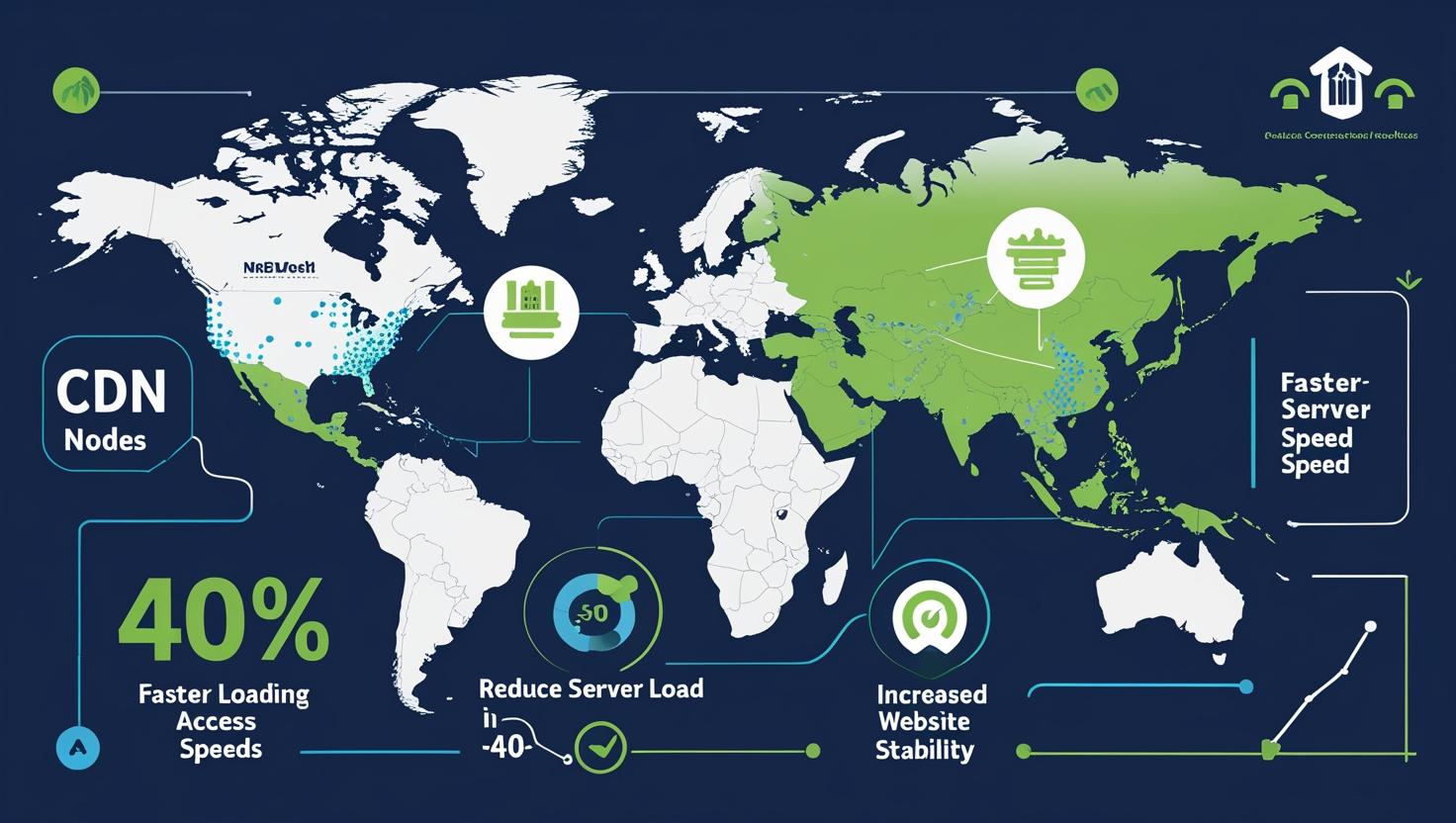
Foreign trade websites: using a content delivery network (CDN)

3. Front-end and code optimization

Front-end code optimization is the basis for improving loading speed:

  • Compress and merge files : compress and merge CSS and JS files to reduce HTTP requests.

  • Enable browser caching : Static resources can be cached on the user side to reduce repeated loading.

  • Asynchronously load scripts : Use the async or defer attribute for non-core scripts to ensure fast page rendering.

Nielsen Norman Group research shows that front-end optimization and page streamlining can effectively improve user experience and reduce bounce rates.

Backend optimization also affects the overall speed of the website:

  • Use a high-performance server : Choose a cloud server or VPS suitable for overseas access.

  • Database index optimization : Improve data query speed and reduce dynamic page loading delay.

  • Compress transferred data : Enable GZIP or Brotli compression to speed up page transfers.


Summarize :

The loading speed of a foreign trade website directly impacts user experience, SEO inclusion, and conversion rates. By optimizing images and multimedia, CDN acceleration, front-end code optimization, and database and server optimization, businesses can significantly improve website access speed and user satisfaction. Using the Pinshop website building platform, businesses can quickly build a well-optimized foreign trade website, achieving efficient overseas promotion and traffic conversion.

Pinshop website building platform CTA :
Want to make your foreign trade website faster and provide a better user experience? Use the Pinshop website building platform and experience it now to quickly build a professional and optimized foreign trade website.

Pinshop foreign trade website building: CND global acceleration

Recommended article: Optimizing product details pages for foreign trade websites

特色博客
Agricultural Product Foreign Trade Website Construction: Visual Presentation of Organic Certification and Traceability Information

Agricultural Product Foreign Trade Website Construction: Visual Presentation of Organic Certification and Traceability Information

This article, based on the latest standards of the International Federation of Organic Agriculture Movements (IFOAM), systematically explains how agricultural product exporting enterprises can create transparent and trustworthy foreign trade websites through the construction of certification information visualization and traceability systems.

Home Furnishings Export Website: Showcasing Lifestyle and Product Application Scenarios

Home Furnishings Export Website: Showcasing Lifestyle and Product Application Scenarios

This article, based on the latest research from the International Home Furnishings Design Association, systematically explains how to create a home furnishings export website that resonates emotionally by deeply integrating life scenarios with product applications.

Building an international website for automotive parts: Effectively conveying OEM compatibility information

Building an international website for automotive parts: Effectively conveying OEM compatibility information

This article, based on the latest standards from the Society of Automotive Engineers (SAE), systematically explains how automotive parts companies can build technical trust with overseas buyers by showcasing professional compatibility information.

Website building for the building materials industry's international trade: Methods for showcasing project cases and product specifications

Website building for the building materials industry's international trade: Methods for showcasing project cases and product specifications

This article, based on the latest research from the International Building Materials Association, systematically explains how to enhance the international competitiveness of building materials companies through in-depth packaging of project cases and structured presentation of technical parameters.

Website Building for Medical Device Export: Techniques for Showcasing International Certifications and Product Descriptions

Website Building for Medical Device Export: Techniques for Showcasing International Certifications and Product Descriptions

This article, based on the latest requirements of international medical device regulatory agencies, systematically explains how to build a professional and reliable medical device foreign trade platform through standardized certification display and technical document management.

Compliance requirements for foreign trade website building for food import and export enterprises

Compliance requirements for foreign trade website building for food import and export enterprises

This article, based on the latest research from the International Food Trade Association, systematically elaborates on the seven key compliance areas that food import and export companies need to focus on during the website construction process and corresponding strategies.