
Create an independent product display page with high conversion rate

  • Independent website industry application
  • Independent website operation strategy
Posted by 广州品店科技有限公司 On Aug 08 2025
In the e-commerce marketing funnel, your website's product page is a key determinant of conversion rates. According to research by the Nielsen Norman Group, visitors spend an average of just 43 seconds on a product page—a brief window in which all their questions must be answered and a purchase decision must be made. Data from the Baymard Institute further shows that optimized product pages increase conversion rates by an average of 35.26% compared to standard pages. Despite this importance, many store owners still use templated product pages, missing out on conversion opportunities. This article will share how to create truly sales-driving product display pages through a systematic optimization approach.

Visual Display: Make Your Product Pop on the Screen

Visual Presentation: Make Your Product Pop on the Screen

Excellent product visuals are the first step to conversion:

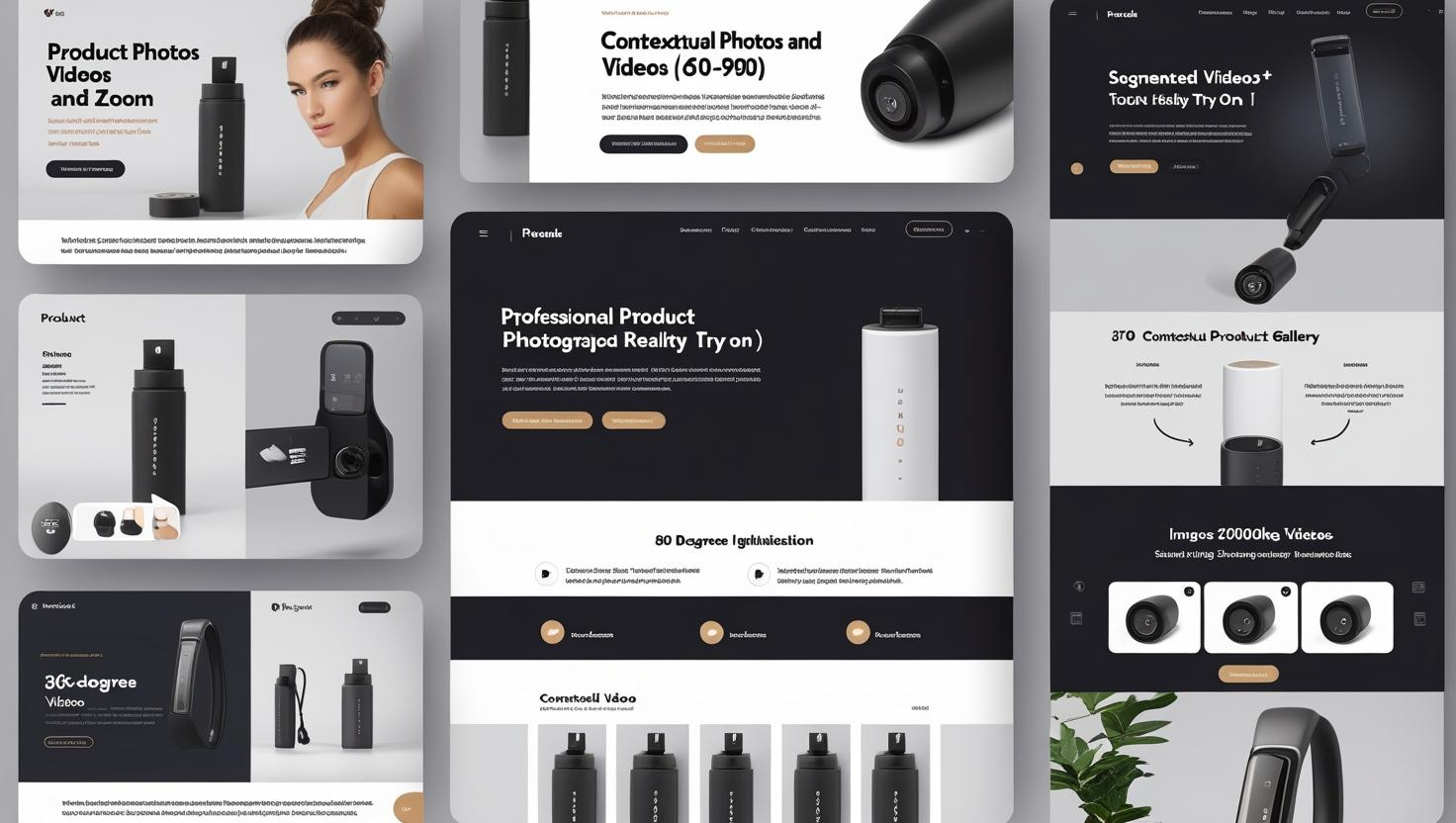
  1. Professional product photography strategy:

    • Use multiple angles (at least 5-7 different perspectives)
    • Implement zoom functionality to showcase product details (enable at least 2x magnification)
    • Include photos of product use scenarios (enhance purchase inspiration)
    • Ensure image loading speed (compress to 100-200KB without losing quality)
  2. The power of video and 3D presentation:

    • Add short videos showing product usage (60-90 seconds) seconds (ideally)
    • Consider 360-degree rotations (to enhance product realism)
    • Implement augmented reality try-on functionality (for furniture, glasses, etc.)
    • Use segmented videos to highlight different product features
  3. Mobile optimization tips:

    • Implement vertical scrolling galleries instead of horizontal ones
    • Ensure zooming supports touch gestures
    • Prioritize loading the first image and progressively load other images
    • Design a vertical video-first mobile experience

According to Shopify research, product pages that include videos have an average conversion rate increase of 80%, while pages with high-quality, multi-angle images have a 40% higher conversion rate than pages with a single image. Visual elements not only showcase the product but also reduce uncertainty and lower returns.
Product Description: From Features to Benefits

Product Descriptions: Shifting from Features to Benefits

Engaging product descriptions bridge information gaps:

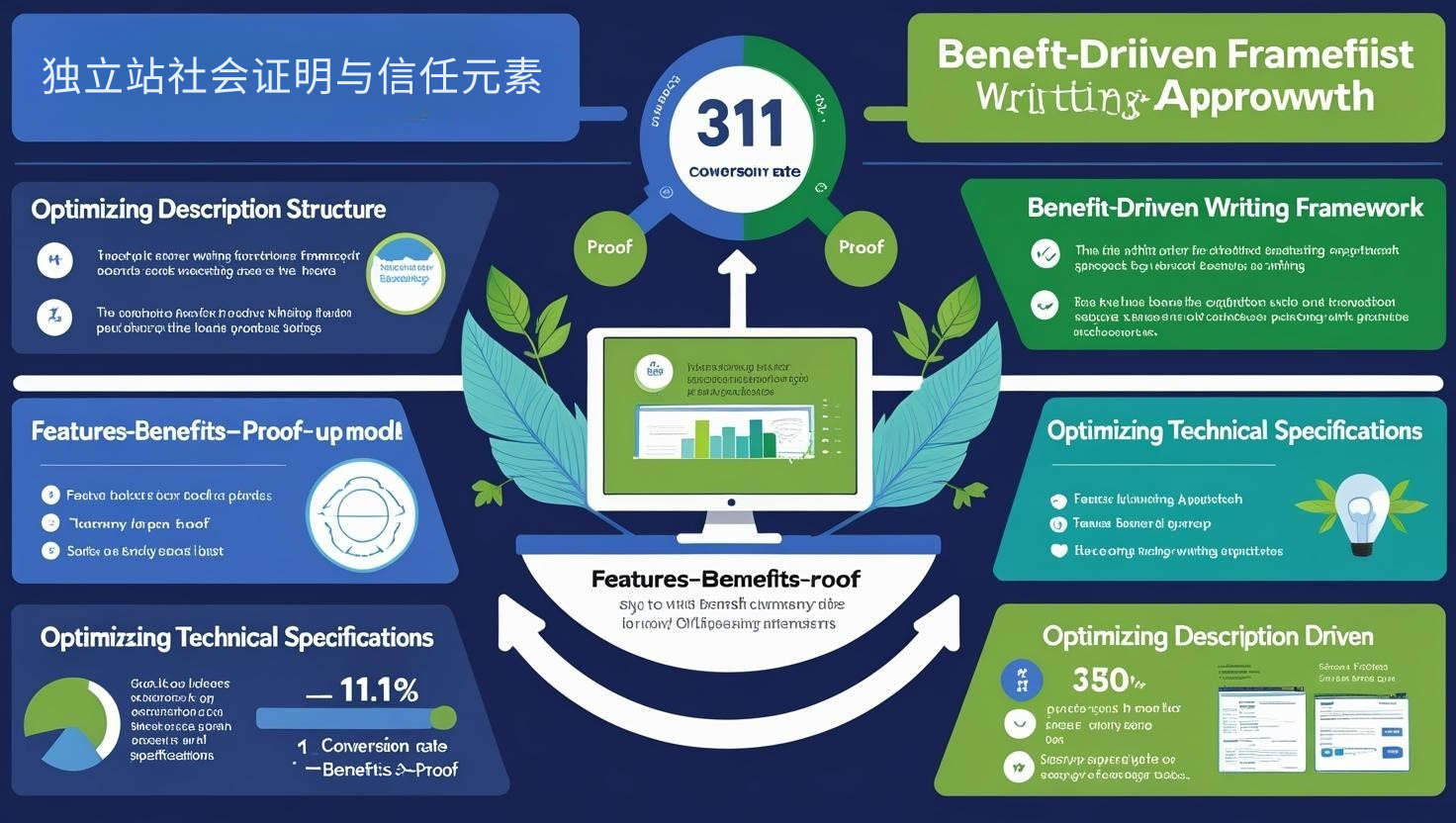
  1. Optimizing description structure:

    • Open with a benefit-oriented summary (30-50 words)
    • Use a scanner-friendly format (bullets, subheadings)
    • Use a layered information architecture (important information first)
    • Combining storytelling with technical specifications
  2. Benefit-driven writing framework:

    • Use the "Features-Benefits-Proof" model
    • Address potential concerns and objections
    • Customize content paragraphs for different buyer personas
    • Use specific numbers and comparisons ("30% lighter" instead of "lighter")
  3. Optimize technical specifications:

    • Use comparison tables to present different options
    • Visualize specifications (charts are better than numbers)
    • Add context (explain the meaning of specifications)
    • Offer downloadable detailed specifications for professional buyers

According to CXL's A/B testing research, pages that shifted product descriptions from a simple feature list to a "problem-solution" framework saw an average conversion rate increase of 31%. Remember, customers don't buy products; they buy the results they deliver.
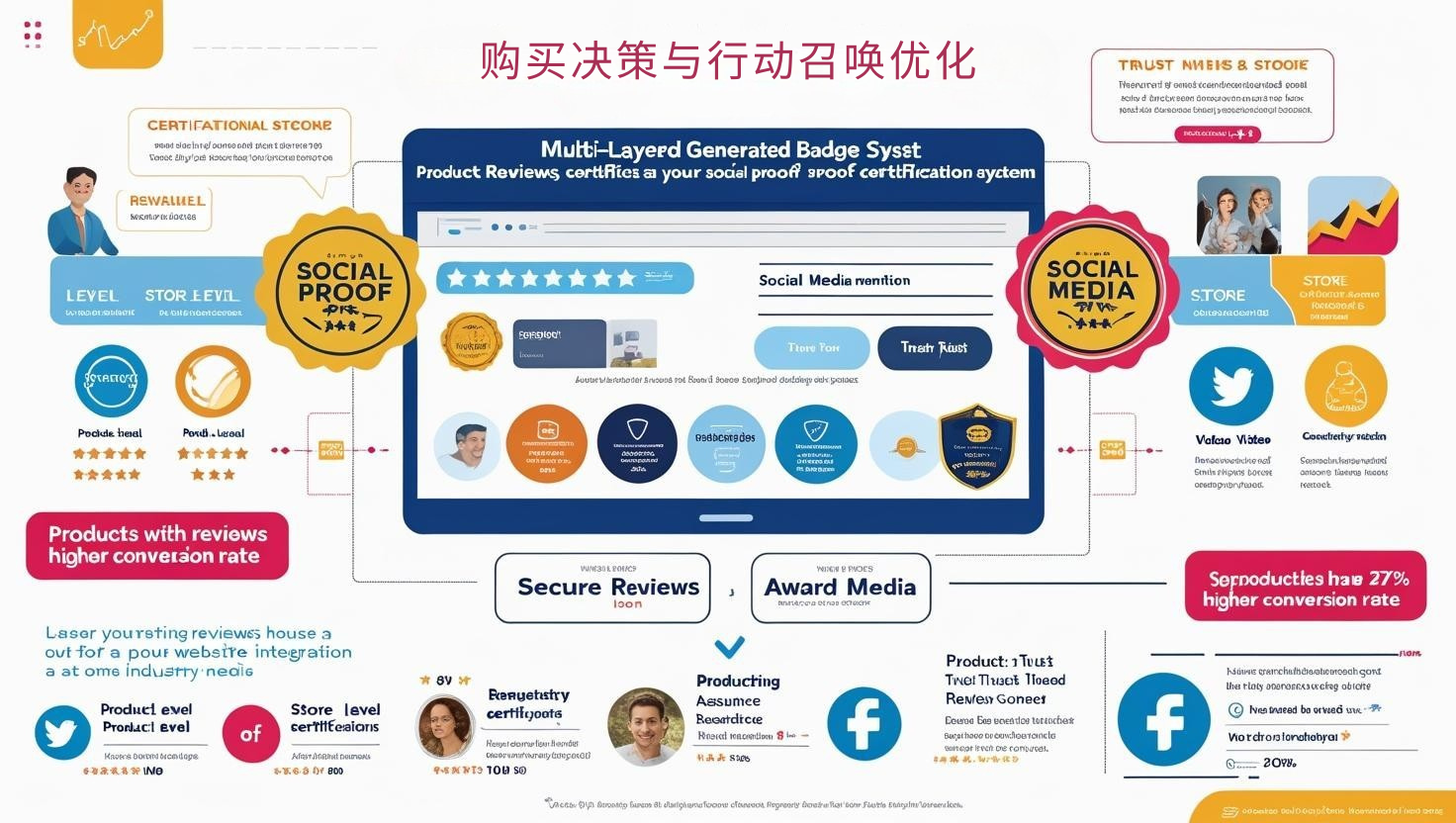
Social Proof and Trust Elements of Independent Websites

Social Proof and Trust Elements on Independent Websites

Reducing purchase risk is key to increasing conversion rates:

  1. Optimizing review and rating systems:

    • Implementing categorization filtering (by rating, date, and relevance)
    • Encouraging reviews with pictures (increasing authenticity)
    • Enabling Q&A functionality (addressing potential concerns)
    • Highlighting the most helpful reviews
  2. A multi-layered trust badge strategy:

    • Product-level certifications (quality assurance, testing)
    • Store-level trust seals (secure payment, privacy protection)
    • Industry recognition (awards, media coverage)
    • Expert endorsements and recommendations
  3. User-generated content integration:

    • Show product photos of actual users
    • Integrate social media reviews and mentions
    • Add video reviews and use cases
    • Show real-time purchase notifications ("Someone just bought...")

A study by the Spiegel Research Center shows that products with reviews have a 270% higher conversion rate than those without, and when a product has five reviews, the likelihood of purchase increases fourfold. Trust isn't automatic; it must be intentionally built through multiple elements of proof.
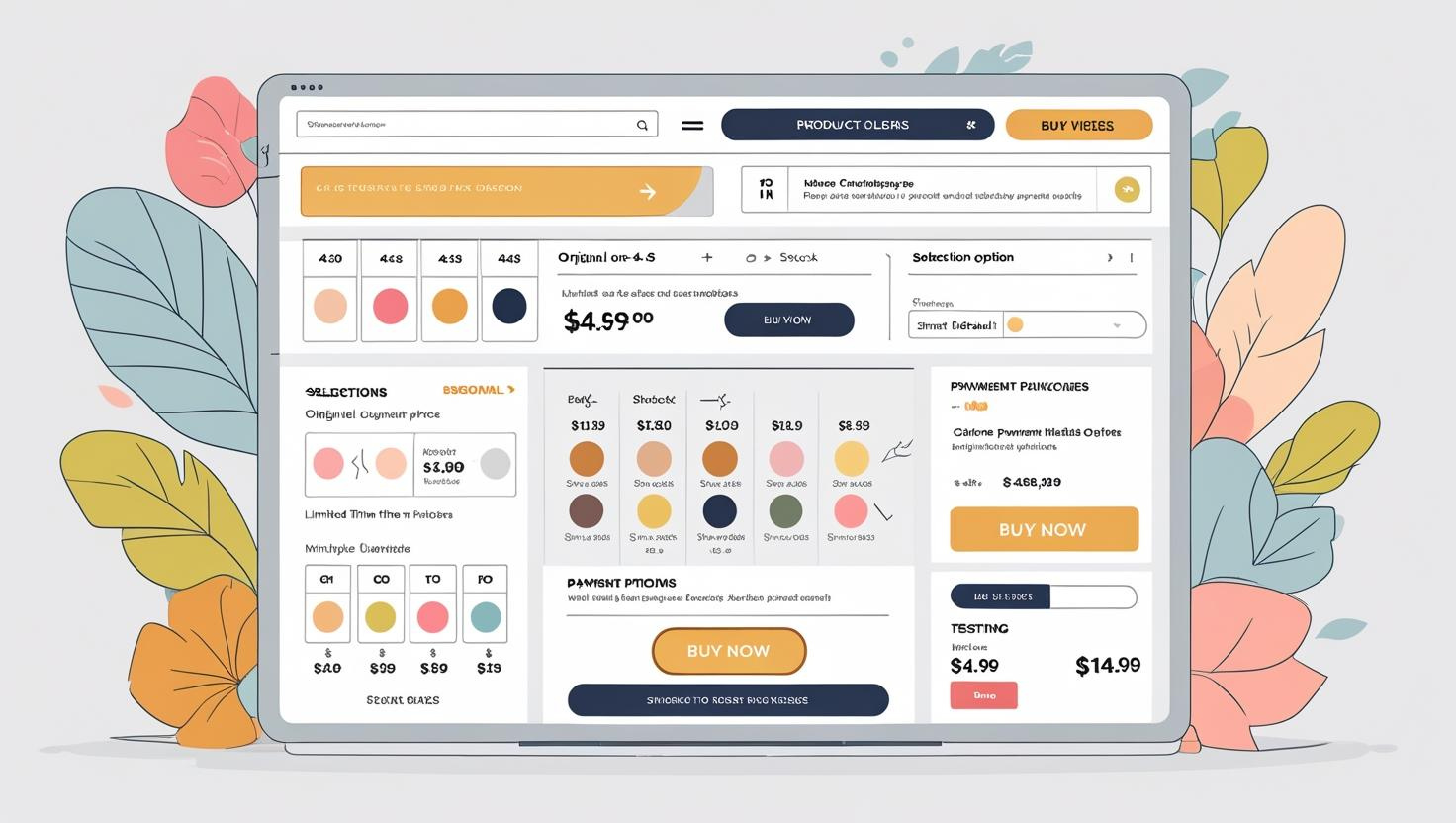
Purchase Decision and Call to Action Optimization

Purchase Decision and Call to Action Optimization

Simplifying the purchase process is key in the final step:

  1. Call to Action (CTA) Design:

    • Use high-contrast colors (visually distinct from other elements on the page)
    • Use action-oriented copy ("Buy Now" is better than "Submit")
    • Ensure the button is appropriately sized (minimum 44x44 pixels on mobile)
    • Add subtle animation to increase engagement
  2. Simplify purchase options:

      Limit variant options (no more than 4-5 per category)
    • Use visual selectors (color, material, size)
    • Implement smart defaults (most popular options)
    • Add selection guides to aid decision-making
  3. Display pricing and availability:

    • Clearly display discount calculations (original price vs. savings)
    • Implement scarcity cues (in-stock quantity, limited-time offers)
    • Offer flexible payment options (installments, multiple payment methods)
    • Prominently display shipping information and return policies

According to Baymard Institute research, 20% of shopping cart abandonment is due to a complex checkout process or insufficient information. Ensure a clear and seamless path to purchase, eliminating all potential friction points.

Product page optimization is a continuous process of testing and improvement, not a one-time project. Create an A/B testing plan to gradually test the impact of varying elements on conversion rates. Remember, the best product pages don't just showcase the product; they solve customer problems, build trust, and guide purchase decisions. By systematically optimizing the above elements, your product pages will become true conversion engines.

特色博客
From Static to Dynamic: How Interactive Content Boosts User Engagement

From Static to Dynamic: How Interactive Content Boosts User Engagement

This article provides an interaction design framework verified by 6,800 companies. Through dynamic parameter calculation, religious compliance adaptation, engineer collaboration tools and other solutions, it transforms traditional static pages into highly sticky marketing engines.

Voice search optimization: the next traffic outlet for foreign trade websites

Voice search optimization: the next traffic outlet for foreign trade websites

This article provides a voice search optimization framework verified by 6,800 companies, and seizes the entrance to the next generation of search traffic through solutions such as industrial terminology voice database, religious compliance Q&A, and dynamic situational feedback.

In addition to the PC version, is your foreign trade website ready for VR/AR experience?

In addition to the PC version, is your foreign trade website ready for VR/AR experience?

This article reveals the VR/AR application solutions verified by 7,200 companies, and solves the trust and experience pain points of traditional foreign trade exhibitions through innovations such as Yuanverse exhibition hall, digital twin inspection, and remote engineer collaboration.

Cross-border B2C foreign trade independent station GEO: C-side client ChatGPT search conversion optimization skills

Cross-border B2C foreign trade independent station GEO: C-side client ChatGPT search conversion optimization skills

This article focuses on GEO optimization of cross-border B2C foreign trade independent stations, and the core solution is "the conversion problem of C-end customers after searching through ChatGPT". The opening chapter points out the differences between B2C and B-side customers - C-side customers make decisions quickly and their needs are concrete, which leads to the core of GEO optimization being "search-to-conversion full-link matching". The text is divided into three parts: the first is the search and conversion logic of C-side customers in the ChatGPT environment (scenario-based questions, short decision-making links, and preference for real experiences); the second is the 4-dimensional core optimization skills (accurate keyword mining and layout, C-side friendly lightweight content creation, trust signal construction, short-path conversion optimization). Each skill is accompanied by cases and practical templates such as yoga clothes, home furnishings, etc.; the third is 5 pitfall avoidance guides (avoiding generic keywords, official content, fake reviews, etc.). The full text fits the B2C scenario, with zero code and high implementation, helping foreign traders to efficiently convert the exposure recommended by ChatGPT into orders.

GEO rapid ranking method for independent foreign trade stations: 7 days for brands to appear in ChatGPT target search term results

GEO rapid ranking method for independent foreign trade stations: 7 days for brands to appear in ChatGPT target search term results

This article focuses on the demand for fast 7-day ranking of GEO, an independent foreign trade station, and proposes a solution of "accurately focusing on core signals" to address the pain point of "slow optimization results" for foreign traders. The core content is divided into three parts: the first is the underlying logic of rapid ranking (ChatGPT prioritizes capturing precise keywords, incremental content, and multi-source linkage signals); the second is the 7-day implementation plan, which breaks down the tasks of "word mining and positioning, core page optimization, lightweight content creation, technology optimization, cross-channel traffic, active push, monitoring and fine-tuning" tasks on a daily basis. Each link is accompanied by tools, templates and camping light cases; the third is 5 pitfall avoidance guides (avoiding multiple keywords, plagiarism, neglecting video transcription, etc.). The full text has zero coding and low threshold, helping GEO novices to get their brands to appear in the ChatGPT target search term results within 7 days by focusing on 3 high-potential keywords and lightweight content.

Lightweight foreign trade independent station GEO content: How short videos + short copy can be efficiently captured by ChatGPT

Lightweight foreign trade independent station GEO content: How short videos + short copy can be efficiently captured by ChatGPT

This article focuses on the GEO content lightweight strategy for independent foreign trade websites, and proposes an efficient solution of "short video + short copywriting" in view of the pain points of foreign trade people who "lack the energy to make long content and have no professional editing ability". The core content is divided into three parts: the first is the logic of ChatGPT capturing lightweight content (information density priority, multi-modal signal linkage, scene-based matching requirements); the second is the 5-step implementation method (short video creation templates and tools, short copywriting formulas, independent station embedding positions, content optimization skills, cross-channel linkage and traffic); the third is 4 pitfall avoidance guides (avoiding valueless verification, vague expressions, lack of video transcription, and low update frequency). The full text provides scripts, copywriting templates and free tools that can be directly copied to help foreign trade companies achieve efficient crawling and accurate exposure of ChatGPT with low-threshold content.