

In the context of global competition, building a website for international trade requires not only aesthetically pleasing and comprehensive functionality, but also high access speed and conversion rates across different regions. The combination of React and Next.js is becoming a mainstream technical solution for independent international trade websites, with server-side rendering (SSR) offering significant advantages in SEO optimization and user experience. This article, drawing on research from leading institutions, provides an in-depth analysis of how to optimize international trade websites and accelerate global conversion rates using the React + Next.js architecture.
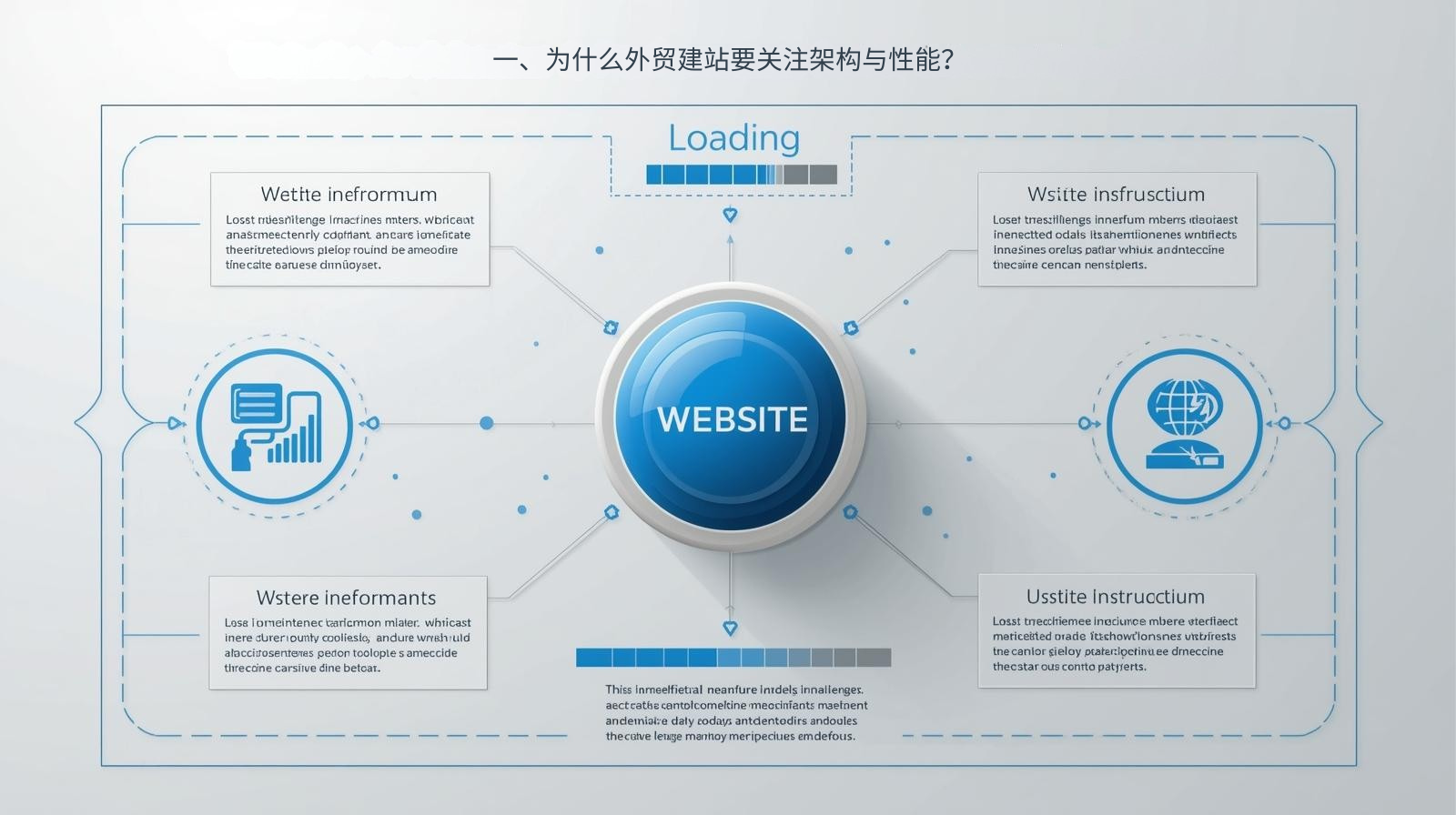
1. Why should we pay attention to architecture and performance when building a foreign trade website?
Traditional foreign trade websites are more at the stage of "being able to display products", but for modern buyers, access speed and interactive experience directly determine whether to leave an inquiry.
SEO level : Google Search Central clearly states that loading speed and mobile performance are important factors in search rankings.
User experience level : Research shows that if a page takes more than 3 seconds to load, more than 50% of users will choose to leave.
Globalization challenges : Differences in network environments across countries and regions require websites to have cross-regional performance optimization capabilities.
This means that the underlying architecture of a foreign trade website is not an option, but the key to success or failure.

2. Advantages of React + Next.js Architecture
In the construction of foreign trade websites, the combination of React and Next.js provides enterprises with a highly competitive architecture:
SSR improves SEO
Through server-side rendering, search engines can crawl page content faster and improve the inclusion and ranking of foreign trade websites.Dynamic content loading <br data-start="904" data-end="907">Supports multi-language and multi-currency switching, suitable for the personalized needs of multinational customers.
Performance optimization
Next.js has built-in code splitting and caching mechanisms to reduce page loading time and improve user experience.
Research by the China Academy of Information and Communications Technology (CAICT) shows that foreign trade websites that use SSR and modern front-end architecture have an average page loading speed increase of 40% and a conversion rate increase of more than 30%.
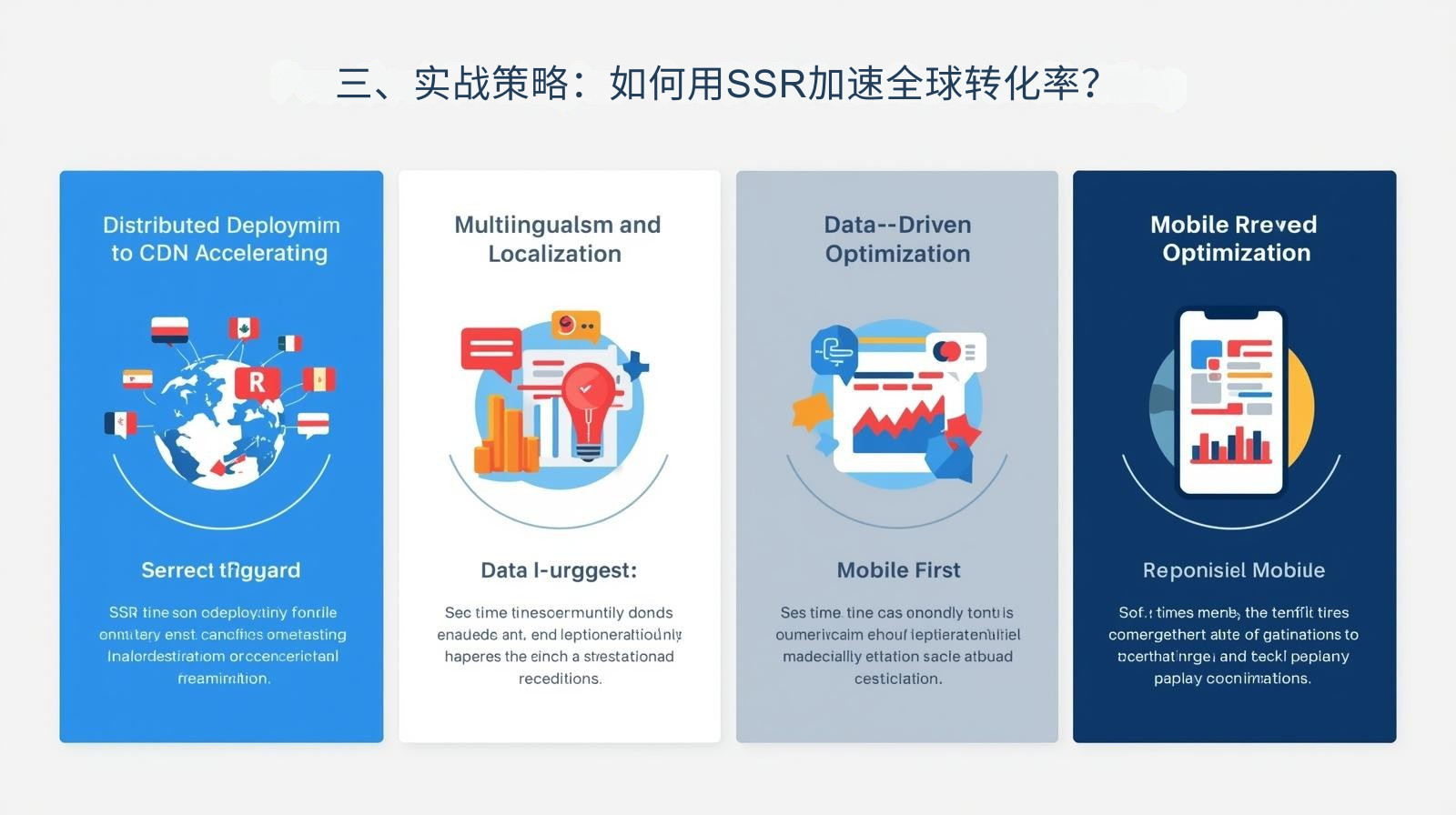
3. Practical Strategy: How to use SSR to accelerate global conversion rate?
Distributed deployment and CDN acceleration <br data-start="1140" data-end="1143">Combined with Next.js's static export and server-side rendering capabilities, the website can be deployed on global CDN nodes to shorten access latency.
Multilingualism and localization <br data-start="1205" data-end="1208">Use the component characteristics of React to quickly implement multilingual switching, and combine the SEO rules of foreign trade website construction to optimize Meta tags in different language versions.
Data-driven optimization <br data-start="1277" data-end="1280">Through tools such as Google Analytics and Baidu Statistics, we monitor the access status of users in different markets in real time and dynamically adjust the content and structure.
Mobile-first design
Data from Statista shows that more than 65% of foreign trade website visits come from mobile devices. SSR combined with responsive design ensures a smooth mobile access experience.

4. Implementation suggestions from foreign trade bosses
Choose an advanced architecture : Avoid traditional template-based website building and give priority to the React + Next.js combination.
Pay attention to performance indicators : regularly check indicators such as TTFB (time to first byte) and LCP (largest contentful paint).
Focus on customer experience : combine speed, interaction and content, rather than just focusing on appearance.
With the help of professional platforms : Utilize mature foreign trade website building platforms to achieve automated integration of SSR and SEO.
Research by the World Trade Organization (WTO) shows that in cross-border e-commerce, websites with technical optimization and localization capabilities are more likely to win the trust and long-term cooperation of international customers.
Recommended related articles: Foreign trade customer acquisition software + independent website: traffic conversion golden combination
Building a website for international trade is only the first step. Accelerating globalization through architectural optimization is key to a company's long-term customer acquisition. A React + Next.js SSR solution can not only improve SEO performance but also enhance global user experience, significantly boosting conversion rates. Combining research from Google , CAICT , Statista , and the WTO , we can see that international trade companies must treat website building as a long-term optimization project, not a one-time undertaking.
👉 If you're looking to quickly build a website for international trade that supports React + Next.js architecture, SSR optimization, multilingual localization, and SEO acceleration , we recommend trying the Pinshop platform . It can help business owners and international trade decision-makers transform their independent international trade websites into truly global customer acquisition engines.