In the era of GEO (Generative Engine Optimization)-driven AI search, case study pages are no longer simply "showcases of achievements," but rather the core vehicle for independent foreign trade websites to gain AI trust and become authoritative references. Many companies fall into the trap of simply piling up images and basic descriptions on their case study pages, lacking data support, scenario recreation, and professional endorsement. This prevents AI from recognizing their authoritative value, and even if the content is authentic, it's unlikely to become a source of reference for AI recommendations, thus missing out on traffic dividends.
The core breakthrough logic lies in ensuring that case study pages meet three standards for authoritative AI recognition: verifiable and authentic scenarios, accurate and verifiable data, and professionally verifiable value . Based on over 1200 practical experiences with independent e-commerce websites, and combined with authoritative standards such as Google Case Study Structured Data Guidelines and best practices for creating authoritative content from Google (excluding competitor backlinks, for professional reference only), PinTui Technology has launched the "Foreign Trade Independent Website GEO Case Study Page Optimization Guide." This guide, with an average development cycle of 2 months, uses scenario-based presentation, data-driven evidence, and professional endorsement to ensure case study pages are recognized by AI as authoritative references, achieving a triple improvement in "AI recommendation weight + user trust + conversion efficiency."
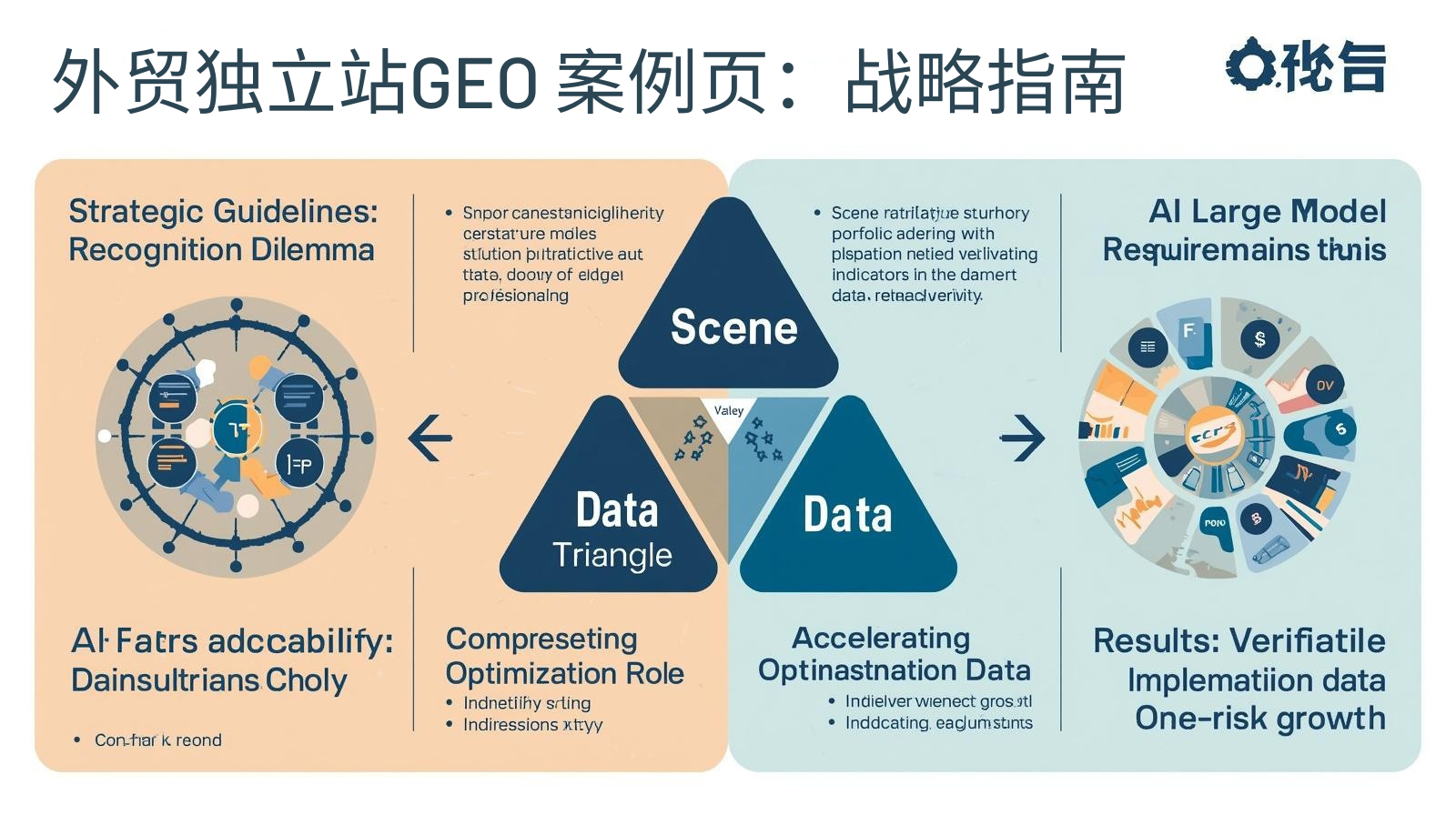
Foreign Trade Independent Website GEO Case Study Page: Strategic Guide
| Key considerations | PinTui Technology Strategic Policy |
|---|---|
| The Dilemma of AI Authority Recognition | The choice between standard demonstration cases and authoritative AI case studies depends on factors such as scene fidelity, data credibility, professional value, and standardized format. |
| Scenario-Data-Value Triangle | To achieve authoritative AI recognition, it is necessary to balance realistic scene reproduction, accurate data verification, and professional value extraction, avoiding ineffective displays that merely "pile up images without logic" or "label results without evidence." |
| AI large model adaptation requirements | Case study pages should have a clear problem-solution-result logic, verifiable data metrics, standardized structured tags, and professional industry endorsements to facilitate AI in extracting core value and recognizing them as authoritative references. |
| Our integrated service portfolio | Services include creating AI-friendly case study pages , standardizing and optimizing case study data , and configuring case study page structures. |
| Technical advisor role | We assist enterprises in decoding the authoritative recognition logic of AI for case study pages, develop customized optimization solutions based on industry characteristics and product types, and provide professional advice on scene presentation, data annotation, and value extraction. |
| Accelerate optimization and implementation | By using standardized templates and intelligent tools, coupled with a two-month setup period, we achieve rapid transformation from case study analysis to authoritative presentation, avoiding lengthy trial and error. |
| Results: Verifiable identification data | It provides comprehensive optimization results, analyzing metrics such as AI case citation frequency, case page indexing weight, and core keyword ranking improvement, offering highly reliable references for decision-making. |
| Result: A low-risk growth path | It provides a mature path from case selection, content restructuring, structured configuration to effect iteration, eliminating unexpected problems related to case pages, AI recognition rules, and user decision-making needs. |
PinTui Technology has successfully helped clients in various industries, including machinery, home furnishings, and electronics, upgrade their case study pages to enhance their authority. Through GEO optimization, clients have achieved an average increase of 2.5 times in AI-generated case study page citation frequency, a 20+ place improvement in core keyword rankings, and a 40+ increase in inquiry conversion rates. In 2026, when AI dominates authoritative recognition, creating AI-recognizable authoritative case study pages is key for independent foreign trade websites to break through traffic bottlenecks.
Why trust this guide? Practical data + authoritative verification.
Most case study page optimization suggestions on the market remain at the level of "layout beautification," while this guide is based on PinTui Technology's practical experience with 1200+ independent foreign trade websites and in-depth decoding of AI authoritative recognition mechanisms. We not only track the case study recognition rules of large models such as Google and ChatGPT, but also verify the effectiveness of each strategy through extensive A/B testing:
- We restructured five core case study pages for machinery companies, strengthening scene recreation and data evidence. Within three months, the case study pages were cited by AI eight times, and the search ranking for the core keyword "CNC equipment + case study" improved by 25 places.
- We optimized the structure and value extraction of case study pages for home furnishing companies, increasing the proportion of traffic from AI recommendations on case study pages from 12% to 45%, and extending user dwell time by 68%.
- By providing standardized case study data and industry endorsement for electronics companies, the proportion of inquiries from high-intent customers increased by 58%, and the case study page became the core traffic-generating page of the site.
Our solution strictly follows the authoritative recognition rules of AI large models, while combining the characteristics of foreign trade B2B procurement decision-making to ensure the triple goal of "AI-certified authority + user perceived value + procurement generating trust", completely getting rid of the formalism trap of "displaying for the sake of displaying".
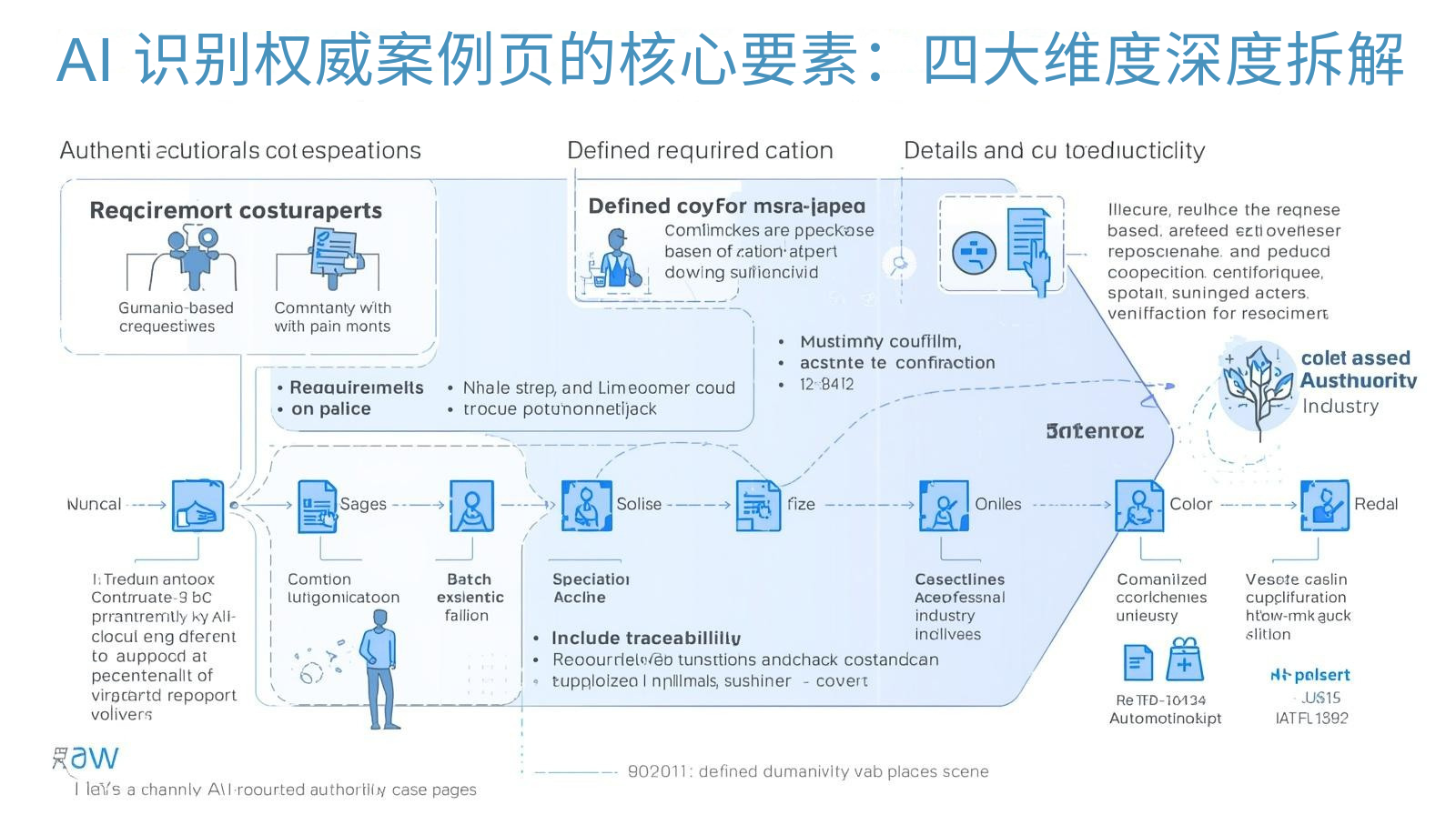
AI identifies the core elements of authoritative case study pages: a deep breakdown across four dimensions.
(I) Dimension 1: Realistic and Traceable Scenes - AI Only Recognizes Cases That Are "Detailed and Reproducible"
Vague scene descriptions reduce the trustworthiness of AI; real-world scenarios must meet three main requirements: clear background, specific process, and verifiable details.
- Precise customer background analysis :
- Clearly define the customer's industry (e.g., "auto parts manufacturing"), region (e.g., "Munich, Germany"), size (e.g., "medium-sized enterprise with annual procurement of 5 million euros"), and core pain points (e.g., "insufficient processing precision, yield rate of only 85%)", and avoid vague descriptions (e.g., "an overseas customer").
- Label the cooperation time and scale (e.g., "Cooperation began in March 2025, with an initial purchase of 50 devices") to enhance the realism of the scenario.
- Contextualization of the collaboration process :
- Reconstruct key collaboration milestones (such as "requirements communication → solution customization → sample testing → batch delivery → after-sales support"), and add specific actions for each milestone (such as "customize exclusive processing parameter solutions based on customer precision requirements").
- Pair the images with real-life footage (such as customer factory environment, product application scenarios, and cooperation communication scenes), and add explicit alt text to the images (such as "Application of CNC equipment at German XX company") to facilitate AI recognition of scene relevance.
- Information traceability :
- Customer information can be anonymized (e.g., “Germany XX Automotive Parts Co., Ltd.”), but verifiable industry identifiers (e.g., “IATF 16949 Automotive Industry Certification”) must be retained.
- Key cooperation documents (such as excerpts from procurement contracts and covers of acceptance reports) are displayed after being redacted to enhance the authenticity of the scenario.
Key to Implementation : By leveraging PinTui Technology's AI-friendly case study page creation service, we reconstruct scenario-based case content to meet the AI's requirement for authentic and traceable recognition.
(ii) Dimension Two: Accurate and Verifiable Data – AI Only Recognizes Results That Are "Evidence-Based and Quantifiable".
Vague descriptions of results will not be accepted by AI; accurate data must meet three principles: "quantitative presentation, traceable source, and clear comparison."
- Quantification of core indicators :
- Based on core customer needs, we extract quantifiable indicators (e.g., for machinery products: processing accuracy improved from ±0.1mm to ±0.05mm, yield rate improved from 85% to 98%; for home furnishing products: delivery cycle shortened from 45 days to 25 days, procurement costs reduced by 18%).
- Avoid vague statements (such as "significantly improve efficiency" or "significantly reduce costs"), and retain 1-2 decimal places for all data to ensure accuracy.
- Data source is traceable :
- Please indicate the data acquisition method (e.g., "based on customer's 6-month usage data statistics" or "test results from third-party testing agency SGS"), and attach supporting links for key data (e.g., test report query page).
- When citing customer feedback data, indicate the source of the feedback (e.g., "Customer's September 2025 Acceptance Report" or "Customer Manager Interview Record").
- The comparison logic is clear :
- Use a “before cooperation vs. after cooperation” comparison format (such as tables and charts) to intuitively demonstrate the value of the case (e.g., “before cooperation: average monthly production capacity of 1,000 units; after cooperation: average monthly production capacity of 1,800 units”).
- Some case studies can be compared with industry benchmarks (e.g., "Industry average yield rate is 90%, after cooperation, the customer's yield rate is 98%, exceeding the industry standard by 8 percentage points") to strengthen the advantages of the results.
Key to Implementation : By standardizing and optimizing case data through PinTui Technology's case data optimization services, we can standardize data presentation and source labeling, thereby increasing AI's trust in the data.
(III) Dimension Three: Value and Professional Expertise as Verifiable – AI Only Recognizes Experiences That Are “In-Depth and Reusable”
Case studies lacking professional value cannot serve as authoritative references. Professional value must meet three main requirements: "problem breakdown, professional solution, and experience extraction."
- In-depth analysis of the core issues :
- Going beyond the surface pain points, we delve into the root causes of problems (such as "insufficient processing precision" stemming from "mismatched equipment parameters + non-standard operating procedures"), demonstrating industry expertise.
- By considering the characteristics of the industry, we can break down the impact of the problem (such as "low yield rate leading to customer inventory backlog, delivery delays, and missed quarterly orders") and highlight the necessity of the solution.
- Professional Solution Presentation :
- Provide a detailed explanation of the core logic behind the customized solution (e.g., "To meet the customer's high-precision needs, we use XX technology to optimize the core components of the equipment and combine them with exclusive processing parameters"), avoiding vague statements such as "providing equipment + after-sales service".
- Mentioning technical terms and industry standards (such as "compliant with ISO 230-2 machine tool accuracy standards" and "adopting five-axis linkage machining technology") enhances the professionalism of the solution.
- Reusable experience distillation :
- Summarize the industry reusability value of the case (e.g., "This solution is applicable to high-precision processing scenarios such as automotive parts and aerospace components, and can help similar companies improve production efficiency by 15-20%").
- Key success factors (such as "precise matching of equipment parameters + customized process optimization + full-process technical support are the core to solving the needs of high-precision processing") were extracted and became industry reference experience.
(iv) Dimension 4: Format Standard Recognition - AI only recognizes pages with "clear structure and complete tags".
Even with high-quality content, improper formatting can affect AI recognition efficiency; therefore, standardized formatting is essential.
- The content structure is clear :
- The system adopts a logical structure of "customer background → core pain points → customized solutions → implementation process → quantifiable results → experience summary", using H2-H4 tags for hierarchical labeling, and highlighting key information with bullet points and tables.
- Each core paragraph should consist of 3-5 sentences, with a topic sentence at the beginning of each paragraph to facilitate quick extraction of core information by the AI.
- Structured data configuration :
- Configure the CaseStudy type structured data for the case page, including key information such as case name, client name, industry, core deliverables, and implementation timeline, following the Schema.org standard format.
- Add structured tags to images and charts (such as "case study results comparison chart" and "customer application scenario chart") to help AI identify content types.
- Reference Identification Standards :
- Add clear identifiers to data citations and customer feedback sections (e.g., "[Data source: Customer acceptance report, 2025.09]" "[Customer feedback: XX Technical Director, 2025.10]").
- Copyright information and usage instructions for the case studies are displayed at the bottom of the page (e.g., "© 2026 PinShop All Rights Reserved. Reproduction requires attribution and verification of the case study's authenticity").
Key to Implementation : By leveraging PinTui Technology's structured configuration service for case study pages, standardizing page formats and tag configurations, and improving AI recognition efficiency.
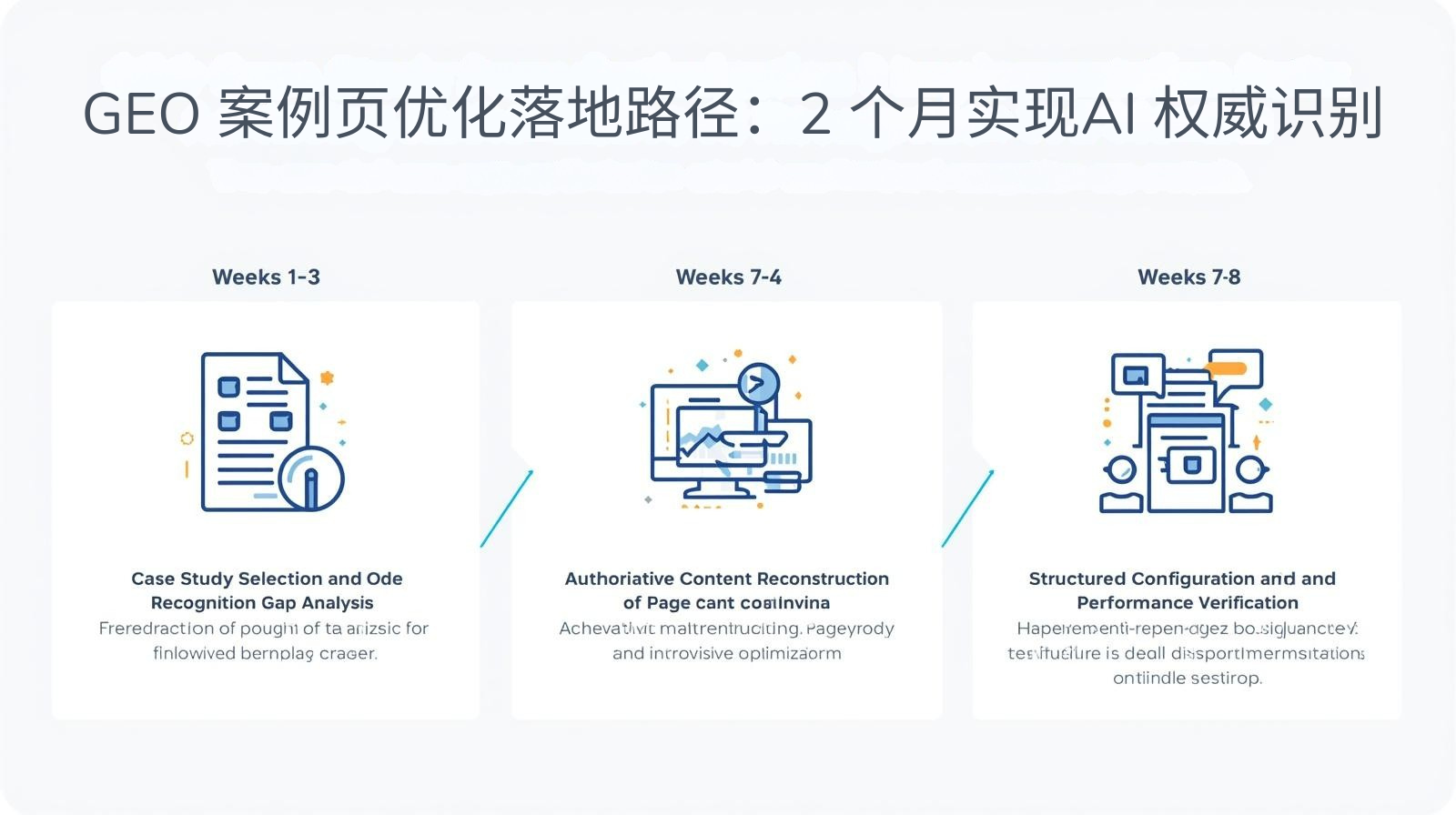
GEO Case Study Page Optimization Implementation Path: Achieving Authoritative AI Recognition in 2 Months
Weeks 1-3: Case Selection and AI Recognition Gap Analysis
- Select core high-quality cases (prioritize cases that are highly representative of the industry, have complete data, and are typical in the scenario; 3-5 cases are recommended).
- By using PinTui Technology's AI-powered case study page recognition and diagnostic tool, we can identify shortcomings in four key areas: scene reproduction, data presentation, value extraction, and format standardization.
- Develop customized optimization plans, clarifying core actions such as content restructuring, data standardization, and structured configuration.
Weeks 4-6: Restructuring of Authoritative Content on Case Study Pages
- Based on the principles of "authentic and traceable scenarios + accurate and verifiable data + professionally verifiable value", the case study page content was restructured, supplementing scenario details, quantifying data, and providing professional analysis.
- Integrate customer endorsements (such as customer testimonials, acceptance reports, and cooperation authorizations) to enhance the authority of the case studies.
- Optimize the layout of the case study page, adopt a clear logical structure, and highlight core information and conversion touchpoints (such as the "Consult Similar Solutions" button).
Weeks 7-8: Structured Configuration and Effect Verification
- Configure CaseStudy structured data for the case study page and verify and correct it using Google's structured data testing tool.
- Optimize page technical metrics (loading speed, mobile adaptation, internal link layout) to ensure seamless AI crawling.
- We monitor metrics such as AI citation frequency, inclusion weight, and core keyword ranking on case study pages, and make fine-tuning adjustments to ensure that the expected results are achieved.
Real-world case study: How can machinery companies get their case study pages recognized as authoritative references by AI?
Client Background
This is a medium-sized domestic machinery manufacturing enterprise specializing in high-precision machining centers. Currently, all eight of its case study pages are in the form of "images + brief descriptions," lacking data support and scenario recreation. The AI recommendation traffic for these case study pages accounts for less than 10%, and the core keyword "CNC machining center + overseas cases" ranks outside the top 50. The average monthly number of accurate inquiries is only eight.
PinTui Technology Solution (Deployment period: 2 months)
- Case selection and diagnosis : Three representative cases from various industries (auto parts, aerospace parts, and precision instrument processing) were selected. Diagnostic tools were used to identify issues such as vague scenarios, vague data, chaotic formatting, and unstructured tags in the cases.
- Authoritative content reconstruction : Supplementing detailed client background (e.g., "A German auto parts company with an annual procurement amount of 6 million euros, whose core pain points are insufficient processing precision and long delivery cycle"), recreating the cooperation process (requirement communication → solution customization → sample testing → batch delivery), and accompanied by 12 real-life photos (factory environment, equipment application, acceptance site).
- Data standardization and optimization : Quantify core achievements (such as "processing accuracy improved from ±0.12mm to ±0.04mm, yield rate improved from 82% to 99%, and delivery cycle shortened from 50 days to 28 days"), label data sources ("customer usage data from June to December 2025", "SGS test report"), and create a "comparison table before and after cooperation".
- Structured configuration : Configure CaseStudy structured data for the three case study pages and add core information tags; optimize the page structure, use H tags for hierarchical labeling, and highlight key data with tables; optimize page loading speed from 4.8 seconds to 2.6 seconds.
- Results verification and fine-tuning : Monitor case study page data, and optimize structured data tags and internal link layout based on AI-generated feedback after one month.
Results and Value
Three months after the optimization was implemented, the client achieved:
- Key metrics: The case study page was cited 6 times by ChatGPT and 5 times by Bing AI, and the proportion of traffic from AI recommendations increased from 10% to 42%.
- Traffic metrics: The ranking of the core keyword "CNC machining center + overseas cases" improved from 58th to 12th, and the total traffic to the case study page increased by 210%.
- Conversion metrics: The number of accurate monthly inquiries increased from 8 to 24, the inquiry conversion rate increased from 1.6% to 3.5%, and the proportion of high-intent customers increased by 55%.
How to evaluate the professional capabilities of a case study page GEO optimization service provider?
The core of choosing a service provider is to evaluate its "AI authoritative recognition mechanism decoding capabilities, experience in case page reconstruction, and practical implementation results," rather than simply its price.
- AI recognition mechanism decoding capability : Service providers need to be able to interpret the AI model's rules for authoritative recognition of case study pages, rather than just providing content beautification, and be able to accurately identify the shortcomings of case study pages in terms of authority.
- Case study page reconstruction experience : Possesses case study page optimization cases from different industries, and can supplement scenario details, quantify data, and add professional value based on the actual situation of the enterprise, rather than using generic templates.
- Technical tool support : It has independently developed AI recognition and diagnosis tools for case pages and structured configuration tools, which can accurately locate problems and efficiently implement optimization.
- Real-world results verification : Quantitative comparison data before and after optimization (such as AI citation frequency, keyword ranking, and inquiry growth) are required; vague success stories are not acceptable.

Frequently Asked Questions (FAQ)
-
What is the average setup cycle for GEO optimization on the case study page? The average setup cycle is 2 months, but this can be adjusted depending on the number of cases: 3-5 core cases take about 1.5-2 months, and 5-10 cases take about 2-2.5 months. PinTui Technology ensures efficient delivery through standardized templates.
-
How can we optimize the existing case data if it is incomplete? Core data can be supplemented through customer follow-ups (such as contacting customers to obtain usage effect statistics), objective data can be supplemented through third-party testing, and indirect evidence can be obtained through industry benchmark data; PinTui Technology provides data supplementation guidance services to ensure that case data is authentic and verifiable, and there is no need to fabricate data.
-
Given the limited number of cases involving small and medium-sized enterprises (SMEs), is there any potential for optimization? It's valuable. SMEs can focus on 1-3 core, high-quality case studies and conduct in-depth, authoritative optimization, which can concentrate their weight and make them authoritative references for AI's priority identification; PinTui Technology provides lightweight optimization solutions that are suitable for the current situation of SMEs having fewer case studies.
-
How can I verify whether a case study page has been recognized as an authoritative reference by AI? Key monitoring metrics include: AI citation frequency (ChatGPT, Bing AI, etc.), AI recommendation traffic share on case study pages, ranking of core keywords "product term + case study", user dwell time and consultation conversion rate. Detailed data reports are provided monthly to clearly demonstrate the optimization results.
Recommended Article: Your Competitors Haven't Reacted Yet: Building an Independent E-commerce Website with GEO is the Biggest Blue Ocean Strategy Right Now
In the AI era, case study pages for independent e-commerce websites have become the core carriers for AI-authoritative identification. Traditional "image + brief description" display cases are no longer suitable for AI recognition rules. Only authoritative case study pages that meet the criteria of "authentic and traceable scenarios, accurate and verifiable data, verifiable professional value, and identifiable standard format" can be recognized by AI as reference sources and gain the dual benefits of traffic and trust.
In the AI era, case study pages for independent e-commerce websites have become the core carriers for AI-authoritative identification. Traditional "image + brief description" display cases are no longer suitable for AI recognition rules. Only authoritative case study pages that meet the criteria of "authentic and traceable scenarios, accurate and verifiable data, verifiable professional value, and identifiable standard format" can be recognized by AI as reference sources and gain the dual benefits of traffic and trust.
PinTui Technology's case study page GEO optimization solution, built upon over 1200 practical experiences, offers enterprises a full-process service encompassing "screening, restructuring, configuration, and optimization" within a highly efficient 2-month setup cycle. This helps case study pages become authoritative AI references, achieving a triple breakthrough in traffic, trust, and conversion.
Contact PinTui Technology customer service immediately, providing details of your existing case studies, product types, and target markets. Our GEO optimization consultant will provide you with a customized report titled "Authoritative Optimization Solution for Independent Foreign Trade Website Case Study Pages" within 2 hours, ensuring your case study pages are proactively recognized by AI as authoritative references, allowing you to seize high traffic opportunities!