
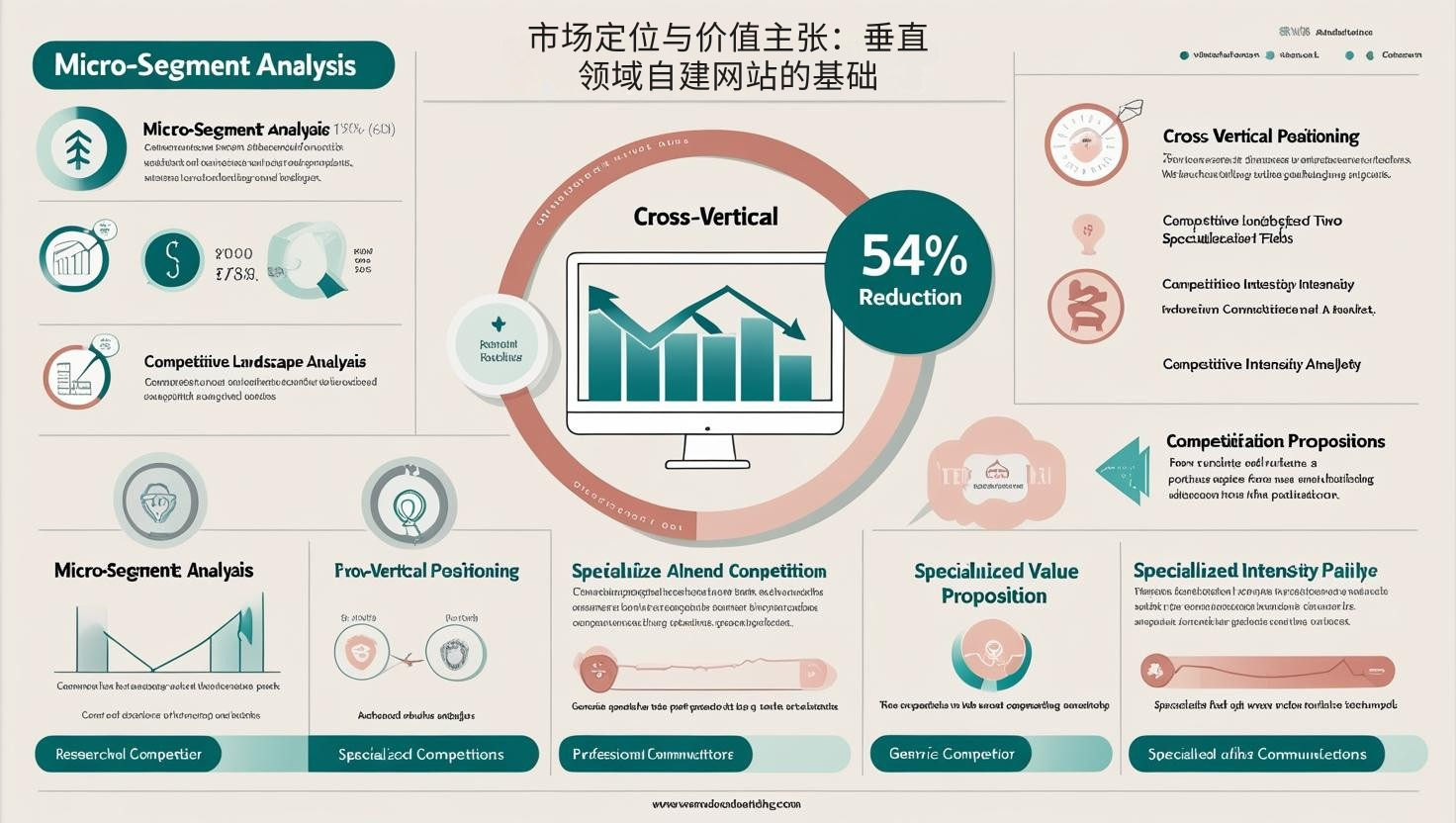
 Market Positioning and Value Proposition: The Foundation of Building Your Own Vertical Website
Market positioning determines the competitive landscape. According to Harvard Business Review research, companies with clear niche positioning can gain up to 63% market share in their target sectors, far exceeding their competitors with vaguer positioning.
Discover and capture vertical niches
-
Micro-segment analysis and selection: Research overlooked niche needs and pain points within the mainstream market; analyze deep needs and niche opportunities within specialized fields; assess the competitive landscape and market entry barriers; examine the growth trends and lifecycle of target segments; assess the balance between market size and profitability; research the professional backgrounds and specific needs of target users; and pay special attention to the differences in vertical markets across different regions globally. A highly effective strategy is "cross-vertical positioning," establishing a position at the intersection of two or more specialized fields. Forrester research shows that this strategy can reduce competitive intensity by approximately 54% while increasing differentiation.
-
Professional Value Proposition and Competitive Differentiation: Create a core value proposition that addresses the pain points of specific professional groups; develop emotional and identity-building value that goes beyond functionality; analyze and amplify key differences from generic competitors; consider professional qualifications and technical background as differentiating factors; research the target user's professional language and communication style; design a brand personality that deeply aligns with the target market; and pay special attention to cross-cultural differences in the expression of professional value. Research shows that value propositions based on deep professional insights increase initial trust by approximately 47% and conversion rates by 31% compared to general promises.
-
Professional Brand Positioning and Visual Expression: Create a brand identity and visual system that reflects the depth of professional expertise; develop a design language that resonates with the target professional field; consider industry-specific visual conventions and trust symbols; research the unique application of color psychology in professional environments; design user interface elements that reinforce professional authority; establish a visual rhythm and information density that aligns with industry expectations; and pay special attention to the differences in how professional visual expressions are interpreted across different cultural backgrounds. One practical strategy is a "visual authority signal" system, which reinforces professional credibility through design elements. Research shows that this approach can increase first-time visitor trust by approximately 38%.
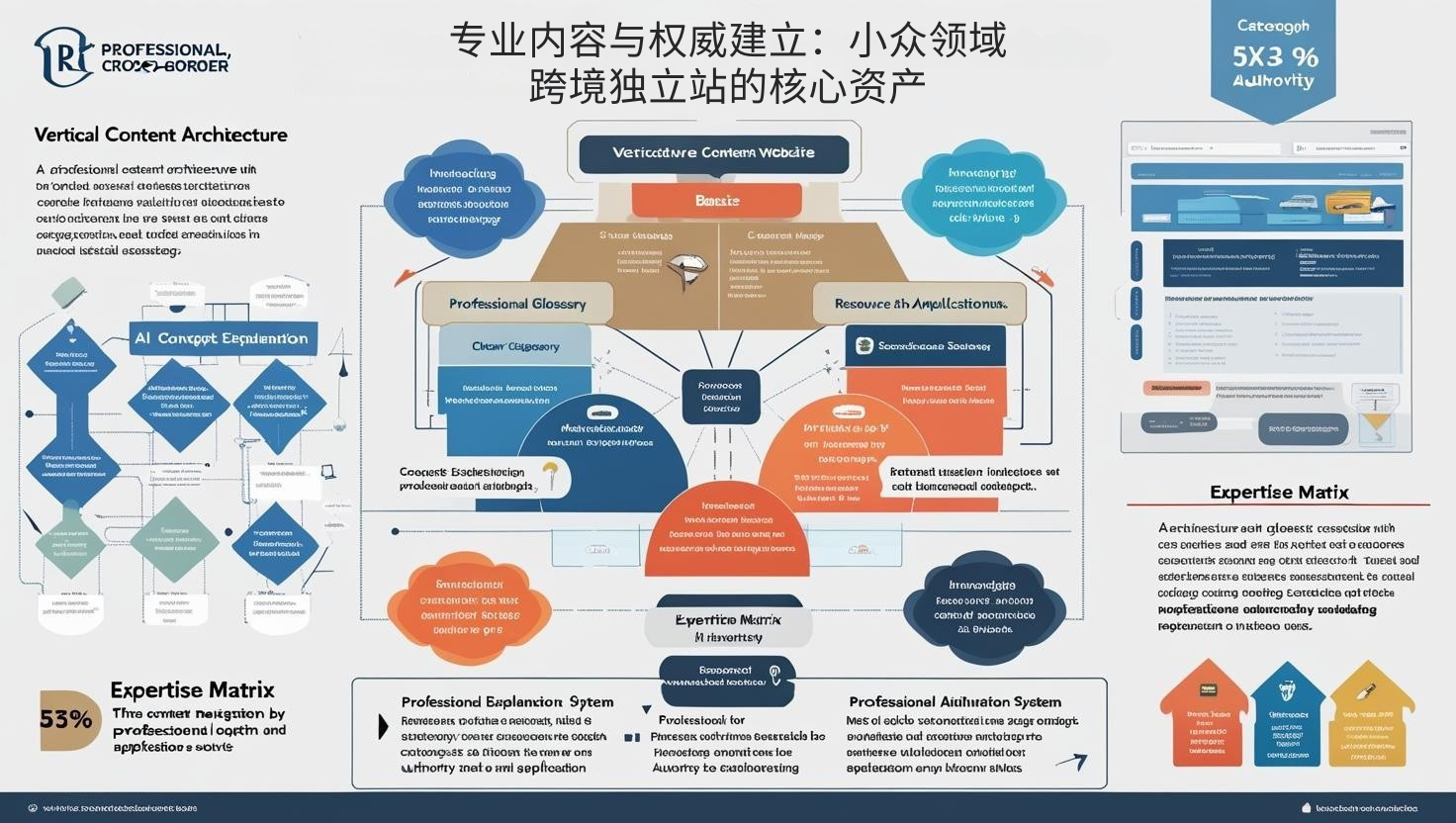 Professional Content and Authority Building: The Core Assets of Niche Cross-Border Independent Websites
Content depth determines professional authority. According to research by the Content Marketing Institute, in-depth content in specialized verticals receives an average of 4.3 times more engagement and 7.8 times more sharing than general content.
Building an irreplaceable professional content system
-
Vertical content architecture design: Create content categories and topic maps that reflect professional depth; develop a knowledge hierarchy from basic to cutting-edge; design a professional glossary and concept explanation system; create practical tools and resource libraries to enhance practical value; consider the content needs of users at different professional levels; develop case studies and in-depth analysis of real-world applications; and pay special attention to the discoverability and organizational logic of professional content. An effective architecture is a "professional knowledge matrix," which categorizes content by professional depth and application scenarios. Research shows that this structure can increase a website's authority by approximately 53% while also optimizing the user navigation experience.
-
Expert Content Creation and Presentation Strategy: Develop core content assets that demonstrate deep expertise; establish leadership through original research and data analysis; design quality assurance processes for professional detail and technical accuracy; consider the complementary nature of different content formats (articles, videos, and infographics); research narrative styles and information density tailored to specialized audiences; develop strategies for visualizing and simplifying technical concepts; and pay special attention to accurately translating professional terminology across multiple languages. A differentiated strategy is a "deep + accessible" content model, which maintains professional depth while improving comprehensibility. Research shows that this approach can increase content impact by approximately 61% while expanding the audience reach.
-
Expert Status and Trust Building: Demonstrate the team's professional qualifications, experience, and industry certifications; create collaborative content and endorsements with industry influencers; develop detailed product technical documentation and user guides; consider transparently displaying the source of expertise and research methods; explore a balance between professional terminology and plain language; design a content update frequency that reflects the depth of expertise; and pay special attention to cultural differences in trust in professional credentials. Research shows that websites that systematically display professional credentials receive an average of 74% higher initial trust and 43% lower bounce rates than websites that simply claim expertise.
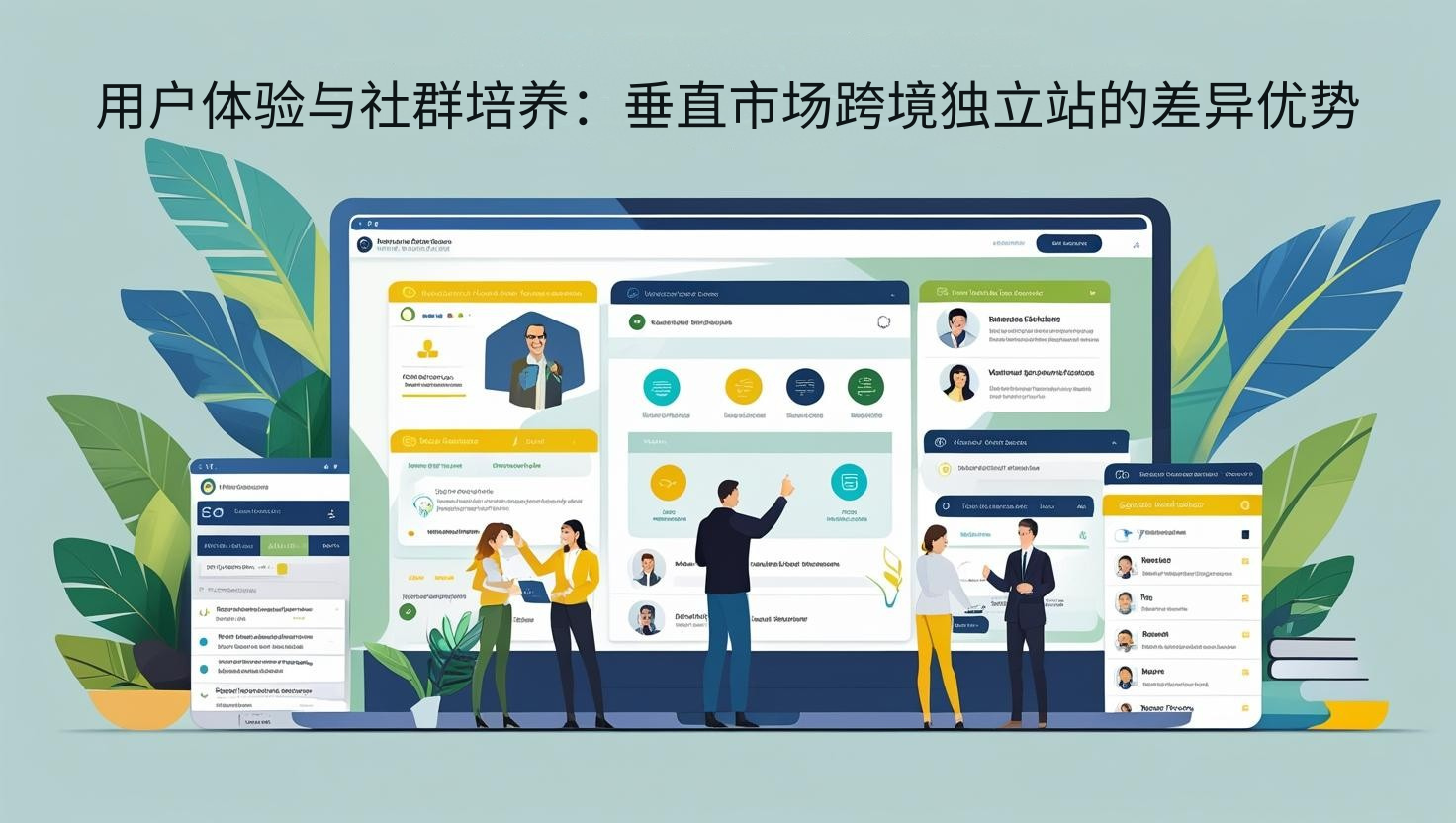 User Experience and Community Cultivation: The Differentiated Advantages of Vertical Market Cross-Border Independent Websites
User experience determines professional recognition. According to research by UX Magazine, user experiences tailored to specific domains average 58% higher engagement and 45% higher customer retention than generic designs.
Creating Professional User Experiences and Active Communities
-
Vertical User Experience Design: Create interface designs optimized for professional user workflows; develop professional tools and features that go beyond simple presentation; design interaction patterns that suit the target user's professional habits; consider the balance between professional efficiency and learning curves; research device usage scenarios and needs in professional environments; create visual and interactive elements that reinforce professional identity; and pay special attention to the differences in professional user habits across different cultural backgrounds. A practical strategy is "professional scenario mapping," which designs features based on actual user work scenarios. Research shows that this approach can increase user satisfaction by approximately 49% and significantly enhance professional identity.
-
Professional Community Building and Interaction Strategies: Create community features and content that attract core professional users; develop interactive mechanisms for expert Q&A and knowledge sharing; design incentive systems for professional discussions and case studies; consider strategies for integrating online and offline professional activities; research contribution paths for professional users at different levels; create community mechanisms for professional certification and skills demonstration; and pay special attention to the cultural characteristics of professional communities in different regions around the world. Research shows that vertical websites with active professional communities experience an average of 67% higher return visit rates and 83% longer user lifetime value than pure content websites.
-
Professional Customer Relationships and Trust Building: Design customer communication processes that demonstrate deep expertise; develop a service system for technical consulting and professional support; create value-added services for professional training and capacity building; consider a cycle of sharing customer success stories and results; explore strategies for maintaining and developing long-term professional relationships; design core conversations that prioritize professional value over price; and pay special attention to building professional trust across different cultural backgrounds. A highly effective approach is the "Proof of Value Loop," which builds long-term trust by consistently demonstrating professional value. Research shows that this approach can increase customer lifetime value by approximately 58% while significantly reducing price sensitivity.
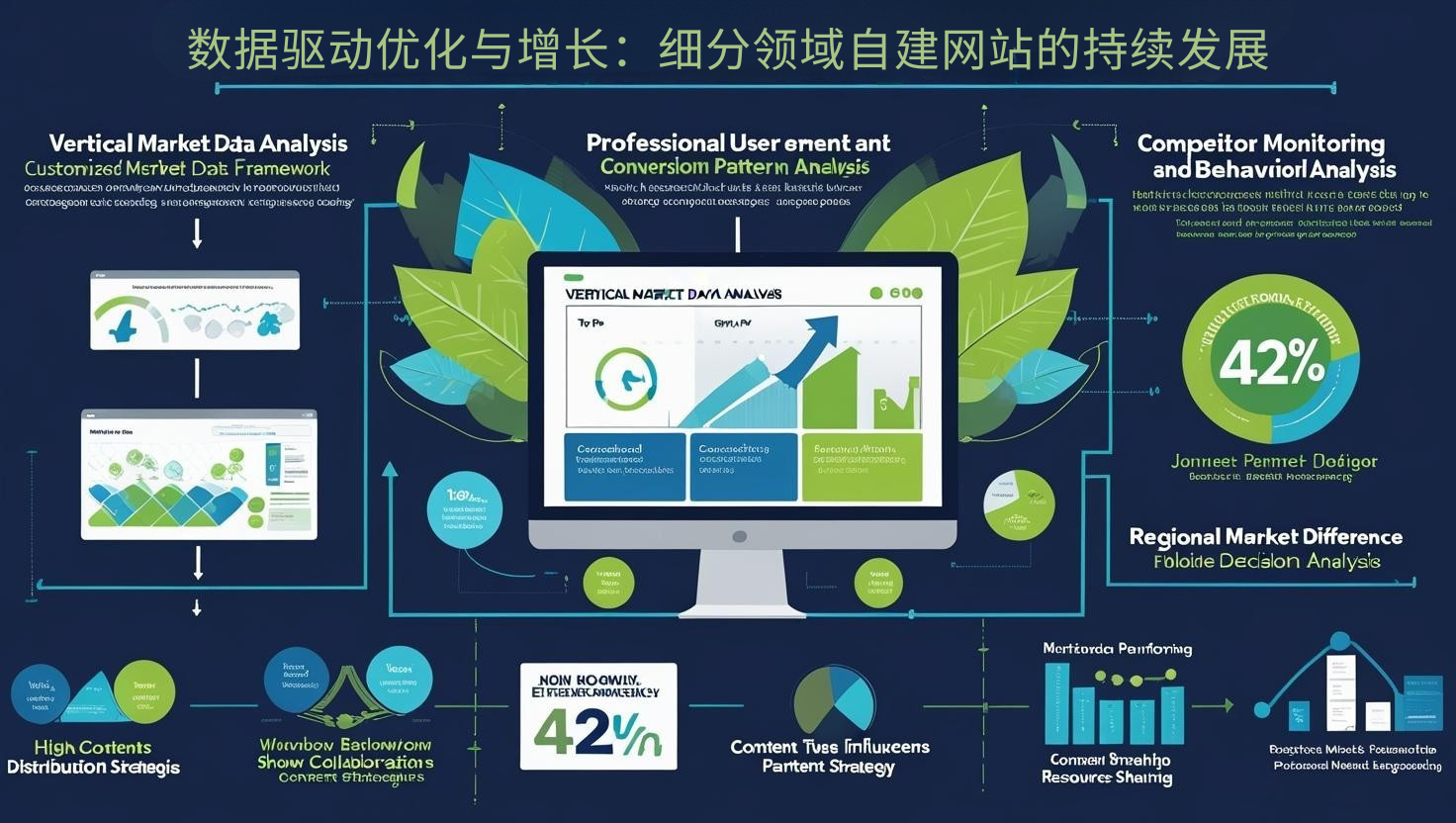 Data-Driven Optimization and Growth: The Sustainable Development of Self-Built Websites in Niche Markets
Data optimization determines long-term success. According to research by the Aberdeen Group, data-driven vertical-specific websites achieve an average of 43% higher annual growth and 61% higher customer retention rates than their intuitive competitors.
Building an Optimized Growth System for the Professional Market
-
Vertical Market Data Analysis Framework: Create customized analytical metrics for professional user behavior; develop methods to track engagement and penetration of professional content; design a mapping of professional conversion paths and decision-making processes; consider attribution models for long-term professional decision-making; research professional user segmentation and behavioral pattern analysis; establish a system for monitoring competitors and market trends; and pay special attention to data differences between professional markets in different regions. An advanced approach, "Professional Decision Analysis," tracks professional users' research and evaluation paths. Research shows that this in-depth analysis can increase marketing efficiency by approximately 42% while also optimizing content strategy.
-
Growth Strategy and Channel Optimization: Identify high-performing professional channels and communities within verticals; develop content distribution and promotion strategies for professional audiences; design a collaboration framework for professional influencers and opinion leaders; consider integrated marketing at professional exhibitions and industry events; research content partnerships with professional media and publications; develop a strategy for sharing professional resources and tools; and pay special attention to the differentiated characteristics of professional channels in different markets. Research shows that marketing strategies focused on specialized vertical channels achieve an average 3.7 times the return on investment and 52% lower customer acquisition costs than broad marketing.
-
Iterative Product and Service Optimization: Establish a product improvement cycle based on professional user feedback; develop a system for early identification of changes in professional needs; design a professional testing process for new features and services; consider product adaptation strategies for different professional market segments; research collaborative planning between professional trends and product development; establish a collaborative mechanism for user participation in product development; and pay special attention to the evolving differences in professional needs across different regions of the world. A core strategy is the "professional co-creation model," which engages core users in the product development process. Research shows that this approach can increase product-market fit by approximately 56% and significantly enhance user loyalty.
With increasingly fierce global e-commerce competition, vertical specialization has become a key differentiation strategy for small and medium-sized foreign trade companies. Through precise market positioning, in-depth professional content creation, customized user experience design, and continuous data-driven optimization, companies can establish genuine market authority and brand barriers in niche verticals, avoid direct competition with large platforms, and achieve sustainable business growth. The key lies in truly understanding and deeply serving the target professional groups, permeating professionalism into every aspect of the business—from products to content, from experience to service—to establish comprehensive professional authority.
Related article recommendations: https://pinshop.cn/zh-Hans/blog/what-is-independent-site-for-business