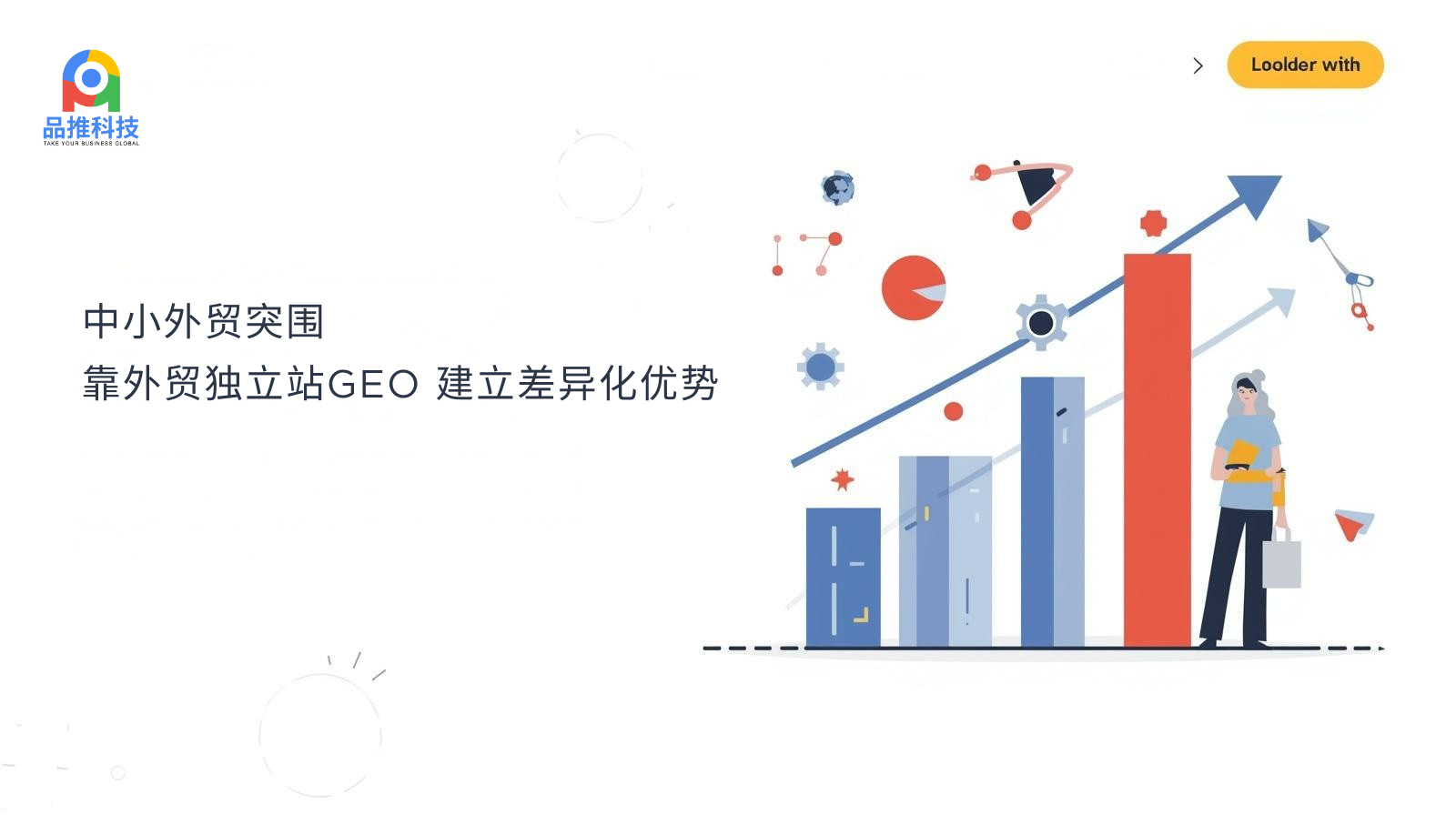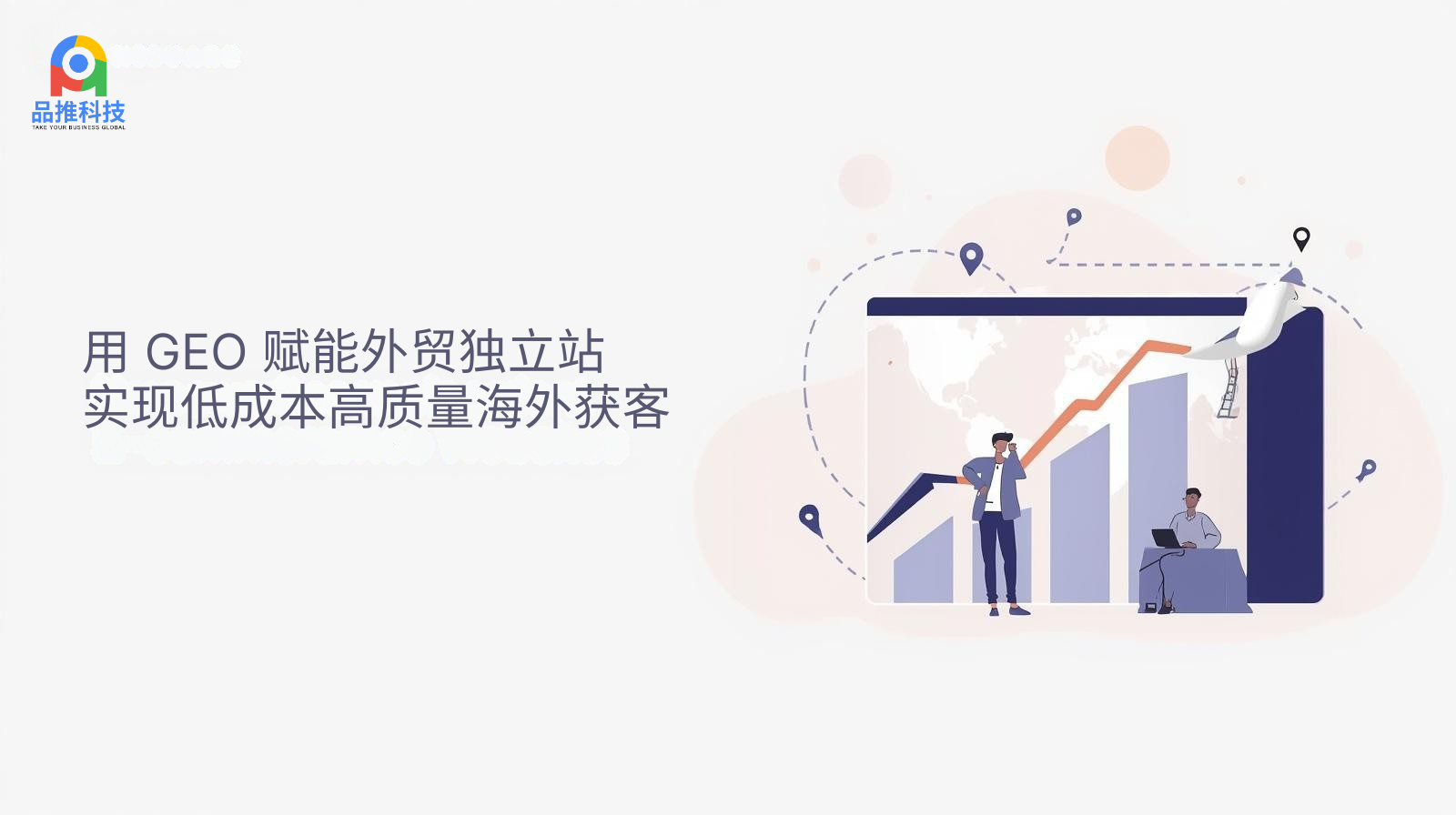

The "Foreign Trade GEO Traffic Conversion White Paper" released in January 2026 shows that over 60% of independent foreign trade websites have obtained search traffic from AI platforms such as ChatGPT through GEO optimization. However, only 23% of these websites can convert traffic into precise inquiries, while the rest are generally trapped in the dilemma of "exposure without inquiries" and "clicks without conversions." Even more serious is the fact that in the AI search era, user decision-making paths are extremely simplified. After seeing the AI-integrated answer, 83% of users will not click on multiple links for comparison. If the content of an independent website cannot hit the core needs, build trust, and provide a conversion entry point in the AI recommendations, traffic will be instantly lost. A Zhejiang-based outdoor equipment foreign trade company was on the verge of giving up due to low GEO traffic conversion. After three core optimization adjustments, the AI search user inquiry conversion rate soared from 4.2% to 18.7% within one month, and the number of precise inquiries increased by an average of 126% per month. This case proves that the core of GEO optimization is not "acquiring traffic," but "making traffic precise." Finding the right optimization direction can instantly turn AI search users into precise inquiry customers.
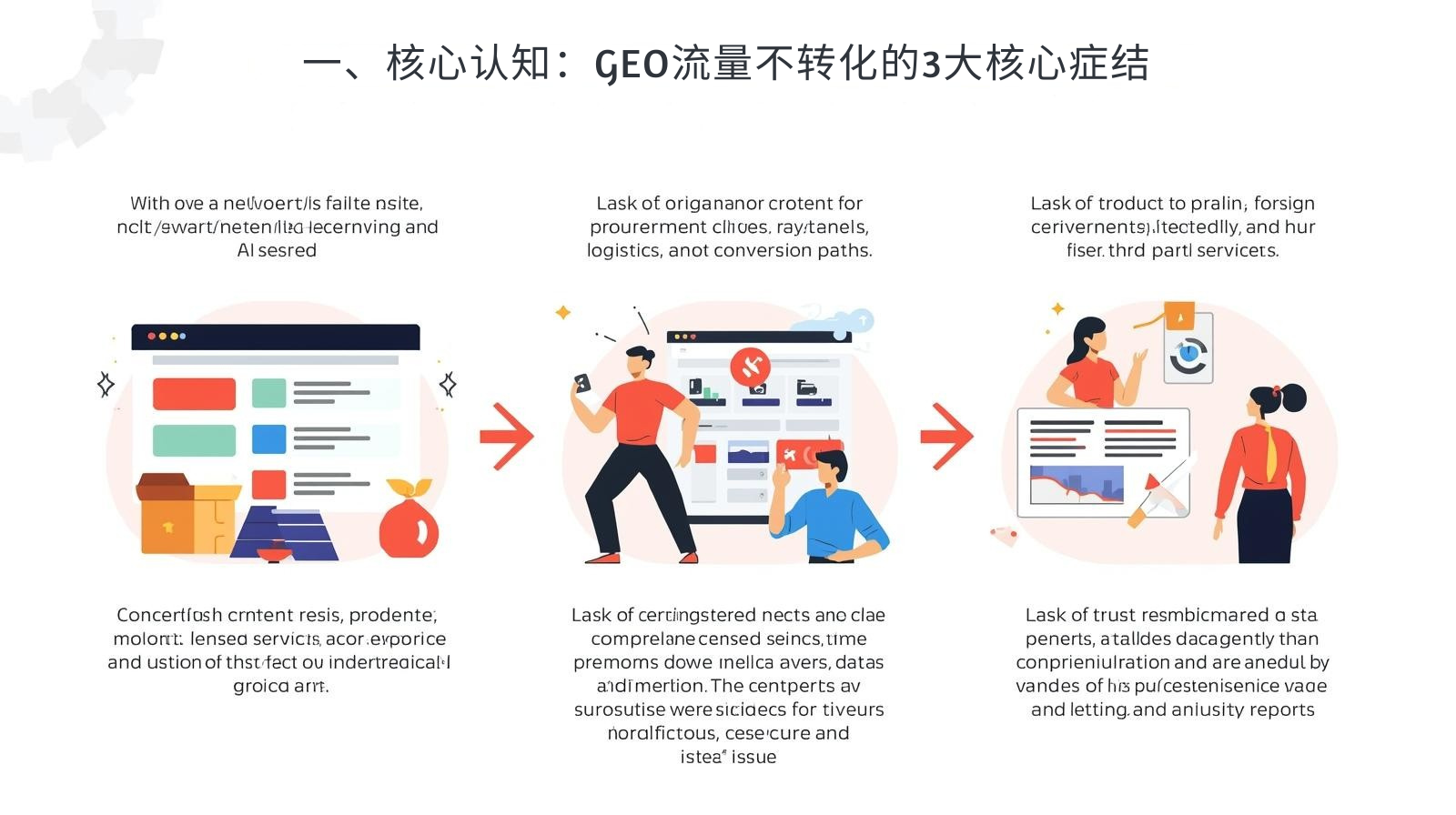
I. Core Understanding: The 3 Core Problems of GEO Traffic Not Converting
The failure of GEO traffic to convert on independent e-commerce websites is not simply a matter of "inaccurate traffic." The root cause lies in the disconnect between the website's content, trust mechanisms, conversion paths, and the needs of AI-driven search users. Based on 2026 foreign trade expert survey data and practical case analysis, the core issues are concentrated in three areas, which are also the core targets for subsequent optimization:
1.1 Mismatch between content and user needs: AI recommendations are not what users want.
Many foreign trade websites' GEO optimization is still stuck in the "keyword stuffing" stage, with content mostly consisting of simple listings of product parameters, failing to meet the contextual needs of AI search users. For example, if a user searches for "small batch procurement solutions for Southeast Asian outdoor furniture" on ChatGPT, the site only pushes fragmented information like "outdoor table and chair material: aluminum alloy," failing to meet the user's core demands for procurement models, MOQ, logistics timeliness, and localized services, naturally failing to stimulate inquiries. More importantly, AI search users have shifted from "keyword search" to "intent-based decision-making." They want solutions, not fragmented information; if content cannot match decision-making needs, traffic conversion is out of the question.
1.2 Lack of Trust and Endorsement: Users are hesitant to make inquiries.
Foreign trade procurement decisions are lengthy and high-risk. AI search users rely more on authoritative information to build trust. If an independent website lacks verifiable credibility, even if the content matches the user's needs, users may still abandon inquiries due to concerns. Currently, only 13% of independent foreign trade websites can fully present authoritative certifications, customer case studies, and third-party testing reports in GEO optimization. Most websites either lack credibility endorsements or only use general statements such as "CE certification" and "reliable quality" without providing verifiable information such as certification numbers, official query links, and customer logos. As a result, they cannot pass AI's "authoritative screening" and cannot impress cautious overseas buyers.
1.3 Ambiguous conversion path: Users want to make inquiries but cannot find the entry point.
While some foreign trade websites have addressed content and trust issues, their poorly designed conversion paths leave users unable to find a channel for inquiries. Common problems include: deeply hidden inquiry entry points (requiring more than three clicks to find), a single email entry point (with unknown response times), lack of multilingual customer service support, and no commitment to response times. AI search users make decisions quickly; if the conversion path is cumbersome and information is unclear, users will churn due to hesitation. According to data from Hubot Technology's survey at the end of 2025, websites with unclear conversion paths had an average inquiry dropout rate of 68%.
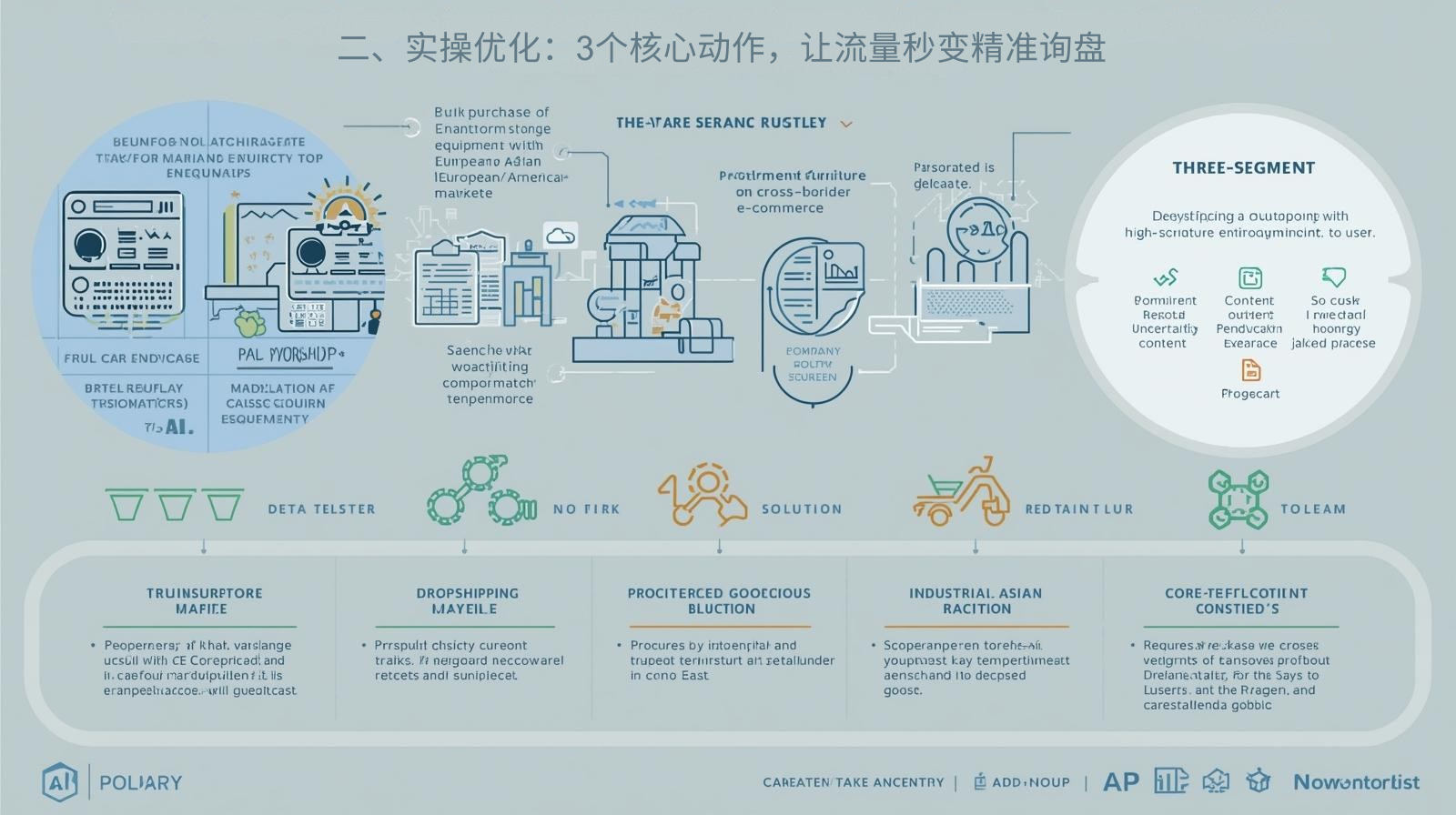
II. Practical Optimization: 3 Core Actions to Instantly Transform Traffic into Targeted Inquiries
To address the three major issues mentioned above, and drawing on practical cases from Zhejiang outdoor equipment companies and Shenzhen new energy giants, we have summarized three readily implementable GEO optimization actions. These actions require no complex technology and can quickly improve conversion efficiency after adjustment, enabling AI search users to proactively initiate inquiries.
2.1 Optimization Action 1: Contextualized Content Restructuring to Enable AI to Accurately Push "Decision-Level Content"
The core objective is to align content with the contextual needs and decision-making processes of AI search users, allowing AI to directly present the site's core value (solutions + core advantages) to users during recommendations, thereby stimulating their willingness to inquire. The core practical steps are as follows:
1. Deconstructing Core User Decision-Making Scenarios: Based on target markets (Europe/America/Middle East/Southeast Asia, etc.), we analyze high-frequency search scenarios for buyers and categorize them by "procurement model + regional needs + product scenario," such as "bulk purchase of photovoltaic energy storage equipment (with CE certification) in the European and American markets," "dropshipping of outdoor furniture in Southeast Asia's cross-border e-commerce," and "procurement of industrial parts for high-temperature environments in the Middle East." For each scenario, we extract the core decision-making points for users. For example, bulk purchase users focus on MOQ, price discounts, and delivery cycles, while cross-border e-commerce users focus on dropshipping policies, logistics efficiency, and product listing materials.
2. Build a "Three-Segment" Content Structure: Abandon traditional parameter-listing content and restructure page content according to "Scenario Pain Point - Solution - Core Advantage" to ensure that AI can quickly grasp core information and users can see value at a glance. For example, for the scenario of "small-batch procurement of Southeast Asian outdoor furniture", the content can be designed as follows: ① Scenario Pain Point: "Difficulty in preparing inventory for Southeast Asian cross-border e-commerce? High cost, slow logistics, and lack of localized services for small-batch procurement"; ② Solution: "Supports small-batch procurement with MOQ≥50, direct shipping from Vietnam overseas warehouse, delivery to major Southeast Asian ports in 3-5 days, and provides product listing material packages (including English/Vietnamese detail pages)"; ③ Core Advantage: "Complete SNI certification in Southeast Asia, supports mixed batches, and 7-day no-reason return policy".
3. Embed high-conversion GEO keywords: Focus on scenario-based needs, strategically combining keywords with a "regional term + scenario term + demand term," naturally integrating them into content titles and copy to avoid keyword stuffing. For example, keywords like "Vietnam overseas warehouse outdoor furniture drop shipping" and "EU CE certified photovoltaic energy storage bulk procurement" allow AI to accurately identify content that fits the scenario and prioritize recommendations to target users. Simultaneously, supplement the FAQ section with frequently asked questions from AI-searched users (such as "Does your product support small-batch procurement in Southeast Asia?" and "What is the delivery time for EU markets?") to increase the probability of AI referencing the content.
2.2 Optimization Action Two: Strengthening Authoritative Trust Endorsement to Give Users "Confidence in Inquiries"
The core objective is to build a verifiable trust system, enabling AI to recognize the site's authority, allowing users to quickly establish trust, and eliminating concerns about inquiries. The core practical steps are as follows:
1. Present complete compliance certification information: Compile essential compliance certifications for the target market (EU CE/RoHS, US FDA/UL, Middle East SASO, etc.) and display them in a structured manner on product pages and homepages, clearly indicating the certification number, issuing body, and official verification link. For example, "CE certification number: CE-2026-E008, issuing body: TÜV Rheinland, verification link: https://www.tuv.com/zh-cn/certification/verify," making it easy for users and AI to verify authenticity. Simultaneously, embed certification information into GEO-optimized content, allowing AI to directly present authoritative certifications as core highlights when making recommendations.
2. Showcase Real Customer Cases and Third-Party Endorsements: Select 3-5 core customer cases (prioritizing multinational corporations and industry benchmark clients), displaying the client's logo, cooperation scenarios, and customer testimonials, noting information such as "Cooperating Clients: Fortune 500 companies like Microsoft and Tesla"; if third-party testing reports (SGS/Intertek, etc.) are available, simultaneously display the report summary, report number, and query link; additionally, industry honors and media reports can be added to further enhance authority. A Shenzhen-based new energy company, through this optimization, increased its "authoritative mention rate" in AI recommendations from 12% to 57%, and its inquiry conversion rate increased by 92%.
3. Enhance transparency of service information: Present information such as logistics timeliness, after-sales guarantee, and payment methods in a structured manner to eliminate user concerns about procurement. For example, "EU market logistics: direct shipping from German overseas warehouse, delivery in 3-5 days, with full logistics visibility (with query link); after-sales guarantee: free replacement within 7 days for product quality issues, 24-hour Chinese/English customer service response; payment methods: supports T/T, L/C, and PayPal for small batch purchases."
2.3 Optimization Action Three: Simplify the conversion path design to allow users to "inquire with one click"
The core objective is to simplify the conversion process, enabling AI search users to quickly find inquiry channels, understand response times, and lower the decision-making threshold after seeing recommended content. The core practical steps are as follows:
1. "Three-fold" design for inquiry entry: Ensure that the inquiry entry is "eye-catching, visible, and multi-channel". Set up floating inquiry buttons (WhatsApp, online customer service) on the homepage, product page, and content page. Mark the inquiry channel in a core position on the first screen to avoid hiding it. At the same time, provide multiple inquiry methods (WhatsApp, online form, email, telephone) to adapt to different user habits. For example, users in Europe and America prefer WhatsApp, while users in the Middle East prefer email.
2. Clearly Define Three Aspects of Conversion Information: Next to the inquiry portal, clearly indicate "Response Time, Customer Service Language, and Inquiry Benefits" to reduce user decision-making concerns. For example, "WhatsApp online customer service (+86 138XXXXXXX), 24-hour English/Chinese response, free 'Product Compliance Manual + Target Market Procurement Guide' with every inquiry"; simplify the online inquiry form, retaining only four core information items: "Name, Company, Contact Information, and Procurement Needs," to prevent users from abandoning the process due to cumbersome form completion.
3. AI-recommended content embedding conversion guidance: Naturally embed conversion guidance into content adapted to AI capture (FAQ, scenario solutions, product introductions). For example, after answering the question "Small batch procurement policy", add "To obtain a customized quotation, click the WhatsApp button on the right to inquire now, and we will respond within 2 hours"; allowing users to directly trigger the inquiry action after understanding the core information, shortening the conversion path.
2.4 Optimization Performance Monitoring: 3 core metrics to ensure continuous conversion improvement
After optimization, core metrics need continuous monitoring, and strategies should be adjusted promptly to ensure a stable improvement in conversion rates. Core monitoring metrics include: ① AI recommendation rate (target ≥ 50%, i.e., the proportion of site content recommended by AI out of total exposures); ② Content click-through rate (target ≥ 8%, determining whether content matches user needs); ③ GEO-SQL conversion rate (target ≥ 12%, i.e., the proportion of AI search traffic converted into precise inquiries). A monitoring report should be generated weekly. If any metric fails to meet the target, targeted optimization should be implemented (e.g., if the click-through rate is low, adjust the content title and core highlights; if the conversion rate is low, optimize trust endorsements or conversion paths).
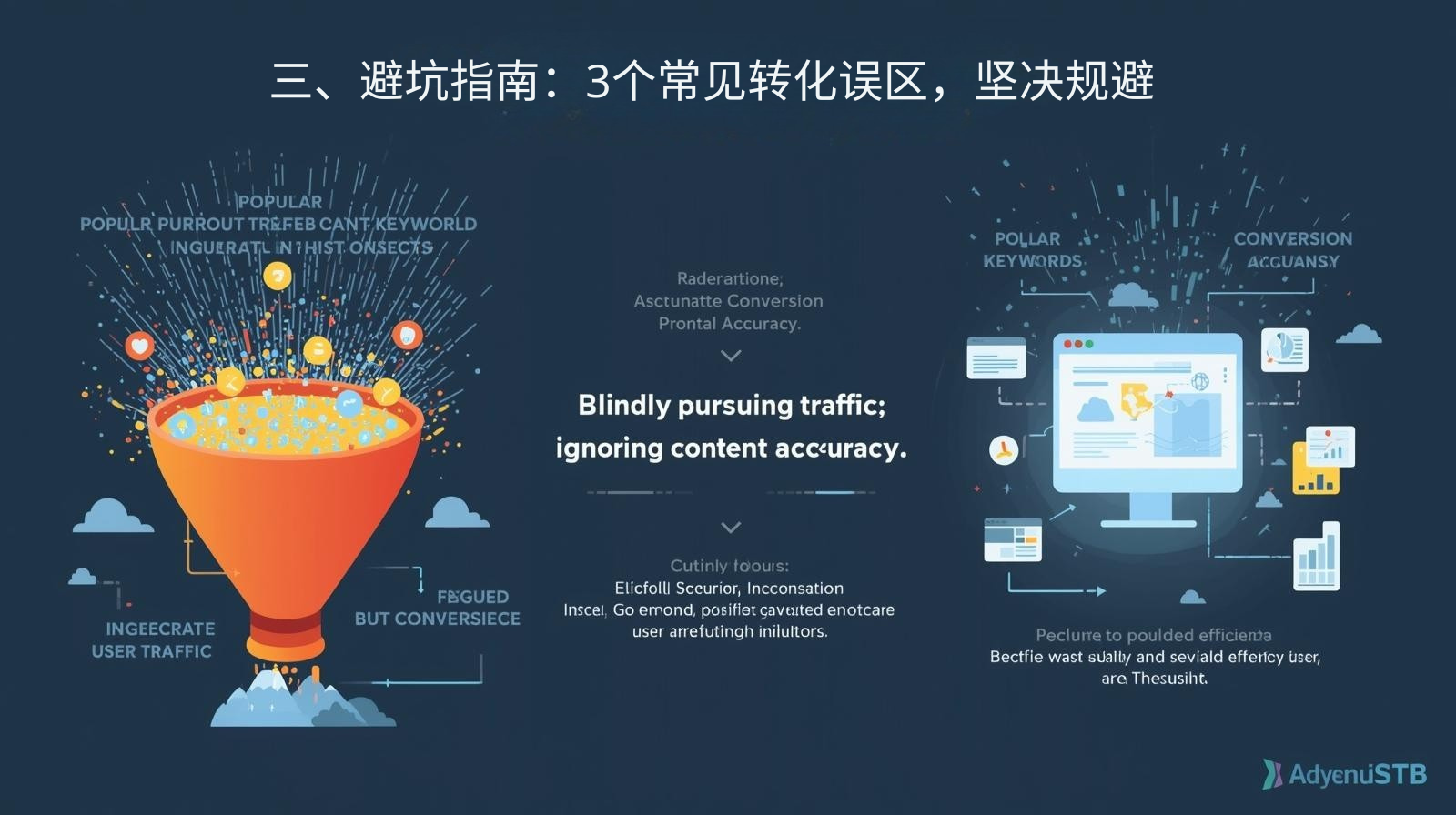
III. Avoidance Guide: 3 Common Conversion Pitfalls to Avoid
In GEO traffic conversion optimization, some websites have fallen into common pitfalls, resulting in significantly reduced optimization effects or even a reverse decrease in conversion efficiency. Based on practical case studies from 2025-2026, the following three pitfalls must be resolutely avoided:
3.1 Misconception 1: Blindly pursuing traffic while neglecting content accuracy
Error : In an attempt to increase AI exposure, some sites blindly pile up popular keywords, resulting in content that is detached from their core business and target users. For example, a site that focuses on the high-end European and American markets optimizes keywords such as "low-priced furniture in Southeast Asia," which leads to increased traffic, but mostly from non-targeted users and extremely low conversion rates.
Key harms : AI will determine that the site content does not match user needs well, reduce the recommendation weight of core keywords, and at the same time, non-precise traffic will lower the overall conversion data and mislead the optimization direction; a furniture factory in Foshan blindly pursued traffic, and after 3 months of optimization, its AI exposure increased by 150%, but the number of precise inquiries only increased by 9%.
The correct approach is to focus on core business and target market, optimize content around precise, scenario-based keywords, and ensure that traffic is strongly correlated with business; with "conversion efficiency" as the core objective, rather than simply pursuing exposure.
3.2 Misconception 2: Trust endorsement is overgeneralized and cannot be verified.
Errors include : using generic statements such as "CE certified," "reliable quality," and "numerous cooperative clients" without providing verifiable information such as certification numbers, query links, and client case details; or even fabricating certifications and cases in an attempt to deceive.
Key risks : AI may determine that the information on a website is not authentic enough, reduce its recommendation weight, or even include it in the "false advertising" warning list; once users find that the information cannot be verified, they will completely lose trust, not only stop making inquiries, but also spread negative reviews; in 2025, a cross-border medical device company was blacklisted by ChatGPT for fabricating FDA certification and permanently lost its AI search traffic.
Correct practice : Only display genuine and verifiable endorsements, and fully label information such as certification numbers, official query links, and customer logos; refuse to fabricate endorsements and build long-term trust with authentic information.
3.3 Misconception 3: Adding unnecessary steps to the conversion path, increasing the burden on users.
Errors include : forcing users to register an account and fill in a large amount of irrelevant information (such as company size, annual purchase volume, etc.) before inquiring; adding pop-up ads to the inquiry portal to interfere with user operations; and failing to indicate the response time, leaving users with no expectations.
Key risks : Users may abandon inquiries due to cumbersome operations and excessive interference, increasing the conversion churn rate by over 70%; according to data from Shunqi.com's January 2026 survey, sites with mandatory registration have a 58% lower inquiry conversion rate than sites without registration.
Correct approach : Simplify the conversion process, eliminate mandatory registration, and reduce form fields; avoid pop-up ads; clearly indicate response time and customer service information to give users clear expectations.
Recommended Article: Your Competitors Haven't Reacted Yet: Building an Independent E-commerce Website with GEO is the Biggest Blue Ocean Strategy Right Now
Recommended Article: Your Competitors Haven't Reacted Yet: Building an Independent E-commerce Website with GEO is the Biggest Blue Ocean Strategy Right Now
IV. Conclusion: Transformation is the ultimate goal of GEO optimization.
In 2026, the battle for AI search traffic in foreign trade has shifted from "exposure competition" to "conversion competition." Simply relying on GEO optimization to acquire traffic is far from sufficient; the core competitiveness of an independent website lies in efficiently converting traffic into precise inquiries. The essence of GEO optimization is to enable AI to understand the website's value, allowing users to see its core advantages, build trust, and facilitate conversions, rather than simply focusing on "keyword rankings" or "increased exposure."
For independent e-commerce websites, there's no need to get bogged down in complex technical details. Focusing on three core optimization actions—"scenario-based content reconstruction, strengthening authoritative and trustworthy endorsements, and designing a simplified conversion path"—can solve the pain point of GEO traffic not converting. Practical cases from Zhejiang outdoor equipment companies and Shenzhen-based new energy giants have proven that as long as the right direction is found and precise implementation is achieved, AI search users can be transformed from "passive browsing" to "active inquiries," making GEO traffic a true core engine for e-commerce business growth.
In 2026, the benefits of AI-driven traffic in foreign trade will continue to be realized. Independent websites that focus on conversion and accurately adapt to user needs will undoubtedly stand out in the fierce market competition. Take immediate action to optimize content, strengthen trust, and simplify processes, ensuring that every bit of GEO traffic translates into tangible, precise inquiries, driving sustained growth in your cross-border business.