

On international trade websites, forms are a key touchpoint between businesses and potential customers. A well-designed, user-friendly form not only increases user willingness to complete the form, but also directly increases inquiries and conversion rates. According to HubSpot research, optimizing form design can increase average submission rates by approximately 20%-30%. This article will share practical methods for optimizing forms on international trade websites, helping businesses stand out in the fiercely competitive international market.
1. Simplify fields and reduce user operation costs
Too many form fields is one of the main reasons why users abandon their forms.
Prioritize core information : Collect only necessary information, such as name, email address, company name, and requirement type, and reduce unnecessary fields.
Step-by-step design : Split the form into multiple steps, gradually guiding users to fill in the form and reduce psychological pressure.
Smart defaults : Provide default options for common countries or product types to speed up filling.
According to the International Trade Centre (ITC) , simplifying form fields can significantly increase cross-border inquiry submission rates.
2. Improve user experience and visual guidance
Form design is not only about content arrangement, but also about interactive experience and visual guidance.
Clear labels and hints : Provide short and clear descriptions for each field to help users quickly understand the required information.
Visual feedback : When users fill in errors or omissions, real-time prompts and highlight related fields are provided to avoid the frustration of form submission failure.
Emphasize the CTA button : The submit button should be conspicuous and have clear copy, such as "Get a quote now" or "Free consultation", to guide users to complete the action.
Nielsen Norman Group research shows that good form usability design can enhance user trust and thus increase conversion rates.
3. Form Validation and Security
The forms on foreign trade websites must not only be convenient, but also ensure that the information is accurate and secure.
Combination of front-end and back-end verification : timely remind users of errors in filling in the form, and re-verify on the server side to ensure data accuracy.
Prevent spam submissions : Use verification codes or hidden fields to reduce automated robot submissions and improve form quality.
Privacy Statement Reminder : Clearly inform users of data usage and privacy protection policies next to the form to increase trust.
According to the security guidelines of the Internet Society (ISOC) , clarifying data protection and privacy policies can effectively increase users' willingness to fill out the form.
4. Mobile Optimization and Responsive Design
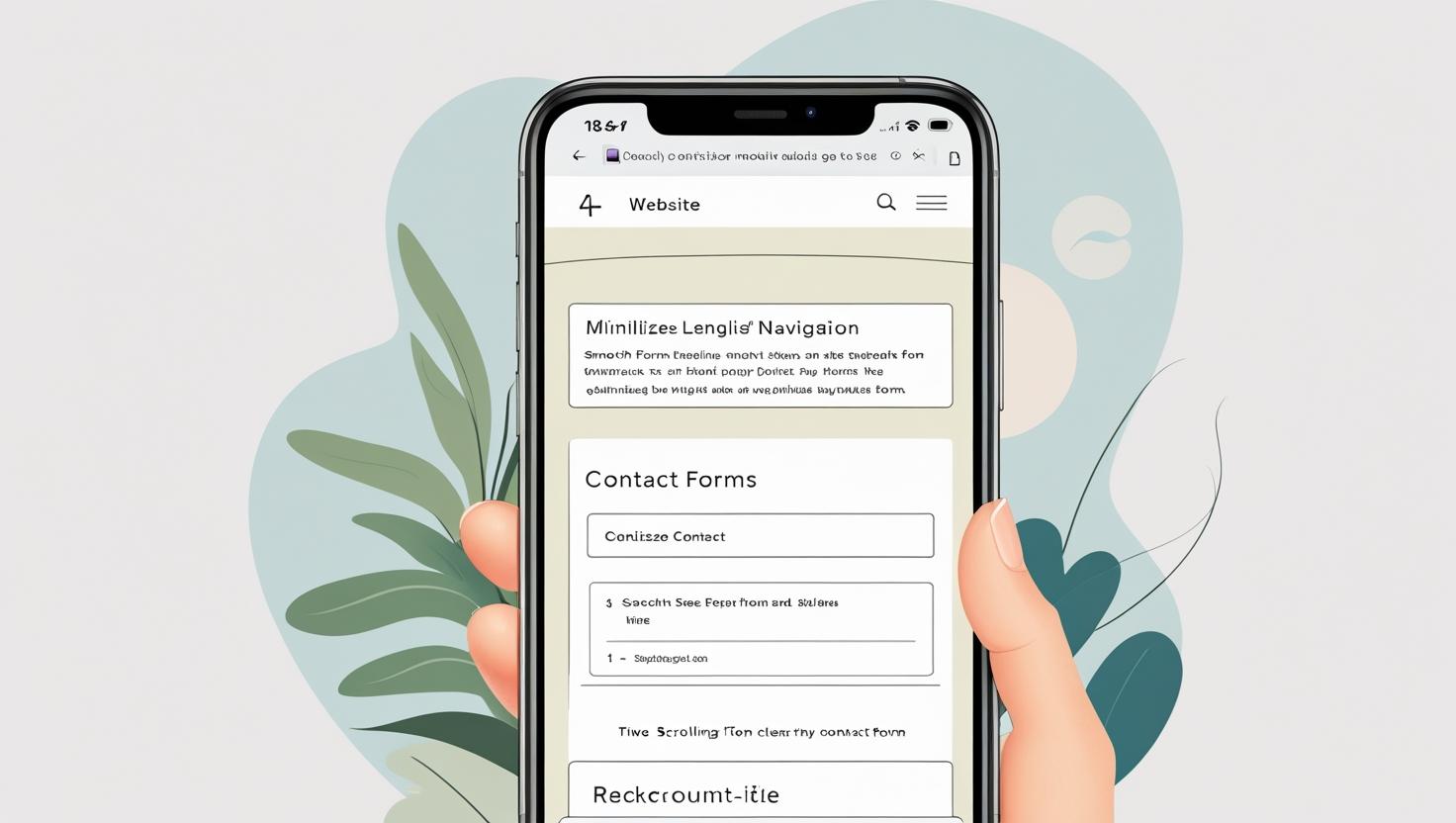
As the proportion of mobile device visits continues to rise, the mobile experience of foreign trade website forms is particularly important.
Adaptive layout : The form remains readable and easy to use on different screen sizes.
Simplified input method : Automatically call out the appropriate input keyboard for email, phone or address fields.
Reduce scrolling and zooming : Place key fields on the first screen to make it easier for users to operate.
Data shows that mobile form optimization can reduce user abandonment rate by about 25%, significantly improving the conversion effect of foreign trade websites.
5. Data analysis and iterative optimization
Form design is not a one-time thing and needs to be continuously optimized based on data.
Conversion rate monitoring : Track form submissions and user behavior through tools like Google Analytics or Hotjar.
A/B testing : Test different field orders, CTA copy, or prompt information to find the best solution.
Regular updates : Adjust form content and design based on market demand, product changes, or user feedback.
Through continuous iterative optimization, companies can continuously improve the conversion rate of foreign trade website forms and enhance their ability to acquire potential customers.
Summarize
Foreign trade website forms are a core tool for acquiring potential customers and driving business conversions. By streamlining fields, optimizing the user experience, ensuring security, adapting to mobile devices, and iterating on data analysis, businesses can significantly improve form submission rates and conversions.
With the Pinshop website building platform , businesses can easily implement form customization, responsive design, multilingual management, and automated data collection, thereby improving the user experience and conversion rate of their foreign trade websites. Experience the Pinshop website building platform now and let your foreign trade website forms provide a powerful boost to business growth!

Recommended article: Tips for writing titles and descriptions for foreign trade websites