SEO optimization techniques for product categories on foreign trade websites

  • Independent website marketing and promotion
  • Independent website operation strategy
  • Foreign trade website
Posted by 广州品店科技有限公司 On Aug 27 2025

Why do foreign trade website products need SEO optimization?

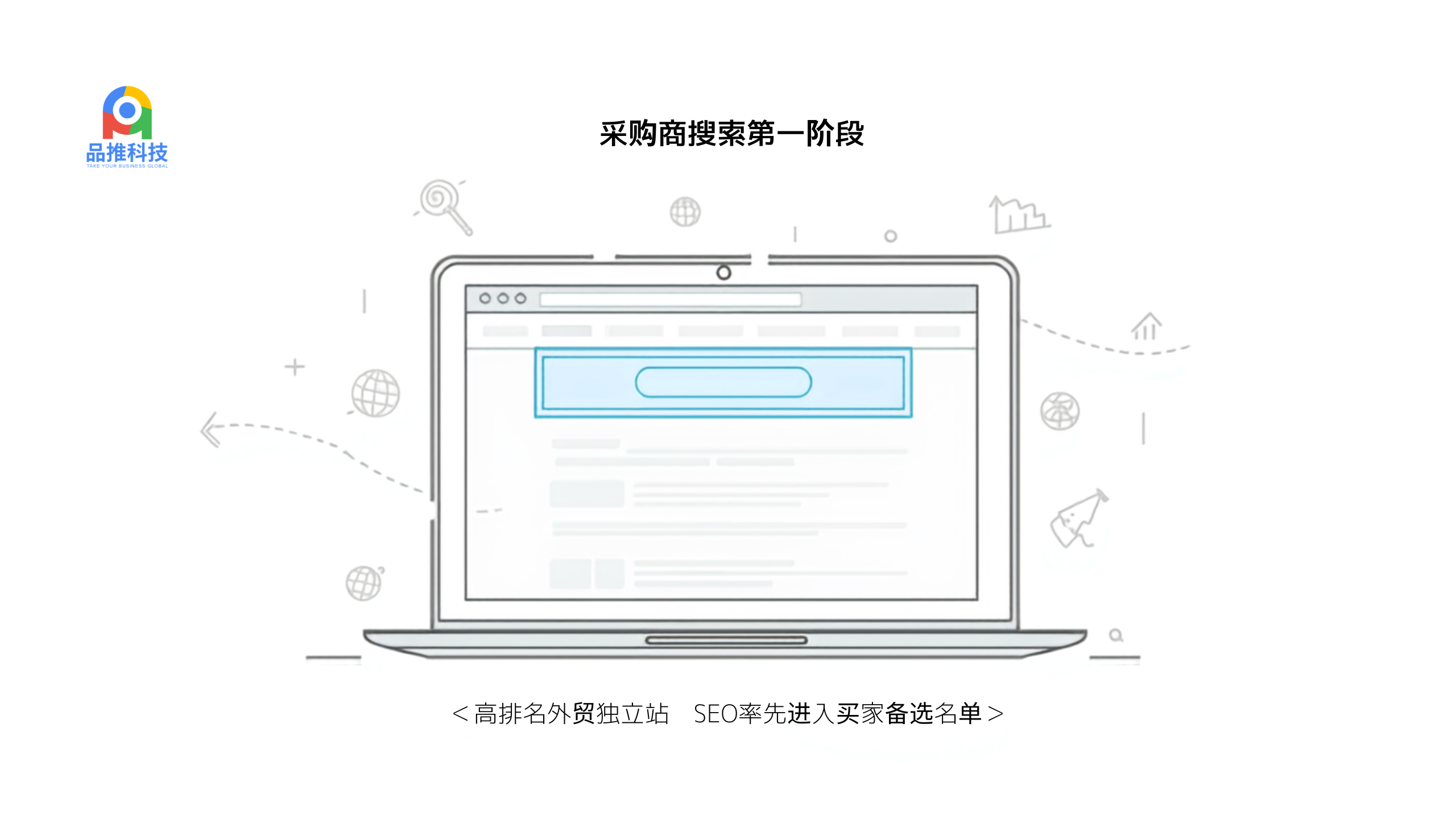
The product category pages of foreign trade websites are a crucial entry point for overseas customers to learn about a company's products and place orders. According to data from the Baidu Search Resource Platform , product pages without SEO optimization are often difficult to crawl by search engines, resulting in low traffic and inquiries. Optimizing product category pages not only improves search engine rankings but also increases customer click-through rates and conversion rates by accurately displaying product information.

Furthermore, ** Google Search Central** also points out that a clear page structure and a well-placed keyword layout help search engines understand website content, thereby increasing overall website authority. For foreign trade companies, SEO optimization is a low-cost, sustainable way to acquire customers, generating greater long-term value than relying solely on advertising.

Core Strategies for Product Category SEO

In foreign trade websites, product category SEO optimization needs to follow the following strategies:

  1. Keyword research and layout : For each category page, select high-search volume, low-competition keywords and reasonably embed them in the title, description, H1/H2 tags and content.

  2. The page structure is clear : Use breadcrumb navigation and category tags to allow search engines and customers to quickly find target products.

  3. Content optimization : Each category page should contain concise and valuable introduction text, combined with pictures, text or videos to illustrate product features.

  4. Multilingual optimization : Provide localized language versions for overseas markets to improve user experience and conversion rates.

  5. Internal links and external citations : Use internal links to direct to relevant product pages, and cite data or standards from authoritative organizations to increase the credibility of the page.

Companies can refer to the ** International SEO Association** 's recommendations on page optimization and keyword placement to ensure that product category pages perform better in search engines.

How to improve the weight of product pages on foreign trade websites

The key to optimizing product category page weight lies in combining user behavior and data analysis:

  • User visit analysis : Track page dwell time, click paths, and bounce rates through Baidu Tongji or Google Analytics.

  • Keyword performance monitoring : Regularly check keyword rankings, adjust content and layout in a timely manner, and improve page search performance.

  • Page loading speed optimization : Optimize image compression, code structure, and responsive layout according to ** W3C official website ** standards to improve user experience and reduce bounce rate.

Through these measures, companies can not only improve the weight of product category pages, but also increase the overall SEO value of the website and obtain more natural traffic for foreign trade websites.

How to improve the weight of product pages on foreign trade websites

Practical cases and optimization methods

In specific operations, enterprises can take the following implementation measures:

  1. Optimize the title of the category page : include core keywords in the title, such as "foreign trade website product category + product type" to increase search matching.

  2. Combination of content and pictures : Each category page is equipped with high-quality pictures, set ALT text and naturally integrate keywords, taking into account both SEO and user experience.

  3. Multi-dimensional internal links : Link category pages with related product pages, blog content, and promotional activity pages to improve page weight transfer and user retention.

  4. Update content regularly : Adjust page copy and images based on market trends and new product releases to ensure page activity and search engine crawling frequency.

Using the Pinshop website building platform, companies can easily implement responsive, multilingual product category pages, and support SEO optimization functions such as keyword embedding, page structure adjustment and data analysis tools.

Data-driven SEO optimization results

Through data analysis, companies can scientifically evaluate optimization effects:

  • Increased traffic : Optimized category pages rise in search engine rankings, attracting more targeted traffic.

  • Increased click-through rate and conversion rate : Clear page structure and keyword layout guide customers to find target products and complete inquiries more quickly.

  • Reduce bounce rate : High-quality content, fast loading, and multilingual optimization improve user experience and reduce page loss.

These data management and continuous optimization methods ensure that the product classification SEO work of foreign trade websites produces long-term value.


CTA (Call to Action):
Want to make your product category pages on your international trade website more SEO-friendly and conversion-efficient? Use the Pinshop website building platform now to quickly create multilingual, SEO-optimized product category pages, making it easy for overseas customers to find your products and achieve global market expansion!

Pinshop foreign trade website building system

【Extended Reading】

特色博客
Foreign Trade Independent Website GEO Team Configuration: How to Divide Labor Among Operations, Technology, and Content?

Foreign Trade Independent Website GEO Team Configuration: How to Divide Labor Among Operations, Technology, and Content?

In March 2026, GEO (Generative Engine Optimization) became a core capability for independent foreign trade websites to gain exposure and inquiries in AI search engines like ChatGPT. Efficient team division of labor is key to the continued effectiveness and stable iteration of GEO. This article focuses on the entire GEO workflow for independent foreign trade websites, clearly defining the core responsibilities, division of labor, collaboration processes, and performance indicators for the three main roles: operations, technology, and content. Combining OpenAI and Google's official AI crawling rules and authoritative reference links, it provides directly implementable team configuration solutions and practical processes to help foreign trade companies shift from "fragmented optimization" to "systematic GEO operations," ensuring their brands consistently appear in ChatGPT search results. The article also recommends PinDian Technology's React framework for website building and its native GEO adaptation service at the end.

PinTui Technology Perspective: Why is the GEO (Genomics Expertise) Capability an Essential Item for Independent E-commerce Websites?

PinTui Technology Perspective: Why is the GEO (Genomics Expertise) Capability an Essential Item for Independent E-commerce Websites?

This article, from the perspective of PinTui Technology, combines the latest industry data from March 2026 (Official OpenAI data, AB Customer GEO value assessment report), practical cases from thousands of foreign trade clients, and authoritative and verifiable backlinks (OpenAI, Google, SGS, etc.) to focus on the core question: "Why is GEO an essential capability for independent foreign trade websites?" It is divided into three core chapters (including sub-headings): "Industry Trends," "Core Value," and "Practical Necessity." It deeply analyzes the customer acquisition barrier role of GEO in the context of normalized AI procurement, its end-to-end empowerment value, and the drawbacks of not optimizing for GEO. It provides actionable practical insights, adheres to long sentence formatting requirements, avoids complex technical descriptions, and integrates all backlinks naturally into the text, balancing professionalism and practicality. It also provides standardized article summaries, meta descriptions, and specified slugs to help foreign trade companies understand the core value of GEO, emphasize the importance of GEO implementation, and naturally recommends PinTui's website building services at the end.

Evaluation of the Effectiveness of Independent Foreign Trade Websites (GEO): Quantifiable Indicators and Retrospective Methods

Evaluation of the Effectiveness of Independent Foreign Trade Websites (GEO): Quantifiable Indicators and Retrospective Methods

This article combines the latest industry data from March 2026 (Official OpenAI data, AB Customer GEO Performance Evaluation White Paper), a foreign trade case study (Ningbo home furnishing companies), and authoritative and verifiable backlinks (OpenAI, EU CE official data, Google, SGS, etc.) to focus on the core topic of "GEO Performance Evaluation for Independent Foreign Trade Websites: Quantifiable Indicators and Review Methods." It is divided into four core chapters (including sub-headings): "Core Understanding," "Quantifiable Indicators," "Practical Review Methods," and "Pitfall Avoidance Guide." It deeply analyzes the core logic of GEO evaluation and review, breaks down four categories of quantifiable core indicators (including definitions and statistical methods), provides a four-step standardized review implementation method, and addresses four common pitfalls and their avoidance methods. Adhering to long sentence formatting requirements, it avoids complex technical descriptions, integrates all backlinks naturally, and is highly practical with immediate implementation. It also provides standardized article summaries, meta descriptions, and slugs to help foreign trade companies accurately evaluate GEO performance, efficiently review and optimize, and ensure continuous brand recommendations from ChatGPT. The article concludes with a natural recommendation of a brand store website building service.

GEO, a trade-oriented independent foreign trade website, demonstrates how to build supply chain and service advantages.

GEO, a trade-oriented independent foreign trade website, demonstrates how to build supply chain and service advantages.

This article combines the latest industry data from March 2026 (Official OpenAI data, AB Customer's GEO evaluation for trading companies), practical case studies of trading companies (Shenzhen hardware and building materials companies, Guangzhou home furnishing companies), and authoritative and verifiable backlinks (OpenAI, EU CE official data, SGS, AnswerThePublic, etc.). Focusing on the core theme of "Trading-Oriented Independent Websites: How GEOs Build Supply Chain and Service Advantages," it is divided into four core chapters (including sub-headings): "Core Understanding," "Practical Implementation of Supply Chain Advantages," "Practical Implementation of Service Advantages," and "Pitfall Avoidance Guide." It deeply analyzes the core pain points of trading companies and the value of GEO adaptation, providing standardized practical steps for building supply chain and service advantages with GEOs. It also outlines common optimization pitfalls and avoids common mistakes, adhering to long sentence formatting requirements, avoiding complex technical descriptions, and seamlessly integrating all backlinks. Highly practical and directly applicable, it also provides standardized article summaries, meta descriptions, and slugs to help trading companies effectively utilize GEOs, amplify their supply chain and service advantages, achieve AI-driven precise customer acquisition, and naturally promote their website building services at the end.

In the era of AI-driven procurement, independent e-commerce websites that don't utilize GEO (Google Origin and Development) will gradually become obsolete.

In the era of AI-driven procurement, independent e-commerce websites that don't utilize GEO (Google Origin and Development) will gradually become obsolete.

This article, combining the latest industry report from March 2026 ("2026 Global Foreign Trade AI Procurement Trends Report," NetEase News Foreign Trade Review), practical foreign trade case studies (Shenzhen electronics, Ningbo hardware, Dongguan furniture companies), and authoritative and verifiable backlinks (OpenAI, EU CE official, CNCA, AnswerThePublic, etc.), focuses on the core theme that "In the AI procurement era, independent foreign trade websites that don't implement GEO will gradually become ineffective." It is divided into three core chapters (including sub-headings): "Core Understanding," "Deconstruction of Ineffective Scenarios," and "Practical Implementation." It provides a detailed analysis of the core value of GEO in the AI procurement era, the four major ineffective scenarios for not implementing GEO, and a three-step standardized GEO optimization process. Adhering to long sentence formatting requirements, it avoids complex technical descriptions, and all backlinks are naturally integrated into the text, making it highly practical and directly applicable. It also provides standardized article summaries, meta descriptions, and slugs to help foreign trade companies understand the AI procurement trend, activate the value of their independent websites through GEO optimization, avoid site ineffectiveness, achieve accurate inquiry conversion, and naturally recommend product store website building services at the end.

Foreign Trade Independent Website GEO Content System: AI's Favorite Structure and Format

Foreign Trade Independent Website GEO Content System: AI's Favorite Structure and Format

This article, combining the latest industry reports from March 2026 (NetEase News GEO evaluation, "2026 GEO Generation Search Optimization White Paper"), practical foreign trade case studies (Jinan machinery and textile companies), and authoritative and verifiable backlinks (OpenAI, EU CE official, CNCA, AnswerThePublic, etc.), focuses on the core concept of "GEO content system for independent foreign trade websites: AI's favorite structure and format." It is divided into three core chapters (including detailed subheadings): "Core Understanding," "AI Preference Structure Deconstruction," and "Practical Implementation." It details the underlying logic of AI's capture of foreign trade GEO content, the AI preference structure of the four core pages, and the four-step standardized content system construction process. Adhering to long sentence formatting requirements, it avoids complex technical descriptions, and all backlinks are naturally integrated into the text, making it highly practical and directly applicable. It also provides standardized article summaries, meta descriptions, and slugs to help foreign trade companies build a GEO content system favored by AI, enabling AI tools such as ChatGPT to quickly capture and prioritize content, achieving accurate inquiry conversions. The article concludes with a natural recommendation of brand store website building services.